Lockheed Flexes To Modular AGM-158 JASSM Missile Concept洛克希德·马丁公司向模块化AGM-158 JASSM导弹概念靠拢
FLEX aims to give the JASSM missile family modular weapons architecture spanning longer-range, anti-ship, and new launch configurations. FLEX aims to give the JASSM missile family modular weapons architecture spanning longer-range, anti-ship, and new launch configurations.
新闻视频
Published Sep 15, 2026 2:27 PM EDT
Lockheed Martin has unveiled a modular airframe concept for its stealthy and combat-proven AGM-158 Joint Air-to-Surface Standoff Missile (JASSM) family that could support multiple configurations, launch methods, and sensor packages while making use of the existing JASSM and Long-Range Anti-Ship Missile ( LRASM ) production infrastructure. Highly survivable, the missiles are an incredibly important and staple weapon for the U.S. military, and for select export customers.
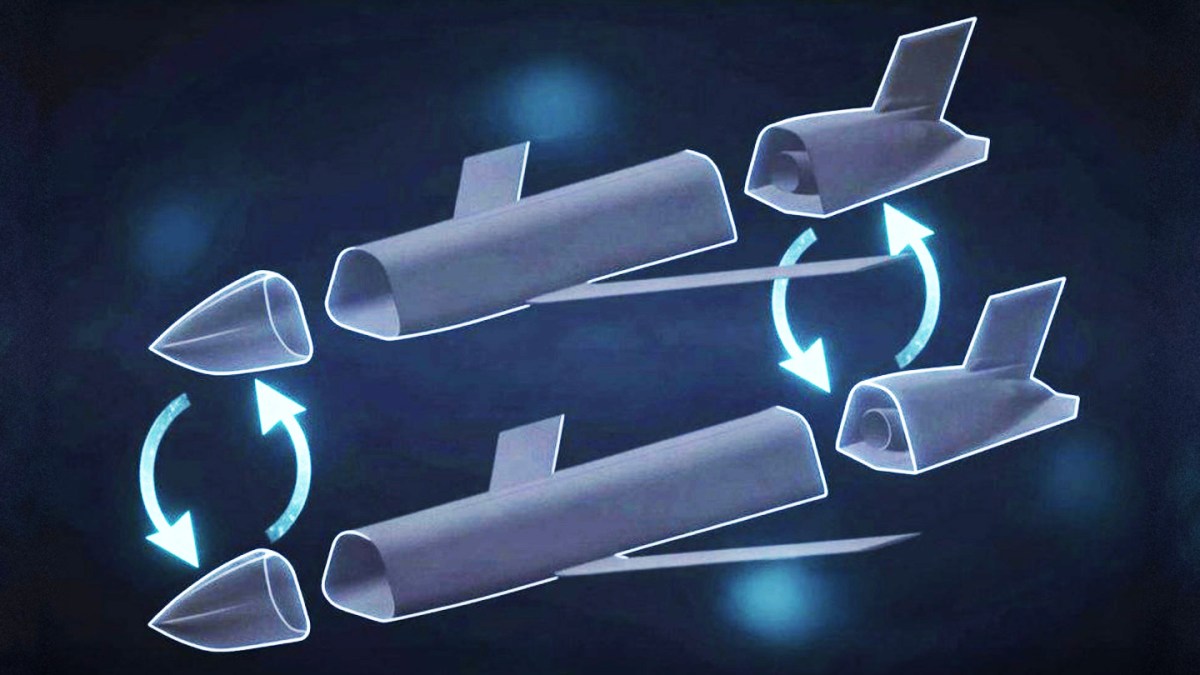
Called AGM-158 FLEX, the new concept is centered on a common airframe with interchangeable components. Lockheed Martin says it has invested more than $35 million of its funds in the effort so far, including airframe design, testing, prototype production, subsystem qualification, and work with suppliers.
An Air Force load crew member prepares to load an AGM-158 Joint Air-to-Surface Standoff Missile onto the B-2 Spirit weapons load trainer during a weapons load competition at Whiteman Air Force Base, Missouri. U.S. Air Force photo by Airman 1st Class Joel Pfiester/Released Tech. Sgt. Joel Pfiester
The company says the FLEX design will use removable nose sections that can accommodate sensor suites associated with the AGM-158 family. A removable boat tail would allow the same basic airframe to be configured for different launch methods, including air, surface, and subsurface launch. That would open the AGM-158 architecture up to ground-, ship-, and submarine-launched applications, although Lockheed Martin has not provided details on the specific launchers, platforms, or configurations envisioned. It’s worth noting the LRASM has been tested in vertical launch configuration for vessels equipped with the Mk 41 launch system .
A 2016 test of LRASM from a Mk 41 launcher on the Navy’s Self Defense Test Ship. Lockheed Martin
In addition to the Navy vertical launch tests, the idea of moving the JASSM family beyond its traditional combat aircraft launch platforms is not new. The Air Force’s Palletized JASSM concept, better known as Rapid Dragon , has demonstrated the ability to deploy JASSM-ER from palletized launchers carried inside cargo aircraft, using an expendable airdrop system. FLEX takes a different approach by building those kinds of launch options into the airframe architecture itself, with modularity supporting various launch configurations for the same basic weapon.
For aircraft-launched weapons, Lockheed Martin says FLEX will retain compatibility with current and future JASSM and LRASM launch platforms.
An F-35B carrying the AGM-158C Long-Range Anti-Ship Missile (LRASM). U.S. Marine Corps Kyra Helwick
The company is also proposing multiple airframe lengths. A 206-inch configuration is associated with the supersized JASSM-XR , while a 168-inch version is consistent with the dimensions of JASSM-ER . Lockheed Martin says JASSM-XR will be the first configuration of the FLEX airframe.
The AGM-158 family has already grown well beyond the original JASSM. The AGM-158A is the baseline stealthy air-launched land-attack missile, with a publicly reported range of roughly 230-330 miles, while the AGM-158B JASSM-ER uses a more efficient engine and additional fuel to roughly double that reach, to around 575 miles or more.
Alongside the land-attack variants is the AGM-158C LRASM, which uses the JASSM airframe but substitutes a sophisticated imaging infrared anti-ship seeker, electronic support measures, datalink, and other capabilities, for operations against heavily defended surface combatants.
A B-2 deploys an AGM-158C Long Range Anti-Ship Missile to support a live-fire sinking exercise as part of Valiant Shield 2026 over the Philippine Sea, June 27, 2026. U.S. Air Force photo by Tech Sgt. Thomas Barley Tech. Sgt. Thomas Barley
Finally, the much larger JASSM-XR is being developed with a substantially stretched fuselage to carry more fuel and a larger 1,000-pound-class warhead, with a range expected to approach or exceed 1,000 miles. This would give it a similar striking capability as the Tomahawk cruise missile, although in a stealthier package.
Beyond range and launch options, the company is pitching its new FLEX concept as a way to simplify future upgrades. Components could be replaced as they become obsolete or new capabilities become available without necessarily requiring a completely new missile design.
That approach could have an industrial-base advantage, particularly as the United States seeks to increase production of long-range weapons . Lockheed Martin says FLEX would use the existing JASSM/LRASM production line, supply chain, mission-planning infrastructure, and software ecosystem rather than establishing an entirely new manufacturing and support architecture.
The company says its JASSM/LRASM production infrastructure includes a 225,000-square-foot facility opened in 2022 with increased automation and a robotic paint line.
Notable, however, is the fact that FLEX is being proposed at a time when the U.S. Air Force is pursuing affordable mass as a key priority .
For example, as part of a slew of low-cost cruise missile offerings, the service has been moving ahead with the Extended Range Attack Munition, or ERAM, a new air-launched missile explicitly intended to provide a relatively low-cost, rapidly producible standoff weapon. The Air Force conducted a live-warhead ERAM test in January of last year , less than 16 months after the program received its initial contract, and described the weapon as a means of generating mass against fixed targets. ERAM is understood to have a range of between 150 and 280 miles, putting it below the reach of the baseline JASSM, let alone the JASSM-ER or XR.
The Extended Range Attack Munition live-fire test on Jan. 22, 2025, at Eglin Air Force Base, Florida. via U.S. Air Force
However, the emerging class of lower-cost weapons are intended very much more to complement than compete with JASSM. While the Air Force plans to buy thousands of the cheaper missile, the JASSM will still be needed to take up the higher end of the cost and capability list.
Lockheed Martin mentions that FLEX should “unlock future cost savings,” but this more about giving customers the ability to swap out components and upgrade capabilities on existing missile rounds, to avoid obsolescence, rather than facilitate mass production.
As it stands, JASSM has evolved into a family of increasingly capable and longer-range weapons, but those capabilities necessarily come with a different set of cost and production considerations than a weapon designed from the outset around large-scale production. Lockheed Martin’s announcement does not disclose a target unit cost for FLEX, nor does it explain how the eventual cost of a FLEX-derived weapon would compare with a baseline JASSM or LRASM. The unit price of the latest subvariants of the JASSM-ER is around $1.2 and $1.5 million, according to official budget documents .
The new weapon is a way of getting more variants and launch options out of the established JASSM/LRASM architecture, potentially with less development work than creating entirely new weapons. Whether that translates into enough savings or production capacity to satisfy the military’s growing demand for large numbers of standoff weapons remains to be seen.
For Lockheed Martin, the proposal also offers a way to extend the relevance of the AGM-158 family as the company and the Pentagon pursue additional range, new launch platforms, and potentially new launch methods.
The flexibility of the missile could be particularly relevant to the Agile Combat Employment concept, and the wider U.S. military in the Indo-Pacific, where forces are expected to operate from a larger number of dispersed and potentially austere locations . A common missile architecture that can be adapted to different launch platforms and different target sets could allow weapons to be positioned and employed across a distributed force rather than tying particular missile variants to particular launchers.
The original JASSM/LRASM has also become a significant export weapon, with Australia , Finland , Poland and several other U.S. allies cleared to acquire variants of the missile. While the advanced capabilities of the weapon have seen its export opportunities carefully controlled, FLEX could potentially open up the market to more customers, including less-advanced, ‘sanitized’ versions.
Pilot and Weapon Systems Officer conduct a pre-flight check on the JASSM-ER loaded to a Royal Australian Air Force F/A-18F Super Hornet at RAAF Base Amberley, Queensland. Australian Department of Defense LAC Campbell Latch
Lockheed Martin’s announcement provides few details on FLEX’s eventual cost, production rate, schedule, or specific performance beyond the stated airframe dimensions. For now, the concept demonstrates that the company is seeking to create a more adaptable architecture around an established missile family, one that has played a critical role in numerous operations since its introduction.
Contact the author: thomas@thewarzone.com
Comments couldn’t be loaded. Please refresh the page.
发布于美国东部时间2026年9月15日下午2:27
洛克希德·马丁公司公布了其隐身且久经实战考验的AGM-158联合空对地防区外导弹(JASSM)系列的模块化弹体概念。该概念弹体可支持多种配置、发射方式和传感器组件,同时还能利用现有的JASSM和远程反舰导弹(LRASM)生产基础设施。这些导弹具有极高的生存能力,是美国军方以及部分出口客户极其重要的主力武器。
这款名为AGM-158 FLEX的新概念战机,其核心在于采用通用机身和可互换部件。洛克希德·马丁公司表示,迄今为止,该公司已为此投入超过3500万美元的资金,用于机身设计、测试、原型机生产、子系统鉴定以及与供应商的合作。
在密苏里州怀特曼空军基地举行的武器装载比赛中,一名空军装载组成员准备将一枚AGM-158联合空对地防区外导弹装载到B-2“幽灵”隐形轰炸机的武器装载训练器上。美国空军一等兵乔尔·菲斯特拍摄/技术军士乔尔·菲斯特发布
该公司表示,FLEX设计将采用可拆卸的弹头部分,以便安装与AGM-158系列导弹相关的传感器套件。可拆卸的船尾结构将使同一基本弹体能够配置为不同的发射方式,包括空中、水面和水下发射。这将使AGM-158架构可用于地面、舰载和水下发射,但洛克希德·马丁公司尚未提供关于具体发射装置、平台或配置的细节。值得注意的是,LRASM导弹已在配备Mk 41发射系统的舰艇上进行了垂直发射配置的测试。
2016年,美国海军自卫试验舰使用Mk 41发射器对远程反舰导弹(LRASM)进行了测试。洛克希德·马丁公司
除了海军的垂直发射测试之外,将JASSM系列导弹的发射平台拓展到传统作战飞机之外的想法并非新鲜事。空军的托盘式JASSM概念,更广为人知的名称是“快速龙”(Rapid Dragon),已经证明了能够使用一次性空投系统,从运输机携带的托盘式发射器中投放JASSM-ER导弹。FLEX则采用了不同的方法,将这类发射选项直接集成到机身结构中,其模块化设计支持同一基本武器的多种发射配置。
洛克希德·马丁公司表示,对于机载发射武器,FLEX 将保持与当前和未来的 JASSM 和 LRASM 发射平台的兼容性。
一架F-35B战斗机携带AGM-158C远程反舰导弹(LRASM)。美国海军陆战队凯拉·赫尔维克
该公司还提出了多种机身长度方案。206英寸的配置与超大型JASSM-XR导弹相关,而168英寸的配置则与JASSM-ER导弹的尺寸一致。洛克希德·马丁公司表示,JASSM-XR将是FLEX机身的首个配置方案。
AGM-158系列导弹的性能已经远远超越了最初的JASSM。AGM-158A是基础型的隐形空射陆攻导弹,公开数据显示其射程约为230-330英里;而AGM-158B JASSM-ER则采用了更高效的发动机和额外的燃料,使其射程几乎翻了一番,达到约575英里或更远。
除了陆攻型之外,还有 AGM-158C LRASM,它使用 JASSM 的机身,但替换了先进的成像红外反舰导引头、电子支援措施、数据链和其他功能,用于对付防御严密的水面作战舰艇。
2026年6月27日,一架B-2轰炸机在菲律宾海上空部署了一枚AGM-158C远程反舰导弹,以支援“勇敢之盾2026”演习中的实弹击沉演习。美国空军技术军士托马斯·巴利摄。
最后,尺寸更大的JASSM-XR导弹正在研发中,其弹体大幅加长,可携带更多燃料和更大的1000磅级弹头,预计射程将接近或超过1000英里。这将使其拥有与战斧巡航导弹类似的打击能力,但隐身性能更佳。
除了射程和发射选项之外,该公司还大力推广其新型FLEX概念,旨在简化未来的升级。当部件过时或出现新功能时,无需重新设计导弹,即可进行更换。
这种方法可能具有工业基础优势,尤其是在美国寻求提高远程武器产量之际。洛克希德·马丁公司表示,FLEX项目将利用现有的JASSM/LRASM生产线、供应链、任务规划基础设施和软件生态系统,而不是建立一套全新的制造和支持架构。
该公司表示,其 JASSM/LRASM 生产基础设施包括一个 225,000 平方英尺的工厂,该工厂于 2022 年开业,自动化程度更高,并配备了机器人喷漆线。
然而值得注意的是,FLEX 的提出正值美国空军将经济实惠的大规模生产作为一项关键优先事项之际。
例如,作为一系列低成本巡航导弹方案的一部分,美国空军一直在推进增程攻击弹药(ERAM)项目。这是一种新型空射导弹,旨在提供一种成本相对较低、可快速生产的防区外武器。去年1月,在项目获得初始合同不到16个月后,空军进行了ERAM实弹头测试,并将该武器描述为一种对固定目标进行大规模打击的手段。据了解,ERAM的射程在150至280英里之间,低于基础型JASSM的射程,更不用说JASSM-ER或XR了。
2025年1月22日,美国空军在佛罗里达州埃格林空军基地进行了远程攻击弹药实弹测试。(图片来源:美国空军)
然而,新兴的低成本武器与其说是与JASSM竞争,不如说是与之互补。虽然空军计划采购数千枚价格更低的导弹,但JASSM仍然是满足高端成本和高性能需求的必要选择。
洛克希德·马丁公司提到,FLEX 应该能够“释放未来的成本节约潜力”,但这更多的是为了让客户能够更换现有导弹弹药的组件并升级其性能,以避免过时,而不是为了促进大规模生产。
目前,JASSM导弹已发展成为一个性能日益增强、射程更远的系列武器,但这些性能的提升必然会带来与从一开始就以大规模生产为设计目标的武器截然不同的成本和生产考量。洛克希德·马丁公司的公告并未透露FLEX导弹的目标单价,也没有说明FLEX衍生武器的最终成本与基础型JASSM或LRASM相比如何。根据官方预算文件,JASSM-ER最新子型号的单价约为120万至150万美元。
这种新型武器旨在利用现有的JASSM/LRASM架构,开发出更多衍生型号和发射方式,其研发工作量可能比全新武器的研发工作量要少。但这能否转化为足够的成本节约或产能,以满足军方日益增长的对大量防区外武器的需求,还有待观察。
对于洛克希德·马丁公司而言,该提案还提供了一种方法,可以延长 AGM-158 系列导弹的相关性,因为该公司和五角大楼正在寻求增加射程、新的发射平台以及可能的新发射方法。
这种导弹的灵活性对于敏捷作战部署理念以及美国在印太地区的军事行动尤为重要,因为该地区的部队预计将在更多分散且可能条件艰苦的地点开展作战行动。一种能够适应不同发射平台和不同目标类型的通用导弹架构,可以让武器部署和使用范围更广,覆盖整个分布式部队,而无需将特定型号的导弹与特定发射装置绑定。
原版JASSM/LRASM也已成为重要的出口武器,澳大利亚、芬兰、波兰和其他几个美国盟国已获准采购该导弹的各种改进型。虽然该武器的先进性能使其出口机会受到严格控制,但FLEX项目有可能为更多客户打开市场,包括一些技术含量较低、经过“净化”的版本。
在昆士兰州安伯利皇家澳大利亚空军基地,飞行员和武器系统官正在对装载在澳大利亚皇家空军F/A-18F超级大黄蜂战斗机上的JASSM-ER导弹进行飞行前检查。澳大利亚国防部下士坎贝尔·拉奇
洛克希德·马丁公司的公告并未透露FLEX最终成本、生产速度、进度安排或除机身尺寸以外的具体性能等细节。目前来看,该概念表明该公司正寻求围绕一个成熟的导弹系列打造更具适应性的架构,该系列导弹自问世以来已在众多作战行动中发挥了关键作用。
联系作者:thomas@thewarzone.com
评论加载失败,请刷新页面。