Iran war costs: $38B, plus $2-3B per month going forward, CBO says据国会预算办公室称,伊朗战争成本为380亿美元,未来每月还将增加20亿至30亿美元。
The Congressional Budget Office reported it would take "at least five years" to rebuild the US' munitions inventories.
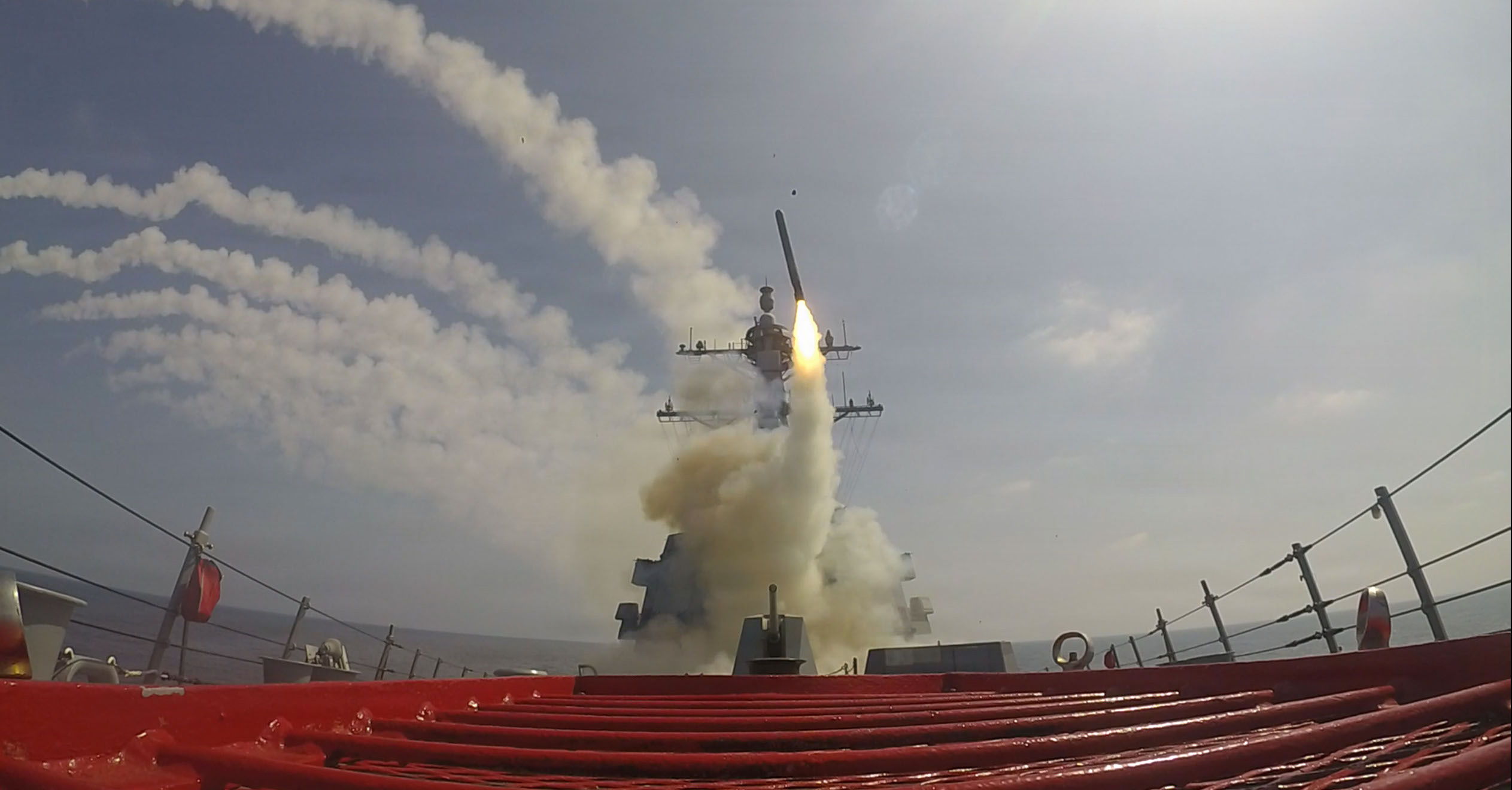
Arleigh Burke-class guided-missile destroyer USS Frank E. Petersen Jr. (DDG 121) fires a Tomahawk Land Attack Missile during operations in support of Operation Epic Fury, Feb. 28, 2026. (U.S. Navy Photo)
WASHINGTON — According to a Congressional Budget Office report published today , combat operations in Iran have cost the Defense Department around $38 billion as of August 1, and will continue to cost the department around $2-3 billion per month if the operations continue.
As the report lays out, the largest chunk of change was for the $21.7 bi llion it will cost the DoD to replace expended munitions — including $13.1 billion for interceptors, $7.3 billion for land-attack cruise missiles and $1.2 billion for “other munitions.” And those munitions will not be replaceable anytime soon, according to the findings.
“The U.S. has probably used between one-half and two-thirds of its inventory of certain interceptors since June 2025, spanning both conflicts; rebuilding those inventories would probably take at least five years, ” even with the Pentagon’s ongoing push to speed munitions production, the report adds, referring to Operation Epic Fury and Operation Midnight Hammer .
The repo rt said this “large exp enditure” of missiles and interceptors will leave the US with a “reduced inventory of interceptors for several years.” Such a situation would “become especially problematic if a conflict arose with an opponent whose arsenal included large numbers of ballistic and cruise missiles,” namely China, the report reads.
Such munitions included Tomahawks , Joint Air-to-Surface Standoff Missiles, Terminal High Altitude Area Defense systems, Patriot systems and Standard Missile 3 and Standard Missile 6 interceptors.
Apart from munitions, CBO’s repo rt, which came at the request of Rep. Brendan Boyle, ranking member of the House Budget Committee, estimates that the Pentagon has spent $10.4 billion on increased flying hours, $2.7 billion from increased fuel costs, $1.9 billion in equipment lost in battle and $1.5 billion in “other operational costs.”
Further, the report adds that every additional month would cost the Pentagon about $2 billion at “the level of violence seen in May and June” and estimates that it could cost the department about $3 billion at July’s level of intensity.
“Monthly costs would be higher if the conflict intensified further or DoD used expensive munitions,” the report added.
The CBO report was released hours after a Pentagon Inspector General report that put costs for the war through the end of June at $33.4 billion. Adding two more months to the IG report’s figure, at $3 billion each, roughly lines up with the $38 billion total from CBO, although both figures are missing a key cost, as neither factors in damage to bases.
The DoD did not respond to CBO’s queries on such figures. Hence, the “estimate relies on government databases and public reports and is subject to considerable uncertainty,” the report reads. The CBO report also does not include costs related to personnel killed or injured in the conflict or any “future increases in outlays for veterans’ health care and disability compensation.”
In a table located towards the end of the report, the CBO also estimates key US equipment lost through the start of August. The 42 planes and one AN/TPY-2 radar would cost roughly $3.3 billion to replace with new equipment, per researcher estimations; however, there is no guarantee the Pentagon will look to replace these systems on a one-to-one basis, leaving the dollar total somewhat speculative.
Earlier this year, the Trump administration sent a $87.6 billion supplemental request , with $67.1 billion in defense funds to cover expenses associated with the war in Iran. The CBO notes the president’s request is “not directly comparable with CBO’s estimate because the [a]dministration’s request includes other defense priorities and funding for other departments.”
“Comparing CBO’s estimate ($38.1 billion) with the [a]dministration’s request for supplemental funding is complicated by a lack of information in the latter; however, the estimate and the request are broadly similar in their costs for replacing expended munitions and for fuel,” the report reads.
2026年2月28日,阿利·伯克级导弹驱逐舰“弗兰克·E·彼得森”号(DDG 121)在支援“史诗狂怒行动”的作战行动中发射了一枚战斧陆攻导弹。(美国海军照片)
华盛顿——根据国会预算办公室今天发布的一份报告,截至 8 月 1 日,在伊朗的作战行动已耗费国防部约 380 亿美元,如果这些行动继续下去,国防部每月还将继续耗费约 20 亿至 30 亿美元。
报告指出,最大的一笔开支是国防部用于替换已消耗弹药的217亿美元,其中包括131亿美元用于拦截弹,73亿美元用于陆攻巡航导弹,以及12亿美元用于“其他弹药”。调查结果显示,这些弹药短期内无法替换。
报告补充说,“自 2025 年 6 月以来,美国可能已经使用了其某些拦截弹库存的二分之一到三分之二,涵盖了这两场冲突;即使五角大楼正在持续努力加快弹药生产,重建这些库存也可能至少需要五年时间”,这里指的是“史诗狂怒行动”和“午夜铁锤行动”。
报告称,美国在导弹和拦截器方面的“巨额支出”将导致其“拦截器库存减少数年”。报告指出,如果与拥有大量弹道导弹和巡航导弹的对手发生冲突,这种情况将“变得尤为棘手”,例如与中国发生冲突。
此类弹药包括战斧导弹、联合空对地防区外导弹、末段高空区域防御系统、爱国者导弹系统以及标准导弹3型和标准导弹6型拦截弹。
除了弹药之外,国会预算办公室(CBO)应众议院预算委员会资深成员布伦丹·博伊尔议员的要求撰写的报告估计,五角大楼已花费 104 亿美元用于增加飞行时间,27 亿美元用于增加燃油成本,19 亿美元用于战斗中损失的设备,以及 15 亿美元用于“其他运营成本”。
此外,该报告还补充说,如果暴力事件达到“五月和六月的水平”,每增加一个月,五角大楼将损失约 20 亿美元;如果暴力事件达到七月份的强度,预计国防部将损失约 30 亿美元。
报告还指出,“如果冲突进一步加剧或国防部使用昂贵的弹药,每月成本将会更高。”
国会预算办公室(CBO)的报告发布数小时前,五角大楼监察长办公室也发布了一份报告,称截至6月底的战争成本为334亿美元。如果将监察长办公室报告的数字再增加两个月,每月30亿美元,则与CBO得出的380亿美元的总额大致相符,尽管这两个数字都遗漏了一项关键成本,因为它们都没有将基地损失考虑在内。
国防部没有回应国会预算办公室(CBO)关于这些数据的问询。因此,报告指出,“该估算依赖于政府数据库和公开报告,存在相当大的不确定性”。CBO的报告也没有包括冲突中人员伤亡的相关费用,以及“未来退伍军人医疗保健和伤残补偿支出增加”的任何“费用”。
在报告末尾的一张表格中,国会预算办公室(CBO)还估算了截至8月初美国损失的关键装备。据研究人员估计,用新设备替换损失的42架飞机和一部AN/TPY-2雷达大约需要33亿美元;然而,五角大楼是否会逐一替换这些系统尚无定论,因此最终的美元总额仍存在一定程度的推测性。
今年早些时候,特朗普政府提交了一份876亿美元的补充预算申请,其中671亿美元为国防资金,用于支付与伊朗战争相关的开支。国会预算办公室(CBO)指出,总统的预算申请“与CBO的估算不具有直接可比性,因为政府的预算申请包含了其他国防优先事项以及其他部门的资金。”
报告指出:“由于政府补充资金请求缺乏信息,将国会预算办公室的估算(381亿美元)与政府的补充资金请求进行比较比较复杂;然而,估算和请求在更换已消耗弹药和燃料的成本方面大致相似。”