Iran war has cost $38 billion, depleted two-thirds of US missile interceptors, CBO says美国国会预算办公室称,伊朗战争已耗资380亿美元,并消耗了美国三分之二的导弹拦截器。
The U.S. military has incurred about $38 billion in costs from combat operations against Iran, a new Congressional Budget Office analysis found.
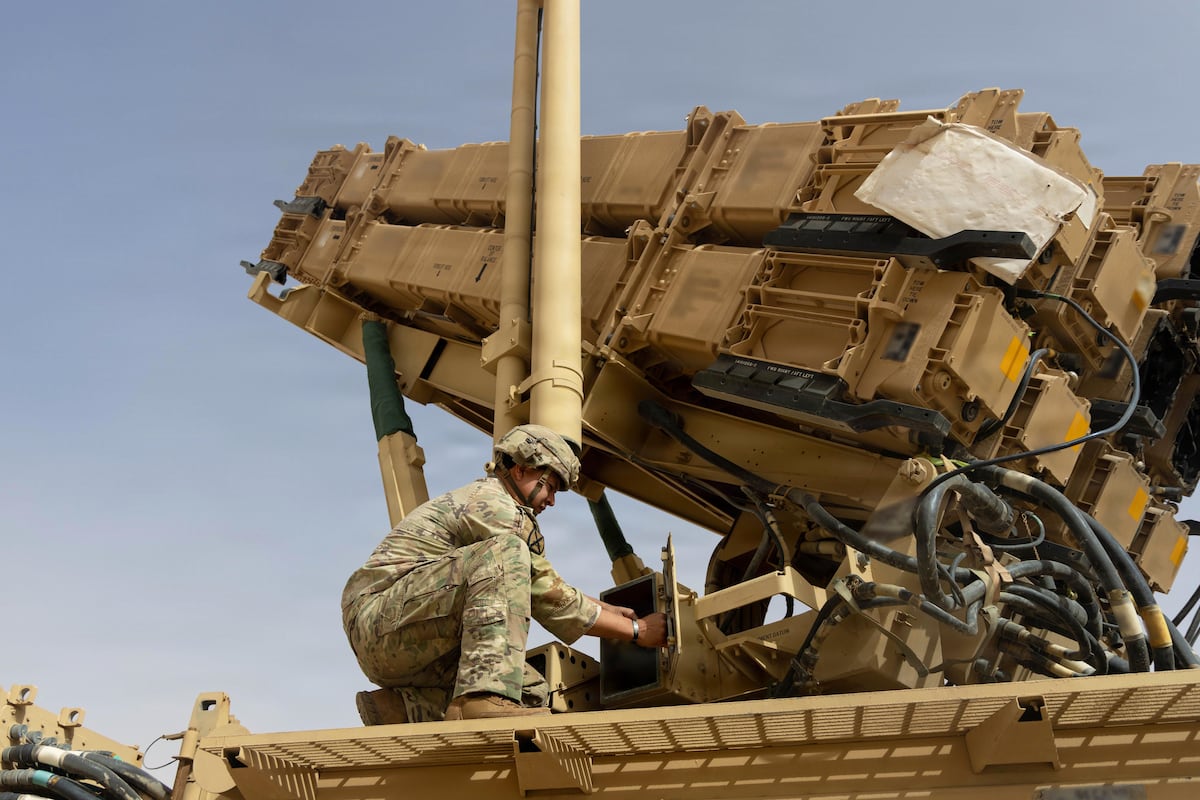
The U.S. military has incurred about $38 billion in costs from combat operations against Iran through Aug. 1, while the conflict’s main opportunity cost has been the missile-defense interceptors the Pentagon has expended defending U.S. forces and allies, according to a new Congressional Budget Office analysis released today.
CBO estimates the conflict has consumed between one-half and two-thirds of the U.S. inventory of certain missile-defense interceptors since June 2025, leaving the military with fewer weapons available for a future conflict. Rebuilding those stocks could take at least five years, even if production rates increase, the agency found.
The estimate includes Patriot, Terminal High Altitude Area Defense, or THAAD, Standard Missile-3 and Standard Missile-6 interceptors. CBO said the Pentagon does not disclose how many interceptors it has in its inventory. Instead, analysts compared reported expenditures with the total number of missiles DoD has purchased to estimate how much of the inventory has been used. The estimate applies to the combined inventory of those four interceptor systems.
Those interceptors accounted for $13.1 billion of the $21.7 billion CBO estimates the Pentagon would need to replace in munitions that were expended through Aug. 1. Land-attack cruise missiles accounted for another $7.3 billion, with $1.2 billion for other munitions.
A separate Defense Department inspector general report estimated the cost of the operation at $33.4 billion through June 29.
CBO said the campaign involved large expenditures of munitions during the first few weeks, particularly as U.S. forces defended against Iranian ballistic missile and drone attacks.
The interceptor depletion is particularly significant because the weapons are expensive and produced at relatively low rates. CBO estimates unit costs of roughly $4 million for a Patriot or SM-6, $12 million for a THAAD interceptor and $28 million for a sophisticated SM-3. The agency said the United States has already used significant quantities of these weapons defending Israel and then expended more during Operation Epic Fury.
That figure includes expended munitions, equipment losses, increased flying hours, other operations and higher fuel costs. It does not include costs borne by other federal agencies or military operating costs already included in the federal budget.
The highest costs beyond munitions were $10.4 billion for increased flying hours, $2.7 billion for fuel and $1.9 billion to replace equipment lost in battle. The equipment losses included a THAAD radar destroyed by Iran.
The initial phase of Operation Epic Fury involved about 250 tactical aircraft, including roughly 90 from two carrier strike groups, as well as an amphibious ready group. Those forces were supported by bombers, airlifters, refueling tankers, other Navy vessels and Army air-defense, aviation and artillery units.
CBO said the Pentagon did not respond to its requests for information, so analysts relied on government databases and public reports. The agency cautioned that its estimate is therefore subject to considerable uncertainty.
The administration had requested $87.6 billion in supplemental funding in June, including $67.1 billion for the DoD, with $42.3 billion identified as directly related to the conflict. That portion was about 10% higher than CBO’s estimate.
The cost of the conflict also continues to grow. CBO estimates each additional month of fighting would cost roughly $2 billion to $3 billion if the intensity remains relatively low, with costs potentially higher if operations intensify.
The depleted interceptor stocks could pose a particular problem in a conflict with China, CBO said, because Beijing maintains large numbers of ballistic and cruise missiles.
Natalie Oliverio is an independent journalist and Navy veteran who covers military and veterans’ issues. Drawing on her experience as a talent executive and mentor, she writes about the policies, people and programs shaping the military community.
根据国会预算办公室今天发布的一份新的分析报告,截至 8 月 1 日,美国军方在对伊朗的作战行动中已花费约 380 亿美元,而这场冲突的主要机会成本是五角大楼为保卫美国军队及其盟友而消耗的导弹防御拦截器。
美国国会预算办公室(CBO)估计,自2025年6月以来,这场冲突已经消耗了美国部分导弹防御拦截器库存的一半到三分之二,导致美军在未来冲突中可用的武器数量减少。该机构发现,即使生产速度加快,重建这些库存也至少需要五年时间。
该估算包括“爱国者”导弹系统、“萨德”末段高空区域防御系统、“标准-3”导弹和“标准-6”拦截导弹。国会预算办公室表示,五角大楼并未披露其库存拦截导弹的数量。因此,分析人员将已公布的支出与国防部采购的导弹总数进行比较,以估算已使用的库存量。该估算适用于这四种拦截系统的总库存。
据国会预算办公室估计,五角大楼需要替换的弹药总额为 217 亿美元,其中拦截导弹就占了 131 亿美元(截至 8 月 1 日)。陆攻巡航导弹占了另外 73 亿美元,其他弹药占了 12 亿美元。
国防部监察长办公室的另一份报告估计,截至 6 月 29 日,此次行动的成本为 334 亿美元。
美国国会预算办公室表示,这场战役在最初几周内消耗了大量弹药,尤其是在美军防御伊朗弹道导弹和无人机袭击期间。
拦截导弹的损耗尤为显著,因为这类武器造价昂贵且产量相对较低。国会预算办公室(CBO)估计,一枚“爱国者”或SM-6导弹的单价约为400万美元,“萨德”拦截导弹的单价约为1200万美元,而一枚先进的SM-3导弹的单价则高达2800万美元。该机构表示,美国此前已在保卫以色列的行动中使用了大量此类武器,并在“史诗狂怒行动”中进一步消耗了更多。
该数字包括消耗的弹药、设备损失、增加的飞行小时数、其他行动以及更高的燃油成本。但它不包括其他联邦机构承担的费用或已列入联邦预算的军事行动费用。
除了弹药之外,最大的开支包括:飞行时间增加费用104亿美元,燃料费用27亿美元,以及更换战斗中损失的装备费用19亿美元。损失的装备包括被伊朗摧毁的萨德雷达。
“史诗狂怒行动”初期阶段出动了约250架战术飞机,其中包括来自两个航母打击群的约90架飞机,以及一个两栖戒备群。这些部队得到了轰炸机、运输机、加油机、其他海军舰艇以及陆军防空、航空和炮兵部队的支援。
美国国会预算办公室(CBO)表示,五角大楼没有回应其信息请求,因此分析人员只能依赖政府数据库和公开报告。该机构同时提醒,其估算结果存在相当大的不确定性。
今年6月,政府申请追加拨款876亿美元,其中包括国防部671亿美元,另有423亿美元被认定与冲突直接相关。这一比例比国会预算办公室(CBO)的估计高出约10%。
冲突的成本也在持续增长。国会预算办公室估计,如果冲突强度保持在相对较低的水平,每增加一个月的战斗,成本将增加约20亿至30亿美元;如果战斗升级,成本可能会更高。
美国国会预算办公室表示,拦截导弹库存的减少可能会在与中国的冲突中造成特别严重的问题,因为北京拥有大量的弹道导弹和巡航导弹。
娜塔莉·奥利维里奥是一位独立记者,也是一位海军退伍军人,她主要报道军事和退伍军人相关议题。凭借其作为人才主管和导师的经验,她撰写有关塑造军事社区的政策、人物和项目的文章。