Top U.S. Air Force Officer In Europe Implementing New NATO Air Defense Plans美国空军驻欧洲最高指挥官正在实施新的北约防空计划
With alarming incursions into NATO territory by Russian drones and missiles, and the possibility that worse is on the horizon, NATO is adapting its air defense playbook.
新闻视频
Published Sep 15, 2026 4:23 PM EDT
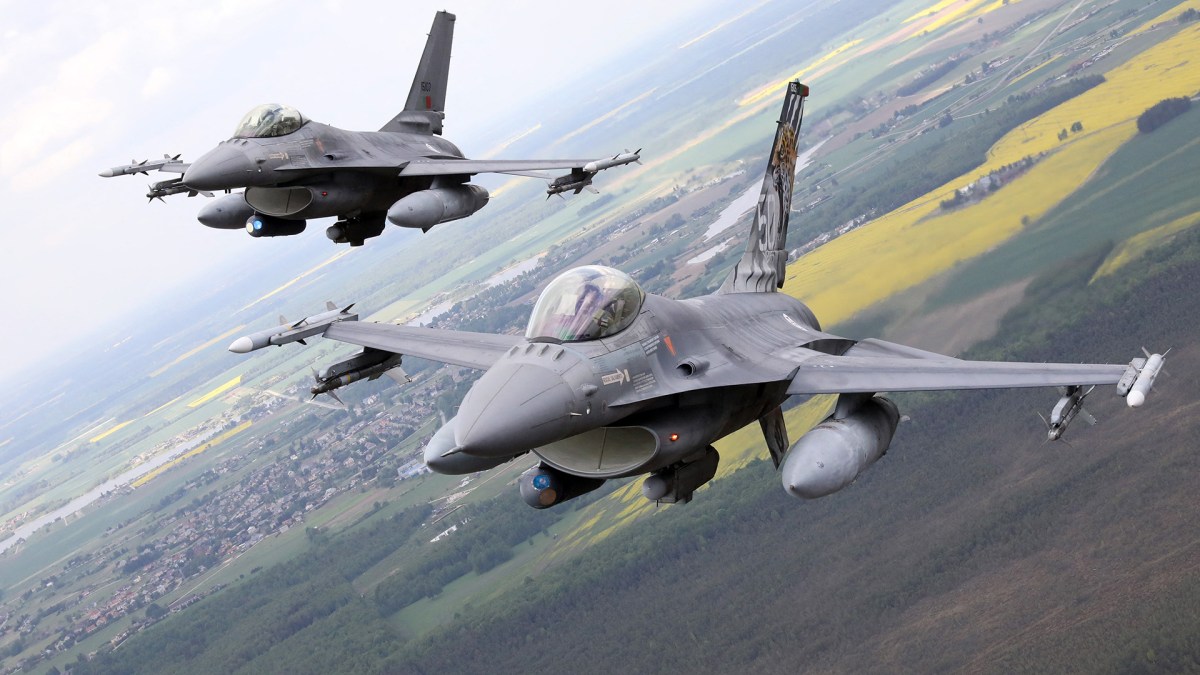
(Photo by PETRAS MALUKAS/AFP via Getty Images)
The top U.S. Air Force officer in Europe, who also serves as the NATO Allied Air Command leader, said he has been tasked with enacting new alliance plans to defend against cruise missiles and drones. He was responding to questions about a drone that NATO had to shoot down after it entered Lithuanian airspace overnight. European Commission President Ursula von der Leyen said Tuesday morning that the incident was “ part of a broader pattern of Russian aggression and provocation against Europe, testing our readiness and our resolve.”
The drone incursion into Lithuania took place against the backdrop of the ongoing Russian war on Ukraine and amid a spate of so-called ‘hybrid’ or ‘gray zone’ actions Moscow has been accused of carried out throughout Europe, including a recent attempted drone attack on the Leipzig-Halle airport in Germany.
We now know that Russia is responsible for the attempted explosive attack at Leipzig airport. Russia's repeated hybrid attacks on Germany and Europe are unacceptable. (1/4) pic.twitter.com/o3vBjgpeb1 — German Embassy Washington (@GermanyinUSA) September 1, 2026
We now know that Russia is responsible for the attempted explosive attack at Leipzig airport. Russia's repeated hybrid attacks on Germany and Europe are unacceptable. (1/4) pic.twitter.com/o3vBjgpeb1
“I don’t know what’s in the mind of Putin or his fielded forces about those one-way attack drones or even cruise missiles, like we’ve seen enter Polish airspace just a few months ago. In July, we had an AS-23 cruise missile enter Poland,” Lt. Gen. Jason T. Hinds, Commander, U.S. Air Forces in Europe/U.S. Air Forces Africa (USAFE), and Commander of the Allied Air Command said in response to a question about the drone shootdown over Lithuania. He was speaking during a media roundtable at the Air & Space Forces Air, Space and Cyber Conference that TWZ is attending.
This video grab taken from footage from TVN Poland on July 30, 2026, shows the Polish army securing a large crater from a Russian missile that crashed in Poland. (Photo by various sources / AFP) –
Hinds added that while he doesn’t “know the why behind” the drone incursion into Lithuania, he has been tasked by U.S. Air Force Gen. Alexus G. Grynkewich, who serves as NATO Supreme Allied Commander Europe (SACEUR), “to fully implement EVA [Enhanced Vigilance Activity] Eastern Sentry and now its Standing Defense Plan 12000, which gives the nations the capabilities that they need to defend their airspace against either one-way attack drones like the one that you described last night, or a cruise missile.”
EVA Eastern Sentry is a mission NATO stood up in September 2025 after “an unprecedented number of Russian drones and planes violated the airspace of several NATO Allies,” according to the alliance . “Allies are contributing additional capabilities and assets to NATO’s deterrence and defense – for instance, more fighter jets, helicopters, transport aircraft, air defense systems, surveillance aircraft and frigates – and improving the coordination of these assets through NATO.”
Standing Defense Plan 12000 is a new plan for integrated air and missile defense across the alliance. Grynkewich introduced the concept during testimony to Congress in March .
Hinds acknowledged that Russia could be testing the alliance.
“It’s not about the small UASs; that’s typically a national responsibility, and it could be probing,” the Air Force general noted. “Regardless of the intent behind it, what we want to be prepared for is the second that a one-way attack drone or a cruise missile is first and foremost detected – hopefully well before it enters NATO territory – we want to know it. We want to know where it’s coming from. We want to have the capability to sense it. We want to be able to have the C2 [command and control] systems to be able to decide what to do about it, and then have the right kit to be able to act.”
Despite an integrated air and missile defense system that includes Patriot surface-to-air missile batteries, NATO currently is primarily “using air power” against drones and cruise missiles “and that’s not putting us on the right side of the cost curve,'” Hinds stated. “But we want to get there.”
Using NATO jets to take down drones “is very effective, just like what you saw last night, and many other times,” but not necessarily efficient, Hinds explained.
“I think there’s been at least five other cases of allied nations providing air power to shoot down one-way attack drones,” he proffered. “I want to get to the point where we’re doing it efficiently, using lower-cost interceptors, hopefully ground-based, and in some cases air-based that are cheaper to use, so we’ll see what the intent may be. Intelligence organizations are going to provide us with that intelligence later on, but I just don’t know yet.”
You can see one of those NATO jet engagements with drones in the following video.
NATO airpower in action this morning, safeguarding Latvian airspace. pic.twitter.com/Ugzbx8aaZS — Marko Mihkelson 🇪🇪🇺🇦🇪🇺 (@markomihkelson) June 8, 2026
NATO airpower in action this morning, safeguarding Latvian airspace. pic.twitter.com/Ugzbx8aaZS
It should be noted that Europe is starting to follow the American lead in using less expensive laser-guided, air-to-air rockets as drone-killing weapons. TWZ was the first to report about the use of 70mm Advanced Precision Kill Weapon System (APKWS) rockets by the U.S. The U.K. Royal Air Force announced in May of this year that its Typhoons were now equipped with APWKS rockets while the French recently tested their own 68mm laser-guided rockets from Rafale fighters.
The Defence Procurement Agency has successfully completed integration testing of 68 mm laser-guided rockets on the Rafale fighter jet. The time between the contract being awarded for this new capability and initial operational capability being achieved was less than 8 months. pic.twitter.com/rR2Nij9EzY — French Aid to Europe 🇨🇵 🇪🇺 (@aidefranceukr) July 13, 2026
The Defence Procurement Agency has successfully completed integration testing of 68 mm laser-guided rockets on the Rafale fighter jet. The time between the contract being awarded for this new capability and initial operational capability being achieved was less than 8 months. pic.twitter.com/rR2Nij9EzY
As the threats have evolved, NATO has “transitioned away from air policing, and we’ve transitioned to air defense for some specific reasons,” the general pointed out. “One is readiness. Air policing is a readiness decrementing mission that the alliance has done for years. There’s also an assurance mission that we did for 32 nations. That’s transitioned to air defense now. Air defense means we have the right kit, multi-domain, to be able to be put in the right place based on indications, warnings, or real threats, like you saw last night, inside of the Baltic nations, to be able to respond decisively and quickly.”
“There’s also a deterrence value there,” Hinds added. “So if Russia does fly a one-way attack drone or a cruise missile, they know that we’re going to be in the right spot to be able to detect it and then defend against it.”
“These are limited incursions, right? Small numbers. Here’s what I see: hybrid activities may, in fact, only be one of the few levers that Putin has available to him, because he sees that he does not have an advantage in geography, domain, or readiness,” Hinds suggested.
“Think about that,” he urged. “So what are we seeing? We’re not seeing a massing of forces across the opposite side of Finland, a new NATO nation. We’re not seeing a massing of forces whatsoever in any domain opposite of Poland, Latvia, Lithuania, or Estonia. You’re seeing a significant number of one-way attack drones in the Black Sea targeting Ukraine. Some of them are entering Romania. What you’re not seeing is a direct confrontation in geography. We’re not seeing direct competition in domains. And I think Putin knows that we are ready. I know he knows that we’re a defensive alliance. I know he knows that we have an advantage in every domain against them, and I think that’s likely why you’re seeing things like what you’re seeing with hybrid activity.”
Russian President Vladimir Putin. (Photo by Contributor/Getty Images) Contributor#8523328
Though below the level of armed conflict, these Russian activities raise the potential for something worse, Hinds posited.
“The risk about hybrid activity, from my perspective, is it could lead to escalation, and that’s where I hope that we get back towards deterrence again, and that the nations they’re going to decide to do what they want to do when it comes to these hybrid activities,” the general said. “Some of them are law enforcement. Some of them are military responses, and that’s up to the nations to decide how they’re going to deal with that. Not me.”
“But what I owe General Grynkewich is to ensure that we are demonstrating our deterrence each and every day, and we’re doing that effectively across all domains,” Hinds added. “And to ensure that Putin knows that if he tries something against the alliance, that we will be there, and we’re ready to win decisively if challenged.”
Contact the author: howard@twz.com
Comments couldn’t be loaded. Please refresh the page.
发布于美国东部时间2026年9月15日下午4:23
(图片来源:PETRAS MALUKAS/AFP via Getty Images)
美国驻欧洲最高空军指挥官,同时也是北约盟军空军司令,表示他已受命制定新的联盟计划,以防御巡航导弹和无人机。他是在回应有关一架无人机夜间闯入立陶宛领空后被北约击落的问题时做出上述表态的。欧盟委员会主席乌尔苏拉·冯德莱恩周二上午表示,该事件“是俄罗斯针对欧洲更广泛的侵略和挑衅行为的一部分,旨在考验我们的战备和决心”。
无人机入侵立陶宛的事件发生在俄罗斯对乌克兰持续作战的背景下,以及莫斯科被指控在整个欧洲实施一系列所谓的“混合”或“灰色地带”行动之际,其中包括最近企图对德国莱比锡-哈勒机场发动无人机袭击。
我们现在知道,俄罗斯应对莱比锡机场的未遂爆炸袭击负责。俄罗斯屡次对德国和欧洲发动混合袭击是不可接受的。(1/4) pic.twitter.com/o3vBjgpeb1 — 德国驻华盛顿大使馆 (@GermanyinUSA) 2026年9月1日
我们现在知道,俄罗斯应对莱比锡机场的未遂爆炸袭击负责。俄罗斯屡次对德国和欧洲发动混合袭击是不可接受的。(1/4) pic.twitter.com/o3vBjgpeb1
“我不知道普京或他部署的部队对那些单向攻击无人机,甚至是巡航导弹——就像我们几个月前看到的那样——究竟是怎么想的。7月份,一枚AS-23巡航导弹就进入了波兰领空。”美国驻欧洲空军/驻非洲空军司令兼盟军空军司令杰森·T·欣兹中将就立陶宛上空无人机被击落一事回答道。他是在TWZ正在参加的空军与太空部队空天网络会议上的媒体圆桌会议上发表上述言论的。
这段视频截图来自波兰电视台(TVN Poland)2026年7月30日的画面,显示波兰军队正在保护一枚坠落在波兰境内的俄罗斯导弹留下的巨大弹坑。(图片来源:多家媒体/法新社)
欣兹补充说,虽然他“不知道无人机入侵立陶宛背后的原因”,但他已受美国空军上将、北约欧洲盟军最高司令亚历克西斯·G·格林克维奇的指示,“全面实施‘东部哨兵’增强警戒行动’及其现行的‘常设防御计划12000’,该计划赋予各国防御其领空免受单向攻击无人机(如您昨晚描述的那种)或巡航导弹攻击的能力。”
据北约称,在“数量空前的俄罗斯无人机和飞机侵犯多个北约盟国领空”之后,北约于2025年9月启动了“东部哨兵”行动。“盟国正在向北约的威慑和防御体系提供更多能力和资源——例如,更多的战斗机、直升机、运输机、防空系统、侦察机和护卫舰——并通过北约加强对这些资源的协调。”
“常设防御计划12000”是一项旨在加强联盟内部一体化防空和导弹防御的新计划。格林克维奇在3月份向国会作证时提出了这一概念。
欣兹承认,俄罗斯可能是在试探美俄联盟。
“这并非关乎小型无人机系统;那通常是国家责任,而且可能带有试探性质,”这位空军将领指出。“无论其背后的意图如何,我们希望做好准备的是,一旦单向攻击无人机或巡航导弹被探测到——最好是在它们进入北约领土之前——我们就要知道。我们想知道它们来自哪里。我们想要具备探测能力。我们想要拥有指挥控制系统来决定如何应对,并配备合适的装备来采取行动。”
欣兹表示,尽管北约拥有包括“爱国者”地对空导弹系统在内的综合防空反导系统,但目前北约主要依靠空中力量来对抗无人机和巡航导弹,“这让我们在成本方面处于不利地位”。“但我们希望能够做到这一点。”
欣兹解释说,使用北约战机击落无人机“非常有效,就像你昨晚看到的那样,以及很多其他时候一样”,但不一定高效。
“我认为至少还有五起盟国动用空中力量击落单向攻击无人机的案例,”他说道。“我希望我们能够更高效地完成这项工作,使用成本更低的拦截器,最好是地面拦截器,在某些情况下也可以使用成本更低的空中拦截器,所以我们还要观察对方的意图。情报机构稍后会向我们提供相关情报,但我现在还不清楚。”
您可以在以下视频中看到北约战机与无人机的一次交战。
今天上午,北约空军出动,保卫拉脱维亚领空。 pic.twitter.com/Ugzbx8aaZS — Marko Mihkelson 🇪🇪🇺🇦🇪🇺 (@markomihkelson) June 8, 2026
今天上午,北约空军出动,保卫拉脱维亚领空。pic.twitter.com/Ugzbx8aaZS
值得注意的是,欧洲正开始效仿美国,使用成本更低的激光制导空空火箭作为反无人机武器。TWZ率先报道了美国使用70毫米先进精确杀伤武器系统(APKWS)火箭的情况。英国皇家空军今年5月宣布,其“台风”战斗机已配备APKWS火箭;而法国最近也测试了其“阵风”战斗机发射的68毫米激光制导火箭。
英国国防采购局已成功完成“阵风”战斗机68毫米激光制导火箭的集成测试。从授予这项新技术的合同到实现初始作战能力,耗时不到8个月。 pic.twitter.com/rR2Nij9EzY — 法国援助欧洲 🇨🇵 🇪🇺 (@aidefranceukr) 2026年7月13日
国防采购局已成功完成“阵风”战斗机68毫米激光制导火箭的集成测试。从授予这项新技术的合同到实现初始作战能力,历时不到8个月。 pic.twitter.com/rR2Nij9EzY
随着威胁的演变,北约“出于一些特定原因,已经从空中警戒任务转向防空任务”。这位将军指出:“其中之一是战备。空中警戒任务会降低联盟的战备水平,而北约多年来一直在执行这项任务。此外,我们还为32个成员国执行过一项安全保障任务。现在,这项任务已经转变为防空任务。防空意味着我们拥有合适的装备,能够跨领域作战,根据各种迹象、预警或实际威胁(就像昨晚在波罗的海国家发生的事件一样)部署到正确的位置,从而能够迅速果断地做出反应。”
“这其中也蕴含着威慑作用,”欣兹补充道。“所以,如果俄罗斯真的发射单程攻击无人机或巡航导弹,他们知道我们会在合适的位置探测到它,然后进行防御。”
“这些都是有限的入侵行动,对吧?规模很小。我的看法是:混合行动实际上可能只是普京为数不多的可用手段之一,因为他意识到自己在地理位置、领域或战备方面都不占优势,”欣兹表示。
“好好想想,”他敦促道,“所以我们看到了什么?我们没有看到在芬兰——一个新加入北约的国家——对面集结兵力。我们也没有看到在波兰、拉脱维亚、立陶宛或爱沙尼亚对面的任何区域集结兵力。你们看到的是大量单向攻击无人机在黑海瞄准乌克兰。其中一些无人机正在进入罗马尼亚。你们看到的不是地理上的直接对抗,也不是各个领域的直接竞争。我认为普京知道我们已经做好准备。我知道他知道我们是一个防御性联盟。我知道他知道我们在各个领域都对他们有优势,我认为这很可能就是你们看到混合行动的原因。”
俄罗斯总统弗拉基米尔·普京。(图片来源:投稿人/Getty Images)投稿人编号:8523328
欣兹认为,虽然这些俄罗斯活动尚未达到武装冲突的程度,但却增加了发生更糟糕情况的可能性。
“在我看来,混合行动的风险在于它可能导致局势升级,所以我希望我们能重新回归威慑,让各国自行决定如何处理这些混合行动,”这位将军说道。“有些是执法行动,有些是军事行动,如何处理这些行动应由各国自行决定,我无权干涉。”
“但我对格林克维奇将军的责任是确保我们每天都在展现我们的威慑力,而且我们正在所有领域有效地做到这一点,”欣兹补充道。“还要让普京明白,如果他胆敢对联盟采取任何行动,我们必将挺身而出,并且一旦受到挑战,我们已做好充分准备,必将取得决定性的胜利。”
联系作者:howard@twz.com
评论加载失败,请刷新页面。