US seeks to ramp up munitions production for Ukraine, Israel美国寻求提高对乌克兰和以色列的弹药产量
Secretary Austin outlined U.S. production constraints and made the case to Congress for more funds to ramp up munitions production for Ukraine and Israel.
WASHINGTON ― President Joe Biden’s $106 billion defense spending supplemental request to Congress aims in part to bolster munitions production capacity to continue rushing arms to Ukraine and Israel.
The Senate Appropriations Committee questioned Defense Secretary Lloyd Austin at a Tuesday hearing on the status of U.S. stockpiles and the workforce, supply chain and infrastructure constraints of weapons manufacturers racing to replenish them.
The Senate is formulating its supplemental spending bill encompassing both Ukraine and Israel aid, while the House is set to vote on a stand-alone Israel aid bill later this week.
“There are some limitations in terms of how quickly they can do certain things,” said Austin. “There will continue to be workforce challenges. And when you expand capacity, there’s this issue of the time it takes to build the capacity and make sure the lines are running smoothly.”
Austin noted some defense contractors have required workers to take on additional shifts to keep up with production rates.
“What they’ve done in a lot of cases to meet urgent needs is double and triple shifts so that they can in some cases crank out munitions and weapons at a much greater speed,” he said.
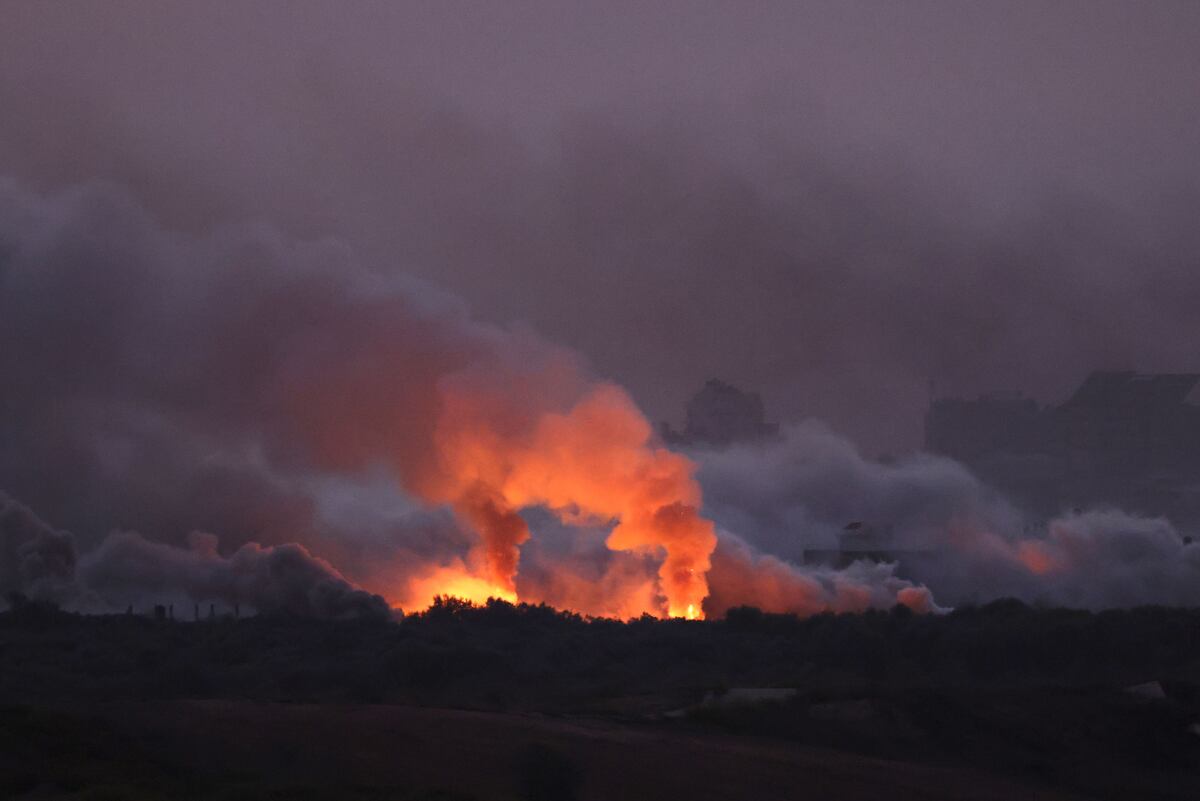
Austin’s comments come as Israel rapidly burns through munitions as it continues to bomb the 2.2 million Palestinians in the Gaza Strip, killing more than 8,500 people and wounding more than 21,500, per the Gaza Health Ministry. Shortly before the hearing, Israel bombed the Jabalia refugee camp , which the Health Ministry lambasted as a “horrific massacre” that killed at least 50 people and wounded hundreds.
It is the latest of many civilian targets Israel has bombed in its campaign to destroy Hamas. Israel launched its campaign following Hamas’ massacre of approximately 1,400 Israelis and abduction of 240 hostages, per the Israel Defense Forces.
On top of that, the Biden administration has less than $5.5 billion remaining to continue transferring weapons to Ukraine as the nation’s slow-moving counteroffensive fails to retake significant tracts of territory.
Biden’s requested defense supplemental includes $44.4 billion to continue arming Ukraine and $14.3 billion in military aid for Israel. That request includes more Iron Dome interceptors to stop Hamas rockets and additional munitions for Israel to continue its bombardment of Gaza.
A large portion of the requested funding would go toward backfilling U.S. stockpiles of weapons the Biden administration has so far sent Ukraine and Israel. There’s also $3 billion requested to expand industrial base capacity.
“We simply do not have the workforce, supply chain or infrastructure necessary to meet the coming threats,” Sen. Deb Fischer, R-Neb., said at the hearing. “Building out this capacity is going to take time and resources, but we can start now by making targeted investments in our munitions production base.”
Biden’s supplemental request includes $30 billion to replenish weapons sent to Ukraine as well as funding to backfill stocks given to Israel.
“As a general rule, we’re going to do everything that we can to meet the demands that we see in both Ukraine and Israel,” Austin said.
The U.S. and NATO continue to face a shortage of 155mm ammunition and are providing those shells both to Ukraine and Israel.
“I’m hearing from industry that they are currently lacking the investment to help quickly accelerate rocket motor production for the [Iron Dome] interceptor missiles to meet the increased demand,” Sen. John Boozman, R-Ark., said at the hearing.
Boozman asked Austin if the supplemental bill should include infrastructure investment to help expand rocket motor production for Iron Dome interceptor missiles.
Austin declined to answer at the hearing and noted he would respond to Boozman in writing, citing the fact that he used to work at RTX, formerly Raytheon Technologies, which coproduces the Iron Dome interceptor with Israel’s Rafael Advanced Defense Systems.
The latest Israel-Hamas war is by far the most destructive, with Israel noting approximately a week after it began its campaign against Gaza that it had dropped more than 6,000 bombs in six days — more than the U.S.-led coalition dropped during any month of its counter-Islamic State campaign.
Sen. Chris Van Hollen, D-Md., said at the hearing Israel has stopped disclosing the number of munitions it has used. He stressed the need to distinguish between Hamas and Palestinian civilians and for Israel to comply with the laws of war.
“Some members of Prime Minister [Benjamin] Netanyahu’s coalition have indicated that all Palestinians in Gaza are responsible for the horrors visited upon Israel,” he said. “And Israel has imposed, as you know, a full siege on the people of Gaza, cutting off most water, food, medicine, electricity and fuel shipments.”
Bryant Harris is the Congress reporter for Defense News. He has covered U.S. foreign policy, national security, international affairs and politics in Washington since 2014. He has also written for Foreign Policy, Al-Monitor, Al Jazeera English and IPS News.
华盛顿——乔·拜登总统向国会提出的1060亿美元国防开支补充请求,部分目的是为了提高弹药生产能力,以便继续向乌克兰和以色列快速输送武器。
周二,参议院拨款委员会在听证会上质询了国防部长劳埃德·奥斯汀,询问美国武器库存状况以及武器制造商为补充库存而面临的劳动力、供应链和基础设施限制。
参议院正在制定一项补充支出法案,其中包括对乌克兰和以色列的援助,而众议院将于本周晚些时候对一项单独的以色列援助法案进行投票。
奥斯汀说:“他们在处理某些事情的速度上存在一些局限性。劳动力短缺的问题将持续存在。而且,当扩大产能时,还需要时间来建设产能并确保生产线顺畅运行。”
奥斯汀指出,一些国防承包商要求工人加班以跟上生产速度。
他说:“为了满足紧急需求,他们在很多情况下都实行了双班甚至三班倒,以便在某些情况下能够以更快的速度生产弹药和武器。”
奥斯汀发表上述言论之际,以色列正迅速消耗弹药,持续轰炸加沙地带的220万巴勒斯坦人,据加沙卫生部统计,轰炸已造成超过8500人死亡,超过21500人受伤。就在听证会召开前不久,以色列轰炸了贾巴利亚难民营,加沙卫生部谴责这是一场“骇人听闻的大屠杀”,造成至少50人死亡,数百人受伤。
这是以色列为摧毁哈马斯而轰炸的众多平民目标中的最新一起。据以色列国防军称,此前哈马斯屠杀了约1400名以色列人并绑架了240名人质,以色列随后发起了这场军事行动。
此外,拜登政府剩余的资金不足 55 亿美元,无法继续向乌克兰输送武器,而乌克兰缓慢的反攻行动未能收复大片领土。
拜登提出的国防补充拨款请求包括444亿美元用于继续武装乌克兰,以及143亿美元用于向以色列提供军事援助。该请求还包括增购“铁穹”拦截系统以拦截哈马斯火箭弹,以及向以色列提供更多弹药以继续轰炸加沙地带。
申请的资金中很大一部分将用于补充拜登政府迄今为止向乌克兰和以色列输送的美国武器库存。此外,还有30亿美元用于扩大工业基础产能。
内布拉斯加州共和党参议员黛布·费舍尔在听证会上表示:“我们根本没有足够的劳动力、供应链或基础设施来应对即将到来的威胁。建立这种能力需要时间和资源,但我们可以从现在开始,对我们的军火生产基地进行有针对性的投资。”
拜登的补充拨款请求包括 300 亿美元,用于补充运往乌克兰的武器,以及用于补充运往以色列的武器库存。
奥斯汀说:“总的来说,我们将尽一切努力满足我们在乌克兰和以色列看到的诉求。”
美国和北约仍然面临 155 毫米炮弹短缺的问题,并正在向乌克兰和以色列提供这些炮弹。
“我从业界了解到,他们目前缺乏投资来帮助快速加快[铁穹]拦截导弹火箭发动机的生产,以满足不断增长的需求,”阿肯色州共和党参议员约翰·布兹曼在听证会上说。
布兹曼问奥斯汀,补充法案是否应该包括基础设施投资,以帮助扩大“铁穹”拦截导弹的火箭发动机生产。
奥斯汀拒绝在听证会上作答,并表示他将以书面形式回复布兹曼,理由是他曾在RTX(前身为雷神技术公司)工作,该公司与以色列的拉斐尔先进防御系统公司共同生产“铁穹”拦截器。
以色列与哈马斯之间的最新战争是迄今为止最具破坏性的战争。以色列在对加沙发动战争大约一周后指出,它在六天内投下了 6000 多枚炸弹——比美国领导的联军在打击伊斯兰国的战争中任何一个月投下的炸弹都多。
马里兰州民主党参议员克里斯·范霍伦在听证会上表示,以色列已停止披露其使用的弹药数量。他强调,必须区分哈马斯成员和巴勒斯坦平民,以色列也必须遵守战争法。
他说:“内塔尼亚胡总理执政联盟中的一些成员表示,加沙的所有巴勒斯坦人都应对以色列遭受的暴行负责。正如你们所知,以色列对加沙人民实施了全面封锁,切断了大部分水、食物、药品、电力和燃料的供应。”
布莱恩特·哈里斯是《防务新闻》的国会记者。自2014年以来,他一直在华盛顿报道美国外交政策、国家安全、国际事务和政治。他还曾为《外交政策》、《Al-Monitor》、《半岛电视台英语频道》和IPS新闻撰稿。