What are the takeaways from Ukraine’s fight in the Black Sea?从乌克兰在黑海的斗争中我们能吸取哪些教训?
Opinion: Today’s struggles in the Black Sea may herald a changing face of naval warfare, in which large warships are increasingly vulnerable.
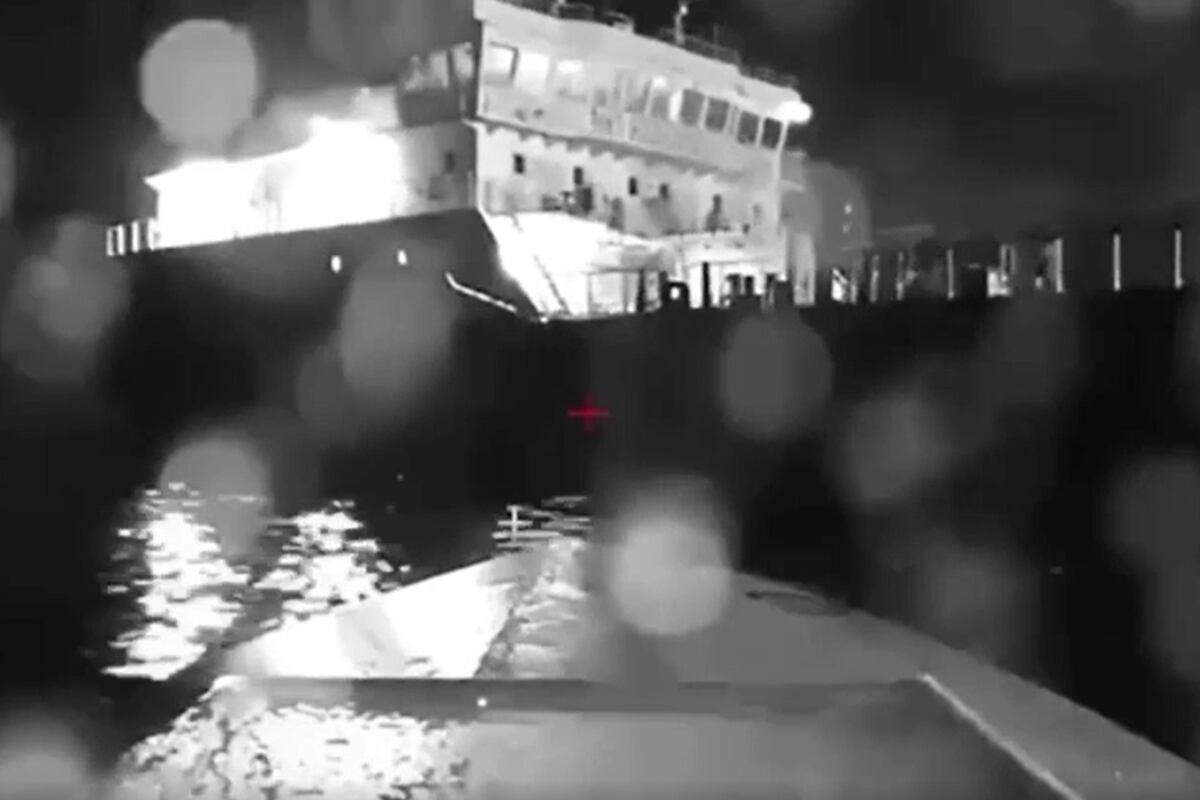
Ukraine has shown surprising naval capability in the Black Sea , helping to protect its shores and shipping while keeping its predator’s fleet at bay. This achievement is remarkable because Ukraine is virtually bereft of warships . It has succeeded through the skillful use of emerging technologies , such as explosive-laden uncrewed surface vessels , and of older ones, such as land-based missiles and naval mines.
The current war is the latest in a long history of battles in the Black Sea, a crossroads whose fertile shores have induced numerous nations to seek to dominate the sea and its approaches. Thucydides described Greek fleets fighting there over 2,400 years ago; more recently, Turkish and Russian fleets fought intermittently for centuries.
Some of these battles have taken place in the same areas as today’s fighting. In the Crimean War of the 1850s, British and French warships contributed to the siege to Russia’s naval base at Sevastopol. Others have focused on the Turkish straits, the Black Sea’s only exit. During World War I , Britain, France and Russia tried and failed to seize those straits.
In World War II, the Soviet Union’s Black Sea Fleet fought the naval forces of Nazi Germany and its allies near Ukraine’s shores. During the Cold War, the Soviets saw their fleet as vital to protecting against NATO warships that could attack its southern flank.
A key constraint on naval power in the Black Sea has been the limited ability of non-littoral nations to get their warships through the Turkish straits. Since 1936, the Montreux Convention has restricted the number and size of warships that they can operate within the Black Sea, as well as how long they can stay there. The convention also gives Turkey the right to close its straits to warships in time of war or when it perceives a threat. Turkey has exercised that right in the current war , preventing Russia from reinforcing its Black Sea Fleet, while also limiting access to the sea by other NATO nations.
On the other hand, Russia and other littoral states are subject to no such constraints when they build up fleets within the Black Sea. When the Soviet Union collapsed in 1991, its Black Sea Fleet had 300 or more warships and submarines, vastly more than any other littoral country. Although the fleet was divided among Russia, Ukraine and Georgia, Russia is now the sole heir. It destroyed the Georgian fleet during its 2008 invasion.
During its 2014 seizure of Crimea, Russia used a millennium-old tactic — scuttling old vessels in a key channel — to trap Ukrainian ships in port, then seize them from the landward side. The result has been that the Russian Navy has dominated the Black Sea for the last decade.
Pro-Russian protesters remove a gate from the Ukrainian Navy headquarters as Russian troops stand guard in the Crimean city of Sevastopol on March 19, 2014. (Vasiliy Batanov/AFP via Getty Images)
In its full-scale invasion of Ukraine , Russia has sought to use naval power in the Black Sea as an integral element. It has launched missiles against land targets, menaced Ukraine’s coastline with a potential amphibious invasion and sought to throttle Ukraine’s vital maritime trade. This strategy has had limited effectiveness because of Ukraine’s skillful use of uncrewed surface vessels, missiles and naval mines.
Ukraine has repeatedly employed explosive-laden USVs to target ships, even in Russian ports hundreds of miles from Ukrainian-controlled waters. Ukraine also likely used them to damage the Kerch Strait Bridge, a vital logistical link between southern Russia and occupied Crimea. Ukraine is now developing an explosive-laden uncrewed undersea vehicle, which can achieve greater stealth than a USV.
Last year, Ukraine’s anti-ship missiles sank Russia’s Black Sea flagship , the Moskva. Recently, Ukraine’s land-attack missiles damaged Russia’s fleet headquarters in Sevastopol and an advanced S-400 air defense system . Some Russian warships are fleeing occupied Crimea for ports further east, though even those may remain within range of USV attacks.
Throughout the conflict, naval mines have hindered Russia’s ability to launch an amphibious assault against the key port of Odesa and other coastal areas. Ukraine’s ability to nullify Russian sea power has facilitated grain and other commercial shipping along the western edge of the Black Sea.
Ukraine has shown that a combination of USVs , land-based missiles and naval mines can deny a superior navy the ability to exercise sea control, at least in a relatively confined body of water. Ukraine has achieved this, in part, by pioneering the use of low-profile, explosive-laden USVs (these have ancient antecedents, such as fireships ).
Other technologies are not new: Anti-ship missiles have been used for over 50 years, and even nonstate actors like Lebanon’s Hezbollah and Yemen’s Houthis have employed them (with Iranian assistance). Mines have stymied superior navies since the Crimean War of the 1850s. Ukraine’s contribution is to demonstrate how the deft use of these technologies in combination can offset a stronger navy’s advantages.
The lessons from today’s fighting in the Black Sea may not be universal. In more open waters, some aspects of Ukraine’s innovative approaches may be negated. Open-ocean environments could enable warships to operate at safer distances from land-based missiles, small uncrewed surface vessels’ bases and waters conducive to mining. However, throughout history, most naval battles have been fought in relatively confined coastal waters.
Moreover, uncrewed surface vessel and uncrewed underwater vessel technologies will continue to mature and be employed for an ever-wider range of missions. Today’s struggles in the Black Sea may herald a changing face of naval warfare, in which large warships are increasingly vulnerable even to nations that lack substantial navies.
Scott Savitz is a senior engineer at the think tank Rand, where former U.S. Ambassador to Kazakhstan and Georgia William Courtney is an adjunct senior fellow.
乌克兰在黑海展现了令人惊讶的海军实力,在保护其海岸线和航运的同时,有效遏制了敌对舰队的进攻。考虑到乌克兰几乎没有军舰,这一成就尤为引人注目。乌克兰的成功得益于其对新兴技术(例如装载炸药的无人水面舰艇)和传统技术(例如陆基导弹和水雷)的巧妙运用。
当前的战争是黑海漫长海战史上最新的一场。黑海是世界各国争夺的十字路口,其富饶的海岸线吸引了众多国家前来争夺对这片海域及其周边地区的控制权。早在2400多年前,修昔底德就曾记载过希腊舰队在此交战;而近代,土耳其和俄罗斯的舰队也曾在此断断续续地交战了数个世纪。
有些战役的发生地与今天的战区重合。在19世纪50年代的克里米亚战争中,英国和法国的军舰参与了对俄罗斯塞瓦斯托波尔海军基地的围攻。另一些战役则聚焦于土耳其海峡——黑海唯一的出口。第一次世界大战期间,英国、法国和俄罗斯都曾试图夺取该海峡,但最终失败。
二战期间,苏联黑海舰队在乌克兰海岸附近与纳粹德国及其盟国的海军交战。冷战时期,苏联将这支舰队视为抵御北约军舰攻击其南部侧翼的关键力量。
黑海海域海军力量的一个关键制约因素是,非沿岸国家难以使其军舰通过土耳其海峡。自1936年以来,《蒙特勒公约》限制了各国在黑海活动的军舰数量和规模,以及停留时间。该公约还赋予土耳其在战时或感知到威胁时关闭海峡的权利。土耳其在当前的战争中行使了这项权利,阻止了俄罗斯加强其黑海舰队,同时也限制了其他北约国家进入黑海的通道。
另一方面,俄罗斯和其他沿岸国家在黑海组建舰队时不受此类限制。1991年苏联解体时,其黑海舰队拥有300多艘军舰和潜艇,远远超过其他任何沿岸国家。尽管这支舰队曾被俄罗斯、乌克兰和格鲁吉亚瓜分,但如今俄罗斯是唯一的继承者。在2008年的入侵中,俄罗斯摧毁了格鲁吉亚舰队。
2014年吞并克里米亚期间,俄罗斯采用了一种沿用千年的策略——凿沉关键航道中的旧船——将乌克兰船只困在港口,然后从陆路将其扣押。结果是,俄罗斯海军在过去十年中一直主导着黑海。
2014年3月19日,在克里米亚城市塞瓦斯托波尔,亲俄示威者拆除了乌克兰海军总部的大门,俄罗斯军队在一旁站岗。(图片来源:Vasiliy Batanov/AFP via Getty Images)
俄罗斯全面入侵乌克兰,试图将黑海海军力量作为其战略的重要组成部分。它向陆地目标发射导弹,以潜在的两栖入侵威胁乌克兰海岸线,并试图切断乌克兰至关重要的海上贸易。然而,由于乌克兰巧妙地运用无人水面舰艇、导弹和水雷,这一战略收效甚微。
乌克兰曾多次使用装载炸药的无人水面艇(USV)袭击船只,甚至包括距离乌克兰控制水域数百英里的俄罗斯港口。乌克兰很可能也曾使用无人水面艇破坏刻赤海峡大桥,该桥是连接俄罗斯南部和被占领的克里米亚的重要后勤通道。乌克兰目前正在研发一种装载炸药的无人水下航行器,其隐蔽性优于现有的无人水面艇。
去年,乌克兰的反舰导弹击沉了俄罗斯黑海旗舰“莫斯科”号。最近,乌克兰的陆攻导弹又重创了俄罗斯位于塞瓦斯托波尔的舰队司令部和一套先进的S-400防空系统。一些俄罗斯军舰正从被占领的克里米亚撤往更东边的港口,但即便如此,它们也可能仍在无人水面艇的攻击范围内。
在整个冲突期间,水雷阻碍了俄罗斯对重要港口敖德萨和其他沿海地区发动两栖攻击的能力。乌克兰有效遏制了俄罗斯的海上力量,从而促进了黑海西岸的粮食和其他商业运输。
乌克兰已经证明,无人水面艇、陆基导弹和水雷的组合可以剥夺优势海军行使制海权的能力,至少在相对封闭的水域内是如此。乌克兰之所以能够做到这一点,部分原因在于其率先使用了低矮的、装载炸药的无人水面艇(这类水面艇有着古老的前身,例如火船)。
其他技术并非新生事物:反舰导弹已使用超过50年,甚至黎巴嫩真主党和也门胡塞武装等非国家行为体也曾使用过(在伊朗的协助下)。自19世纪50年代克里米亚战争以来,水雷就一直令实力强大的海军束手无策。乌克兰的贡献在于展示如何巧妙地将这些技术结合起来,从而抵消实力更强海军的优势。
从今天黑海的战斗中汲取的经验教训或许并不具有普遍性。在更开阔的水域,乌克兰的一些创新策略可能并不适用。远洋环境或许能让军舰在远离陆基导弹、小型无人水面舰艇基地以及易布雷水域的安全距离外作战。然而,纵观历史,大多数海战都发生在相对封闭的近岸水域。
此外,无人水面舰艇和无人水下舰艇技术将不断成熟,并应用于日益广泛的任务。如今黑海的冲突或许预示着海战格局的转变,届时,即使是那些海军实力不强的国家,其大型军舰也越来越容易受到攻击。
斯科特·萨维茨是兰德智库的高级工程师,前美国驻哈萨克斯坦和格鲁吉亚大使威廉·考特尼是兰德智库的兼职高级研究员。