Businesses reposition amid growing demand for solid rocket motors随着对固体火箭发动机的需求不断增长,企业正在调整战略布局。
Companies in the rocket propulsion industry are making their own moves, reshuffling the market with potentially wide-ranging effects.
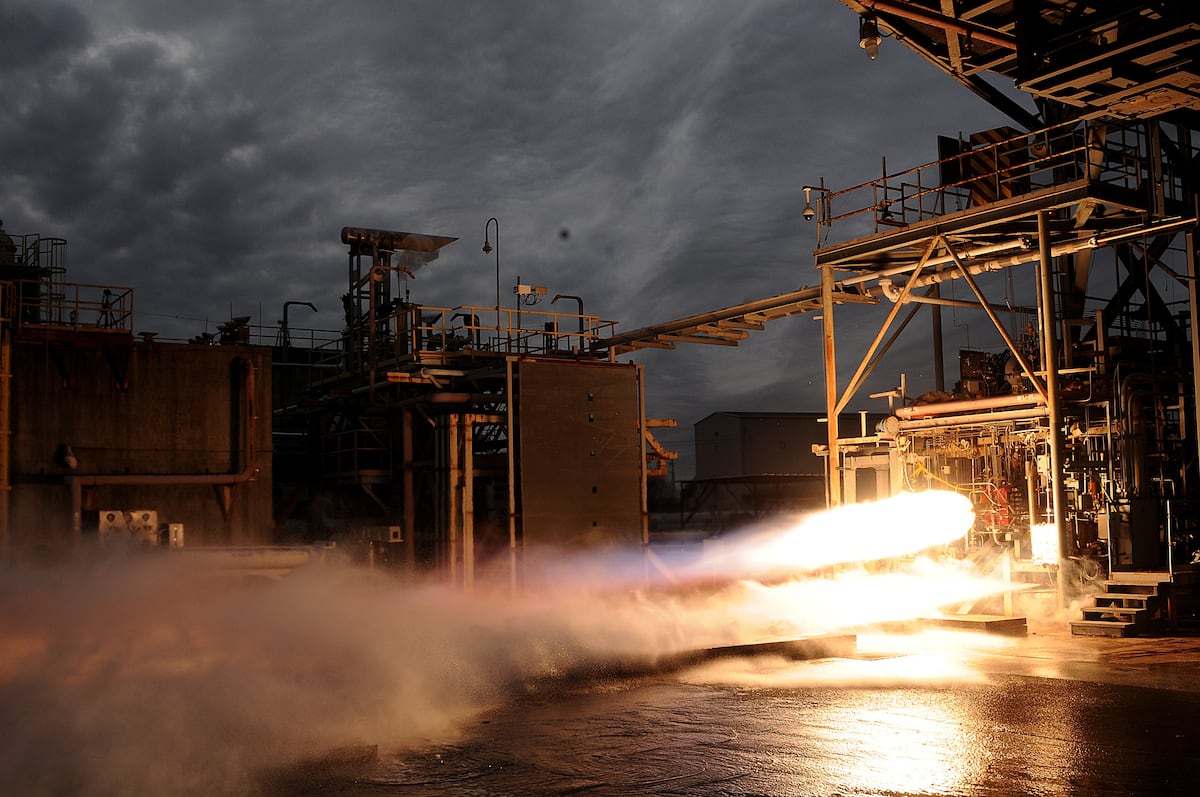
WASHINGTON — After L3Harris Technologies acquired one of the two U.S.-based solid rocket motor providers in July, the new division’s chief embarked on a barnstorming tour of the sector.
For nearly two months, Ross Niebergall bounced from one newly acquired Aerojet Rocketdyne facility to another, he told Defense News, spending just two days in his home office as he reviewed propulsion production processes for critical weapons such as the Javelin, Stinger and Guided Multiple Launch Rocket System. One of his goals: finding ways to open up the military’s constricted pipeline for rocket motors.
With the $4.7 billion purchase , L3Harris made itself a key player in the lucrative world of missiles, munitions, hypersonic technologies and other weapons. It’s a rapidly expanding sector — one that will most certainly keep growing amid global turmoil, from Israel to Ukraine to the Pacific region, said analyst Roman Schweizer with the Cowen Washington Research Group.
Experts say the increasing demand but limited supply for the roughly $60 billion global rocket and missile propulsion market could continue to drive further acquisitions, partnerships and expansions. And some researchers believe that market could be worth $85 billion to $93 billion by the end of this decade.
Such deals could lead to new investments in the field, potentially expanding the pipeline for critical parts and systems and boosting supply.
Indeed, other companies in the rocket propulsion industry are making their own moves, reshuffling the market with potentially wide-ranging effects.
Smaller defense technology firm Anduril Industries , for instance, in June acquired solid rocket manufacturer Adranos, which specializes in a high-performance solid rocket fuel it calls ALITEC. The deal gives Anduril its first foothold in the missile market.
Additionally, X-Bow Systems, a small aerospace firm in Albuquerque, New Mexico, founded in 2016, surprised competitors in the solid rocket motor industry when it received in September a $64 million contract from the Pentagon for Army and Navy hypersonic boost propulsion systems. X-Bow, pronounced “crossbow,” became the first new company in decades to supply solid rocket motors to the Defense Department.
And Lockheed Martin — whose bid for Aerojet Rocketdyne was stymied by federal regulators last year — is in late-stage negotiations to partner with an unidentified rocket propulsion supplier, though details on that partnership remain scarce.
Over the last decade, the Pentagon’s annual budget requests for missiles and munitions procurement as well as related research and development have more than tripled, from $9 billion in fiscal 2015 to $30.6 billion in fiscal 2024. And it’s unlikely lawmakers will stop pressuring the Pentagon to catch up with China and Russia on developing hypersonic weapons.
The U.S. Army awarded a joint venture of Lockheed Martin and Raytheon a $1.3 billion contract to produce Javelin antitank weapons. (Sgt. Marcos A. Alvarado/U.S. Marine Corps)
This could mean continued jockeying as companies seek to position themselves.
“There’s a stronger demand signal than there is supply, and some people see an opportunity to build into these markets,” said Byron Callan, a defense industry analyst and managing partner at the research firm Capital Alpha Partners. “You see a need, you’re going to fulfill it.”
L3Harris makes its play
In a September interview at L3Harris’ Washington office, Niebergall said the company in early 2022 reviewed which defense markets it had a hand in — and where it was essentially on the sidelines.
One area that jumped out was the missiles and rocket industry, a multibillion-dollar market “that we weren’t effectively participating in a significant way,” he said.
When Lockheed Martin backed off its attempted acquisition of Aerojet Rocketdyne following a Federal Trade Commission lawsuit, L3Harris saw an opening to make itself a major supplier in the growing rocket engine and propulsion business.
L3Harris envisioned Aerojet as mainly acting as a supplier on major programs, not a prime contractor. That strategy would allow L3Harris “to be on as many teams as possible” for missiles and rocket programs.
Now, L3Harris is trying to determine how to apply its expertise and resources to the Aerojet business. As Niebergall toured Aerojet facilities and as L3Harris combed through the workflow processes for flagship programs — including propulsion systems for the Guided Multiple Launch Rocket System, the Army Tactical Missile System, the Standard Missile series and the Patriot air defense system — the company found chokepoints a tier lower in the supply chain.
For example, Niebergall said, with some weapon programs’ designs dating back to the 1970s, often only a single, small manufacturer is qualified to make a particular kind of steel motor case or component Aerojet needs. This hinders the company’s ability to surge production on such systems if necessary.
And in some cases, Niebergall said, Aerojet didn’t have full visibility into the programs on which it served as a subcontractor and was “held at arm’s length from understanding the full mission.” Without that full picture, Aerojet was unable to suggest ways to refine or improve customers’ requirements, he added.
But now L3Harris can “bridge that gap and bridge that understanding,” Niebergall said.
“My focus is going to be working to help create the health of that entire supply chain so that we can ramp up our delivery for what we anticipate are increased demands,” he explained.
This story will likely continue to play out in the market, said Bryan Clark, a senior fellow at the Hudson Institute think tank. As companies’ work on missiles, space rockets and hypersonic tech takes up a greater share of the market, he explained, firms will want to insulate themselves from supply disruptions caused by labor disputes or a lack of parts.
“Rocket fuel in particular is one where there’s a very limited industrial base,” Clark told Defense News. “So having another path of supply is going to be really important. Because energetics, there’s only a couple of companies that make them, and they’re somewhat dependent upon a unified supply chain when it comes to the underlying chemical materials.”
Indeed, the solid rocket motor-industrial base in the U.S. has gone through multiple changes in recent decades, according to a 2017 report by the Government Accountability Office. Since 1995, GAO said, the industry consolidated from six U.S. manufacturers to two — Aerojet Rocketdyne and Orbital ATK .
For its part, Lockheed Martin wants additional solid rocket motor suppliers to augment its pipeline and strengthen the supply chain, chief executive Jim Taiclet said during an Oct. 17 earnings call.
“Our objective is to bring anti-fragility into our own supply chain first, and to broadly apply that to the DoD,” he said.
The first step, Taiclet explained, is to find another rocket motor supplier for the Guided Multiple Launch Rocket System — a role now filled by both Northrop Grumman and Aerojet Rocketdyne — and then expand this approach to other programs.
“We want to augment our existing supplier and have a dual source, frankly,” Taiclet said. “That will extend into other systems, large and small and legacy and advanced.”
Lockheed is still in partnership negotiations with an unidentified company, Taiclet noted, but more could be on the way.
That company might be Nammo, a rocket motor firm based in Norway that also operates in the U.S., Callan said in a newsletter to investors.
Various rounds of ammunition by Nammo are on display Sept. 13, 2023, at the DSEI show in London, England. (Leon Neal/Getty Images)
“This is not a one-shot deal,” he added. “It’s going to be a long journey, and we’ll probably have additional participants and programs as the years and even decades roll on.”
In 2024, L3Harris’ first full year after the Aerojet acquisition, Niebergall said the parent firm will focus on modernizing the subsidiary’s rocket propulsion manufacturing in Camden, Arkansas; Huntsville, Alabama; and Orange County, Virginia, under a nearly $216 million Pentagon contract Aerojet received in April under the Defense Production Act. This is intended to accelerate the production and delivery of Javelin, Stinger and Guided Multiple Launch Rocket System weapons for Ukraine.
Over decades of production, those weapons have been hampered by inconsistent stop-start patterns of orders and deliveries. Because Ukrainian forces use those three systems so heavily in its fight against Russia’s invasion, the U.S. Army and the Pentagon anticipate a long-term need and want to be able to rapidly scale up production.
“Aerojet Rocketdyne in and of [itself] is a 5,200-person company,” Niebergall said. “Now we’re bringing the resources of a 52,000-person company to manage that as a program.”
Once L3Harris and Aerojet make production of those weapons more consistent and prolific, Niebergall added, the parent company plans to use those upgrades as a blueprint for the rest of its programs and systems. That will include applying digital tools commonly used at L3Harris to increase automation of legacy Aerojet weapons, he said.
Alan Chvotkin, a government contracting expert and partner at Washington law firm Centre Law Group, said the Aerojet acquisition “propels L3Harris into a much higher level tier among defense suppliers” and could continue driving its growth.
And if L3Harris can help Aerojet produce more propulsion systems — and faster — the Pentagon and prime defense firms would have more options from which to choose, Callan said.
L3Harris has not ruled out its potential to serve as prime contractor on some weapons programs. Last year, for example, it was one of three companies vying to create a new stand-in attack weapon for the F-35 fighter jet. Northrop Grumman ultimately won that contract.
“We will certainly look at opportunities [to bid as a prime contractor] where it makes sense, based on our capabilities,” Niebergall said.
Six-year-old Anduril has typically focused on emerging technologies like artificial intelligence and autonomous drones. But its acquisition of Adranos — the company did not disclose its value — gives Anduril a toehold in the hypersonic technology and missile market.
Chris Brose, Anduril’s chief strategy officer, said the war in Ukraine has highlighted how critical it is to expand this market.
“We don’t have enough weapons. We don’t have enough rocket motors to put on the back of the weapons that we’re going to need to have,” Brose said. “That pie needs to grow, and we want to help win a share of the growing pie.”
Adranos is best known for its creation of ALITEC, an aluminum-lithium alloy fuel for solid rocket motors that it claims can produce up to a 40% range increase. (Anduril)
He said a driving force behind that problem is a lack of capacity in the solid rocket motor-industrial base, in which Aerojet Rocketdyne and Orbital ATK — acquired by Northrop in 2018 — do the lion’s share of the work. There’s enough growth potential that a smaller company can compete and broaden the industrial capacity for rocket and missile production in the process, he argued.
Solid rocket motors are used to propel everything from air-launched missiles to heavy-lift rockets that launch satellites into space. They burn a solid propellant consisting of a fuel and oxidizer mixture, which is encased in a cylinder, ignited and exhausted through a nozzle.
“Even if the government were pouring money into both of those companies, we’re still going to need more capacity to generate the weapons required to be relevant in an INDOPACOM scenario,” Brose said, referring to the potential for conflict in the Indo-Pacific region involving the U.S. military.
“The government needs Aerojet Rocketdyne. The government needs Northrop Grumman-Orbital ATK. But we also need new capacity, new entrants who can really get to scale and provide rocket motors to produce larger quantities of weapons,” Brose added.
In the last year or so, Anduril began seriously looking for a way to enter this market. Executives considered Adranos “far and away” the best positioned for an acquisition, given its potential production capacity in Mississippi, the technological advancements of its production methods, and its high-performance, high-range ALITEC propellant.
Brose said ALITEC could be useful for multiple weapons, particularly the RTX-made Advanced Medium Range Air-to-Air Missile. And Anduril sees opportunities to provide rocket motors for everything from anti-tank munitions to advanced hypersonic weapons. Brose said Anduril is in discussions with prime contractors on such programs.
Anduril’s acquisition of Adranos brought with it the smaller company’s 450-acre production facility in Mississippi, set up to produce these systems. The parent firm is now looking to modernize and further develop that facility to bolster production capacity, Brose said, and allow for the production of more standard solid rocket motors in addition to more motors that use ALITEC fuel.
X-Bow Systems, a small company of about 100 employees, originally focused on commercial small launches when it was founded in 2016, chief executive Jason Hundley told Defense News. Its plan was to buy solid rocket motors from major suppliers, he said, but the company quickly found that was unaffordable.
“If we were going to be serious about this launch technology based on solid rocket motors, to do this economically, we were going to have to take this problem on ourselves,” Hundley said. “Because we didn’t know of any other suppliers out there.”
X-Bow took a different approach and now specializes in three areas: launch services, energetics technology, and designing and building an array of solid rocket motors.
But as the firm broadened its reach, it saw the U.S. military’s scope also widening to encompass hypersonic programs. Also in play was the Air Force’s next-generation nuclear missile, dubbed Sentinel. These two areas were receiving significant investments, with the Sentinel procurement alone likely to cost at least $85 billion.
The company began to try to crack the military propulsion market, and its move paid off in September with a $64 million contract, making it a large solid rocket motor provider for the Pentagon — the military’s third.
Under this contract, X-Bow’s solid rocket motors will power the Navy’s hypersonic all-up round for its Conventional Prompt Strike weapon system as well as the Army’s Long-Range Hypersonic Weapon System.
The Pentagon has hired X-Bow Systems to provide solid rocket motors to power the Navy’s hypersonic all-up round for its Conventional Prompt Strike weapon system, seen here in an artist’s rendering. (Lockheed Martin)
X-Bow in February opened a new facility at a decommissioned airport in Luling, Texas, south of Austin, to build solid rocket motors and hypersonic technology. The firm plans to spend $25 million developing the facility over the next two years. In a release earlier this year, the company said it had already finished building a hangar and several solid rocket motor test pads there.
Hundley said X-Bow’s smaller footprint at locations such as its Texas facility will allow it to focus on affordability as it creates propulsion systems for the Army and Navy.
Even as these companies expand, demand continues to grow. The Ukrainian military has rained down scores of artillery shells and rockets on Russian targets on a virtually daily basis, while Israel has launched airstrikes at the militant group Hamas in the Gaza Strip.
Both Ukraine and Israel receive supplies from the United States. And to fill those battlefield needs — plus stock U.S. forces and other foreign customers — continued government and market investment in this sector is almost guaranteed, according to Schweizer, the defense analyst with Cowen Washington Research Group.
“There’s massive demand for rocket motors,” Schweizer said. “And when there’s an oversized market opportunity, companies will go after that. That’s where the money’s at.”
But with relatively few companies providing such technology, he noted, over time the industry may see new entrants reach the upper end of the high-performance rocket market.
“There’s also some concerns within DoD about having such a constrained industrial base and supply chain, so it’s a function of expanding that as well,” Schweizer said.
Anduril and other companies “look at the billions of dollars that are going to be spent on refilling U.S. weapons inventories, increasing stockpiles, the fact that there are hundreds of rocket-propelled munitions being shot every day,” he added. “There is significant demand for at least a decade or more.
“It’s just, sadly, a good business to be in right now, given the state of affairs in the world.”
Stephen Losey is the air warfare reporter for Defense News. He previously covered leadership and personnel issues at Air Force Times, and the Pentagon, special operations and air warfare at Military.com. He has traveled to the Middle East to cover U.S. Air Force operations.
华盛顿——L3Harris Technologies 于 7 月收购了美国两家固体火箭发动机供应商之一后,新部门的负责人便开始了对该行业的巡回考察。
据《防务新闻》报道,罗斯·尼伯格尔在近两个月的时间里,奔波于新近收购的Aerojet Rocketdyne公司的各个工厂之间,仅在其家庭办公室待了两天,期间他一直在审查标枪导弹、毒刺导弹和多管火箭炮系统等关键武器的推进系统生产流程。他的目标之一是:找到方法,以疏通军方受限的火箭发动机供应渠道。
凭借这笔47亿美元的收购,L3Harris一跃成为利润丰厚的导弹、弹药、高超音速技术及其他武器领域的重要参与者。考恩华盛顿研究集团的分析师罗曼·施韦泽表示,这是一个快速扩张的行业,在全球动荡的局势下,从以色列到乌克兰再到太平洋地区,这个行业必将继续增长。
专家表示,全球火箭和导弹推进系统市场规模约为600亿美元,但需求不断增长而供应有限,这可能会继续推动更多的收购、合作和扩张。一些研究人员认为,到本十年末,该市场规模可能达到850亿至930亿美元。
此类交易可能会为该领域带来新的投资,从而有可能扩大关键零部件和系统的供应渠道,并提高供应量。
事实上,火箭推进行业的其他公司也在采取各自的行动,重塑市场格局,这可能会产生广泛的影响。
例如,规模较小的国防技术公司安杜里尔工业公司(Anduril Industries)在6月份收购了固体火箭制造商阿德拉诺斯公司(Adranos),该公司专门生产一种名为ALITEC的高性能固体火箭燃料。这笔交易使安杜里尔首次进军导弹市场。
此外,位于新墨西哥州阿尔伯克基的小型航空航天公司X-Bow Systems成立于2016年,该公司在9月份获得五角大楼价值6400万美元的合同,为其陆军和海军提供高超音速助推推进系统,令固体火箭发动机行业的竞争对手感到意外。X-Bow(发音为“crossbow”)成为几十年来第一家向国防部供应固体火箭发动机的新公司。
洛克希德·马丁公司去年收购 Aerojet Rocketdyne 的计划被联邦监管机构否决,该公司目前正与一家身份不明的火箭推进系统供应商进行合作谈判,但有关该合作的细节仍然很少。
过去十年间,五角大楼每年用于导弹和弹药采购以及相关研发的预算申请增长了两倍多,从2015财年的90亿美元增至2024财年的306亿美元。而且,国会议员不太可能停止向五角大楼施压,要求其在研发高超音速武器方面赶上中国和俄罗斯。
美国陆军授予洛克希德·马丁公司和雷神公司合资企业一份价值13亿美元的合同,用于生产“标枪”反坦克导弹。(马科斯·A·阿尔瓦拉多中士/美国海军陆战队)
这意味着各公司为了确立自身市场地位,可能会继续展开激烈的竞争。
“需求信号强于供应,有些人看到了进军这些市场的机会,”国防工业分析师、研究公司Capital Alpha Partners的管理合伙人拜伦·卡兰表示。“你看到需求,就会去满足它。”
L3Harris 出手了
9 月,Niebergall 在 L3Harris 华盛顿办公室接受采访时表示,该公司在 2022 年初审查了其涉足的国防市场,以及其基本上处于旁观者的市场。
他说,导弹和火箭产业是一个价值数十亿美元的市场,“但我们并没有有效地、实质性地参与其中”,这个领域尤其突出。
在联邦贸易委员会提起诉讼后,洛克希德·马丁公司放弃了收购 Aerojet Rocketdyne 的计划,L3Harris 看到了成为蓬勃发展的火箭发动机和推进系统业务的主要供应商的机会。
L3Harris设想Aerojet主要作为大型项目的供应商,而非主承包商。这一战略将使L3Harris能够“尽可能多地参与”导弹和火箭项目。
现在,L3Harris正试图确定如何将其专业知识和资源应用于Aerojet的业务。在Niebergall参观Aerojet的工厂,以及L3Harris仔细研究其旗舰项目(包括多管火箭炮系统、陆军战术导弹系统、标准导弹系列和爱国者防空系统的推进系统)的工作流程时,该公司发现供应链中存在一些瓶颈环节。
例如,尼伯格尔表示,由于某些武器项目的设计可以追溯到上世纪70年代,通常只有一家小型制造商有资格生产Aerojet公司所需的特定类型的钢制发动机壳体或部件。这限制了该公司在必要时提高此类系统产量的能力。
尼伯格尔表示,在某些情况下,Aerojet公司作为分包商参与的项目,Aerojet公司无法全面了解项目的具体情况,并且“被排除在了解项目全部任务之外”。他补充说,由于缺乏全面的信息,Aerojet公司无法提出改进或完善客户需求的建议。
但现在 L3Harris 可以“弥合这一差距,增进这种理解”,Niebergall 说。
他解释说:“我的重点将是努力帮助改善整个供应链的健康状态,以便我们能够提高交付能力,满足我们预计的增长需求。”
哈德逊研究所高级研究员布莱恩·克拉克表示,这种情况很可能会在市场上持续上演。他解释说,随着企业在导弹、航天火箭和高超音速技术方面的研发投入占据越来越大的市场份额,各公司会希望采取措施,避免因劳资纠纷或零部件短缺而导致的供应中断。
克拉克告诉《防务新闻》:“火箭燃料的工业基础非常有限,因此拥有另一条供应途径至关重要。因为只有少数几家公司生产高能燃料,而且它们在基础化学原料方面很大程度上依赖于统一的供应链。”
事实上,根据美国政府问责局 (GAO) 2017 年的一份报告,近几十年来,美国的固体火箭发动机工业基础经历了多次变革。GAO 指出,自 1995 年以来,该行业已从六家美国制造商整合为两家——Aerojet Rocketdyne 和 Orbital ATK。
洛克希德·马丁公司首席执行官吉姆·泰克莱特在 10 月 17 日的财报电话会议上表示,该公司希望增加固体火箭发动机供应商,以扩充其产品线并加强供应链。
他说:“我们的目标是首先将反脆弱性引入我们自己的供应链,然后将其广泛应用于国防部。”
泰克莱特解释说,第一步是为制导多管火箭系统寻找另一家火箭发动机供应商——目前诺斯罗普·格鲁曼公司和航空喷气火箭动力公司都承担着这一角色——然后将这种方法扩展到其他项目。
“坦白说,我们希望增强现有供应商的实力,实现双供应商模式,”泰克莱特说。“这将扩展到其他系统,无论大小、无论新旧。”
泰克莱特指出,洛克希德公司仍在与一家未透露名称的公司进行合作谈判,但未来可能会有更多合作。
卡兰在给投资者的简报中表示,那家公司可能是 Nammo,这是一家总部位于挪威的火箭发动机公司,也在美国开展业务。
2023年9月13日,在英国伦敦举行的DSEI防务展上,Nammo公司展出了各种弹药。(Leon Neal/Getty Images)
“这不是一次性的交易,”他补充道。“这将是一段漫长的旅程,随着时间的推移,我们可能会有更多的参与者和项目。”
2024年,也就是L3Harris收购Aerojet后的第一个完整年度,Niebergall表示,母公司将专注于对Aerojet位于阿肯色州卡姆登、阿拉巴马州亨茨维尔和弗吉尼亚州奥兰治县的火箭推进系统制造工厂进行现代化改造。Aerojet于今年4月根据《国防生产法》获得了五角大楼近2.16亿美元的合同,旨在加快向乌克兰生产和交付“标枪”、“毒刺”和多管火箭炮系统等武器。
数十年来,这些武器的生产一直受到订单和交付断断续续、不稳定的制约。由于乌克兰军队在对抗俄罗斯入侵的战斗中大量使用这三种武器系统,美国陆军和五角大楼预计未来将有长期需求,并希望能够迅速扩大生产规模。
“Aerojet Rocketdyne 本身是一家拥有 5200 名员工的公司,”尼伯格尔说。“现在,我们调集了一家拥有 52000 名员工的公司资源来管理这个项目。”
尼伯格尔补充说,一旦L3Harris和Aerojet能够更稳定、更高效地生产这些武器,母公司计划将这些升级作为蓝图,应用于其其余项目和系统。他表示,这将包括应用L3Harris常用的数字化工具,以提高Aerojet传统武器的自动化程度。
华盛顿律师事务所 Centre Law Group 的合伙人、政府合同专家 Alan Chvotkin 表示,收购 Aerojet “将 L3Harris 推向国防供应商中更高层次的地位”,并可能继续推动其增长。
卡兰表示,如果 L3Harris 能够帮助 Aerojet 生产更多推进系统,并且速度更快,那么五角大楼和主要国防公司将有更多选择。
L3Harris并未排除未来担任某些武器项目主承包商的可能性。例如,去年,该公司是竞标F-35战斗机新型替代攻击武器的三家公司之一,最终诺斯罗普·格鲁曼公司赢得了该合同。
“我们当然会根据自身能力,在合适的地方寻找机会(作为主承包商进行投标)。”尼伯格尔说。
成立六年的安杜里尔公司通常专注于人工智能和自主无人机等新兴技术。但此次收购Adranos(该公司未披露收购金额)使安杜里尔得以在超音速技术和导弹市场站稳脚跟。
Anduril 的首席战略官克里斯·布罗斯表示,乌克兰战争凸显了拓展这个市场的重要性。
“我们的武器不够。我们没有足够的火箭发动机来装备我们未来需要的武器,”布罗斯说。“这个蛋糕需要做大,我们希望能够分得一杯羹。”
Adranos公司最知名的产品是ALITEC,这是一种用于固体火箭发动机的铝锂合金燃料,该公司声称该燃料可使火箭射程提高40%。(Anduril)
他表示,造成这一问题的主要原因是固体火箭发动机工业基础产能不足,而Aerojet Rocketdyne和Orbital ATK(后者于2018年被诺斯罗普·格鲁曼公司收购)承担了该领域绝大部分的工作。他认为,该领域仍有足够的增长潜力,规模较小的公司完全可以参与竞争,并在这一过程中扩大火箭和导弹生产的工业产能。
固体火箭发动机用于推进各种飞行器,从空射导弹到将卫星送入太空的重型运载火箭。它们燃烧由燃料和氧化剂混合物组成的固体推进剂,该推进剂被封装在圆柱体中,点燃后通过喷嘴排出。
布罗斯说:“即使政府向这两家公司投入大量资金,我们仍然需要更大的产能来生产在印太司令部(INDOPACOM)场景中发挥作用所需的武器。”他指的是美国军队在印太地区可能发生的冲突。
“政府需要Aerojet Rocketdyne公司,也需要诺斯罗普·格鲁曼-轨道ATK公司。但我们也需要新的产能,需要能够真正扩大规模并提供火箭发动机以生产更多武器的新进入者,”布罗斯补充道。
在过去一年左右的时间里,安杜里尔开始认真寻找进入这个市场的方法。高管们认为,鉴于阿德拉诺斯在密西西比州的潜在生产能力、生产方法的技术进步以及其高性能、远射程的ALITEC推进剂,该公司是迄今为止最合适的收购对象。
布罗斯表示,ALITEC技术可用于多种武器,特别是RTX公司生产的先进中程空空导弹。安杜里尔公司则看到了为从反坦克弹药到先进高超音速武器等各种武器提供火箭发动机的机会。布罗斯称,安杜里尔公司正在与主要承包商就此类项目进行洽谈。
Anduril收购Adranos后,也获得了这家规模较小的公司位于密西西比州占地450英亩的生产设施,该设施专门用于生产这些系统。Brose表示,母公司目前正寻求对该设施进行现代化改造和进一步开发,以提高产能,并使其能够生产更多标准固体火箭发动机以及更多使用ALITEC燃料的发动机。
X-Bow Systems是一家规模较小的公司,员工约100人。首席执行官杰森·亨德利告诉《防务新闻》,该公司成立于2016年,最初专注于小型商业发射。他表示,公司原本计划从主要供应商处购买固体火箭发动机,但很快发现这样做成本过高。
“如果我们真的想认真发展这项基于固体火箭发动机的发射技术,并且想在经济上实现这一点,我们就必须自己解决这个问题,”亨德利说。“因为我们不知道还有其他供应商。”
X-Bow 采取了不同的方法,现在专注于三个领域:发射服务、能源技术以及设计和制造一系列固体火箭发动机。
但随着公司业务范围的扩大,它发现美国军方的业务范围也在扩大,涵盖了高超音速项目。此外,空军的下一代核导弹“哨兵”(Sentinel)项目也备受关注。这两个领域都获得了大量投资,仅“哨兵”导弹的采购就可能耗资至少850亿美元。
该公司开始尝试打入军用推进市场,并在 9 月份获得了 6400 万美元的合同,成为五角大楼的大型固体火箭发动机供应商——军方的第三大供应商。
根据这份合同,X-Bow 的固体火箭发动机将为海军的常规快速打击武器系统的高超音速全弹以及陆军的远程高超音速武器系统提供动力。
五角大楼已聘请 X-Bow Systems 公司为其常规快速打击武器系统的超音速全功率弹药提供固体火箭发动机,图中所示为艺术家绘制的效果图。(洛克希德·马丁公司)
今年2月,X-Bow公司在德克萨斯州卢林市(奥斯汀以南)一座废弃机场开设了一家新工厂,用于研发固体火箭发动机和高超音速技术。该公司计划在未来两年内投资2500万美元用于该工厂的建设。该公司在今年早些时候发布的一份声明中表示,他们已经完成了机库和多个固体火箭发动机测试平台的建设。
亨德利表示,X-Bow 在德克萨斯州等地的工厂占地面积较小,这将使其能够专注于降低成本,同时为陆军和海军制造推进系统。
即便这些公司不断扩张,需求依然持续增长。乌克兰军队几乎每天都向俄罗斯目标倾泻大量炮弹和火箭弹,而以色列则对加沙地带的哈马斯武装组织发动了空袭。
乌克兰和以色列都从美国获得物资供应。考恩华盛顿研究集团的国防分析师施韦泽表示,为了满足这些战场需求,以及为美军和其他外国客户提供物资,政府和市场对该领域的持续投资几乎是必然的。
施韦泽说:“火箭发动机的需求量巨大。当市场机会巨大时,企业就会去争取。因为那里有利可图。”
但他指出,由于提供此类技术的公司相对较少,随着时间的推移,该行业可能会出现新的进入者,从而进入高性能火箭市场的高端领域。
施韦泽表示:“国防部内部也对工业基础和供应链如此受限感到担忧,因此扩大这些方面也是一个需要考虑的问题。”
安杜里尔和其他公司“看到了数十亿美元将被用于补充美国武器库存、增加储备,以及每天都有数百枚火箭推进弹药发射的事实,”他补充道。“至少在未来十年或更长时间内,需求量都将很大。”
“令人遗憾的是,鉴于当今世界局势,这的确是一个不错的行业。”
斯蒂芬·洛西是《防务新闻》的空战记者。他此前曾在《空军时报》报道领导层和人事问题,并在Military.com网站报道五角大楼、特种作战和空战。他曾前往中东报道美国空军的行动。