A victory in Ukraine will require a maneuver division在乌克兰取得胜利需要一支机动部队。
Opinion: In order to fight this war, Ukraine must be able to shoot, move and communicate.
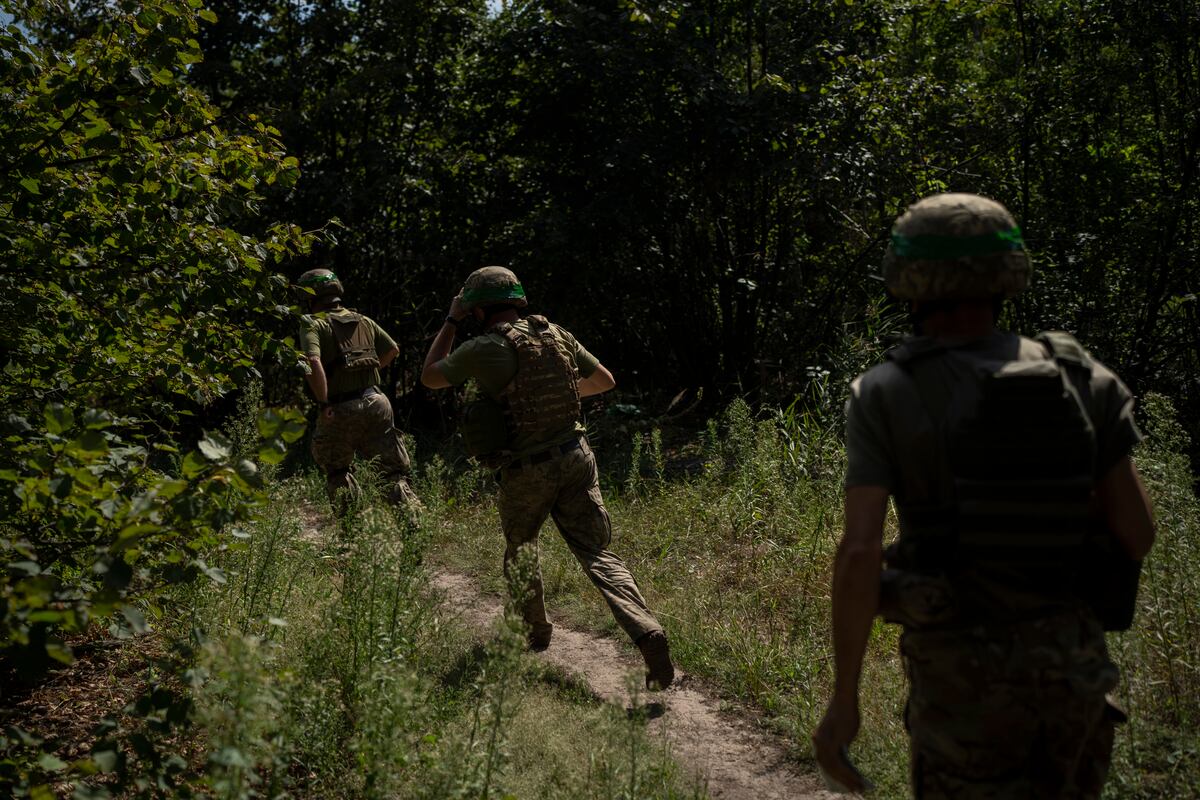
There are some who are criticizing Ukraine for taking so long to win, and others who are questioning whether they can win at all. The conflict appears to be mired in a stalemate — a battle of attrition along the lines of World War I that’s heavy on fires but low on maneuver. Given that many Ukrainians have been trained by NATO allies, why is this the case?
One answer is that we have not provided the Ukrainians with enough equipment to maneuver.
In order to fight this war, Ukraine must be able to shoot, move and communicate. Despite shortages in munitions , NATO has been providing Ukraine with the ability to shoot, even if evermore shells and rockets are needed given expenditure rates . Starlink has provided Ukraine with the ability to communicate. What’s missing is sufficient quantity of protected mobility, also known as combined arms maneuver.
The U.S. Army has such formations: armored divisions consisting of three to four maneuver brigades of tanks and infantry fighting vehicles, an artillery brigade, a support brigade for logistics, and another brigade of other enablers such as engineers, signal and air defense.
Producing and fielding this amount of equipment for Ukraine would take many years — time that the Ukrainians are paying for with the blood of their soldiers and civilians. And even if Congress appropriates the funding requested by the president, industrial base issues mean that it still wouldn’t get there in time. The solution then is to transfer this equipment from the U.S. Army today and then purchase new equipment for the Army over the next several years.
In more specific terms, the Army should transfer a division’s worth of equipment to Ukraine. This would not only assist Ukraine in breaking through Russian defensive lines, but it would also help modernize the U.S. Army, build industrial depth and increase the Army’s readiness in the near term by ensuring 100% manning in the service’s existing units.
A division’s worth of equipment isn’t some arbitrary number. It’s directly linked to the current size of the Army, which is struggling to maintain structure due to it being in the midst of one of its worst recruiting crises . The lack of soldiers in Army units is so bad that the service has to rightfully cut the structure of its special operations forces . But those cuts are just the beginning, as the Army’s active duty end strength has fallen by about 7% over the past few years, dropping from around 485,000 personnel in fiscal 2020 to around 452,000 today.
Transferring this equipment would help modernize the Army. Many of its weapons are decades old and must eventually be replaced with more modern versions of the Abrams tank and the Bradley fighting vehicle as well as the new Armored Multi-Purpose Vehicle. Because of the existing budget pressures on the Army, it wouldn’t be able to afford this needed modernization of equipment on its own. By transferring weapons and gear to Ukraine, the Army would receive more modern weapons in return.
Next, transferring this equipment would provide industrial depth, reinforcing a lesson that the Army and the rest of the services must learn from Ukraine: We may be unable to rearm ourselves during war. Sending these weapons as well as countless others through the steady drip of the Pentagon’s aid packages have forced the Army to rapidly increase its own ability to produce the tools of war.
Take, for instance, 155mm artillery shells. Without the war in Ukraine, there would have been little impetus for the Army to ramp up shell production from 14,000 shells per month within the last year to 28,000 shells per month today and to 57,000 shells per month by next spring — and even beyond that, to 100,000 artillery shells per month by 2025.
That’s an astounding increase, and transferring even more equipment to Ukraine would reinforce this lesson among Army leaders to expand production of other needed equipment.
Finally, the Army must cut the number of its units, or else it will become hollow — a phrase that came to being at the end of the 1970s and denotes an army that exists in name only. Possessing too much structure and not enough soldiers is the quickest way in which one gets to a hollow army. Therefore, divesting of a division’s worth of equipment today makes the Army more ready. When and if recruiting recovers, the new replacement equipment will begin to arrive.
In short, for the sake of the future of the Army and the future success of the Ukrainian counteroffensive , the Army should transfer a division’s worth of weapons and equipment to Ukraine. It would be a small price to pay in the long run to help the Ukrainians defeat one of our top adversaries and modernize the Army in the process.
Retired U.S. Army Maj. Gen. John Ferrari is a senior nonresident fellow at the American Enterprise Institute think tank. Ferrari previously served as a director of program analysis and evaluation for the Army.
有人批评乌克兰迟迟未能取得胜利,也有人质疑他们是否能够最终取胜。这场冲突似乎陷入了僵局——一场类似于第一次世界大战的消耗战,火力猛烈但机动性不足。鉴于许多乌克兰士兵都接受过北约盟国的训练,为何会出现这种情况?
其中一个原因是,我们没有向乌克兰人提供足够的机动装备。
为了打赢这场战争,乌克兰必须具备射击、机动和通信能力。尽管弹药短缺,北约仍在向乌克兰提供射击能力,即便考虑到目前的军费开支,需要的炮弹和火箭弹数量还在不断增加。“星链”计划为乌克兰提供了通信能力。目前乌克兰缺乏的是足够的防护机动能力,也就是所谓的联合兵种机动能力。
美国陆军拥有这样的编制:装甲师由三到四个坦克和步兵战车机动旅、一个炮兵旅、一个后勤支援旅以及另一个由工兵、通信兵和防空兵等其他支援力量组成的旅组成。
生产和部署如此大量的装备给乌克兰需要很多年——而乌克兰人民正在用士兵和平民的鲜血来偿还这漫长的等待。即便国会批准了总统提出的拨款请求,由于工业基础问题,这些装备仍然无法及时交付。因此,解决办法是今天就从美国陆军转移这些装备,然后在未来几年内为乌克兰陆军采购新的装备。
更具体地说,陆军应该向乌克兰移交一个师的装备。这不仅有助于乌克兰突破俄罗斯的防线,还能帮助美国陆军实现现代化,增强工业实力,并通过确保现有部队人员满编,在短期内提高陆军的战备水平。
一个师的装备数量并非随意设定,而是与陆军目前的规模直接相关。由于正处于史上最严重的征兵危机之一,陆军正努力维持其规模。陆军部队兵力严重不足,以至于不得不削减特种作战部队的规模。但这仅仅是开始,因为过去几年陆军现役兵力已下降约7%,从2020财年的约48.5万人降至如今的约45.2万人。
转让这些装备将有助于陆军现代化。陆军的许多武器装备已使用数十年,最终必须被更现代化的艾布拉姆斯主战坦克、布雷德利步兵战车以及新型装甲多用途车所取代。由于陆军目前面临预算压力,它无力独自承担这笔必要的装备现代化费用。通过向乌克兰转让武器装备,陆军将获得更现代化的武器装备作为回报。
其次,移交这些装备将增强美国的工业实力,这也再次印证了陆军和其他军种必须从乌克兰事件中吸取的一个教训:战时我们可能无法自行重新武装。通过五角大楼持续不断的援助计划,向乌克兰输送这些武器以及其他无数物资,迫使陆军迅速提升自身生产战争工具的能力。
以155毫米炮弹为例。如果没有乌克兰战争,陆军就不会有太大的动力将炮弹产量从去年的每月14000发提高到现在的每月28000发,到明年春天达到每月57000发——甚至更远,到2025年达到每月100000发。
这是一个惊人的增长,向乌克兰转移更多装备将使陆军领导人更加深刻地认识到扩大其他所需装备生产的重要性。
最后,陆军必须削减部队数量,否则就会变成“空壳军”——这个词组出现于20世纪70年代末,指的是一支徒有虚名的军队。拥有过多的编制而士兵不足,是导致军队空壳的最快途径。因此,今天裁减一个师的装备,反而能提高陆军的战备水平。一旦征兵恢复,新的替代装备就会陆续到位。
简而言之,为了陆军的未来和乌克兰反攻的胜利,陆军应该向乌克兰移交一个师的武器装备。从长远来看,这笔费用微不足道,却能帮助乌克兰击败我们最大的敌人之一,并在此过程中实现陆军现代化。
美国陆军退役少将约翰·法拉利是美国企业研究所智库的高级非常驻研究员。法拉利此前曾担任陆军项目分析与评估主任。