US holds fire on reports of Turkey’s second S-400 shipment美国对有关土耳其第二次交付S-400导弹系统的报道按兵不动。
The U.S. warned against further engagement with Russia’s defense sector amid reports Turkey will move forward with a second S-400 batch.
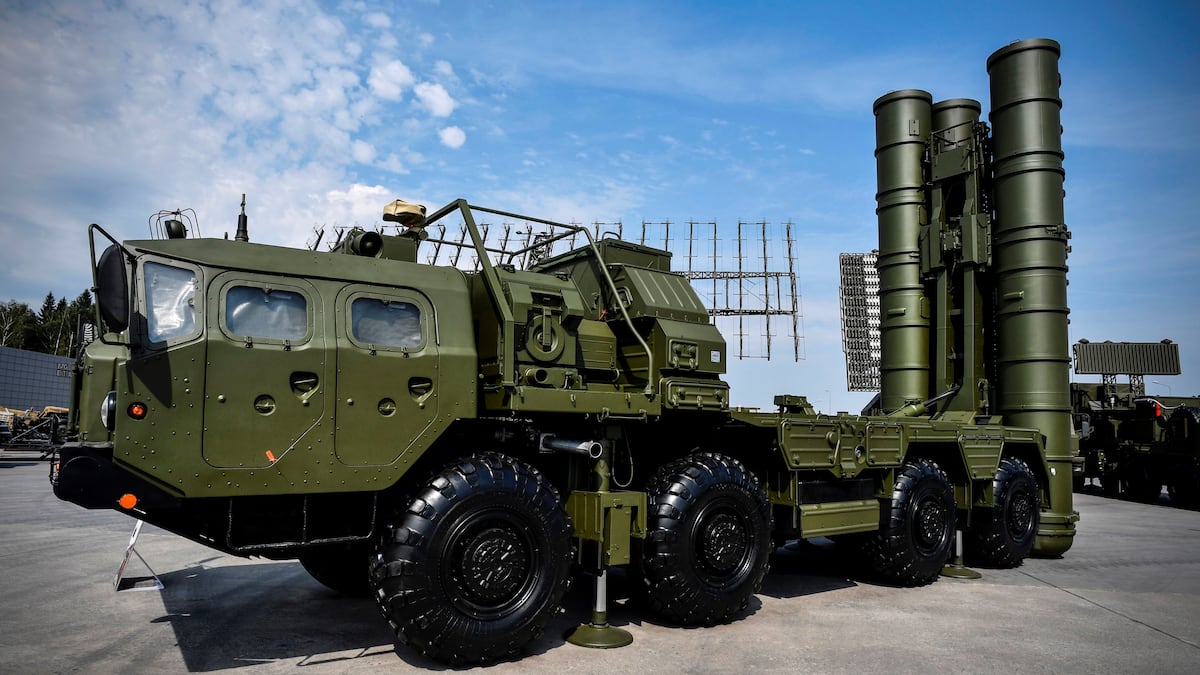
WASHINGTON and ANKARA, Turkey ― The Biden administration on Tuesday stopped short of threatening additional penalties following reports Turkey plans to receive the second batch of the Russian S-400 missile defense system.
Turkey initially purchased the S-400 in 2017, plunging its relationship with the U.S. into crisis. As a result of the deal, the Trump administration expelled Turkey from the F-35 program and later sanctioned the country’s defense industry organization and its leaders. The United States fears the powerful S-400 radar system would allow Russia to spy on the advanced F-35 fighter jet.
But the reaction in the U.S. on Tuesday was comparatively muted. At a press briefing, State Department spokesman Ned Price urged Turkey not to further engage with Russia’s defense sector.
“The point that we have consistently made across the board is that Russia’s brutal and unjustified war against Ukraine makes it vital, now more than ever in some ways, that all countries avoid transactions with Russia’s defense sector,” he said.
“We’ll have to wait and see what happens, but we are not aware of any new developments on this matter,” Price added.
Price declined to address whether a new S-400 would prompt the Biden administration to reconsider plans to sell F-16 fighter jets to Turkey .
The Russian news agency TASS reported Tuesday Russia and Turkey have signed a contract for a second “regiment” of the S-400 to Turkey, quoting the head of the Federal Service for Military-Technical Cooperation, Dmitry Shugayev.
Turkish defense sources quickly rebutted Russian claims it had signed an additional contract, noting the second S-400 was part of the initial agreement.
Shugayev, the Russian official, reportedly told TASS the new agreement with Turkey will allow for some components of the system to be built in Turkey.
Turkish sources told Defense News there may be an agreement with Russia to domestically manufacture some S-400 components for the second regiment.
The Turkish Embassy in Washington didn’t return a request for comment.
Turkey’s complex balancing act between the West and Russia has only gotten trickier since Russia’s invasion of Ukraine. The strongest sign of a thaw between Turkey and the U.S. came in late June as Turkish leader Reccep Tayyip Erdogan dropped objections to Finland and Sweden joining NATO.
U.S. President Joe Biden then voiced support for the F-16 sale at the NATO summit in Madrid in June.
A delegation from Ankara arrived in the U.S. on Monday for the fourth round of technical talks with Washington on a potential F-16 deal, Turkey’s Anadolu Agency reported this week.
Turkey has asked to make a $6 billion purchase of 40 Lockheed Martin Block 70 F-16 fighter jets. It is also seeking a separate $400 million sale to upgrade their current F-16 jets with new missiles, radar and electronics.
Senate Foreign Relations Committee Chairman Bob Menendez, D-N.J., has threatened to block the F-16 sale over Turkey’s continued possession of the S-400s , its violations of Greek airspace and Cypriot waters in the eastern Mediterranean, its human rights record and ongoing attacks on U.S.-backed fighters in northeast Syria.
Menendez issued a statement on Thursday blasting reports that Turkey intends to proceed with the second S-400 batch and called on Ankara to “unequivocally demonstrate its commitment to NATO and to regional peace and security by fully rejecting any military cooperation with a war criminal like Vladimir Putin.”
“Between continued antagonistic violations of Greece’s airspace and the delaying of the accession process for Sweden and Finland’s NATO membership, I sincerely hope Turkey will change course and live up to its responsibilities to the defense alliance by being the constructive partner in the region we all hope it can be,” said Menendez. “The United States must be clear: Any expansion of Turkey’s ties to the Russian defense sector would be a grave mistake that would further endanger the security of our NATO allies and partners throughout Europe.”
Despite increased tensions with its NATO allies in recent years, Turkey has generated some goodwill in Washington over its support for Ukraine against Russia. Turkish firm Bayraktar has been selling Ukraine its TB2 laser-guided, bomb-dropping drone for use against Russian troops , and, in June, Ukraine said Bayraktar would open a drone factory within its borders to help repel the invasion.
In recent weeks, Erdogan also brokered an international deal with Russia to allow the export of grain from Ukraine, a breadbasket for the world, to ease a global food crisis. Agricultural goods had been stuck in Black Sea ports due to the invasion.
Eric Edelman, a former U.S. ambassador to Turkey and senior Pentagon official, said he believes the S-400 deal between “competimates” Erdogan and Russian President Vladimir Putin will confound efforts to mend ties between Turkey and the U.S.
“To say the least, this will complicate the Biden administration’s effort to sell F-16s to Turkey and enrage Turkey’s growing legion of detractors on Capitol Hill,” Edelman said.
Jim Townsend, the Pentagon’s top Europe and NATO policy official during the Obama administration, said he doubts the S-400 deal came about without Turkey giving advanced warning to the U.S. He hypothesized that it was a component of the international grain deal.
“This might be residue from that deal, and if that is the case, then we probably heard about it, not only because we were probably in the background of these discussions, but also so that the Turks don’t have to pay a price from the U.S. for doing something to make the grain deal work,” Townsend said.
The hushed U.S. reaction to the Russian report is a clue, he added.
“If we’re not thundering from the pulpit, we probably knew about it,” Townsend said.
Bryant Harris is the Congress reporter for Defense News. He has covered U.S. foreign policy, national security, international affairs and politics in Washington since 2014. He has also written for Foreign Policy, Al-Monitor, Al Jazeera English and IPS News.
Joe Gould was the senior Pentagon reporter for Defense News, covering the intersection of national security policy, politics and the defense industry. He had previously served as Congress reporter.
Burak Ege Bekdil was the Turkey correspondent for Defense News.
华盛顿和土耳其安卡拉——周二,在有报道称土耳其计划接收第二批俄罗斯S-400导弹防御系统后,拜登政府并未威胁要实施额外的制裁。
土耳其最初于2017年购买了S-400防空系统,此举使其与美国的关系陷入危机。作为交易的后果,特朗普政府将土耳其逐出F-35项目,随后又对土耳其国防工业组织及其领导人实施了制裁。美国担心强大的S-400雷达系统会让俄罗斯得以监视先进的F-35战斗机。
但周二美国的反应相对平静。在新闻发布会上,国务院发言人内德·普莱斯敦促土耳其不要进一步与俄罗斯国防部门接触。
他说:“我们一直以来强调的观点是,俄罗斯对乌克兰发动的残酷且毫无正义的战争,使得所有国家避免与俄罗斯国防部门进行交易变得至关重要,在某些方面,这一点现在比以往任何时候都更加重要。”
“我们只能拭目以待,看看事情会如何发展,但我们目前还没有收到任何关于此事的新进展,”普莱斯补充道。
普莱斯拒绝就新的S-400是否会导致拜登政府重新考虑向土耳其出售F-16战斗机的计划发表评论。
俄罗斯塔斯社周二报道称,俄罗斯和土耳其签署了一份合同,向土耳其提供第二个“团”的S-400防空导弹系统。报道援引了俄罗斯联邦军事技术合作局局长德米特里·舒加耶夫的话。
土耳其国防消息人士迅速反驳了俄罗斯关于其签署额外合同的说法,指出第二套S-400防空导弹系统是最初协议的一部分。
据报道,俄罗斯官员舒加耶夫告诉塔斯社,与土耳其达成的新协议将允许在土耳其建造该系统的某些组件。
土耳其消息人士告诉《防务新闻》,土耳其可能与俄罗斯达成协议,在国内为第二团生产一些S-400防空导弹系统的部件。
土耳其驻华盛顿大使馆未回复置评请求。
自俄罗斯入侵乌克兰以来,土耳其在西方和俄罗斯之间艰难求稳的局面变得更加棘手。土耳其与美国关系缓和的最有力迹象出现在6月下旬,当时土耳其领导人雷杰普·塔伊普·埃尔多安放弃了对芬兰和瑞典加入北约的反对意见。
美国总统乔·拜登随后在6月马德里举行的北约峰会上表示支持F-16战斗机的出售。
据土耳其阿纳多卢通讯社本周报道,安卡拉代表团周一抵达美国,与华盛顿就潜在的F-16战斗机交易进行第四轮技术会谈。
土耳其已提出以60亿美元的价格购买40架洛克希德·马丁公司生产的Block 70型F-16战斗机。此外,土耳其还寻求另一笔价值4亿美元的军售,用于升级其现有的F-16战斗机,包括加装新型导弹、雷达和电子设备。
参议院外交关系委员会主席鲍勃·梅嫩德斯(新泽西州)威胁要阻止F-16战斗机的出售,理由是土耳其继续拥有S-400防空导弹系统,侵犯希腊领空和塞浦路斯在东地中海的水域,侵犯人权,以及持续袭击美国支持的叙利亚东北部武装分子。
梅嫩德斯周四发表声明,抨击有关土耳其打算继续推进第二批S-400导弹系统的报道,并呼吁安卡拉“明确表明其对北约以及地区和平与安全的承诺,彻底拒绝与弗拉基米尔·普京这样的战争罪犯进行任何军事合作”。
梅嫩德斯表示:“土耳其持续侵犯希腊领空,并拖延瑞典和芬兰加入北约的进程,我真诚地希望土耳其能够改变路线,履行其对北约的责任,成为我们都希望它成为的那种建设性地区伙伴。美国必须明确一点:土耳其任何扩大与俄罗斯国防领域联系的行为都将是一个严重的错误,这将进一步危及我们在整个欧洲的北约盟友和伙伴的安全。”
尽管近年来土耳其与北约盟国的关系日益紧张,但土耳其因支持乌克兰对抗俄罗斯而在华盛顿赢得了一些好感。土耳其公司拜拉克塔尔(Bayraktar)一直在向乌克兰出售其TB2激光制导投弹无人机,用于对抗俄罗斯军队。今年6月,乌克兰表示拜拉克塔尔将在其境内开设一家无人机工厂,以帮助抵御俄罗斯入侵。
最近几周,埃尔多安还促成了与俄罗斯的一项国际协议,允许乌克兰(世界粮仓)出口粮食,以缓解全球粮食危机。由于入侵,大量农产品滞留在黑海港口。
美国前驻土耳其大使、五角大楼高级官员埃里克·埃德尔曼表示,他认为土耳其总统埃尔多安和俄罗斯总统普京这对“竞争对手”达成的S-400导弹系统交易,将破坏土耳其和美国修复关系的努力。
埃德尔曼说:“毫不夸张地说,这将使拜登政府向土耳其出售F-16战斗机的努力变得更加复杂,并激怒土耳其在国会山日益增多的批评者。”
奥巴马政府时期五角大楼负责欧洲和北约政策的最高官员吉姆·汤森德表示,他怀疑土耳其在未事先向美国发出警告的情况下就达成了S-400协议。他推测这是国际粮食协议的一部分。
汤森德说:“这可能是那项交易的遗留问题,如果是这样的话,那么我们可能早就听说过了,不仅因为我们可能参与了这些讨论,而且也是为了避免土耳其人因为促成粮食交易而向美国付出代价。”
他补充说,美国对俄罗斯报告的沉默反应就是一个线索。
“如果我们没有在讲坛上大声疾呼,那我们可能早就知道了,”汤森德说。
布莱恩特·哈里斯是《防务新闻》的国会记者。自2014年以来,他一直在华盛顿报道美国外交政策、国家安全、国际事务和政治。他还曾为《外交政策》、《Al-Monitor》、《半岛电视台英语频道》和IPS新闻撰稿。
乔·古尔德是《防务新闻》的资深五角大楼记者,负责报道国家安全政策、政治和国防工业的交汇点。他此前曾担任国会记者。
布拉克·埃格·贝克迪尔是《防务新闻》的土耳其记者。