US, South Korea to begin expanded military drills next week美国和韩国将于下周开始扩大联合军事演习
The allies’ summertime drills, named Ulchi Freedom Shield, will take place from Aug. 22 to Sept. 1 in South Korea.
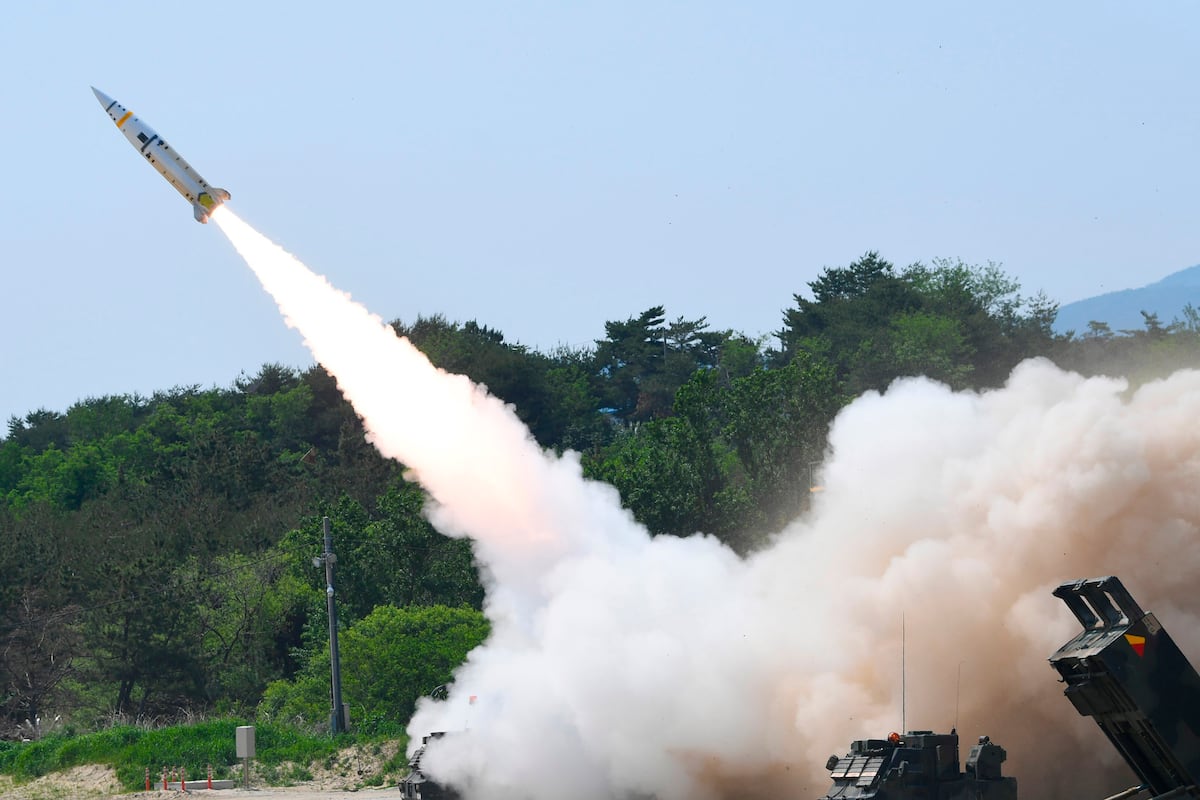
SEOUL, South Korea — The United States and South Korea will begin their biggest combined military training in years next week in the face of an increasingly aggressive North Korea, which has been ramping up weapons tests and threats of nuclear conflict against Seoul and Washington, the South Korean military said Tuesday.
The allies’ summertime drills, named Ulchi Freedom Shield, will take place from Aug. 22 to Sept. 1 in South Korea and include field exercises involving aircraft, warships, tanks and potentially tens of thousands of troops.
The drills underscore Washington and Seoul’s commitment to restore large-scale training after they canceled some of their regular drills and downsized others to computer simulations in recent years to create space for diplomacy with North Korea and because of COVID-19 concerns.
The U.S. Department of Defense also said the U.S., South Korean and Japanese navies took part in missile warning and ballistic missile search and tracking exercises off the coast of Hawaii from Aug. 8 to 14, which it said were aimed at furthering three-way cooperation in the face of North Korean challenges.
While the United States and South Korea describe their exercises as defensive, Ulchi Freedom Shield will almost surely draw an angry reaction from North Korea, which describes all allied training as invasion rehearsals and has used them to justify its nuclear weapons and missiles development .
China, North Korea’s main ally, expressed concern over the expansion of U.S. military exercises with its Asian allies, saying they could worsen tensions with the North. Chinese Foreign Ministry spokesperson Wang Wenbin didn’t offer a specific answer when asked whether Beijing believes the trilateral drills in Hawaii were in some way directed at China.
“North Korea has repeatedly expressed its concern” over the joint drills, Wang said in a briefing in Beijing on Tuesday.
“The negative impact of the military exercises on the situation on the Korean Peninsula is worth paying attention to. All parties should act prudently and stop any actions that may increase tension and confrontation and damage the mutual trust,” he said.
Before being shelved or downsized, the U.S. and South Korea held major joint exercises every spring and summer in South Korea. The spring ones had been highlighted by live-fire drills involving a broad range of land, air and sea assets and usually involved around 10,000 American and 200,000 Korean troops.
Tens of thousands of allied troops participated in the summertime drills, which mainly consisted of computer simulations to hone joint decision making and planning, although South Korea’s military has emphasized the revival of large-scale field training this time.
Officials at Seoul’s Defense Ministry and its Joint Chiefs of Staff did not comment on the number of U.S. and South Korean troops that will participate in Ulchi Freedom Shield.
The drills, which will kick off along with a four-day South Korean civil defense training program led by government employees, will reportedly include exercises simulating joint attacks, front-line reinforcements of arms and fuel, and removals of weapons of mass destruction.
The allies will also train for drone attacks and other new developments in warfare shown during Russia’s war on Ukraine and practice joint military-civilian responses to attacks on seaports, airports and major industrial facilities such as semiconductor factories.
“The biggest meaning of [Ulchi Freedom Shield] is that it normalizes the South Korea-U.S. combined exercises and field training, [contributing] to the rebuilding of the South Korea-U.S. alliance and the combined defense posture,” Moon Hong-sik, a Defense Ministry spokesperson, said during a briefing.
Some experts say North Korea may use the drills as an excuse to increase tensions.
North Korea has already warned of “deadly” retaliation against South Korea over its own COVID-19 outbreak, which it dubiously claims was caused by anti-North Korean propaganda leaflets and other objects flown across the border by balloons launched by southern activists . There are concerns that the North Korean threat, issued last week by the powerful sister of leader Kim Jong Un, portends a provocation which might include a nuclear or missile test or even border skirmishes.
In an interview with Associated Press Television last month, Choe Jin, deputy director of a think tank run by North Korea’s Foreign Ministry, said the United States and South Korea would face “unprecedented” security challenges if they don’t drop their hostile military pressure campaign against North Korea, including joint military drills.
Kim Jun-rak, spokesperson of South Korea’s Joint Chiefs of Staff, said the South Korean and U.S. militaries are maintaining a close watch on North Korean military activities and facilities.
Animosity has increased on the Korean Peninsula since U.S.-North Korea nuclear negotiations derailed in early 2019 because of differences over a relaxation of crippling U.S.-led sanctions on North Korea in exchange for disarmament steps.
Kim Jong Un has since declared North Korea will bolster its nuclear deterrent in the face of “gangster-like” U.S. pressure and halted all cooperation with South Korea. Exploiting a division in the U.N. Security Council over Russia’s war on Ukraine, North Korea has dialed up its weapons testing to a record pace this year, conducting more than 30 ballistic launches. They included the country’s first intercontinental ballistic missiles since 2017 and tests of tactical systems designed to be armed with small battlefield nuclear weapons.
Kim has punctuated the testing binge with repeated warnings that North Korea will proactively use its nuclear weapons in conflicts with South Korea and the United States, which experts say indicate an escalation in its nuclear doctrine that could cause greater concern for its neighbors.
South Korea and U.S. officials say North Korea has been gearing up for its first nuclear test since September 2017, when it claimed to have developed a thermonuclear warhead to fit on its ICBMs.
韩国首尔——韩国军方周二表示,面对日益咄咄逼人的朝鲜,美国和韩国将于下周开始多年来规模最大的联合军事训练。朝鲜一直在加大武器试验力度,并威胁要对首尔和华盛顿发动核冲突。
盟军夏季联合军演“乙支自由之盾”将于8月22日至9月1日在韩国举行,演习将包括飞机、军舰、坦克以及可能数万名士兵参与的实地演习。
此次演习凸显了华盛顿和首尔致力于恢复大规模训练的决心。近年来,由于担心新冠疫情的影响,两国取消了一些常规演习,并将其他演习缩减为计算机模拟,以便为与朝鲜的外交活动创造空间。
美国国防部还表示,8月8日至14日,美国、韩国和日本海军在夏威夷海岸附近举行了导弹预警和弹道导弹搜索跟踪演习,旨在加强三方合作,共同应对朝鲜的挑战。
尽管美国和韩国将他们的演习描述为防御性的,但“乙支自由之盾”几乎肯定会引起朝鲜的愤怒反应,朝鲜将所有盟军训练都描述为入侵演习,并以此为其核武器和导弹研发辩护。
中国作为朝鲜的主要盟友,对美国扩大与亚洲盟友的联合军事演习表示担忧,称这可能加剧与朝鲜的紧张关系。当被问及北京是否认为在夏威夷举行的三方联合军演在某种程度上针对中国时,中国外交部发言人汪文斌没有给出明确答复。
王毅周二在北京举行的新闻发布会上表示,“朝鲜多次对联合军演表示关切”。
他说:“军事演习对朝鲜半岛局势的负面影响值得关注。各方都应谨慎行事,停止任何可能加剧紧张局势和对抗、破坏互信的行动。”
在被搁置或缩减规模之前,美韩两国每年春夏两季都会在韩国举行大规模联合军演。春季军演的亮点是实弹演练,涉及陆地、空中和海上多种兵力,通常有约1万名美军和20万名韩军参演。
数万名盟军士兵参加了夏季演习,演习主要以计算机模拟为主,旨在提高联合决策和计划能力,不过韩国军方此次强调恢复大规模实地训练。
首尔国防部和联合参谋本部官员均未对参加“乙支自由之盾”演习的美韩军队人数发表评论。
据报道,此次演习将与由政府雇员领导的为期四天的韩国民防训练计划同时开始,演习内容包括模拟联合攻击、前线武器和燃料增援以及大规模杀伤性武器的移除。
盟军还将训练应对无人机袭击以及俄罗斯对乌克兰战争中出现的其他新的战争手段,并演练军民联合应对针对海港、机场和半导体工厂等主要工业设施的袭击。
韩国国防部发言人文洪植在新闻发布会上表示:“‘乙支自由之盾’演习的最大意义在于,它使韩美联合演习和实地训练正常化,有助于重建韩美同盟和联合防御态势。”
一些专家表示,朝鲜可能会利用此次军演作为借口,加剧紧张局势。
朝鲜已就韩国新冠疫情爆发发出警告,称将对韩国进行“致命”报复。朝鲜声称疫情是由韩国活动人士放飞气球,向朝鲜散发反朝宣传单和其他物品造成的,但这一说法令人怀疑。外界担忧,朝鲜领导人金正恩的胞妹金正恩上周发出的这一威胁,预示着一场可能包括核试验、导弹试验甚至边境冲突在内的挑衅行为。
上个月,朝鲜外务省智库副主任崔镇在接受美联社电视台采访时表示,如果美国和韩国不停止对朝鲜的敌对军事施压行动(包括联合军事演习),两国将面临“前所未有的”安全挑战。
韩国联合参谋本部发言人金俊洛表示,韩国和美国军方正在密切关注朝鲜的军事活动和设施。
自 2019 年初美朝核谈判因朝鲜裁军措施与美国主导的对朝严厉制裁的放松问题而破裂以来,朝鲜半岛的敌意日益加剧。
此后,金正恩宣称,面对美国“流氓式”的压力,朝鲜将加强核威慑,并停止与韩国的一切合作。朝鲜利用联合国安理会在俄罗斯入侵乌克兰问题上的分歧,今年以创纪录的速度加大了武器试验力度,进行了超过30次弹道导弹发射。其中包括自2017年以来朝鲜首次试射洲际弹道导弹,以及测试旨在搭载小型战场核武器的战术系统。
金正恩在进行核试验的同时,反复警告朝鲜将在与韩国和美国的冲突中主动使用核武器。专家表示,这表明朝鲜的核战略正在升级,可能会引起邻国的更大担忧。
韩国和美国官员表示,朝鲜自 2017 年 9 月以来一直在为首次核试验做准备,当时朝鲜声称已研制出可安装在其洲际弹道导弹上的热核弹头。