Biden hosts Hill leaders as Congress inches toward Ukraine deal拜登会见国会山领导人,此时国会正逐步推进与乌克兰的协议。
Speaker Mike Johnson indicated an openness to trading Ukraine aid for immigration policy changes after a White House meeting, despite House GOP skepticism.
WASHINGTON ― President Joe Biden on Wednesday hosted congressional leaders at the White House in a bid to break the gridlock that has held up a massive foreign aid bill that includes security assistance for Ukraine, Israel and Indo-Pacific partners.
The meeting comes as Congress inches closer to a deal on immigration policy changes Republicans have sought to unlock $61 billion worth of Ukraine assistance .
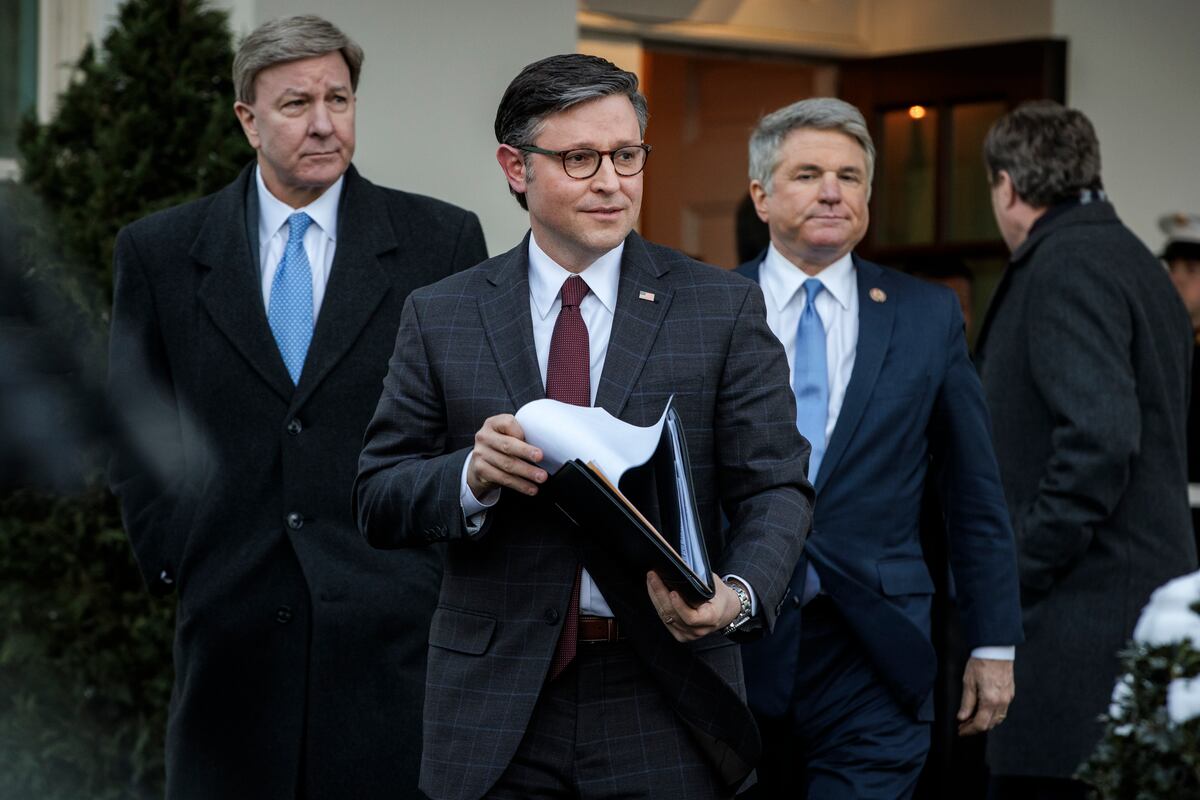
House Speaker Mike Johnson, R-La., briefly addressed reporters at the White House after the meeting. He was flanked by House Armed Services Chairman Mike Rogers, R-Ala., and Foreign Affairs Chairman Mike McCaul, R-Texas, two strong Ukraine aid proponents.
Johnson called the meeting “productive” and said he pushed for “substantive policy change at the border.”
“We’re not insistent upon a particular name or piece of legislation, but we are insistent that the elements have to be meaningful,” he added. “We understand the necessity about Ukraine funding, and we want to say that the status quo is unacceptable.”
Johnson’s comments appeared to reflect a shift; he previously insisted on pairing Ukraine aid with a House immigration bill strongly opposed by Democrats. He noted he had a phone call with Biden on the topic last week.
Johnson said the Biden administration must answer questions “about the strategy, about the end game and about accountability for the precious treasure of the American people.”
House Republicans have become increasingly skeptical of Ukraine aid in recent months, but Johnson’s comments indicate an increasing openness to trading aid to Kyiv for immigration policy changes.
The Biden administration has said it will not transfer more weapons to Ukraine without more funding from Congress, having used its last $1 billion in December to replenish U.S. stockpiles of arms sent to Kyiv.
House Minority Leader Hakeem Jeffries, D-N.Y., Senate Majority Leader Chuck Schumer, D-N.Y., and Senate Minority Leader Mitch McConnell, R-Ky., also joined the White House meeting.
McConnell, who opted to tie Ukraine aid to immigration policy in the Senate , has argued in favor of a bipartisan immigration deal. He predicted the Senate could vote on the foreign aid spending bill as soon as next week. And Schumer told reporters before the meeting that “for the first time, I think the chances of getting it done in the Senate are greater than not getting it done.”
McConnell and Senate Republicans tanked a roughly $110 foreign aid spending bill last month based on Biden’s October supplemental request because it didn’t include the immigration policy changes.
That bill includes $13.5 billion to continue arming Kyiv through the Ukraine Security Assistance Initiative. It allocates $15.1 billion for the Defense Department to continue supporting the Ukrainians with military training, intelligence sharing and “an increased presence in the European Command area of responsibility,” per a Senate summary of the bill.
On top of that, the bill appropriates $24.5 billion to replenish weapons the U.S. has already sent to Ukraine and Israel through its stockpiles. It also sets aside $2.8 billion to increase capacity for the munitions-industrial base.
“Ukraine is already suffering from a lack of armaments,” Schumer said ahead of the meeting. “If Ukraine folds, we’re going to be suffering the consequences not for months, but for years to come.”
He added that the goal of the White House meeting was “frankly to make it clear that things are changing in Ukraine for the worse, and if we don’t get aid to them quickly, the whole thing could turn around and be irretrievable.”
The bill also includes $14 billion in additional military aid for Israel as it continues its offensive in the Gaza Strip.
Additionally, it allocates $2 billion in Foreign Military Financing for allies and partners in the Indo-Pacific, including Taiwan. It also includes more than $2 billion to improve the capacity of the submarine-industrial base amid congressional concerns the trilateral AUKUS agreement in which the U.S. will send up to five Virginia-class vessels to Australia could further strain Navy production goals.
However, final funding levels may change if and when the Senate reaches a compromise and unveils a new bill.
Bryant Harris is the Congress reporter for Defense News. He has covered U.S. foreign policy, national security, international affairs and politics in Washington since 2014. He has also written for Foreign Policy, Al-Monitor, Al Jazeera English and IPS News.
华盛顿——周三,乔·拜登总统在白宫接待了国会领导人,试图打破僵局,以期通过一项大规模对外援助法案,该法案包括向乌克兰、以色列和印太伙伴提供安全援助。
此次会议召开之际,国会正逐步接近就移民政策改革达成协议,共和党人一直寻求通过该协议获得价值 610 亿美元的乌克兰援助。
众议院议长、路易斯安那州共和党籍众议员迈克·约翰逊在会后于白宫向记者发表了简短讲话。陪同他出席的有众议院军事委员会主席、阿拉巴马州共和党籍众议员迈克·罗杰斯和众议院外交事务委员会主席、德克萨斯州共和党籍众议员迈克·麦考尔,这两位都是乌克兰援助的坚定支持者。
约翰逊称这次会议“富有成效”,并表示他推动了“边境政策的实质性变革”。
他补充说:“我们并不坚持使用特定的名称或法律条文,但我们坚持认为,其中的要素必须有意义。我们理解乌克兰资金援助的必要性,我们也想表明,维持现状是不可接受的。”
约翰逊的言论似乎表明他的立场有所转变;他此前坚持将对乌克兰的援助与一项遭到民主党强烈反对的众议院移民法案捆绑在一起。他提到上周曾就此问题与拜登通过电话。
约翰逊表示,拜登政府必须回答“有关战略、最终目标以及对美国人民宝贵财富的问责制”的问题。
近几个月来,众议院共和党人对乌克兰援助越来越持怀疑态度,但约翰逊的言论表明,他们越来越愿意用对基辅的援助来换取移民政策的改变。
拜登政府表示,如果没有国会的更多拨款,就不会向乌克兰输送更多武器。去年12月,美国已用完最后一笔10亿美元,用于补充运往基辅的美国武器库存。
众议院少数党领袖哈基姆·杰弗里斯(纽约州民主党籍)、参议院多数党领袖查克·舒默(纽约州民主党籍)和参议院少数党领袖米奇·麦康奈尔(肯塔基州共和党籍)也参加了白宫会议。
麦康奈尔在参议院选择将对乌克兰的援助与移民政策挂钩,他一直主张达成两党共同支持的移民协议。他预测参议院最早可能在下周就对外援助支出法案进行投票。舒默在会前告诉记者:“我认为,参议院通过这项法案的可能性首次超过了不通过的可能性。”
上个月,麦康奈尔和参议院共和党人否决了一项约 1.1 亿美元的对外援助支出法案,该法案是根据拜登 10 月份的补充请求制定的,因为其中没有包含移民政策的改变。
该法案包括拨款135亿美元,用于通过乌克兰安全援助计划继续向基辅提供武器装备。根据参议院对该法案的概述,法案还拨款151亿美元给国防部,用于继续支持乌克兰进行军事训练、情报共享,并“加强在欧洲司令部责任区内的军事存在”。
此外,该法案还拨款245亿美元,用于补充美国已通过其库存向乌克兰和以色列输送的武器。法案还拨出28亿美元,用于提升军火工业基地的产能。
舒默在会前表示:“乌克兰已经面临武器匮乏的问题。如果乌克兰屈服,我们将承受的后果不是几个月,而是未来几年。”
他补充说,白宫会议的目标是“坦率地表明,乌克兰的局势正在恶化,如果我们不尽快向他们提供援助,整个局势可能会彻底逆转,变得无法挽回。”
该法案还包括向以色列提供 140 亿美元的额外军事援助,以支持其在加沙地带继续发动攻势。
此外,该预算案还拨款20亿美元用于支持印太地区的盟友和伙伴,包括台湾。同时,预算案还包含超过20亿美元的资金,用于提升美国潜艇工业基地的产能。此前,国会担忧,根据美澳三方协议(美国将向澳大利亚派遣至多五艘弗吉尼亚级潜艇),可能会进一步加剧美国海军生产目标的压力。
但是,如果参议院达成妥协并公布新的法案,最终的拨款水平可能会发生变化。
布莱恩特·哈里斯是《防务新闻》的国会记者。自2014年以来,他一直在华盛顿报道美国外交政策、国家安全、国际事务和政治。他还曾为《外交政策》、《Al-Monitor》、《半岛电视台英语频道》和IPS新闻撰稿。