Smaller classes, streamlined teacher duties among ideas MOE will pilot in 6 schools教育部将在6所学校试点推行小班化、简化教师职责等举措。
The ministry will explore where smaller classes can make "the greatest difference" to teaching and learning, Education Minister Desmond Lee says.
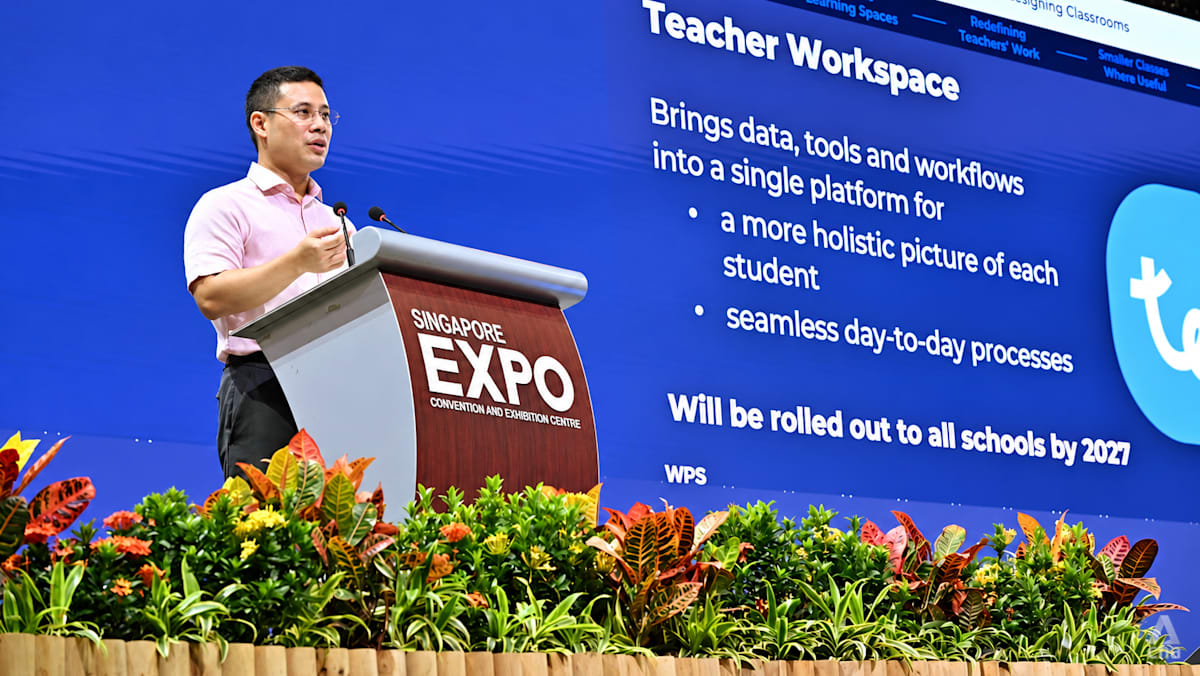
The ministry will explore where smaller classes can make "the greatest difference" to teaching and learning, Education Minister Desmond Lee says.
Education Minister Desmond Lee speaking on Sep 16, 2026, at the MOE workplan seminar at Singapore Expo. (Photo: CNA/Raydza Rahman)
This audio is generated by an AI tool.
SINGAPORE: A pilot in six schools will study measures to redesign classrooms from 2027, including whether more students can benefit from smaller classes, Education Minister Desmond Lee announced on Wednesday (Sep 16).
The Ministry of Education (MOE) will also study streamlining teachers' duties outside the classroom, letting them focus on two of three areas – form teachership, co-curricular activities (CCAs) and committee work, he said.
The six schools are St Anthony's Canossian Primary, Woodgrove Primary, Zhangde Primary, Commonwealth Secondary, Deyi Secondary and Jurongville Secondary.
MOE will use the pilot to explore where smaller classes can make "the greatest difference" to teaching and learning, said Mr Lee.
CNA Games Guess Word Crack the word, one row at a time Buzzword Create words using the given letters Mini Sudoku Tiny puzzle, mighty brain teaser Mini Crossword Small grid, big challenge Word Search Spot as many words as you can Show More Show Less Smaller classes have been adopted on a needs-based approach for years, he added. Primary 1 and 2 form classes have been kept at about 30 students since 2006, while learning support programme classes have eight to 10 students and Crest and Spectra Secondary Schools typically have about 20 students a class. With the recent introduction of full subject-based banding, subject class sizes now vary depending on students' learning needs and the nature of the subject. “We have observed positive experiences on the ground. With smaller classes when needed, teachers are better able to cater to individual learning needs and customise a more engaging and effective learning environment,” he said. Smaller classes allow closer attention to students and more timely feedback, but do not automatically mean less work for teachers, Mr Lee said. It could mean they take on more teaching, as happens in other countries. The government cannot simply hire more teachers given its limited workforce. “And even if we were to hire more teachers, it must be done in a sustainable manner, without compromising quality.” This is why smaller classes must be part of a broader redesign of teaching and learning. If teachers are to teach more classes, MOE must create the capacity and conditions they need to do so, Mr Lee said. Beyond classroom teaching, many teachers also take on roles such as being form teachers, managing CCAs and working on committees. While these are important, constantly switching between responsibilities takes time and mental bandwidth, he said. MOE will study letting teachers focus on two of the three areas, taking into account each school's needs and teachers' strengths and interests. “We also recognise that not every task in school requires a teacher. So we should keep asking four questions: Is it still necessary? Can we simplify it? Can technology or other processes help? And must a teacher do it?” CCAs and other student development programmes are important for students' holistic development, and teachers will continue to play a key role in helping students develop social-emotional and 21st-century competencies, said Mr Lee. At the same time, MOE will explore tapping coaches, instructors, non-teaching staff and external partners more deliberately to support these programmes, including administrative duties.
Smaller classes have been adopted on a needs-based approach for years, he added. Primary 1 and 2 form classes have been kept at about 30 students since 2006, while learning support programme classes have eight to 10 students and Crest and Spectra Secondary Schools typically have about 20 students a class.
With the recent introduction of full subject-based banding, subject class sizes now vary depending on students' learning needs and the nature of the subject.
“We have observed positive experiences on the ground. With smaller classes when needed, teachers are better able to cater to individual learning needs and customise a more engaging and effective learning environment,” he said.
Smaller classes allow closer attention to students and more timely feedback, but do not automatically mean less work for teachers, Mr Lee said. It could mean they take on more teaching, as happens in other countries.
The government cannot simply hire more teachers given its limited workforce. “And even if we were to hire more teachers, it must be done in a sustainable manner, without compromising quality.”
This is why smaller classes must be part of a broader redesign of teaching and learning. If teachers are to teach more classes, MOE must create the capacity and conditions they need to do so, Mr Lee said.
Beyond classroom teaching, many teachers also take on roles such as being form teachers, managing CCAs and working on committees. While these are important, constantly switching between responsibilities takes time and mental bandwidth, he said.
MOE will study letting teachers focus on two of the three areas, taking into account each school's needs and teachers' strengths and interests.
“We also recognise that not every task in school requires a teacher. So we should keep asking four questions: Is it still necessary? Can we simplify it? Can technology or other processes help? And must a teacher do it?”
CCAs and other student development programmes are important for students' holistic development, and teachers will continue to play a key role in helping students develop social-emotional and 21st-century competencies, said Mr Lee.
At the same time, MOE will explore tapping coaches, instructors, non-teaching staff and external partners more deliberately to support these programmes, including administrative duties.
MOE will also study adapting existing school spaces for more flexible use and using technology to free up time for teaching.
Teacher Workspace, a platform piloted in about 20 schools, will be rolled out to all schools by 2027, allowing teachers to coordinate support and communicate with parents and partners more seamlessly, said Mr Lee.
Artificial intelligence and other capabilities will be introduced to the platform over time. For example, collating relevant information about students to generate first drafts of administrative reports to cut down on manual work.
Mr Lee said MOE would proceed carefully given the complexity of the six-school pilot, and would assess whether the changes lead to better learning outcomes and more sustainable teaching.
"We will keep schools updated and share what we learn before considering how these approaches might be applied more widely," he added.
Get our pick of top stories and thought-provoking articles in your inbox
Stay updated with notifications for breaking news and our best stories
Join our channel for the top reads for the day on your preferred chat app
教育部长李智陞表示,教育部将探索小班授课在哪些方面能对教学产生“最大影响”。
教育部长李智陞于2026年9月16日在新加坡博览中心举行的教育部工作计划研讨会上发表讲话。(图片:CNA/Raydza Rahman)
这段音频是由人工智能工具生成的。
新加坡:教育部长李智陞周三(9月16日)宣布,一项在六所学校进行的试点项目将研究从2027年起重新设计教室的措施,包括小班教学是否能让更多学生受益。
他说,教育部还将研究精简教师在课堂外的职责,让他们专注于三个领域中的两个——班主任工作、课外活动和委员会工作。
这六所学校分别是:圣安东尼嘉诺撒小学、伍德格罗夫小学、张德小学、联邦中学、德义中学和裕廊中学。
李先生表示,教育部将利用这项试点项目来探索小班教学能在哪些方面对教学和学习产生“最大的影响”。
CNA游戏 猜词游戏 逐行破解单词 流行词游戏 用给定的字母组成单词 迷你数独 小谜题,脑力挑战 迷你填字游戏 小方格,大挑战 单词搜索 尽可能多地找出单词 显示更多 显示更少 他补充说,多年来,学校一直采用基于需求的班级规模较小的方式。自2006年以来,小学一、二年级的班级人数一直保持在30人左右,而学习支持课程班级有8到10名学生,克雷斯特中学和斯佩克特拉中学通常每个班级有20名学生左右。随着最近全面推行基于学科的分班制度,现在各学科的班级规模根据学生的学习需求和学科性质而有所不同。“我们观察到了一些积极的实践经验。在需要时采用小班制,教师能够更好地满足学生的个性化学习需求,并定制更具吸引力和更有效的学习环境,”他说。李先生表示,小班制可以让教师更关注学生,并提供更及时的反馈,但这并不意味着教师的工作量会自动减少。这可能意味着他们需要承担更多的教学任务,就像其他国家的情况一样。鉴于教师队伍有限,政府无法简单地增加教师人数。“即便我们能够增加教师人数,也必须以可持续的方式进行,并且不能降低教学质量。” 这就是为什么小班教学必须成为教学和学习整体改革的一部分。李先生表示,如果教师要承担更多教学任务,教育部必须创造必要的资源和条件。除了课堂教学之外,许多教师还承担着班主任、课外活动管理以及委员会工作等角色。他指出,虽然这些工作很重要,但频繁切换职责会耗费时间和精力。教育部将研究如何让教师专注于三个领域中的两个,同时兼顾每所学校的需求以及教师的优势和兴趣。“我们也认识到,并非学校里的每项工作都需要教师。因此,我们应该不断问自己四个问题:这项工作是否仍然必要?我们能否简化它?技术或其他流程能否提供帮助?这项工作是否必须由教师来完成?”李先生表示,课外活动和其他学生发展项目对学生的全面发展至关重要,教师将继续在帮助学生培养社交情感能力和21世纪技能方面发挥关键作用。同时,教育部将更有针对性地探索如何利用教练、指导员、非教学人员和外部合作伙伴来支持这些项目,包括承担行政职责。
他补充说,多年来学校一直根据学生需求实行小班制教学。自2006年以来,小学一、二年级的班级人数一直保持在30人左右,而学习辅导班的班级人数为8至10人,克雷斯特中学和斯佩克特拉中学的班级人数通常约为20人。
随着近期全面推行基于学科的分级教学,各学科班级规模现在根据学生的学习需求和学科性质而有所不同。
他说:“我们已经观察到一些积极的实践经验。在需要时采用小班授课模式,教师能够更好地满足学生的个性化学习需求,并打造更具吸引力和更有效的学习环境。”
李先生表示,小班授课可以让老师更关注学生,提供更及时的反馈,但这并不意味着老师的工作量会减少。这可能意味着老师要承担更多的教学任务,就像其他国家的情况一样。
鉴于政府劳动力有限,不能简单地增加教师人数。“即便我们能够增加教师人数,也必须以可持续的方式进行,不能降低教学质量。”
因此,小班授课必须是教学模式整体改革的一部分。李先生表示,如果教师要教授更多课程,教育部必须创造必要的资源和条件。
除了课堂教学之外,许多教师还承担着班主任、课外活动管理以及参与委员会工作等角色。他表示,虽然这些工作很重要,但不断地在不同职责之间切换会耗费时间和精力。
教育部将研究让教师专注于三个领域中的两个,同时考虑到每所学校的需求以及教师的优势和兴趣。
“我们也意识到,并非学校里的每一项任务都需要老师。因此,我们应该不断问自己四个问题:这项任务还有必要吗?我们能否简化它?技术或其他方法能否提供帮助?这项任务是否必须由老师来完成?”
李先生表示,课外活动和其他学生发展计划对学生的全面发展至关重要,教师将继续在帮助学生培养社交情感和 21 世纪能力方面发挥关键作用。
与此同时,教育部将更加有意识地探索如何利用教练、指导员、非教学人员和外部合作伙伴来支持这些项目,包括行政职责。
教育部还将研究如何改造现有学校空间,使其用途更加灵活,并利用科技手段腾出更多时间用于教学。
李先生表示,教师工作空间平台已在约 20 所学校进行试点,将于 2027 年推广到所有学校,使教师能够更顺畅地协调支持工作并与家长和合作伙伴沟通。
未来,平台将逐步引入人工智能和其他功能。例如,收集学生相关信息,生成行政报告初稿,以减少人工操作。
李先生表示,鉴于六所学校试点项目的复杂性,教育部将谨慎行事,并评估这些改变是否能带来更好的学习成果和更可持续的教学。
他补充说:“我们会及时向学校通报最新情况,并分享我们的经验,然后再考虑如何更广泛地应用这些方法。”
订阅我们的邮件,即可获取精选热点新闻和引人深思的文章。
订阅通知,第一时间获取突发新闻和精彩报道。
加入我们的频道,即可在您常用的聊天应用上获取当日热门文章。