She once failed almost every subject and hated school – now she’s the teacher who fights for every student她曾经几乎每门功课都不及格,讨厌学校——如今,她却是一位为每一位学生争取权益的老师。
Raja Shahridah Raja Suhaini grew up poor, could not read in Primary 1 and failed almost every subject. Now a Caring Teacher Award 2026 winner, she knocks on the doors of students who skip school – even when those doors are slammed in her face.
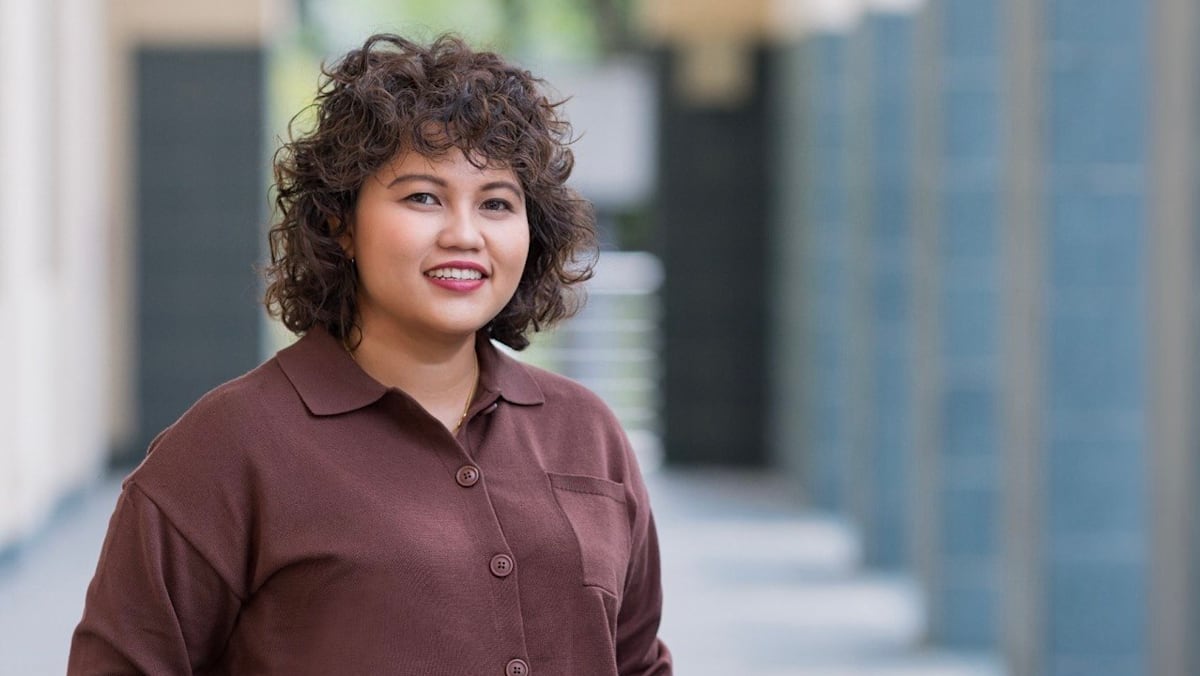
Raja Shahridah Raja Suhaini grew up poor, could not read in Primary 1 and failed almost every subject. Now a Caring Teacher Award 2026 winner, she knocks on the doors of students who skip school – even when those doors are slammed in her face.
Raja Shahridah Raja Suhaini is a National Level winner at the National Institute of Education’s Caring Teacher Awards 2026. (Photo: National Institute of Education)
This audio is generated by an AI tool.
“I hated school.” This was one of the first things Raja Shahridah Raja Suhaini told me, shortly after being named one of four National Level winners at the National Institute of Education’s Caring Teacher Awards 2026.
It is rare to hear a teacher admit this with such startling candour.
But the 35-year-old, k nown to her students at Beatty Secondary School as Ms Shah, was dealt very different cards from most.
Her father was incarcerated for the first five years of her life for drug use. And after his release, he joined her mother as a cleaner.
The family lived in a one-room rental flat, worrying about basic survival needs, such as what to eat the next day. Shahridah’s parents could not afford to take care of her two younger sisters and had to give them away to relatives .
Shahridah did not go to kindergarten. She spent her childhood trailing her parents to work.
“I was that young kid running around Takashimaya without shoes while my parents were cleaning the area. Sometimes, I helped sweep the floor,” she told CNA Women.
Coming from an underprivileged background, Shahridah fell behind academically in her early years, causing her to dread school. (Photo: Raja Shahridah Raja Suhaini)
Her parents mainly spoke Malay, so when she went to Primary 1, Shahridah could not speak much English. She also could not read.
“I was scared most of the time. I didn’t understand what my teachers were saying. My teacher would take out this big book and make us read out loud in front of our friends. I always cried,” she recalled.
Right up to Primary 4, she failed every subject except Malay. She became rebellious and stopped caring, spending her time catching tadpoles in the school’s fishpond.
Today, the woman who once hated school is a teacher who goes from house to house knocking on the doors of pupils who skip school, inviting them back to class.
“ There are times when I visited their house and it brings me back to when I was young,” Shahridah said.
Shahridah does not mind having doors slammed in her face when she visits high-risk students. “As long as you don’t hit my face, okay?” she says. (Photo: National Institute of Education)
THE TEACHER WHO NEVER WANTED TO BE ONE
When she was a child, Shahridah’s parents fought for every opportunity for her. On weekends, they would rent shows such as Mr Bean and RoboCop, deciphering the spoken English and subtitles together.
On their day off, they would take her to the library and have her read out loud. Librarians and other adults would correct her reading, and her parents would thank them for it.
By Primary 2, Shahridah could read.
Her parents would also take her to McDonald’s to do her homework. Whenever she encountered a difficult question, they would approach random strangers for help.
“Imagine walking up to someone and telling them you are not able to teach your own child,” Shahridah reflected.
“When I was a child, my parents told me that education is the key to getting out of this poverty cycle,” says Shahridah. (Photo: Annie Tan)
Witnessing her parents’ hardship and sacrifices, Shahridah was determined to study hard to forge a way out of poverty for her family. From Primary 5, she started to score.
She went to Temasek Polytechnic to study Consumer Science and Technology and even won a gold medal for her academic performance.
After graduating, she received two job offers – one to be a Central Narcotics Bureau officer and the other, to be a Food and Consumer Education (FCE) teacher. It was her mother who decided for her.
Shahridah ended up teaching at Balestier Hill Secondary School, which later merged with Beatty Secondary School.
“Where I came from, you don’t have many choices. A lot of things get thrown to you. You just learn to like it. You do it and you do it well,” she said.
Teaching, however, turned out to be much more for Shahridah.
WHEN COOKING BECOMES CONNECTION
Shahridah teaches FCE to lower secondary students, and Nutrition and Food Science to upper secondary pupils, covering topics such as healthy food choices and practical cooking skills.
Shahridah says she is not a good cook but has learnt to enjoy cooking. (Photo: National Institute of Education)
She gets her students to make trending pasar malam foods such as Ramly burgers, ice cream, and kunafah, a traditional Arab dessert.
“No other lessons will allow you to eat as you listen to the teacher,” she laughed.
Shahridah even bursts into Disney songs such as Let It Go and Can You Feel The Love Tonight while cooking – a quirk that endears her to students.
Many of them come to her with things they would tell no one else.
A girl with special educational needs who grew up without a mother came to Shahridah when she had her first period and did not know how to wear a sanitary napkin. Shahridah showed her how.
Shahridah (right) performing with another teacher at the school’s International Friendship Day Concert Series in 2024. (Photo: Raja Shahridah Raja Suhaini)
Another student who was living with a relative after his parents died also came to Shahridah. For three months, he waited outside the staff room after school to ask her how her day was.
“It felt like he wanted to say something and was holding back. But I did not expect it to be abuse. He was a very jovial boy,” she reflected.
“One day, I nudged him and asked, ‘What is it you want to tell me?’” That was when he told her he and his siblings were being physically abused.
Shahridah worked with the school and relevant agencies to move the boy and his siblings to a safer environment, although they had to be separated.
The boy is now 18, about to enter polytechnic, and currently working to earn money. “His siblings are all he has. He told me that he’s going to get a house so they can be together again. I’m proud of him,” Shahridah said.
STEAK, PRAWNS AND HEART-TO-HEARTS
Eight years ago, Shahridah joined the school disciplinary team, mediating issues such as fighting and bullying.
But she did not stop at discipline. Four years later, she initiated a weekly Cooking Sense Series for high-risk kids and those with special needs who skipped school.
A variety of muffins that Shahridah’s students baked. (Photo: Raja Shahridah Raja Suhaini)
A Teachers’ Day card from Shahridah’s students. (Photo: Raja Shahridah Raja Suhaini)
“I only have from secondary one to secondary four or five. I just have to keep trying. Because after they graduate, I cannot do anything,” says Shahridah. (Photo: National Institute of Education)
Her unconventional solution: Invite them for a fancy meal.
Most of these kids come from vulnerable families and have never tried such food. With the support of her school, Shahridah bought ingredients like steak and juicy prawns, and invited the students to cook and eat together.
The idea was to entice them to come to school for at least one day every week, even if they weren’t going to show up for the rest of the week, she reasoned.
Every Wednesday at 2.30pm, 15 to 20 students with issues such as anger management, oppositional defiant disorder, attention-deficit hyperactivity disorder and autism would gather.
With such a diverse mix, these sessions are always “interesting and colourful”. One boy even burst out into Chinese opera while cooking, said Shahridah.
Shahridah taught them how to clean fish and chop up a whole chicken. Together, they made viral items – cloud bread and Dalgona coffee adapted to use Milo instead.
And somehow, these high-risk kids who never wanted to come to school in the first place would stay till 5.30pm or 6pm, talking about their day-to-day worries and the siblings they had to care for, over the meal they prepped.
Shahridah even learnt sign language to better communicate with students with hearing impairment. (Photo: Annie Tan)
“It has become like a help group,” said Shahridah, who has been running the programme for the past four years. “They realise we are all in the same boat. People here can relate to them. They feel safe.”
And though these students still did not attend school regularly, some of them showed up for their examinations and completed their secondary school journey, she said.
FIGHTING FOR EVERY STUDENT
Sometimes, even a juicy steak cannot persuade a student to return to school. So Shahridah goes to their house looking for them.
Not everyone wants to be helped, and she often gets turned away. But she keeps trying.
“At least they know someone is out there looking for them,” she said. “It’s also a reminder to their parents: If they neglect their child or if something is wrong with their child, there will be people looking out for their child.”
Once when visiting a girl who ran away from home, skipped school and stayed with her older boyfriend, Shahridah was confronted and shoved by the angry boyfriend.
The silver lining: The girl eventually returned to school to seek help when her boyfriend got too aggressive.
Shahridah with her mother, 58, and father, 68, who worked as cleaners to raise her, and inspired her with their humility and courage. (Photo: Raja Shahridah Raja Suhaini)
Shahridah hopes others can see these kids the way she does. Many come from vulnerable families and have many unmet needs, such as food insecurity, she said.
She too, once struggled with such issues – showering in candlelight because her family could not pay the electricity bill and sharing an interim flat with another family because they could not afford their own home.
Shahridah, who is single, has since bought her own flat and now supports her retired parents.
That is her hope for her students who come from vulnerable backgrounds too.
“After they (leave secondary school), if they are able to take care of themselves, and are good people, that is enough. That inspires me,” she said.
She has seen this happy outcome for many of her students, some of whom return to visit after many years.
“That’s the best Teachers’ Day gift I will ever receive,” she reflected. “I don’t want any flowers. They will wilt. I don’t want any candy. They will just make me fat. Just come back and say hi.”
CNA Women is a section on CNA Lifestyle that seeks to inform, empower and inspire the modern woman. If you have women-related news, issues and ideas to share with us, email CNAWomen [at] mediacorp.com.sg .
A single handpicked story that we think you shouldn't miss. Just one a day.
拉贾·沙赫里达·拉贾·苏海尼出身贫寒,小学一年级时还不识字,几乎所有科目都不及格。如今,她荣获2026年“关爱教师奖”,她会敲开那些逃学学生的家门——即使门在她面前砰地关上。
Raja Shahridah Raja Suhaini 荣获 2026 年国家教育学院“关爱教师奖”国家级奖项。(图片:国家教育学院)
这段音频由人工智能工具生成。
“我讨厌上学。”这是拉贾·沙赫里达·拉贾·苏海尼在被评为2026年国家教育学院关爱教师奖的四位国家级获奖者之一后不久告诉我的第一件事。
很少听到有老师如此坦率地承认这一点。
但这位35岁的女士,在比蒂中学被学生们称为沙阿老师,她的境遇与大多数人截然不同。
她父亲因吸毒在她生命的前五年被监禁。出狱后,他跟她母亲一起当了清洁工。
一家人住在出租的一居室里,连第二天吃什么这样的基本生存问题都担忧。沙赫里达的父母无力抚养她的两个妹妹,只好把她们送给亲戚。
莎赫里达没有上过幼儿园。她的童年是在跟随父母上班的过程中度过的。
“我小时候经常光着脚在高岛屋附近跑来跑去,看着父母打扫卫生。有时候,我还会帮忙扫地。”她告诉CNA Women。
沙赫里达出身贫寒,早年学习成绩落后,因此非常害怕上学。(照片:拉贾·沙赫里达·拉贾·苏海尼)
她的父母主要说马来语,所以莎赫里达上小学一年级时,英语说得并不好,也不会阅读。
“我大部分时间都很害怕。我听不懂老师在说什么。老师会拿出一本大书,让我们当着朋友的面大声朗读。我总是哭,”她回忆道。
直到小学四年级,她除了马来语以外所有科目都不及格。她变得叛逆,对学习漠不关心,整天在学校的鱼塘里抓蝌蚪。
如今,这位曾经厌恶学校的女子已成为一名教师,她挨家挨户敲开逃学学生的家门,邀请他们重返课堂。
“有时候我去他们家,会让我想起我的童年时光,”沙赫里达说。
沙赫里达并不介意在探访高危学生时被人摔门。“只要你们不打我的脸就行,好吗?”她说。(图片:国立教育学院)
一位从未想过要当老师的人
莎赫里达小时候,她的父母为了她争取一切机会。周末,他们会租《憨豆先生》和《机械战警》之类的电视节目,一边看字幕一边听懂英语对白。
在他们休息的日子里,他们会带她去图书馆,让她大声朗读。图书管理员和其他成年人会纠正她的朗读,她的父母会为此感谢他们。
到了小学二年级,莎赫里达就能阅读了。
她的父母还会带她去麦当劳做作业。每当她遇到难题时,他们就会向陌生人寻求帮助。
“想象一下,你走到别人面前,告诉他们你连自己的孩子都教不好,”沙赫里达反思道。
“我小时候,父母就告诉我,教育是摆脱贫困循环的关键,”莎赫里达说。(照片:安妮·谭)
目睹父母的艰辛和牺牲,莎赫里达决心努力学习,为家人摆脱贫困。从小学五年级开始,她就开始取得优异的成绩。
她考入淡马锡理工学院学习消费科学与技术,并因其优异的学业成绩获得金牌。
毕业后,她收到了两份工作邀请——一份是中央肃毒局的警官,另一份是食品与消费者教育(FCE)教师。最终是她母亲替她做了决定。
沙赫里达最终在巴莱斯蒂尔山中学任教,该校后来与比蒂中学合并。
“在我来自的地方,你没多少选择。很多事情都会被强加给你。你只能学会接受,然后去做,并且尽力做好,”她说。
然而,对沙赫里达来说,教书的意义远不止于此。
当烹饪成为一种连接
Shahridah 为初中低年级学生教授食品化学课程 (FCE),为高中高年级学生教授营养与食品科学,课程内容涵盖健康食品选择和实用烹饪技巧等主题。
沙赫里达说她厨艺不好,但学会了享受烹饪的乐趣。(图片:国立教育学院)
她让学生们制作流行的夜市小吃,例如拉姆利汉堡、冰淇淋和库纳法(一种传统的阿拉伯甜点)。
“没有其他课程允许你边吃东西边听老师讲课了,”她笑着说。
莎赫里达甚至会在做饭时突然唱起迪士尼歌曲,比如《Let It Go》和《Can You Feel The Love Tonight》——这个怪癖让她深受学生们的喜爱。
他们中的许多人会向她倾诉他们不会告诉任何人的事情。
一个患有特殊教育需求、从小失去母亲的女孩,在初潮来临、不知道如何使用卫生巾时,来到了沙赫里达的家中。沙赫里达教了她。
2024年,莎赫里达(右)与另一位老师在学校的国际友谊日音乐会系列活动中表演。(照片:拉贾·莎赫里达·拉贾·苏海尼)
另一位父母双亡后寄宿在亲戚家的学生也来到了沙赫里达家。三个月来,他每天放学后都会在教职工办公室外等候,询问她一天过得怎么样。
“感觉他好像想说什么,但又忍住了。但我没想到会是虐待。他是个非常开朗的孩子,”她回忆道。
“有一天,我轻轻碰了碰他,问他:‘你想告诉我什么?’” 那时他才告诉她,他和他的兄弟姐妹正在遭受身体虐待。
沙赫里达与学校和相关机构合作,将这名男孩和他的兄弟姐妹转移到一个更安全的环境中,尽管他们不得不分开。
男孩现在18岁了,即将进入理工学院,目前正在打工赚钱。“他的兄弟姐妹是他唯一的亲人。他告诉我他要买一套房子,这样他们就能再次团聚了。我为他感到骄傲,”沙赫里达说道。
牛排、虾和心连心
八年前,沙赫里达加入了学校纪律小组,负责调解打架和欺凌等问题。
但她并没有止步于管教。四年后,她为那些逃学的高危儿童和有特殊需要的儿童创办了每周一次的“烹饪启蒙系列”课程。
Shahridah 的学生烘焙的各种松饼。 (照片:拉贾·沙里达·拉贾·苏海尼)
Shahridah 学生寄来的教师节贺卡。 (照片:拉贾·沙里达·拉贾·苏海尼)
“我只能教到初一到初四或初五。我只能继续努力。因为等他们毕业后,我就什么都做不了了。”沙赫里达说道。(图片:国立教育学院)
她采取的非常规方法:邀请他们享用一顿丰盛的晚餐。
这些孩子大多来自贫困家庭,从未尝过这样的食物。在学校的支持下,莎赫里达购买了牛排、鲜嫩多汁的虾等食材,邀请学生们一起烹饪、一起享用。
她的想法是,即使他们一周的其他时间不来上学,也要吸引他们每周至少来学校一天。
每周三下午 2 点 30 分,15 至 20 名患有愤怒管理问题、对立违抗性障碍、注意力缺陷多动障碍和自闭症等问题的学生会聚集在一起。
沙赫里达说,由于参与者背景各异,这些课程总是“有趣而丰富多彩”。有个男孩甚至在做饭时突然唱起了中国戏曲。
沙赫里达教他们如何处理鱼和分割整鸡。他们一起制作出了风靡网络的甜点——云朵面包和用美禄代替咖啡粉改良的焦糖咖啡。
不知何故,这些原本就不想来上学的高危儿童,会一直待到下午 5 点半或 6 点,一边吃着自己准备的饭菜,一边谈论他们每天的烦恼和他们必须照顾的兄弟姐妹。
为了更好地与听障学生交流,莎赫里达甚至还学习了手语。(图片:安妮·谭)
“它已经变成了一个互助小组,”过去四年一直负责该项目的沙赫里达说道。“他们意识到我们都处境相同。这里的人能感同身受。他们感到安全。”
她说,虽然这些学生仍然没有规律地到校上课,但其中一些人参加了考试,完成了中学学业。
为每一位学生而战
有时候,即使是一块鲜嫩多汁的牛排也无法说服学生重返校园。于是,莎赫里达前往他们家寻找他们。
并非所有人都愿意接受帮助,她经常被拒绝。但她坚持不懈。
“至少他们知道有人在寻找他们,”她说。“这也提醒他们的父母:如果他们疏于照顾孩子,或者孩子出了什么事,总会有人关心他们的孩子。”
有一次,莎赫里达去探望一个离家出走、逃学、和年长男友住在一起的女孩,结果被愤怒的男友当面对质并推搡。
令人欣慰的是:当她的男友行为过于暴力时,这名女孩最终还是回到了学校寻求帮助。
莎赫里达与她58岁的母亲和68岁的父亲合影。她的父母靠做清洁工养大她,他们的谦逊和勇气深深地激励了她。(照片:拉贾·莎赫里达·拉贾·苏海尼)
沙赫里达希望其他人也能像她一样看待这些孩子。她说,许多孩子来自弱势家庭,面临诸多未满足的需求,例如食物短缺。
她也曾经历过类似的困境——因为家里交不起电费,只能点着蜡烛洗澡;因为买不起自己的房子,只能和另一个家庭合租一套临时公寓。
单身的莎赫里达已经买了自己的公寓,现在赡养着退休的父母。
这也是她对那些同样来自弱势背景的学生们的期望。
“如果他们(中学毕业后)能够照顾好自己,而且为人正直,那就足够了。这很鼓舞人心,”她说。
她已经看到她的许多学生都取得了这样的好成绩,其中一些学生多年后还会回来探望她。
“这将是我收到的最好的教师节礼物,”她若有所思地说。“我不要鲜花,它们会枯萎。我不要糖果,它们只会让我长胖。只要你回来跟我打个招呼就好。”
CNA Women是CNA Lifestyle旗下的一个版块,旨在为现代女性提供信息、赋能和灵感。如果您有与女性相关的新闻、议题或想法想要与我们分享,请发送电子邮件至CNAWomen[at]mediacorp.com.sg。
每天一篇,我们精心挑选一篇您不容错过的精彩故事。