‘Breathing toxin every day’: Indonesians choked by haze feel helpless as smoke drifts into Malaysia and wider SE Asia“每天呼吸毒素”:印尼民众饱受雾霾之苦,却无能为力,烟雾正飘向马来西亚和更广阔的东南亚地区。
PONTIANAK, Sept 16 — Struggling to breathe through the acrid haze emanating from wildfires on Indonesia’s Borneo island, residents told AFP today they feared for their health...
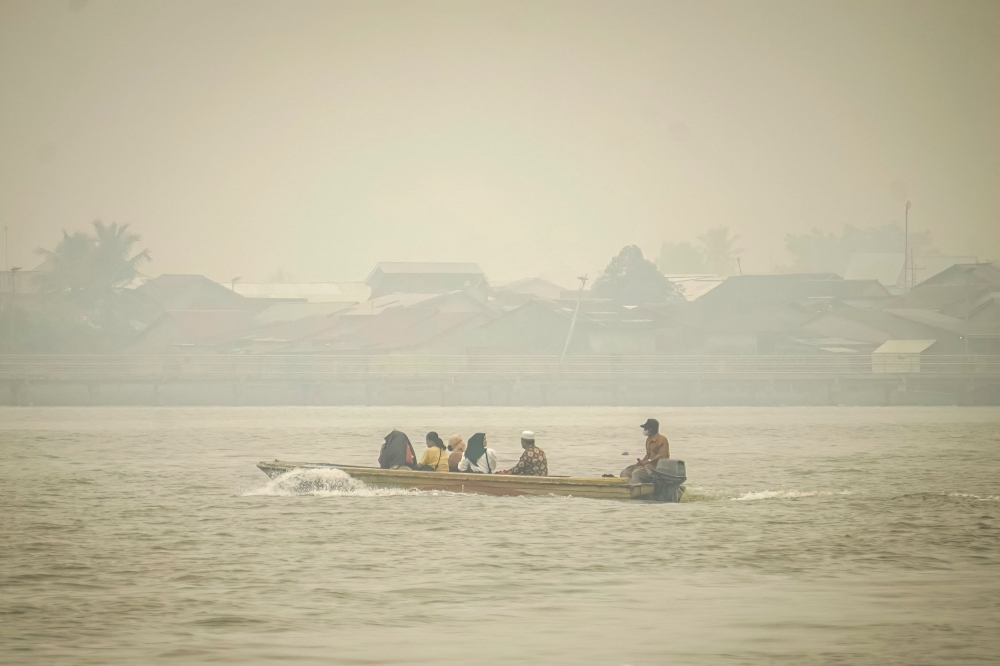
Residents of Pontianak, Indonesia, are struggling with health issues caused by thick haze from wildfires exacerbated by El Nino, significantly impacting daily life.
The poor air quality, with levels far exceeding hazardous limits, has affected thousands and hindered operations, such as airport closures, while disrupting livelihoods and education.
Efforts to control the fires, including water bombing and cloud seeding, are underway, but the situation remains dire, with extensive land damage and regional haze spread to Malaysia and Singapore.
PONTIANAK, Sept 16 — Struggling to breathe through the acrid haze emanating from wildfires on Indonesia’s Borneo island, residents told AFP today they feared for their health but had little to do but wait out the foul-smelling hazard.
Indonesia, which shares Borneo with Malaysia and Brunei, is grappling with forest fires that have ravaged swathes of the island, partly caused by the El Nino climate phenomenon that has also affected other countries in South-east Asia and beyond.
In Pontianak, the capital of West Kalimantan province, the thick, yellow smoke was so intense that it had paralysed the international airport over the weekend.
“My eyes sting, my head hurts. Over the past week it’s been getting worse,” resident Anggita Putri told AFP.
“While working, my chest feels tight, my head dizzy, my eyes burning. Even with this unhealthy air, we still must work,” she said.
The air quality index for Pontianak briefly exceeded 1,100 over the weekend, Anggita said — nearly four times the hazardous limit.
“I leave my child at home, so of course I have worries that go beyond just my own health. I’m also concerned about my child’s condition,” said the 28-year-old, who has a three-year-old son.
Another Pontianak resident, 35-year-old university lecturer Djunita Permata Indah, also said she was concerned for her two children, aged two and four.
“The situation is quite bad. I’m worried about the children’s health. Even as an adult, I feel my head aching and dizzy because of the smoky air,” she told AFP.
“But parents still must work, so the children are forced to keep going to daycare, where they remain exposed to the smoke that has already started to enter the house.”
The health ministry said last week that more than 113,000 cases of upper respiratory tract infections had been recorded across seven provinces since the fires began to rage early this year.
Brief rainfall yesterday, which some residents had hoped could alleviate the risk, did little to help and only intensified the thick smoke, Djunita said.
‘Surrounded by smoke’
Local authorities said they were intensifying efforts to bring the haze under control, including by water bombing and cloud seeding.
Indonesia regularly battles wildfires during the dry season, which typically runs from July to October, but the blazes this year have been particularly bad in part because the powerful El Nino — expected to be the strongest since comparable records began four decades ago.
Experts also blame climate change, decades of forest degradation and slash-and-burn land clearing practices that have changed the naturally fire-resistant landscape.
From Borneo, the haze has also spread to neighbouring Singapore and Malaysia.
The Indonesian government has said that between January and July, more than 202,000 hectares of land burned across the country.
The Nusantara Atlas project put that figure close to 300,000 for the same period, and last week estimated the total area affected, including August, was nearly 896,000 hectares.
For many residents on Borneo, the haze has not only affected their health but also disrupted their livelihood.
“My house is surrounded by smoke... For more than a month, I haven’t opened the windows,” said snack seller Desia, who like many Indonesians only has one name.
She told AFP she had stopped working two weeks ago because she could no longer spend much time outside.
“It’s like we’re breathing toxin every day,” she said.
Desia’s two children, aged 10 and 11, have not gone to school in over a month, spending most of their time in the only room in the house that has an air purifier.
“Right now, I just hope for rain,” she said. “I’ve stopped hoping for anything from the government.” — AFP
More countries move to ban social media for children, with restrictions spreading worldwide
Dead animals, barren fields and hunger as strongest‑in‑decades El Nino chokes Central America
Peace is a ‘dangerous’ word in Russian city heading to polls as residents reel from deadly Ukrainian drone strikes
Malaysia’s OPR stays at 2.75pc: What does it mean for your loans, savings and spendings
Police confirm body found in Perak waters is missing angler
Diesel, RON97 and unsubsidised RON95 prices up by RM0.35 for Sept 17-23 period
印度尼西亚坤甸的居民正饱受厄尔尼诺现象加剧的野火产生的浓烟带来的健康问题困扰,日常生活受到严重影响。
空气质量恶劣,污染物浓度远远超过危险限值,影响了数千人,阻碍了机场关闭等运营活动,同时扰乱了人们的生计和教育。
控制火势的措施正在进行中,包括洒水灭火和人工降雨,但情况依然严峻,大面积土地遭到破坏,区域性烟霾蔓延至马来西亚和新加坡。
坤甸,9 月 16 日——印尼婆罗洲岛上的居民今天告诉法新社,他们呼吸困难,因为野火产生的刺鼻烟雾令人窒息,他们担心自己的健康,但除了等待这种恶臭的危险过去之外,别无他法。
与马来西亚和文莱共同拥有婆罗洲的印度尼西亚,正遭受森林大火的肆虐,这场大火已经烧毁了岛上的大片地区。部分原因是厄尔尼诺气候现象造成的,这种现象也影响了东南亚及其他地区的其他国家。
在西加里曼丹省首府坤甸,浓厚的黄色烟雾导致国际机场在周末陷入瘫痪。
“我的眼睛刺痛,头也疼。过去一周情况越来越糟,”居民安吉塔·普特里告诉法新社。
“工作时,我感觉胸口发闷,头晕目眩,眼睛灼痛。即使空气质量这么差,我们还是得工作。”她说道。
安吉塔表示,坤甸的空气质量指数在周末一度超过 1100,几乎是危险限值的四倍。
“我把孩子留在家里,所以除了自己的健康之外,我当然也会担心其他方面。我也很担心孩子的状况,”这位28岁的母亲说道,她有一个三岁的儿子。
另一位坤甸居民,35岁的大学讲师Djunita Permata Indah也表示,她很担心自己两岁和四岁的两个孩子。
“情况非常糟糕。我很担心孩子们的健康。即使作为成年人,我也因为烟雾弥漫的空气而感到头痛和头晕,”她告诉法新社。
“但父母仍然必须工作,所以孩子们被迫继续去托儿所,在那里他们仍然会接触到已经开始进入家中的烟雾。”
卫生部上周表示,自今年年初火灾开始肆虐以来,七个省份已记录了超过 113,000 例上呼吸道感染病例。
朱尼塔说,昨天短暂的降雨虽然让一些居民希望能够缓解风险,但并没有起到多大作用,反而加剧了浓烟。
“被烟雾包围”
当地政府表示,他们正在加大力度控制雾霾,包括洒水和人工增雨。
印尼在旱季(通常从 7 月持续到 10 月)经常遭受野火侵袭,但今年的火灾尤其严重,部分原因是强大的厄尔尼诺现象——预计将是自 40 年前有可比记录以来最强的一次。
专家们还将气候变化、数十年的森林退化以及刀耕火种的土地清理方式归咎于这些因素,这些都改变了原本天然耐火的地貌。
从婆罗洲蔓延开来的雾霾也扩散到了邻近的新加坡和马来西亚。
印尼政府表示,今年1月至7月期间,全国有超过20.2万公顷的土地被烧毁。
Nusantara Atlas 项目估计,同期受影响的面积接近 30 万公顷,上周估计,包括 8 月份在内,受影响的总面积接近 89.6 万公顷。
对于婆罗洲的许多居民来说,雾霾不仅影响了他们的健康,也扰乱了他们的生计。
“我家周围都是烟雾……一个多月以来,我都没开过窗户,”小吃摊贩德西亚说道,她和许多印尼人一样,只有一个名字。
她告诉法新社,她两周前停止了工作,因为她不能再花太多时间在户外了。
“感觉我们每天都在吸入毒素,”她说。
德西亚的两个孩子,一个 10 岁,一个 11 岁,已经一个多月没去上学了,他们大部分时间都待在家里唯一有空气净化器的房间里。
“我现在只盼着下雨,”她说。“我对政府的任何举措都不抱希望了。”——法新社
越来越多的国家开始禁止儿童使用社交媒体,限制措施正在全球范围内蔓延。
数十年来最强厄尔尼诺现象肆虐中美洲,导致动物死亡、田野荒芜、饥荒蔓延。
在乌克兰无人机致命袭击的阴影笼罩下,俄罗斯一座即将举行大选的城市里,“和平”一词变得“危险”。
马来西亚隔夜政策利率维持在2.75%不变:这对您的贷款、储蓄和支出意味着什么?
警方证实,在霹雳州水域发现的尸体是一名失踪的垂钓者。
9月17日至23日期间,柴油、RON97汽油和非补贴RON95汽油价格上涨0.35令吉。