Nordic nations ponder military changes with NATO in mind北欧国家在考虑北约框架下的军事改革时,正着眼于此。
With all Nordic countries now part of NATO, the nations must manage how to reconcile and integrate national, regional and alliance needs.
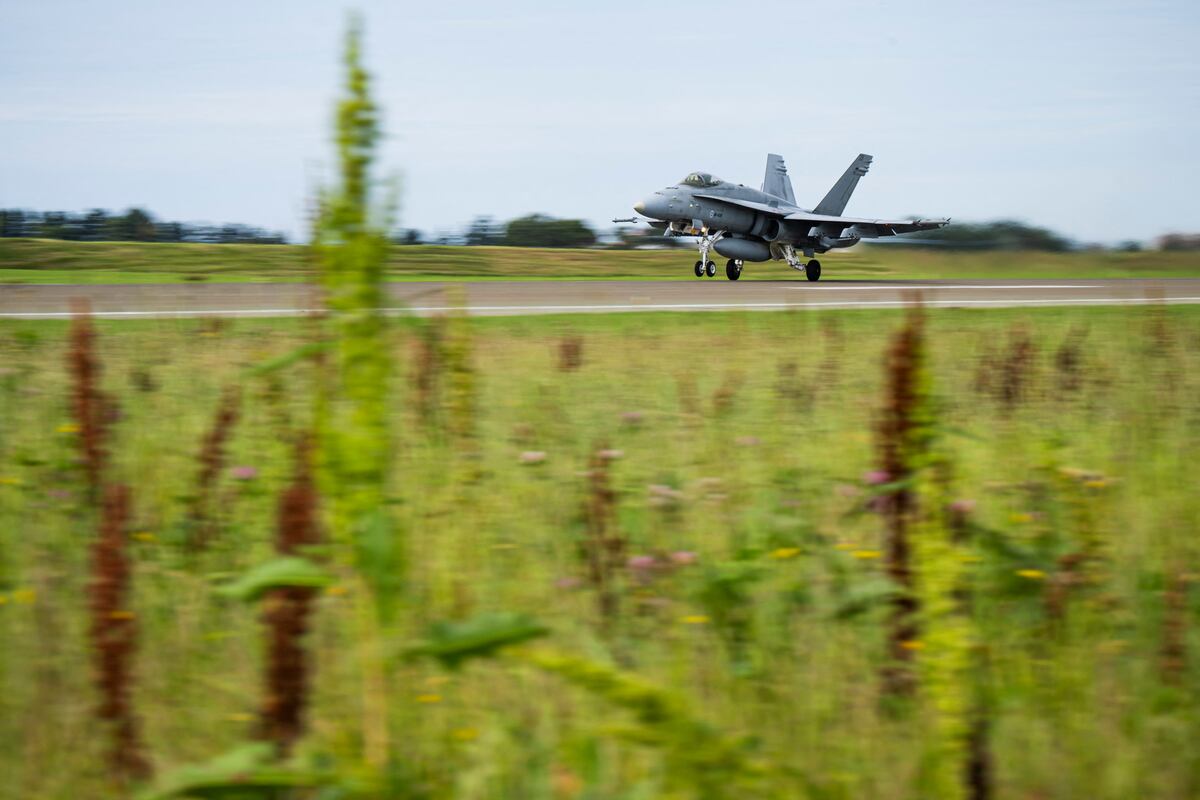
LONDON — With all Nordic countries now part of NATO , the nations must manage how to reconcile and integrate national as well as regional security needs and initiatives with what the alliance requires, which could necessitate changes to existing command structures, officials have said.
In March 2023, the commanders of the Swedish , Norwegian, Finnish and Danish air forces signed a declaration that envisioned the creation of a joint Nordic air force to protect their shared airspaces.
The concept called for the nations to integrate air command and control, joint operations planning, and execution; create flexible air basing; share situational awareness; and produce common air education programs and training exercises.
While the countries have experience in military cooperation, this level of integration between them is unprecedented. Acting as a coordinated force in the air rather than independently will require a shift in the way each nation approaches its airspace security, according to the chief of operations for the Royal Danish Air Force.
“All nations take great pride in their national commands and forces, and our sovereignty is paramount, [but] in order to effectively join our forces, Nordic countries need to have a minute-to-minute command function, which can plan and execute operations, including the use of weapons in defense of our territories,” Col. Søren Andersen said March 27 at an air warfare conference hosted by the London-based Royal United Services Institute think tank.
“For instance, effectively defending Copenhagen would require very close coordination between Sweden, allies and Swedish airspace,” he added. “It requires consensus. … It doesn’t work in a way where I just grab the phone and say, ‘Do you think we should shoot this guy or not,’ and then we can vote on it.
“So it needs to be more firm than that.”
All the Nordic countries are expected to share management responsibilities for the combined military force, but this may require them to release some level of control to a higher authority.
The proposal of a combined polar air force structure has earned the title “mini-NATO” — a notion some officials don’t seem fond of.
“This Nordic initiative is in no way to be seen as a substitute or replacement to NATO, but as part of it,” Andersen told conference attendees.
Along the same lines, Lt. Col. Jan Bjurström, deputy director of air operations in the Finnish Air Force, said “Nordic air forces are not planning a separate structure, but one that complements the military alliance as a whole.”
A member of a Swedish logistics regiment stands sentry at a supply depot during the Nordic Response exercise on March 8, 2024, near Enontekio, Finland. The drill involved 20,000 troops from 13 allied countries. (Leon Neal/Getty Images)
During his presentation, the Danish official touched on what he called the command structure dilemma, surrounding the challenges of having to consider national, Nordic and NATO operational perspectives. Now that all Nordic states are NATO members, there is the question of how their individual and regional responsibilities will fit within the military alliance’s current command-and-control structure.
A statement published last month by the Norwegian Armed Forces, said the NATO command over the Nordic region would “soon” be transferred from the headquarters in Brunssum, Netherlands, to Joint Force Command-Norfolk in the United States .
The alliance’s command-and-control structure was not specifically designed with territorial defense in mind — something the air chiefs said will need revised to include a Nordic agency.
“The Nordic air power concept and Nordic air operations center need to be aligned with NATO plans and structure. This means that NATO’s C2 needs revision to implement this [air operations center] into it,” Bjurström said.
During the Nordic Response exercise this year, a temporarily combined Nordic air operations center was set up for the first time as a test at the Bodø Air Base in Norway. The center was made up of personnel from the air forces of Denmark, Finland, Norway and Sweden (Iceland does not have a military).
Elisabeth Gosselin-Malo was a Europe correspondent for Defense News. She covers a wide range of topics related to military procurement and international security, and specializes in reporting on the aviation sector. She is based in Milan, Italy.
伦敦——官员们表示,随着所有北欧国家现在都加入了北约,这些国家必须设法协调和整合国家以及地区安全需求和倡议与联盟的要求,这可能需要对现有的指挥结构进行改变。
2023 年 3 月,瑞典、挪威、芬兰和丹麦空军指挥官签署了一项声明,设想建立一支北欧联合空军,以保护他们共同的空域。
该概念要求各国整合空中指挥与控制、联合行动计划与执行;建立灵活的空中基地;共享态势感知;并制定共同的空中教育计划和训练演习。
尽管两国在军事合作方面经验丰富,但这种程度的融合却是前所未有的。丹麦皇家空军作战部长表示,要在空中协同作战而非各自为战,需要两国转变其领空安全策略。
“所有国家都对自己的国家指挥机构和部队感到非常自豪,我们的主权至高无上,[但是]为了有效地联合我们的力量,北欧国家需要具备分秒必争的指挥功能,能够计划和执行行动,包括在保卫我们领土时使用武器,”索伦·安德森上校3月27日在伦敦皇家联合军种研究所智库主办的空战会议上说。
“例如,有效保卫哥本哈根需要瑞典、盟友和瑞典领空之间非常密切的协调,”他补充道。“这需要达成共识……这不是我拿起电话问‘你觉得我们应该射杀这个人吗?’然后我们投票表决就能解决的。”
“所以它需要更加坚定。”
所有北欧国家都应共同承担联合军事力量的管理责任,但这可能要求它们将一定程度的控制权移交给更高级别的机构。
建立联合极地空军结构的提议赢得了“迷你北约”的称号——一些官员似乎并不喜欢这个说法。
安德森在会议上告诉与会者:“这项北欧倡议绝不应被视为北约的替代品或取代者,而是北约的一部分。”
芬兰空军空中作战副主任扬·比约斯特伦中校也表示:“北欧空军并不打算建立独立的结构,而是建立一个与整个军事联盟相辅相成的结构。”
2024年3月8日,在芬兰埃农泰基奥附近举行的“北欧响应”演习期间,一名瑞典后勤团士兵在补给站站岗。此次演习共有来自13个盟国的2万名士兵参加。(Leon Neal/Getty Images)
在发言中,这位丹麦官员谈到了他所谓的指挥结构困境,即如何兼顾国家、北欧和北约的作战视角。如今所有北欧国家都是北约成员国,问题在于它们各自的责任和区域责任将如何融入北约现有的指挥控制结构中。
挪威武装部队上个月发表声明称,北约对北欧地区的指挥权将“很快”从荷兰布伦瑟姆的总部转移到美国诺福克联合部队司令部。
该联盟的指挥控制结构并非专门为领土防御而设计——空军首脑表示,需要对此进行修改,以纳入一个北欧机构。
比约斯特伦表示:“北欧空中力量概念和北欧空中作战中心需要与北约的计划和结构保持一致。这意味着北约的指挥控制系统需要进行修订,以便将这个(空中作战中心)纳入其中。”
在今年的“北欧响应”演习期间,挪威博德空军基地首次临时设立了一个北欧联合空中作战中心进行测试。该中心由丹麦、芬兰、挪威和瑞典(冰岛没有军队)空军人员组成。
伊丽莎白·戈斯林-马洛曾任《防务新闻》欧洲通讯员。她的报道涵盖军事采购和国际安全等广泛领域,尤其擅长航空领域的报道。她常驻意大利米兰。