Army office in charge of rapid development takes on Guam air defense负责快速发展的陆军办公室接管了关岛防空任务
The Army's Rapid Capabilities and Critical Technologies Office is taking on the task to create a joint integrated fires architecture to protect Guam.
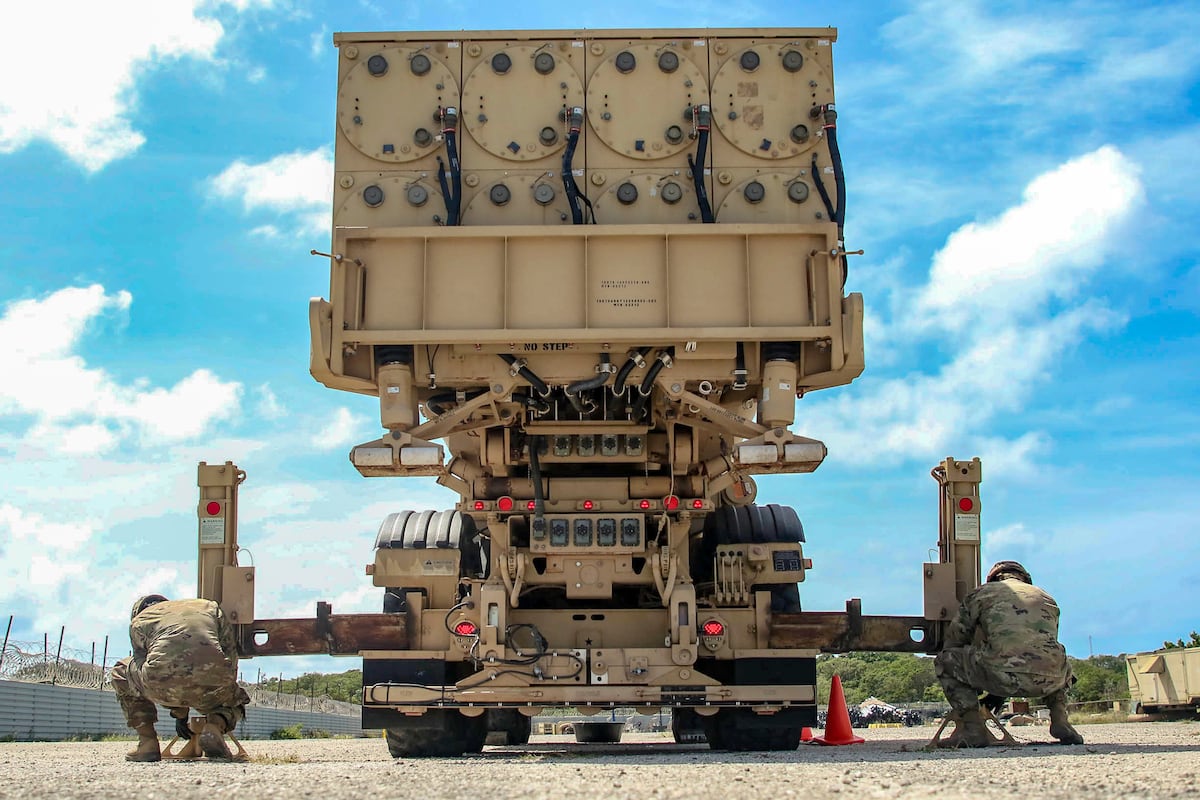
HUNTSVILLE, Ala. — The U.S. Army’s Rapid Capabilities and Critical Technologies Office is standing up a joint team to execute the Pentagon’s vision for a n air and missile defense architecture for Guam , its director told Defense News.
Under Secretary of Defense for Acquisition and Sustainment Bill LaPlante signed a memorandum establishing the Guam Defense Systems Joint Project Executive Office, which RCCTO will manage, Lt. Gen. Robert Rasch, said in a March 27 interview at the Association of the U.S. Army’s Global Force Symposium in Huntsville, Ala. It will consist of members from all of the services, he noted.
The office is already forming and fiscal 2024 money is being realigned to get it started, he said.
The Army last year was assigned to lead the acquisition and execution plan for the Guam architecture and the new office within RCCTO will focus on bringing the technology together to create a joint integrated air and missile defense fires capability to protect the strategic Pacific island.
“As we start bringing to bear defense of Guam Army systems, Navy systems and MDA systems , that sensing layer is going to thicken,” he explained. “And we think we have a lot to learn on how to assimilate or fuse that information from air defense perspective and that’s a really hard domain to get right. So if we can get it right there, [we] think that will scale very quickly to the other domains that don’t quite have the same latency [or] time requirements on it for them to execute their mission.”
Pentagon leaders, focused on China as a growing threat, say 2024 will be a key year for the Army to bolster defense around Guam. During this year, the service plans to have in place a foundational capability to help stave off a potential attack.
The Missile Defense Agency and the Army sought a combined $1.5 billion in FY24 budget to begin preparing the island by moving assets into place and integrating capabilities. The effort is a test for the Army, which decision-makers have at times overlooked amid the focus on air and naval power in the Indo-Pacific region.
Success in Guam could help cement the Army’s air and missile defense role in the region. The first wave of defenses will include radars, launchers, interceptors, and a command-and-control system.
The Army requested $638 million for FY24 for three Lower Tier Air and Missile Defense Sensors , multiple Patriot air defense systems, and an assortment of Mid-Range Capability missile launchers and Indirect Fire Protection Capability launchers. Additionally, the service plans to use the Northrop Grumman-made Integrated Battle Command System to connect the right sensors to the right shooters on the battlefield.
The Navy will provide technology and capability from its Aegis weapon system; the service holds jurisdiction over the sites where it will place the technology.
Additionally, FY24 funding requests are meant to cover the installation along the island’s periphery of four high-end, solid-state, mobile AN/TPY-6 radars, which are new sensors that use technology from the Long Range Discrimination Radar in Clear Space Force Base, Alaska.
“It’s the synchronizing of all of that at one point in time, or to arrive at one point in time, on Guam so you actually have a capability – not just delivering a radar to a location where there’s no power, there’s no place to put it, or we don’t have any maintenance setup for it,” Rasch said. “So a lot of our efforts, other than building this integrated layered capability, is making sure that all of the pieces and parts make a capability, not just a material thing.”
Jen Judson is an award-winning journalist covering land warfare for Defense News. She has also worked for Politico and Inside Defense. She holds a Master of Science degree in journalism from Boston University and a Bachelor of Arts degree from Kenyon College.
阿拉巴马州亨茨维尔——美国陆军快速能力和关键技术办公室主任告诉《防务新闻》,该办公室正在组建一个联合团队,以执行五角大楼为关岛制定的防空和导弹防御架构的愿景。
负责采购和保障的国防部副部长比尔·拉普兰特签署了一份备忘录,成立了关岛国防系统联合项目执行办公室。该办公室将由区域联合司令部(RCCTO)管理。罗伯特·拉施中将在3月27日于阿拉巴马州亨茨维尔举行的美国陆军协会全球力量研讨会上接受采访时表示,该办公室将由来自所有军种的成员组成。
他说,该办公室已经在组建中,2024 财年的资金正在重新调整以启动该办公室的工作。
去年,陆军被指派领导关岛架构的采购和执行计划,RCCTO 内的新办公室将专注于整合相关技术,以创建联合一体化防空和导弹防御火力,保护这个具有战略意义的太平洋岛屿。
他解释说:“随着我们开始运用关岛陆军系统、海军系统和导弹防御局(MDA)系统进行防御,感知层将会加厚。我们认为,从防空角度来看,我们还有很多关于如何整合或融合这些信息需要学习,而这确实是一个非常难以掌握的领域。因此,如果我们能够在这方面取得成功,我们认为这种方法可以很快扩展到其他领域,因为其他领域对延迟或执行任务的时间要求没有那么高。”
五角大楼领导人将中国视为日益增长的威胁,并表示2024年将是陆军加强关岛周边防御的关键一年。在这一年中,陆军计划建立一套基础能力,以帮助抵御潜在的袭击。
导弹防御局和陆军在2024财年预算中联合申请了15亿美元,用于启动该岛的建设工作,包括将资产部署到位和整合各项能力。这项工作对陆军来说是一次考验,在印太地区,决策者有时会因为过于关注空军和海军力量而忽视陆军的作用。
在关岛的成功可能有助于巩固陆军在该地区的防空和导弹防御地位。第一波防御体系将包括雷达、发射器、拦截器和指挥控制系统。
陆军申请2024财年预算6.38亿美元,用于采购三套低级防空反导传感器、多套“爱国者”防空系统以及一系列中程导弹发射器和间接火力防护发射器。此外,陆军还计划采用诺斯罗普·格鲁曼公司制造的集成作战指挥系统,将合适的传感器与战场上合适的火力单位连接起来。
海军将提供其宙斯盾武器系统的技术和能力;海军对该技术的部署地点拥有管辖权。
此外,2024 财年的拨款申请旨在支付在岛屿周边安装四部高端固态移动式 AN/TPY-6 雷达的费用,这些新型传感器采用了来自阿拉斯加克利尔太空部队基地远程识别雷达的技术。
“关键在于将所有环节同步到同一时间点,或者说,确保所有设备同时抵达关岛,从而真正具备作战能力——而不仅仅是将雷达运送到一个没有电力、没有安装地点、也没有任何维护设施的地方,”拉施说道。“因此,除了构建这种集成化的多层作战能力之外,我们的大部分工作都是为了确保所有部件都能构成真正的作战能力,而不仅仅是物质上的存在。”
珍·贾德森是一位屡获殊荣的记者,为《防务新闻》报道陆地战争。她也曾为《政治报》和《内幕防务》工作。她拥有波士顿大学新闻学硕士学位和凯尼恩学院文学学士学位。