Don’t give Turkey an F-16 consolation prize不要给土耳其F-16战斗机作为安慰奖
Turkey made its bed, flirting with both Russia and the West.
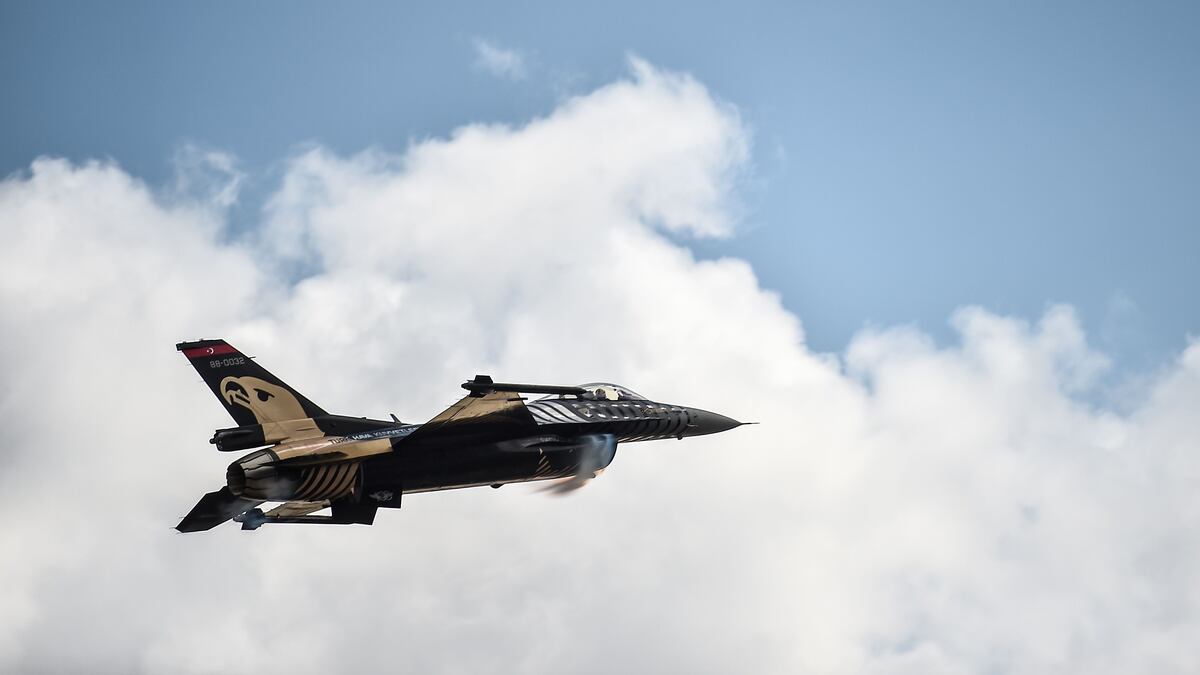
At the November G20 meeting, Turkish President Recep Tayyip Erdoğan and U.S. President Joe Biden met to discuss ongoing tensions and Turkey potentially purchasing the F-16 . Washington should be skeptical. The Turkish government has repeatedly ignored alliance commitments and used U.S. weapons sales against both U.S. and NATO interests, such as its provocations in the Mediterranean and aggressions against the Kurds. Selling Turkey advanced fighter aircraft, which it will then use without constraint, defeats the purpose of the G20 meeting.
The G20 talks focused on Washington’s partnership with Kurdish forces in Syria and Turkey’s 2019 purchase of Russian S-400 missile defense systems . Turkey described the purchase as a “necessity” due to the “intensive attacks” from Kurdish forces on the border, as Erdoğan has long maintained that U.S. support for the Kurds is “ unacceptable ” and goes against its NATO obligations. Ankara’s frustration in Syria gave Russia a leg up on its competition.
In response, the U.S. sanctioned and booted Turkey from the F-35 program , stating that the coexistence of the two programs meant Russian President Vladimir Putin’s military could receive tactical information on U.S. weaponry and military operations. The S-400 can track the F-16 and perhaps provide tactical information to Russia, an action Turkey engaged in during 2020. Nevertheless, Erdoğan continues to prod the Biden administration for the recovery of the $1.4 billion that Turkey spent on its F-35 system. Recently, Erdoğan suggested a U.S. sale of F-16s as a way to meet this debt and continue to provide Turkey with NATO weaponry.
This is not unusual. Much of Turkey’s military capability comes from U.S. weapons and training. Turkey’s entire stock of air combat fleets and the majority of its battle tanks are composed of U.S.-supplied weaponry. Between 2019 and 2020, the U.S. gave Turkey nearly $5 million for international military education and training.
Washington justified this beneficence under the guise of the interoperability that Turkey’s NATO membership demands. In October 2021, a State Department representative noted that “the United States and Turkey have long-standing and deep bilateral defense ties, and Turkey’s continued NATO interoperability remains a priority.” This theory is not without merit. In 2019, Turkish forces composed the second-largest army assisting in Afghanistan, Bosnia and Kosovo.
A continued partnership with Turkey does more harm than good. For starters, Turkey’s anti-Kurdish efforts are undermining American interests in the fight against ISIS. Turkey is using U.S.-supplied weapons to fight U.S.-supported Kurdish troops in Syria rather than ISIS, prolonging U.S. involvement in Syria. It is in the United States’ best interest to prevent a further Turkish incursion against the Kurds, encourage a cease-fire in northeastern Syria and withdraw troops. An easy way to do this is by limiting weapons sales to the combatants, including Turkey.
Further, Turkey consistently ranks as one of the largest human rights offenders that receive U.S. weapons. U.S. defense officials have also previously claimed they believe Turkey is using American weapons to commit war crimes. A U.N. report of Turkey-led human rights abuses against civilians in Syria confirms this reality.
While one may argue that if the U.S. does not sell Turkey arms, Russia will, that is less possible in the case of Turkey and the F-16. The Turkish Defence Ministry recently found the Russian warplanes were technically insufficient and extremely costly because Ankara would need to adapt to the Russian systems.
Even if the U.S. ceases arms sales to Ankara, Turkey is not going to commit to wholly siding with Russia and risk alienating its European partners or losing the benefits of NATO membership. Erdoğan still supports Turkey’s possible ascension into the European Union, declaring in an address to EU ambassadors in January 2021 that he was “ ready to put our relations back on track ” and that negotiations in 2021 “will be the harbinger of a new era.”
It is clear that Erdoğan recognizes the benefits of playing both NATO and Russia off of each other. Regardless of whether Erdoğan has any intention of entering the process of EU accession, Turkey will continue to maximize its gains from both partnerships and avoid an overcommitment to either side.
The costs of further exacerbating tensions with Turkey are minimal. The benefits, though, are worth paying to avoid the strategic folly and human rights abuses that come from these sales. Turkey made its bed, flirting with both Russia and the West. Instead of rewarding Ankara’s estrangement from NATO, the United States should allow Erdoğan to lie in it and end arms sales to Turkey.
Natalie Armbruster is a research associate at Defense Priorities. Jordan Cohen is a defense and foreign policy analyst at the Cato Institute, and a PhD candidate in political science at the Schar School of Policy and Government at George Mason University.
在11月的G20峰会上,土耳其总统雷杰普·塔伊普·埃尔多安和美国总统乔·拜登会晤,讨论了持续的紧张局势以及土耳其可能购买F-16战斗机的事宜。华盛顿应该对此持怀疑态度。土耳其政府屡次无视联盟承诺,并利用美国对土耳其的武器销售损害美国和北约的利益,例如在地中海的挑衅行为以及对库尔德人的侵略。向土耳其出售先进战斗机,而土耳其又可以不受限制地使用这些战机,这完全违背了G20峰会的初衷。
二十国集团会谈的重点是华盛顿与叙利亚库尔德武装的合作以及土耳其2019年购买俄罗斯S-400导弹防御系统一事。土耳其称,由于库尔德武装在边境地区发动“猛烈袭击”,此次购买是“必要的”。埃尔多安长期以来一直坚称,美国对库尔德人的支持“不可接受”,违反了其北约义务。安卡拉在叙利亚的挫败感让俄罗斯在竞争中占据了优势。
作为回应,美国对土耳其实施制裁,并将其从F-35项目中除名。美国声称,这两个项目并存意味着俄罗斯总统普京的军队可以获取有关美国武器和军事行动的战术信息。S-400防空系统可以追踪F-16战机,并可能向俄罗斯提供战术信息,而土耳其在2020年就曾采取过这种行动。尽管如此,埃尔多安仍在不断敦促拜登政府追回土耳其为F-35系统支付的14亿美元。最近,埃尔多安建议美国向土耳其出售F-16战机,以此来偿还这笔债务,并继续向土耳其提供北约武器。
这并非罕见。土耳其的军事能力很大程度上依赖于美国的武器和训练。土耳其的全部空中作战机队和大部分主战坦克都由美国提供的武器装备构成。2019年至2020年间,美国向土耳其提供了近500万美元用于国际军事教育和训练。
华盛顿以土耳其作为北约成员国所要求的互操作性为由,为其这种恩惠行为辩护。2021年10月,一位国务院代表指出,“美国和土耳其有着长期而深厚的双边防务关系,土耳其继续保持北约互操作性仍然是优先事项。”这种说法并非毫无道理。2019年,土耳其军队是参与阿富汗、波斯尼亚和科索沃行动的第二大军队。
与土耳其继续保持伙伴关系弊大于利。首先,土耳其的反库尔德行动正在损害美国在打击“伊斯兰国”行动中的利益。土耳其使用美国提供的武器在叙利亚境内与美国支持的库尔德武装作战,而非打击“伊斯兰国”,从而延长了美国在叙利亚的军事行动。阻止土耳其进一步入侵库尔德地区、促成叙利亚东北部停火并撤军,才是符合美国最佳利益的做法。限制向包括土耳其在内的交战各方出售武器是实现这一目标的简便方法。
此外,土耳其一直是向美国提供武器的人权侵犯最严重的国家之一。美国国防官员此前也声称,他们认为土耳其正在利用美国武器犯下战争罪行。联合国一份关于土耳其主导的叙利亚境内侵犯平民人权行为的报告证实了这一事实。
虽然有人可能会说,如果美国不向土耳其出售武器,俄罗斯就会出售,但就土耳其和F-16战机而言,这种情况发生的可能性较小。土耳其国防部最近发现,俄罗斯战机在技术上不足,而且价格极其昂贵,因为安卡拉需要对俄罗斯系统进行改造才能使用。
即使美国停止向安卡拉出售武器,土耳其也不会完全倒向俄罗斯,从而冒着疏远其欧洲伙伴或失去北约成员国资格的风险。埃尔多安仍然支持土耳其加入欧盟的可能性,他在2021年1月对欧盟大使发表讲话时表示,他“准备使我们的关系重回正轨”,并称2021年的谈判“将是一个新时代的开端”。
显然,埃尔多安深谙周旋于北约和俄罗斯之间的利害关系。无论埃尔多安是否有意加入欧盟,土耳其都将继续从这两个伙伴关系中获取最大利益,避免对任何一方过度投入。
进一步加剧与土耳其的紧张关系代价微乎其微。然而,为了避免这些军售带来的战略失误和人权侵犯,付出这样的代价是值得的。土耳其自食其果,既与俄罗斯又与西方眉来眼去。美国不应助长安卡拉与北约的疏远,而应让埃尔多安承担后果,并停止对土耳其的武器销售。
娜塔莉·阿姆布鲁斯特是国防优先事项研究所的研究员。乔丹·科恩是卡托研究所的国防和外交政策分析师,也是乔治·梅森大学沙尔政策与政府学院政治学博士候选人。