Long-term community support key to preventing return to hoarding: Charities长期的社区支持是防止囤积行为复发的关键:慈善机构
Experts say patience, building trust and gradual decluttering can be crucial.
新闻视频
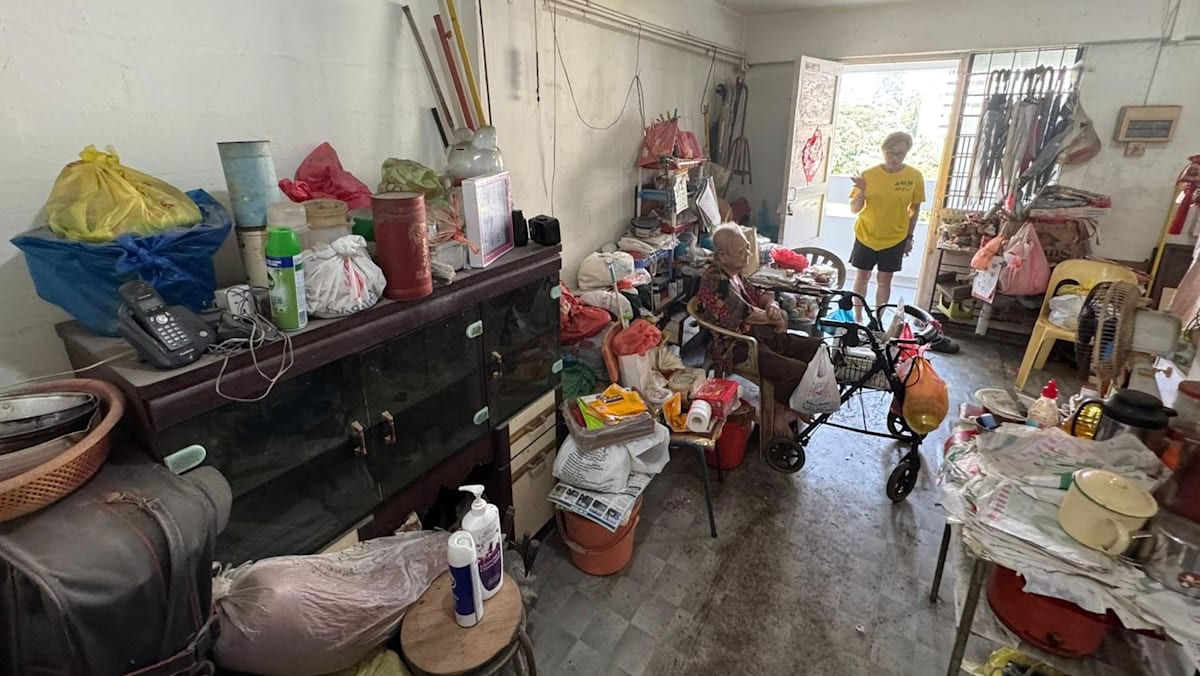
Experts say patience, building trust and gradual decluttering can be crucial.
Mdm Lee Poh Chen's home was previously filled with clutter and had a bed bug problem. (Photo: AMKSS Social Move)
This audio is generated by an AI tool.
SINGAPORE: Clearing a severely cluttered home may take days, but preventing the clutter from returning can require sustained support and regular follow-ups, charities and experts said.
About 60 per cent of hoarding cases seen by three family service centres run by Montfort Care experience re-hoarding, the social service agency said.
Those working with people who hoard say lasting change requires more than just clearing possessions.
CNA Games Guess Word Crack the word, one row at a time Buzzword Create words using the given letters Mini Sudoku Tiny puzzle, mighty brain teaser Mini Crossword Small grid, big challenge Word Search Spot as many words as you can Show More Show Less
For 88-year-old Mdm Lee Poh Chen, accepting help did not happen immediately.
Her home was previously filled with clutter and had a bed bug problem, according to Mr Michael Sim, founder of Ang Mo Kio Secondary School Social Move (AMKSS Social Move).
“We got the information from the MP and HDB. They (sought) help because a lot of people talked to her, but she refused to accept help,” said Mr Sim.
Stains left by bedbugs on a wall in Mdm Lee Poh Chen's home before the AMKSS Social Move clean-up. (Photo: AMKSS Social Move)
When the group became involved about nine months ago, volunteers first spent three days befriending her. She later agreed to accept their help.
The charity, which currently has around 600 volunteers, is part of a 28-organisation strong team set up in 2025 to tackle hoarding.
The New Environment Action Team (NEAT) comprises social service agencies, community groups and private organisations to coordinate efforts to manage such behaviour.
AMKSS Social Move is currently working on around 20 active hoarding cases, with at least another 30 on its waiting list.
Mr Sim, 59, said the charity sees up to 30 per cent more new requests for help year on year due to greater public awareness. Most come from family and friends seeking help for loved ones showing hoarding behaviour.
Mdm Lee (left) speaking to Mr Sim, founder of AMKSS Social Move. She agreed to accept the charity's help after 3 days of befriending. (Image: CNA)
WHEN CLEARING A HOME IS NOT ENOUGH
One contributing factor to re-hoarding can be the way interventions are carried out, said Montfort Care assistant director Jeannie Teo.
“Oftentimes, we come in or stakeholders might come in with quite a forceful approach or really through a statutory kind of approach whereby the residents might feel resistant or even anxious about the decluttering process,” Ms Teo said.
Taking the time to understand the personal value a person attaches to their possessions is important, she said, before taking small steps to address the problem.
“We might look at very small or negotiated steps with the resident to help them to see, are there ways that we can clear one area of the house, bit by bit at a time.”
Dr Chris Tan Ze Jia, senior consultant at the Institute of Mental Health (IMH), said clearing someone's home overnight can create a profound sense of loss.
“The contrast is so stark that it can trigger a backlash; the very next day, they might suddenly hoard even more items to fill the void left by what was taken away,” he said.
Clinical psychologist Sarah Ann Lee from The Psychology Practice said the value people ascribe to objects can go beyond their practical or material worth.
For some, possessions can also provide a sense of permanence and security.
“When we think about people, people might possibly leave us or abandon us, but objects, they're permanent,” she said.
“Let's say we ascribe some sort of value to it, if I keep more items, I might feel more safe, I might have a future need for it.”
Ms Lee said keeping such objects may help people regulate difficult emotions like anxiety, grief and loss.
Building rapport can help residents become more open to decluttering, Ms Lee said.
“The home is a safe space for all of us and we probably would not let people just go into our house if we didn't trust them,” she said.
People who hoard may already fear being negatively judged and may have strained relationships with family members, friends or neighbours.
Someone approaching them with the aim of clearing their possessions may cause them to become more defensive, she added.
Building rapport can start off with engaging them in conversations, trying to understand residents as individuals, learning about their lives and significant milestones.
“This might start to build trust because they do feel respected and seen as individuals, rather than, well, you're only coming to me because you're trying to get me to reduce this behaviour or totally get rid of it altogether,” she said.
She noted that agencies have begun taking a community-focused approach, bringing together people from different task forces and volunteers to better understand and address the behaviour.
The public, too, has a part to play. Ms Lee said greater understanding could help people avoid approaching those who hoard from a defensive or aggressive position.
“If we can understand it, if we can work together to try to relieve some of this stress that people have in their lives, perhaps we can then have a more concerted approach at helping them with this behaviour.”
One of the hoarding cases currently being handled by AMKSS Social Move. (Photo: AMKSS Social Move)
AMKSS Social Move is also among those who have changed its approach over the years, after finding that simply clearing homes was not producing lasting results.
“Six years ago, we cleaned the house. It's like as we always say, same thing, different year. Go back, same thing again, same house,” said Mr Sim.
At the time, about 50 per cent of the cases it handled would recur.
Weekly follow-ups and wider community involvement have since become a key part of its approach.
Now, the recurrence rate among cases it handles has fallen to less than 5 per cent, he said.
“Cleaning the house is simple, but follow up is more important,” said Mr Sim.
“It's a tremendous improvement for us and I can see the elderly are smiling happily.”
Get our pick of top stories and thought-provoking articles in your inbox
Stay updated with notifications for breaking news and our best stories
Join our channel for the top reads for the day on your preferred chat app
专家表示,耐心、建立信任和逐步清理杂物至关重要。
李宝珍女士的家中之前堆满了杂物,而且还有臭虫问题。(图片:AMKSS Social Move)
这段音频由人工智能工具生成。
新加坡:慈善机构和专家表示,清理一个严重杂乱的家可能需要几天时间,但要防止杂物再次出现,则需要持续的支持和定期的后续跟进。
蒙特福特护理中心(Montfort Care)下属的三家家庭服务中心表示,该社会服务机构接诊的囤积症病例中,约有 60% 会出现再次囤积的情况。
与囤积癖患者打交道的人表示,要实现持久的改变,需要的不仅仅是清理物品。
CNA游戏 猜词游戏 逐行破解单词 流行词游戏 用给定的字母组成单词 迷你数独 小小谜题,挑战你的大脑 迷你填字游戏 小方格,大挑战 单词搜索 尽可能多地找出单词 显示更多 显示更少
对于88岁的李宝珍女士来说,接受帮助并不是一蹴而就的事情。
据宏茂桥中学社会行动组织(AMKSS Social Move)的创始人迈克尔·沈先生称,她家以前堆满了杂物,而且还有臭虫问题。
“我们是从国会议员和建屋发展局那里得到的消息。他们(寻求)帮助,因为很多人都和她谈过,但她拒绝接受帮助,”沈先生说。
在AMKSS社会行动组织清理之前,李宝珍女士家中墙上留下了臭虫留下的污渍。(图片:AMKSS社会行动组织)
大约九个月前,当这个团体开始介入时,志愿者们首先花了三天时间与她建立友谊。之后,她同意接受他们的帮助。
该慈善机构目前拥有约 600 名志愿者,是 2025 年成立的由 28 个组织组成的强大团队的一部分,旨在解决囤积症问题。
新环境行动小组(NEAT)由社会服务机构、社区团体和私人组织组成,旨在协调各方努力来管理此类行为。
AMKSS Social Move 目前正在处理大约 20 个囤积症案例,另有至少 30 个案例在等待处理。
59岁的沈先生表示,由于公众意识的提高,该慈善机构每年收到的求助请求增加了30%。其中大部分来自家人和朋友,他们希望帮助有囤积行为的亲人。
李女士(左)与AMKSS Social Move的创始人沈先生交谈。在与沈先生相识三天后,她同意接受该慈善机构的帮助。(图片:CNA)
当清理房屋还不够时
蒙特福特护理中心助理主任珍妮·特奥表示,导致囤积行为再次发生的一个因素可能是干预措施的实施方式。
“很多时候,我们或者利益相关者可能会采取相当强硬的方式,或者通过法定的方式介入,这会让居民感到抵触,甚至对清理过程感到焦虑,”张女士说。
她说,在采取小步骤解决问题之前,花时间了解一个人对自己的物品赋予的个人价值非常重要。
“我们可以和住户一起探讨一些非常小的或协商性的步骤,帮助他们了解是否有办法一点一点地清理房屋的某个区域。”
心理卫生学院 (IMH) 高级顾问陈泽嘉医生表示,一夜之间清理某人的家可能会造成深深的失落感。
“这种对比如此鲜明,可能会引发反弹;第二天,他们可能就会突然囤积更多物品,以填补被夺走物品留下的空缺,”他说。
来自心理诊所的临床心理学家 Sarah Ann Lee 表示,人们赋予物品的价值可能超越其实用或物质价值。
对某些人来说,拥有物品也能带来一种稳定感和安全感。
“当我们想到人时,人可能会离开我们或抛弃我们,但物品却是永恒的,”她说。
“假设我们给它赋予某种价值,如果我保留更多物品,我可能会感到更安全,我将来可能也会需要它。”
李女士表示,保留这类物品可能有助于人们调节焦虑、悲伤和失落等负面情绪。
李女士表示,建立融洽的关系可以帮助居民更容易接受整理杂物。
“家是我们所有人的安全港湾,如果我们不信任某人,我们可能不会让他们随便进我们家,”她说。
有囤积癖的人可能已经害怕被负面评价,并且可能与家人、朋友或邻居关系紧张。
她补充说,如果有人接近他们并意图夺取他们的财物,可能会导致他们变得更加具有防御性。
建立融洽关系可以从与他们交谈开始,尝试了解居民的个性,了解他们的生活和重要里程碑。
“这可能会开始建立信任,因为他们会感到自己受到尊重,被视为独立的个体,而不是,嗯,你来找我只是因为你想让我减少这种行为或彻底消除这种行为,”她说。
她指出,各机构已经开始采取以社区为中心的措施,将来自不同工作组的人员和志愿者聚集在一起,以便更好地了解和应对这种行为。
公众也应尽一份力。李女士表示,增进理解可以帮助人们避免以防御或攻击的姿态对待囤积者。
“如果我们能够理解这种行为,如果我们能够共同努力减轻人们生活中的一些压力,或许我们就能采取更协调一致的方式来帮助他们克服这种行为。”
这是AMKSS Social Move目前正在处理的囤积案件之一。(图片:AMKSS Social Move)
AMKSS Social Move 也是近年来改变其方法的机构之一,因为他们发现仅仅清理房屋并不能产生持久的效果。
“六年前,我们打扫过房子。就像我们常说的,年年一样,还是老样子。回去一看,还是老样子,还是老房子,”沈先生说。
当时,该机构处理的案件中约有 50% 会再次发生。
此后,每周的后续跟进和更广泛的社区参与已成为其方法的关键组成部分。
他说,现在该院处理的病例复发率已降至 5% 以下。
“打扫房子很简单,但后续工作更重要,”沈先生说。
“这对我们来说是一个巨大的进步,我看到老人们脸上都洋溢着幸福的笑容。”
订阅我们的邮件,即可获取精选热点新闻和引人深思的文章。
订阅通知,第一时间获取突发新闻和精彩报道。
加入我们的频道,即可在您常用的聊天应用上获取当日热门文章。