New-Build F-16s For The USAF Is An Idea That Won’t Go Away, For Good Reason为美国空军全新制造F-16战斗机的想法不会消失,这是有充分理由的。
Lockheed’s F-16G pitch could be part of the answer to the Air Force's problem of trying to grow its increasingly geriatric fighter fleet. Lockheed’s F-16G pitch comes as the Air Force seeks to grow its fighter fleet.
By Thomas Newdick , Tyler Rogoway
Published Sep 17, 2026 2:46 PM EDT
Lockheed Martin screenca
Lockheed Martin and the U.S. Air Force are once again discussing new-build F-16 s. The development comes as the service grapples with a fighter fleet that is simultaneously aging, shrinking, ballooning in sustainment cost and being called upon to do more. This also comes at a time when the Air Force is now investing heavily in the F-15EX , another fourth-generation type it hadn’t bought for many years after committing to an all stealth future fighter fleet in the 2000s.
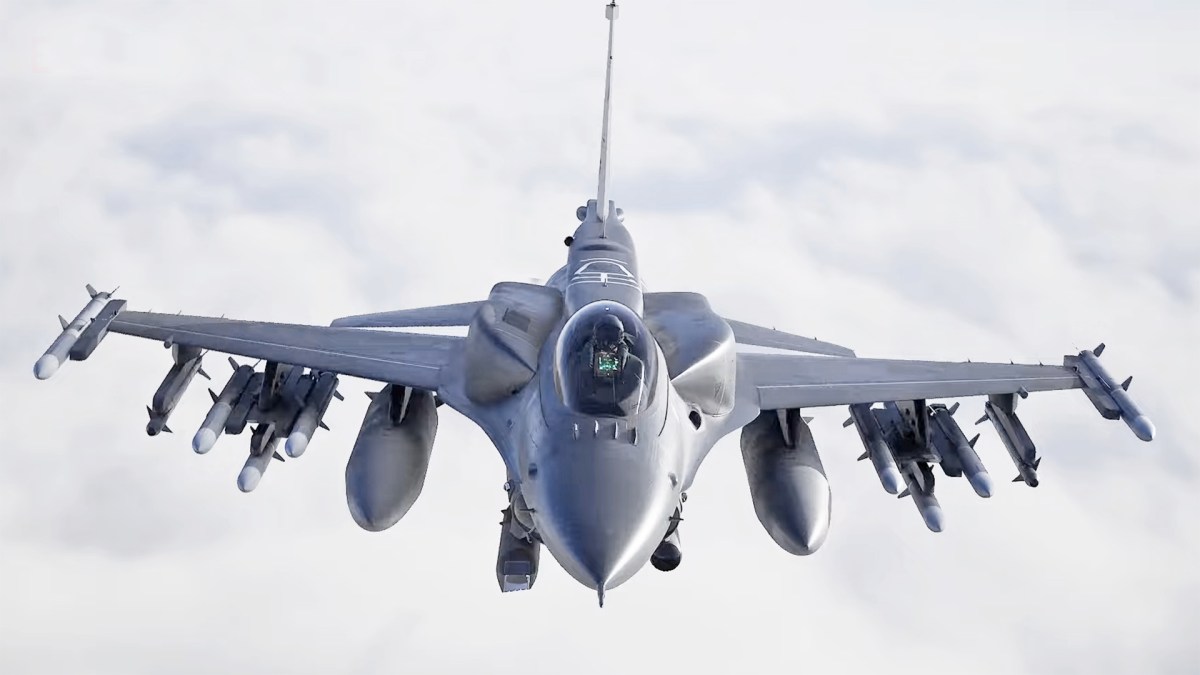
According to Aviation Week , the company has proposed an aircraft called the F-16G, an enhanced derivative of the F-16 Block 70 . The proposed configuration reportedly incorporates conformal fuel tanks, 600-gallon wing tanks , an infrared search-and-track (IRST) system, a Sniper targeting pod , and a drag chute. All of these features have appeared on previous F-16s in one form or another. Lockheed is positioning the new version as a potential replacement for USAF F-16 units whose existing aircraft are approaching the end of their useful lives.
A Bahraini Block 70 F-16D flown by members of the 416th Flight Test Squadron pulls away after receiving fuel from a KC-135 tanker with a crew from the 370th Flight Test Squadron during a sortie out of Edwards Air Force Base in California on March 7, 2024. U.S. Air Force
The Air Force, for its part, says that it has not yet settled on either the requirements or the options for addressing the problem. As it stands, the service has not committed to buying any new F-16s. The proposal is nevertheless notable because it follows an earlier round of discussions in which the Air Force was already examining whether a new-build F-16 could help address the growing fighter gap.
In December 2025, Inside Defense reported that the Air Force had reached out to Lockheed Martin about pricing for Block 70 F-16s — the current export standard . The conversations were described as exploratory, with no firm procurement plan, but the reporting established that the idea had moved beyond a purely theoretical discussion. One congressional aide told the publication that officials were looking at ways to “plug their holes” as part of their future force-structure planning.
A new Viper variant based on the Block 70 would be cheaper than replacing an aging F-16 with an F-35 , while allowing the Air Force to retain much of the infrastructure, training, and experience associated with the existing aircraft. This is a major advantage as the F-35’s unique infrastructure and support requirements are a costly addition to the aircraft’s base price tag. An even bigger factor is unrelated to acquisition and bed-down costs: a Block 70 is far cheaper to sustain and operate over its service life than an F-35, a difference that compounds significantly across a fleet.
A line-up of F-16s assigned to the 149th Fighter Wing, a unit of the Texas Air National Guard. Air National Guard photo by Airman 1st Class Jonathan Rasco Airman 1st Class Jonathan Rasco
The idea of a new Viper buy had already reached the highest levels of Air Force leadership several months earlier.
In May 2025, Sen. Tom Cotton asked then-Air Force Chief of Staff Gen. David Allvin about the possibility of buying a U.S.-configured “Block 80” F-16 if Congress provided additional funding. Allvin did not endorse the proposal, but he did not dismiss it either, saying he needed to examine the time required to adapt the Block 70 design, where a U.S. aircraft could fit into Lockheed Martin’s production line, and what the industrial base could support. He also noted that the existing Block 70/72 line was already heavily occupied by foreign military sales .
At the same hearing, Allvin acknowledged the broader force-structure logic, saying the Air Force needed both the high-end capabilities required for an Indo-Pacific fight and other fighters that “may not need to be as sophisticated as our fifth-generation, sixth-generation.” He also emphasized that the first increment of Collaborative Combat Aircraft (CCA) was intended to augment rather than replace crewed fighters like the F-16.
General Atomics’ YFQ-42 for the first increment of the Air Force’s Collaborative Combat Aircraft program, which has now received the official nickname Vengeance. General Atomics
Taken together, the developments show that the concept has remained alive through the Air Force’s evolving force-structure debate.
At first glance, the idea of buying new F-16s for the Air Force in the late 2020s might seem puzzling. The F-16 entered U.S. service in the 1970s, the Air Force stopped buying new examples for itself more than 20 years ago. The established plan has been to replace the legacy F-16 fleet with the F-35A . For a long time, the service’s stated ambition was ultimately an all-stealth tactical fighter force — but that vision has already largely melted away as budget, operational and industrial-capacity realities have set in.
Today, the fighter fleet is still far older on average than it needs to be and legacy fourth generation types, minus a handful of new F-15EXs, are now well over 20-years old at the youngest. The oldest of these aircraft are increasingly challenging and costly to support. Meanwhile, the F-35 has had its fair share of successes and challenges, but replacing all of the USAF’s oldest fighters with JSFs in a timely and efficient manner, and operating those aircraft over future decades, looks increasingly problematic. The F-47 is also on the horizon, but that aircraft fits a different capability set more aligned with the F-22 than the F-16 and will come at a much higher cost than any fighter currently being procured.
Above all else, the problem is that the Air Force’s fighter challenge is one of numbers.
The service’s 2025 long-term fighter force-structure assessment concluded that it needed 1,558 combat-coded manned fighters by 2035 to reach what it considers a low-risk operational posture. The Air Force had only 1,098 fighters in its inventory as of May 2026, below the statutory minimum of 1,145.
At the same time, the service is trying to retire old aircraft , expand F-35A procurement, introduce the F-47, acquire additional F-15EXs , and field large numbers of CCAs . Those programs address different requirements, but they all compete for money, industrial capacity , personnel, and infrastructure.
An MQ-28 Ghost Bat and a U.S. Air Force F-15EX participate in Valiant Shield 2026 over the Philippine Sea, June 27, 2026. U.S. Air Force photo by Tech Sgt. Thomas Barley Tech. Sgt. Thomas Barley
For the Air Force, the question has not simply been whether the F-16 remains militarily useful, but also whether the aircraft provides a possible answer to a capacity shortfall, while also dealing with delays in F-35 deliveries , and the retirement of the A-10 , blowing another hole in the inventory. Meanwhile, some older F-16s that had been expected to leave the fleet are instead receiving upgrades , including a new radar and electronic warfare suite, to keep them flying longer.
A U.S. Air Force airman works to install a new active electronically scanned array (AESA) radar system onto a 480th Fighter Squadron F-16C at Spangdahlem Air Base, Germany, May 23, 2022. U.S. Air Force photo by Tech. Sgt. Maeson L. Elleman 2nd Lt. Maeson Elleman
That creates a difficult transition period. The Air Force wants to retire aging fighters, but it also needs to keep enough aircraft available while their replacements arrive. The F-16 keeps reappearing because it offers a way of addressing at least part of that problem with a very well known commodity and without requiring every legacy fighter to be replaced by an F-35 or F-15EX.
The Production Line Matters
There is another reason the F-16 procurement idea refuses to disappear: Lockheed Martin already has an F-16 production line operating in the United States.
The Greenville, South Carolina, facility was established to produce Block 70/72 aircraft for foreign customers and is now the world’s only F-16 production facility. The Air Force helped establish the line as part of its broader effort to sustain the F-16 industrial base through foreign military sales. The line moved there after the massive Lockheed Martin plant at Fort Worth, Texas — where the F-16 had been built for decades — transitioned fully over to F-35 production.
So, buying new F-16s would not require reviving a dormant production line or spinning up an entirely new aircraft program. The basic manufacturing infrastructure already exists, and the additional work required for a U.S.-specific aircraft may end up being minimal — potentially amounting to little more than taking an existing Block 70 and tweaking it, rather than a large-scale new engineering, testing, and weapons-integration effort.
A two-seat F-16D Block 70 on the production line in Greenville. Lockheed Martin
The Air Force has been aware of that possibility for years. In 2021, then-Air Force Assistant Secretary for Acquisition Will Roper argued that the service should consider the new F-16 production line as part of its capacity solution. Roper specifically pointed to the upgraded capabilities available from the South Carolina production line.
However, Greenville is not an empty production line waiting for a U.S. customer. Lockheed Martin’s F-16 facility already has a substantial Block 70/72 backlog for foreign operators, with the company reporting more than 100 aircraft in the queue and continued potential for additional international orders. It’s also unclear how much the facility could realistically be expanded, since it was designed around a relatively more modest foreign military sales production volume rather than the kind of surge a large U.S. order could require. Still, the USAF could step in and buy up open slots, which would also ensure the line stays open for the foreseeable future, which has major strategic and industrial protection benefits.
That brings us back to Gen. Allvin’s question in May 2025 about where a U.S. aircraft could fit on the production line. Even if the Air Force decided to buy the jets, it would have to compete for production capacity with an established international order book while developing whatever U.S.-specific configuration, testing, and integration work it requires.
This Is Not Your Dad’s F-16
The proposed F-16G is also significant because it is not simply another upgraded F-16C/D like the USAF already has.
Lockheed’s proposed configuration reportedly would add conformal fuel tanks and 600-gallon wing tanks, along with an IRST, and the latest Sniper targeting pod, as well as a drag chute. All of these systems are already fielded and available today rather than requiring new development.
Those additions point toward an aircraft intended to provide even more basing flexibility, range, persistence, weapons and sensing capability than the current F-16, which had already grown into a medium-weight fighter years ago. That is relevant to how such an aircraft might actually fit into the future Air Force.
A U.S. Air Force avionics specialist prepares to install a Sniper Advanced Targeting Pod onto an F-16. U.S. Air National Guard photo by Airman 1st Class Sarah Stalder Lundgren Staff Sgt. Sarah Stalder Lundgren
A contemporary F-16 is already a very different proposition from the aircraft that entered U.S. service decades ago. Modern AESA radars, electronic warfare systems, digital architecture, datalinks, advanced cockpit interfaces and weapons have substantially expanded its capabilities. The proposed F-16G would push that evolution further, but, like the F-15EX, it would still occupy a different part of the spectrum from the F-35 and whatever eventually emerges from the F-47 program.
That distinction could be useful in a larger force. An F-35 provides capabilities, particularly its combination of stealth and advanced sensor fusion, that an F-16 can never reproduce. But the Air Force does not conduct every mission in the most heavily defended portion of an adversary’s airspace. Homeland defense, training, defensive counter-air, a range of strike missions, and operations in permissive or partially contested environments don’t necessarily require the same characteristics as a penetration mission against an integrated air defense network. In a major conflict, no fighter will fight alone, either. Far from it. Operation Midnight Hammer, the B-2 strikes against Iran’s nuclear program, provides a salient example here, with F-16s flying deep into the country along with F-22s and F-35s, to clear the way for the B-2 strike force. By now, the Air Force is well-versed in leveraging the total-force fourth-and-fifth-generation mix and it has discovered that they complement each other in unique ways that can be an advantage, not just compensation for lack of capability.
As far as the drag chute, that is a highly relevant addition to the USAF’s F-16 capability set. The chute would allow for the F-16 to better execute Agile Combat Employment (ACE) , which includes operating from austere airfields within the enemy’s weapons engagement zone. The F-16 can get off the runway pretty quick, but landing is a different story. The chute can help greatly in this regard.
A U.S. Air Force C-5M Super Galaxy aircraft assigned to the 9th Airlift Squadron, Dover Air Force Base, left, sits beside an R-11 fuel truck and an F-16C Fighting Falcon aircraft assigned to the 122nd Fighter Wing on the flight line at the 122nd Fighter Wing, Fort Wayne, Indiana, July 24, 2025. The C-5 participated in an agile combat employment exercise that included wet wing defueling to the fuel truck which then provided fuel to the F-16. (U.S. Air National Guard photo by Tech. Sgt. David Sherman) Tech. Sgt. David Sherman
There is no question that an F-16 is not a replacement for an F-35. But it could help the Air Force better allocate its limited inventory of increasingly expensive fifth-generation and future sixth-generation aircraft while also maintaining a much larger overall fighter fleet.
CCA Changes the Calculus for Fourth-Gen Jets
One factor that is easy to overlook is Collaborative Combat Aircraft. CCAs are not just a complement to fifth- and sixth-generation fighters, they can also breathe new relevance into fourth-generation types like the F-16. Pairing stealthy, and even optionally expendable CCAs with a fighter like the F-16G could substantially boost its survivability and lethality by pushing sensing, shooting, and some of the risk forward onto uncrewed platforms, extending the F-16’s combat relevance even into higher-end scenarios where it would otherwise be at a disadvantage. In that sense, CCA may end up being arguably as relevant to fourth-generation aircraft as it is to fifth-generation ones.
In other words, CCAs are a positive factor in the F-16G’s business case.
A U.S. Air Force YFQ-44A Fury aircraft, assigned to the Collaborative Combat Aircraft Experimental Operation Unit, takes off for a mission flight during an Agile Combat Employment exercise at Creech Air Force Base, Nevada, July 21, 2026. The flight was part of a broader ACE exercise designed to test the resilience, adaptability, and combat effectiveness of the semi-autonomous fleet. (U.S. Air Force photo by Staff Sgt. Kristal Munguia) Staff Sgt. Kristal Munguia
While the F-22 and F-35 are slated to get CCAs first, the F-16G can be built ready to interoperate with them, which could be a massive force multiplier to what would be the most affordable crewed tactical asset in the inventory. CCAs can eventually be used to also help augment F-16Gs operating in a homeland defense mission and other more mundane roles as well.
New Block 70s could make particular sense for the Air National Guard.
The Guard continues to operate F-16s in large numbers, meaning that its personnel, facilities, simulators, and maintenance infrastructure are already built around the aircraft. A new-build F-16 could therefore replace an aging F-16 without requiring the same organizational transition associated with converting a unit to an entirely different fighter, and especially a highly complex 5th generation type with all its unique support requirements.
That has financial implications beyond the aircraft itself. Replacing an existing F-16 squadron with Block 70s would reduce construction costs and training requirements because much of the existing infrastructure and expertise could be retained.
From left, two U.S. Air Force F-16Cs assigned to the 177th Fighter Wing, New Jersey Air National Guard, and two F-35As assigned to the 158th Fighter Wing, Vermont Air National Guard, follow a KC-135 Stratotanker off the coast of Atlantic City, New Jersey. U.S. Air National Guard courtesy photo by Tech. Sgt. James Norman Andrew J. Moseley
The Air Force would still have to pay for the aircraft and sustainment, but it would not be starting from scratch in terms of operating infrastructure, while the modernized fourth-generation capabilities of an F-16G would still mark a step forward for the Guard over its older F-16s.
It’s worth noting there has also been discussion of replacing more aging F-16s with additional F-15EXs instead. That path, however, is more expensive on both the acquisition and operating-cost side, and it would still require units to convert to a different airframe rather than simply recapitalizing in place.
A new F-16 offers a fresh and highly mature airframe — one with a full service-life ahead of it, on the order of 12,000 flight hours without the need for structural upgrades — double that of the original F-16. This is compared to existing F-16s in the inventory with the decades of wear and fatigue already accumulated on them, with structural upgrades keeping them in the air. That difference in remaining structural life is arguably the single biggest advantage a new-build aircraft has compared with extending an existing one.
U.S. Air Force aircraft armament systems specialists assigned to the Ohio National Guard’s 180th Fighter Wing load 20mm ammunition into an F-16’s M61A1 Vulcan cannon. U.S. Air National Guard photo by Master Sgt. Kregg York Master Sgt. Kregg York
Dumping more money into existing F-16s is becoming questionable. Service life extensions and technical upgrades can only go so far and supporting these jets is becoming harder as parts dry up and suppliers who made them are long gone. A new airframe would give the guard many decades of highly efficient service and the piece of mind for future force planning that goes with it.
Also, just like F-15EX, the development of the Block 70 F-16 has already been paid for largely by foreign over many years. It is as off-the-shelf of a solution as it gets and that is a very attractive proposition to an air arm trying to balance its books.
Above all, F-16 sustainment and operating costs run far below the F-35’s — a gap that already holds true even with older F-16s, and one that would widen further with new-build jets.
The Argument Against Simply Buying More F-35s
One seemingly obvious alternative would be to accelerate F-35A procurement. But the F-35 is not simply another fighter that can be substituted one-for-one whenever an F-16 reaches the end of its service life. That would also be difficult to do in practice. F-35A production is effectively capped and there are dense order books, and the well-documented troubles with the Block 4 upgrade are a huge factor pushing the Air Force to look at alternatives like the F-16G in the first place.
The Air Force’s current force-structure plans call for significantly more fighters overall, while the service is simultaneously pursuing F-35As, F-15EXs, and the F-47.
A U.S. Air Force F-15EX Eagle II. U.S. Air Force U.S. Air Force photo by Tech Sgt. Jacob Stephens
Among the reasons why a modernized F-16 might be considered alongside those programs are concerns not only about the cost of those aircraft, but also about the timing of F-35 deliveries, something that has been disrupted by well-publicized problems with Joint Strike Fighter upgrades . At the same time, keeping older F-16s active through upgrades is an increasingly unattractive way of managing the shortfall.
The issue is therefore less about choosing the F-16 instead of the F-35 than about deciding whether the Air Force should use both aircraft for different portions of the force structure.
The service is already doing something along these lines with the F-15EX. It has accepted that a modernized fourth-generation aircraft can have a role alongside the F-35 and the F-22, rather than requiring every new fighter to be stealthy.
A new F-16 would extend that logic to a lower-cost segment of the fleet, potentially allowing the Air Force to use F-35s where their particular capabilities are most valuable while maintaining additional capacity with a less expensive aircraft.
What Could Happen Next?
Even if Air Force leaders conclude that the F-16G makes operational sense, Congress would still have to decide whether it is worth funding.
The December 2025 reporting identified the central problem: lawmakers would want the service to demonstrate that buying new aircraft is preferable to continuing to upgrade the F-16s it already owns. They would also have to weigh the proposal against the F-35 and CCA programs.
If an existing F-16 can be kept operational with a relatively inexpensive upgrade, a new aircraft has to justify its acquisition cost and the additional long-term sustainment burden. But if maintaining an increasingly old F-16 fleet doesn’t save large sums of money over the long haul, the new Block 70 variant begins to look more compelling.
A U.S. Air Force F-16 takes off at a base in the U.S. Central Command area of responsibility on August 10, 2026. U.S. Air Force photo by Staff Sgt. Justin W. Moore Senior Airman Justin Moore
There remains a substantial gap between Lockheed Martin pitching the F-16G and the Air Force actually buying it. The service told TWZ that is “in the initial phases of analyzing options for the next Future Years Defense Program.” The Air Force spokesperson added: “At this stage, we have neither defined the precise mission requirements nor the spectrum of options that could fill it.”
That is consistent with the status described by Inside Defense nine months earlier. At the time, the Air Force had no plans to procure Block 70s, and the discussions with Lockheed were described as exploratory. Even if senior officials ultimately favored the aircraft, Inside Defense reported that the program could not appear in the Future Years Defense Program until at least fiscal 2028 because the FY2027 budget process was already too far along.
The F-16G therefore remains a proposal rather than a program. But the persistence of the idea is itself significant. It should be noted that the F-15EX buy emerged out of very similar machinations, with the benefits proving to be undeniable.
The new proposal would let some Guard and Reserve units swap their F-16s for vastly improved F-16s — the same logic that drove the F-15EX buy — while also keeping the Greenville line hot, which is a significant benefit in its own right. And it accomplishes both in the most efficient way possible: not just in acquisition cost, but in sustainment cost, which is really the more problematic burden of the two. In the end, this points to another glaring reality check for the all-stealth-force concept, a vision the Air Force has effectively already abandoned.
The Air Force has spent years describing the F-35 as the replacement for its F-16 fleet, yet it now has to contend with aging F-16s, delayed or constrained fighter production, a larger stated requirement for total fighter capacity, and the lengthy transition toward the F-47 and uncrewed combat aircraft. In that environment, a new-build F-16 provides an option that sits between extending legacy aircraft and buying the most sophisticated — and expensive — fighters available.
The F-16 was supposed to have left the U.S. fighter equation years ago. Instead, every time the Air Force looks closely at the gap between the force it has and the force it says it needs, the aircraft somehow finds a way back into the conversation.
Regardless, there are so many priorities facing the force right now, buying new F-16s will be a challenged at every turn, but that doesn’t mean it won’t become to compelling of a proposition to accept.
Contact the author: thomas@thewarzone.com
Comments couldn’t be loaded. Please refresh the page.
作者:托马斯·纽迪克、泰勒·罗戈威
发布于美国东部时间2026年9月17日下午2:46
洛克希德·马丁公司屏幕
洛克希德·马丁公司和美国空军再次就新建F-16战斗机进行磋商。此次磋商正值美国空军面临战斗机机队老化、规模缩减、维护成本飙升以及任务量增加等多重挑战之际。与此同时,美国空军正在大力投资F-15EX——另一种第四代战斗机,自2000年代承诺建设全隐形未来战斗机机队以来,空军已多年未采购该型战机。
据《航空周刊》报道,洛克希德·马丁公司提出了一款名为F-16G的飞机方案,它是F-16 Block 70的改进型。据称,该方案将采用保形油箱、600加仑翼下油箱、红外搜索跟踪(IRST)系统、狙击手(Sniper)瞄准吊舱和减速伞。所有这些部件都曾以某种形式出现在之前的F-16战机上。洛克希德·马丁公司将这款新机型定位为美国空军F-16部队的潜在替代机型,这些部队的现有F-16战机已接近使用寿命终点。
2024年3月7日,一架隶属于美国空军第416飞行测试中队的巴林Block 70型F-16D战斗机在加利福尼亚州爱德华兹空军基地执行飞行任务期间,从一架载有美国空军第370飞行测试中队机组人员的KC-135加油机上获得燃油后起飞。
空军方面表示,尚未确定解决该问题的具体需求和方案。目前,空军尚未承诺采购任何新的F-16战斗机。尽管如此,这项提议仍然引人注目,因为在此之前,空军已经就新制造的F-16战斗机能否帮助解决日益严重的战斗机缺口问题进行过讨论。
2025年12月,《国防内幕》(Inside Defense)报道称,美国空军已就Block 70型F-16战斗机(当时的出口标准)的价格问题与洛克希德·马丁公司进行了接洽。报道称,双方的对话属于探索性质,尚未形成具体的采购计划,但同时也表明,这一想法已不再局限于纯粹的理论探讨。一位国会助理告诉该媒体,官员们正在考虑如何“填补漏洞”,作为未来部队结构规划的一部分。
基于Block 70的新型“蝰蛇”改进型比用F-35替换老旧的F-16更经济,同时还能让空军保留与现有战机相关的绝大部分基础设施、训练和经验。这是一项重大优势,因为F-35独特的配套设施和支持需求会大幅增加其基本成本。还有一个更重要的因素与采购和部署成本无关:Block 70在其整个服役期内的维护和运营成本远低于F-35,而这种差异在整个机队中会显著放大。
隶属于德克萨斯州空中国民警卫队第149战斗机联队的F-16战斗机列队。照片由一等兵乔纳森·拉斯科拍摄。
早在几个月前,购买新型蝰蛇战斗机的想法就已经传到了空军最高领导层。
2025年5月,参议员汤姆·科顿向时任空军参谋长戴维·奥尔文将军询问,如果国会提供额外资金,是否有可能购买一架美制“Block 80”型F-16战斗机。奥尔文并未支持该提议,但也未完全否决,他表示需要考察改造Block 70设计所需的时间、美制飞机能否融入洛克希德·马丁公司的生产线,以及工业基础的承载能力。他还指出,现有的Block 70/72生产线已基本被对外军售占据。
在同一场听证会上,奥尔文承认了更广泛的兵力结构逻辑,他表示空军既需要印太地区作战所需的高端能力,也需要其他“可能不需要像我们的第五代、第六代战机那样先进”的战斗机。他还强调,首批协同作战飞机(CCA)旨在增强而非取代F-16等有人驾驶战斗机。
通用原子公司为美国空军协同作战飞机计划的首批产品——YFQ-42战斗机——提供方案,该机型现已正式命名为“复仇”(Vengeance)。
综合来看,这些发展表明,这一概念在空军不断变化的力量结构辩论中一直存在。
乍一看,在2020年代末期为美国空军采购新型F-16战斗机的想法似乎令人费解。F-16于20世纪70年代在美国服役,而空军早在20多年前就停止采购新型号。既定计划是用F-35A战斗机替换老旧的F-16机队。长期以来,空军的既定目标是最终打造一支全隐形战术战斗机部队——但随着预算、作战能力和工业产能等现实因素的影响,这一愿景已基本落空。
如今,美国空军战斗机机队的平均机龄仍然远超所需,除了少数新型F-15EX之外,现役的第四代战斗机,最年轻的也已服役超过20年。这些老旧战机的维护难度和成本日益增加。与此同时,F-35战机虽然取得了一定的成功,但也面临诸多挑战,但要及时有效地用联合攻击战斗机(JSF)替换美国空军所有老旧战机,并在未来几十年内维持这些战机的正常运转,看起来越来越棘手。F-47战机也即将问世,但其性能定位更接近F-22而非F-16,而且成本将远高于目前正在采购的任何一款战斗机。
最根本的问题在于,空军面临的战斗机挑战是数量上的劣势。
空军2025年的长期战斗机部队结构评估得出结论,到2035年,需要1558架具备作战能力的有人驾驶战斗机才能达到其认为的低风险作战状态。截至2026年5月,空军仅有1098架战斗机,低于法定最低要求1145架。
与此同时,美国空军正试图淘汰老旧飞机,扩大F-35A的采购规模,引进F-47战斗机,增购F-15EX战斗机,并部署大量CCA(作战能力增强型战斗机)。这些项目虽然针对不同的需求,但它们都在争夺资金、工业产能、人员和基础设施。
2026年6月27日,一架MQ-28“幽灵蝙蝠”无人机和一架美国空军F-15EX战斗机在菲律宾海上空参加了“勇敢之盾2026”演习。美国空军技术军士托马斯·巴利摄。
对空军而言,问题不仅在于F-16是否仍具有军事价值,还在于该机能否在应对F-35交付延迟和A-10退役(后者将进一步削弱空军战机库存)的同时,填补战机数量缺口。与此同时,一些原本预计退役的老旧F-16战机正在进行升级改造,包括加装新的雷达和电子战系统,以延长其服役期限。
2022年5月23日,在德国施潘达勒姆空军基地,一名美国空军士兵正在为第480战斗机中队的一架F-16C战斗机安装新型有源相控阵雷达(AESA)系统。美国空军技术军士梅森·L·埃勒曼(Maeson L. Elleman)和少尉梅森·埃勒曼(Maeson Elleman)拍摄。
这就造成了一段艰难的过渡期。空军希望淘汰老旧战斗机,但同时也需要保证在新机型交付之前有足够的飞机可用。F-16之所以屡屡出现,是因为它提供了一种解决方案,既能以成熟的技术手段解决部分问题,又无需将所有老旧战斗机都替换成F-35或F-15EX。
生产线至关重要
F-16采购计划始终挥之不去的另一个原因是:洛克希德·马丁公司在美国已经有一条F-16生产线在运营。
位于南卡罗来纳州格林维尔的工厂最初是为了生产面向海外客户的Block 70/72型F-16战斗机而建立的,如今已成为全球唯一的F-16生产基地。美国空军曾协助建立这条生产线,作为其通过对外军售维持F-16工业基础的更广泛计划的一部分。此前,位于德克萨斯州沃斯堡的洛克希德·马丁公司大型工厂——该工厂曾生产F-16数十年——已全面转型为F-35战斗机的生产基地,这条生产线也随之迁至格林维尔。
因此,购买新的F-16战机无需重启一条闲置的生产线,也无需启动一个全新的飞机项目。基本的制造基础设施已经存在,而针对美国特定机型所需的额外工作可能微乎其微——或许仅仅是对现有的Block 70进行一些调整,而不是开展大规模的全新工程、测试和武器集成工作。
一架双座F-16D Block 70战斗机正在格林维尔的生产线上。洛克希德·马丁公司
空军多年来一直意识到这种可能性。2021年,时任空军负责采购的助理部长威尔·罗珀(Will Roper)曾表示,空军应将新的F-16生产线纳入其产能解决方案。罗珀特别指出,南卡罗来纳州生产线具备升级后的能力。
然而,格林维尔工厂并非一条空荡荡的生产线,等待着美国客户。洛克希德·马丁公司的F-16工厂目前已积压了大量Block 70/72型F-16战斗机的订单,主要来自海外运营商。该公司报告称,目前有超过100架飞机在排队等待交付,并且还有持续的国际订单增长潜力。此外,该工厂的实际扩建能力也尚不明确,因为它最初的设计是基于相对适度的对外军售生产规模,而非美国大宗订单所需的产能激增。不过,美国空军可以介入并购买剩余的生产名额,这将确保该生产线在可预见的未来继续运转,从而带来重要的战略和工业保护效益。
这就引出了艾尔文将军在2025年5月提出的问题:美国飞机在生产线上能排到什么位置?即便空军决定采购这些战机,它也必须与已有的国际订单争夺产能,同时还要开发美国特有的配置、测试和集成工作。
这不是你爸爸那辈的F-16战斗机
拟议中的 F-16G 也意义重大,因为它不仅仅是像美国空军已经拥有的 F-16C/D 那样的升级版。
据报道,洛克希德公司提出的配置方案将增加保形油箱和600加仑的翼下油箱,以及红外搜索跟踪系统(IRST)、最新的“狙击手”瞄准吊舱和减速伞。所有这些系统目前均已投入使用,无需重新研发。
这些新增功能表明,这款战机旨在提供比现役F-16更强的基地灵活性、航程、续航能力、武器装备和传感能力。而F-16早在几年前就已经发展成为一款中型战斗机。这与这款战机未来如何融入美国空军息息相关。
一名美国空军航空电子专家正准备将“狙击手”先进瞄准吊舱安装到一架F-16战斗机上。美国空军国民警卫队一等兵莎拉·斯塔尔德·伦德格伦(Sarah Stalder Lundgren)拍摄。
现代的F-16与几十年前美国服役的那架飞机已经截然不同。现代化的AESA雷达、电子战系统、数字架构、数据链、先进的座舱界面和武器系统极大地提升了它的性能。拟议中的F-16G将进一步推动这一发展,但与F-15EX一样,它仍然与F-35以及最终从F-47项目中诞生的机型处于不同的性能区间。
这种区别在规模更大的部队中可能很有用。F-35 拥有 F-16 永远无法复制的能力,特别是其隐身性能和先进传感器融合技术的结合。但空军并非每次任务都在敌方空域防御最严密的区域执行。国土防御、训练、防御性反空袭、各种打击任务以及在允许或部分对抗环境下的作战行动,并不一定需要与突破一体化防空网络的任务相同的特性。在重大冲突中,任何战斗机都不会单独作战。恰恰相反。“午夜铁锤行动”(即 B-2 轰炸机对伊朗核计划的打击)就是一个鲜明的例子,F-16 与 F-22 和 F-35 一起深入伊朗境内,为 B-2 轰炸机的打击部队开辟道路。到现在为止,空军已经非常熟悉如何利用第四代和第五代战机的全军组合,并且发现它们以独特的方式相互补充,这不仅可以弥补能力上的不足,还可以成为一种优势。
就减速伞而言,它对美国空军的F-16战机来说是一项非常重要的补充。减速伞能够使F-16更好地执行敏捷作战部署(ACE)任务,其中包括在敌方武器交战区内从简易机场起降。F-16的起飞速度很快,但着陆却截然不同。减速伞在这方面能够发挥巨大的作用。
2025年7月24日,在印第安纳州韦恩堡第122战斗机联队的飞行跑道上,一架隶属于多佛空军基地第9空运中队的美国空军C-5M“超级银河”运输机(左)停靠在一辆R-11加油车和一架隶属于第122战斗机联队的F-16C“战隼”战斗机旁。这架C-5参与了一次敏捷作战演习,演习内容包括从机翼上卸油至加油车,然后由加油车为F-16战斗机加油。(美国空中国民警卫队技术军士大卫·谢尔曼摄)
毫无疑问,F-16 并不能取代 F-35。但它可以帮助空军更好地分配其数量有限且日益昂贵的第五代和未来第六代战机,同时还能维持规模更大的战斗机机队。
CCA改变了第四代喷气式飞机的计算方法
协同作战飞机(CCA)是一个容易被忽视的因素。CCA不仅是第五代和第六代战斗机的补充,还能为F-16等第四代战斗机注入新的活力。将隐身甚至可替换的CCA与F-16G这样的战斗机结合使用,可以将侦察、射击以及部分风险转移到无人平台上,从而大幅提升F-16的生存能力和杀伤力,使其在原本处于劣势的高端作战场景中也能发挥作用。从这个意义上讲,CCA对于第四代战机的重要性或许不亚于其对第五代战机的重要性。
换句话说,CCA 是 F-16G 商业案例中的一个积极因素。
2026年7月21日,一架隶属于美国空军协同作战飞机实验部队的YFQ-44A“狂怒”战斗机在内华达州克里奇空军基地参加敏捷作战部署演习期间起飞执行任务飞行。此次飞行是更广泛的敏捷作战部署演习的一部分,旨在测试这支半自主机队的韧性、适应性和作战效能。(美国空军照片,由参谋军士克里斯塔尔·蒙吉亚拍摄)
虽然F-22和F-35计划率先配备协同作战能力组件(CCA),但F-16G可以预先设计成与它们互操作,这将极大地提升这款目前库存中最经济实惠的有人驾驶战术资产的作战能力。CCA最终还可以用于增强F-16G在国土防御任务和其他更常规任务中的表现。
新型 Block 70 型飞机可能特别适合空军国民警卫队。
国民警卫队目前仍大量装备F-16战斗机,这意味着其人员、设施、模拟器和维护基础设施均已围绕该型战机构建。因此,新制造的F-16可以替换老旧的F-16,而无需像将部队换装到完全不同的战斗机(尤其是高度复杂的第五代战机及其所有独特的保障需求)那样进行组织架构上的调整。
这带来的经济影响远不止于飞机本身。用Block 70型F-16战机替换现有的F-16中队,可以降低建设成本和训练需求,因为大部分现有基础设施和技术都能得以保留。
从左至右,两架隶属于新泽西州空中国民警卫队第177战斗机联队的美国空军F-16C战斗机和两架隶属于佛蒙特州空中国民警卫队第158战斗机联队的F-35A战斗机,在新泽西州大西洋城海岸附近跟随一架KC-135同温层加油机飞行。美国空中国民警卫队技术军士詹姆斯·诺曼·安德鲁·J·莫斯利供图。
空军仍然需要支付飞机和维护费用,但就运营基础设施而言,它无需从零开始,而F-16G的现代化第四代能力仍然标志着国民警卫队比其较老的F-16向前迈进了一步。
值得注意的是,也有人讨论过用更多的F-15EX战斗机替换老旧的F-16战机。然而,这种方案在采购和运营成本方面都更高,而且仍然需要部队更换机型,而不是简单地在原地进行更新换代。
新型F-16战机拥有全新且高度成熟的机身,其剩余使用寿命可达12000飞行小时左右,无需进行结构升级——是原F-16的两倍。相比之下,现役的F-16战机已经历了数十年的磨损和疲劳,需要通过结构升级才能继续飞行。可以说,这种剩余结构寿命的差异是新造飞机相对于现有飞机延期服役的最大优势。
隶属于俄亥俄州国民警卫队第180战斗机联队的美国空军飞机武器系统专家正在为一架F-16战斗机的M61A1“火神”机炮装填20毫米弹药。照片由美国空军国民警卫队一级军士长克雷格·约克拍摄。
继续向现有的F-16战机投入资金的做法越来越值得商榷。延长服役寿命和技术升级的作用终究有限,而且随着零部件短缺和供应商早已不复存在,维护这些战机也变得越来越困难。新型机身将为国民警卫队提供数十年的高效服役保障,并为未来的部队规划带来安心。
此外,与F-15EX一样,Block 70型F-16的研发资金多年来主要来自外国。它几乎是现成的解决方案,这对努力平衡收支的空军来说极具吸引力。
最重要的是,F-16 的维护和运营成本远低于 F-35——即使是较老的 F-16 也存在这种差距,而对于新制造的战机来说,这种差距还会进一步扩大。
反对简单地购买更多F-35战斗机的理由
一个看似显而易见的替代方案是加快F-35A的采购。但F-35并非另一种可以简单地在F-16退役后进行一对一替换的战斗机。实际上,这样做也很难。F-35A的产量实际上已经达到上限,订单也已排满,而且众所周知的Block 4升级问题也是促使空军首先考虑F-16G等替代方案的重要原因。
空军目前的部队结构计划要求大幅增加战斗机的数量,同时空军也在推进 F-35A、F-15EX 和 F-47 的研发。
一架美国空军F-15EX“鹰II”战斗机。美国空军技术军士雅各布·斯蒂芬斯摄。
之所以考虑在现有项目之外同时推进F-16的现代化改造,原因不仅在于这些战机的成本,还在于F-35的交付时间——联合攻击战斗机升级项目出现的问题已导致F-35交付受阻,这些问题当时已广为人知。与此同时,通过升级来维持老旧F-16的服役状态,也越来越难以成为解决战机短缺问题的有效途径。
因此,问题的关键不在于选择 F-16 而不是 F-35,而在于决定空军是否应该将这两种飞机用于部队结构的不同部分。
空军已经在F-15EX上采取了类似的策略。他们已经接受了现代化后的第四代战机可以与F-35和F-22并肩作战的理念,而不是要求每款新型战斗机都必须具备隐身能力。
新型 F-16 将把这种逻辑扩展到机队中成本较低的部分,从而使空军能够在 F-35 的特定能力最有价值的地方使用它们,同时用更便宜的飞机保持额外的运力。
接下来会发生什么?
即使空军领导人认为 F-16G 在作战上是有意义的,国会仍然需要决定是否值得为其提供资金。
2025年12月的报告指出了核心问题:立法者希望空军证明,购买新飞机比继续升级现有F-16战机更为可取。他们还必须权衡该提案与F-35和CCA项目之间的关系。
如果现有的F-16战机可以通过相对低成本的升级继续服役,那么新飞机就必须证明其采购成本和额外的长期维护负担是合理的。但如果维护日益老旧的F-16机队在长期来看并不能节省大量资金,那么新型Block 70改进型就显得更具吸引力了。
2026年8月10日,一架美国空军F-16战斗机从美国中央司令部责任区内的一处基地起飞。美国空军照片,由参谋军士贾斯汀·W·摩尔拍摄。
洛克希德·马丁公司推销F-16G战斗机与美国空军实际采购之间仍存在巨大差距。空军告诉TWZ,目前“正处于分析下一年度国防计划方案的初期阶段”。空军发言人补充道:“现阶段,我们既没有明确具体的任务需求,也没有列出所有可能的方案。”
这与《国防内幕》九个月前描述的情况一致。当时,空军没有采购Block 70的计划,与洛克希德公司的讨论也被描述为探索性的。即使高层官员最终倾向于采购该型飞机,《国防内幕》报道称,由于2027财年的预算编制工作已经进行到相当深入的阶段,该项目至少要到2028财年才能列入未来国防计划。
因此,F-16G目前仍处于提案阶段,而非正式项目阶段。但这一构想的持续存在本身就意义重大。值得注意的是,F-15EX的采购也源于非常类似的运作机制,而其带来的益处也毋庸置疑。
新方案将允许部分国民警卫队和预备役部队用性能大幅提升的F-16战机替换现有的F-16战机——这与当初采购F-15EX战机的逻辑相同——同时还能维持格林维尔生产线的正常运转,这本身就是一项显著的优势。而且,该方案以最高效的方式实现了这两点:不仅在采购成本方面,而且在维护成本方面也同样高效,而维护成本才是两者中更为棘手的问题。最终,这再次凸显了全隐形部队理念面临的严峻现实,而空军实际上已经放弃了这一愿景。
多年来,美国空军一直将F-35战斗机定位为F-16机队的替代机型,但如今却不得不面对F-16机队老化、战斗机生产延迟或受限、战斗机总产能需求不断增长以及向F-47和无人作战飞机过渡的漫长过程等诸多挑战。在这样的环境下,全新制造的F-16战斗机提供了一种介于延长老旧机型服役期和购买最先进(也最昂贵)的战斗机之间的选择。
F-16战斗机本应在多年前就退出美国战斗机市场的格局。然而,每当空军仔细审视自身现有力量与所需力量之间的差距时,这款战机总能以某种方式重新回到讨论的视野。
无论如何,目前部队面临着诸多优先事项,购买新的 F-16 战机将处处充满挑战,但这并不意味着它不会成为一个令人难以接受的提议。
联系作者:thomas@thewarzone.com
评论加载失败,请刷新页面。