Former MUIS senior director gets jail for misappropriating funds meant for religious school前伊斯兰学校理事会高级主任因挪用宗教学校资金被判入狱
Razak Mohamed Lazim, 59, also accessed the email server of a religious school without permission after resigning from his position there.
Razak Mohamed Lazim, 59, also accessed the email server of a religious school without permission after resigning from his position there.
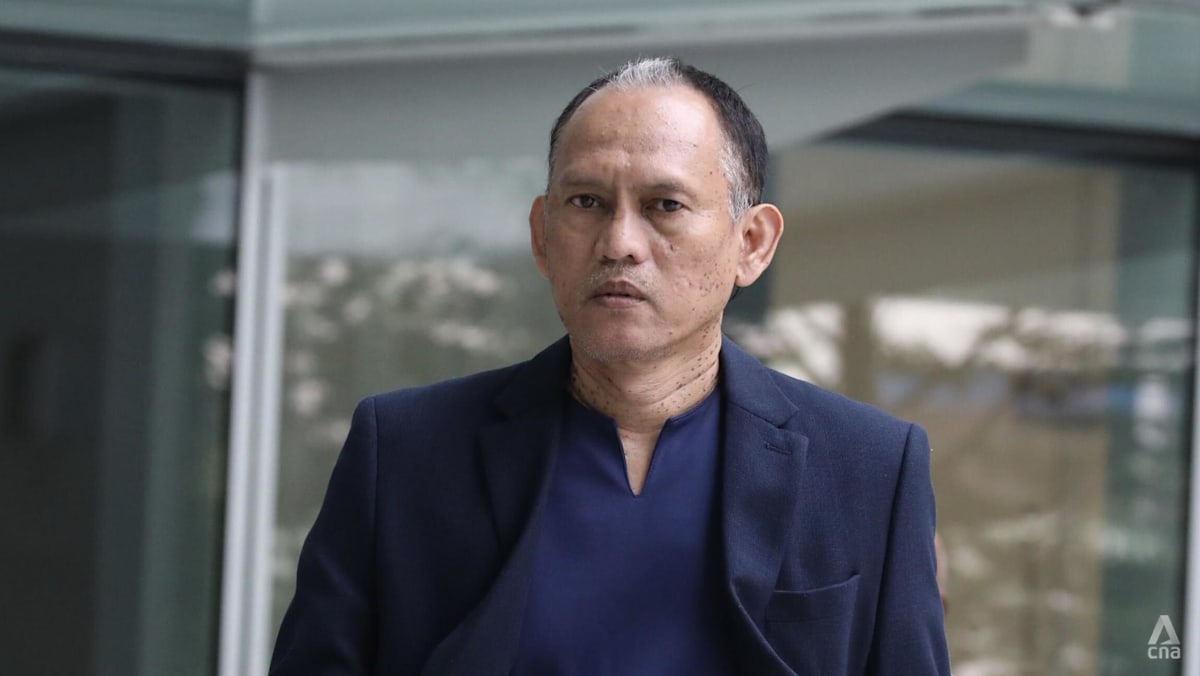
Razak Mohamed Lazim arriving at the State Courts on Sep 18, 2026. (Photo: CNA/Mak Jia Kee)
This audio is generated by an AI tool.
SINGAPORE: A former senior director of the Islamic Religious Council of Singapore (MUIS) was sentenced to seven weeks’ jail on Friday (Sep 18) for misappropriating more than S$68,000 (US$53,300) that was meant for a religious school he used to manage and for accessing its email server without permission after resigning from his position there.
Razak Mohamed Lazim, 59, managed Madrasah Irsyad Zuhri Al-Islamiah when he was employed with MUIS between 2011 to January 2016.
He received a discharge not amounting to an acquittal for two charges of allegedly cheating Temasek Foundation International of nearly S$785,000 and one charge of accessing the madrasah’s email server.
After he resigned from MUIS and left the madrasah, Razak was appointed as an executive director of Irsyad Trust Limited (ITL) from April 2016, making him one of the two required signatories of the company’s bank account. This allowed him to execute transactions.
The misappropriated funds related to arrangements for distributing and publishing textbooks developed by the madrasah.
To use the master copy of the textbooks, a publisher had paid S$205,888 to a company named Key-Orient Lamitec (KOL), which had signed a distribution agreement with the school. From these funds, KOL was supposed to pay S$116,671 to ITL, which it had also signed a distribution agreement with, as well as S$68,629 to the “copyright owner”, or the religious school.
This payment was made on Feb 4, 2020, and the next day, Razak requested that KOL transfer both ITL’s and the madrasah’s share of the royalties – totalling S$185,300 – to ITL, which would disburse it “directly”, court documents showed.
As a result, KOL sent the full sum to ITL’s bank account on Feb 7, 2020, thinking that ITL would transfer the S$68,629 to the religious school. But the money was eventually not transferred.
The prosecution asked for two to three months’ jail for Razak, while the defence argued for a fine of S$7,000.
Deputy Public Prosecutor Bryan Wong highlighted that the misappropriated amount was very high and that the funds belonged to a public body. He noted that Razak had returned S$70,000 to KOL.
He argued that there was a “considerable degree” of deliberation and premeditation by Razak, who intentionally created server instructions to forward a copy of all his work emails.
In the other charges taken into consideration, Razak admitted to instructing someone else to transfer two email addresses to ITL’s server, without informing them that he no longer worked for MUIS and was no longer on the school’s management committee, Mr Wong noted.
Razak’s lawyers Mr Aristotle Emmanuel Eng and Mr Andre Jumabhoy argued that Razak merely wanted to continue receiving work emails. As for the misappropriation charge, they claimed that failing to transfer the funds was an oversight on Razak's part, and that it was not a deliberate or premeditated offence.
Delivering her decision, District Judge Kamala Ponnampalam noted that the prosecution and the defence did not dispute that Razak was not authorised to access the madrasah’s email server and that no actual harm was caused.
She agreed that there was a persistence in Razak’s offences – he did not only reconfigure the server but also asked someone to migrate his email accounts.
Noting that the misappropriated funds technically belonged to MUIS, a public agency, the judge also rejected the defence’s argument that the issue arose because of an oversight by Razak.
The man was tasked by ITL’s board to disburse the S$70,000 to the religious school but he did not do so, the judge said, adding that she failed to see how Razak could have overlooked the matter when it had been brought up multiple times.
As a result, the religious school could not use the funds for two years, the judge said, noting that restitution was made even before investigations began
Razak will be appealing his sentence, his lawyers confirmed.
Razak joined the religious school’s management committee in 2002 and served as its chairman from 2006 to 2008. He was the executive director of the school from 2009 to 2011 and also joined its board of governors in 2008.
While he was employed by MUIS, Razak continued to sit on the school’s management committee and board of governors, court documents showed.
In 2014, the religious school’s management committee decided it should move its international projects to ITL, a separate company established in 2006 by the management committee.
The public company was guaranteed by Razak and two other people. Following Razak's departure from MUIS and the religious school, he was appointed as one of ITL's executive directors. As one of two required signatories to the company's bank account, he was able to execute transactions.
The madrasah initially entered into a distribution agreement with KOL in 2017 – the religious school would receive royalty payments from the company and the company could enter into other arrangements to market and distribute the books, court documents showed.
In 2018, ITL entered into a distribution agreement with KOL to exclusively promote, market, advertise, sell and distribute the textbooks. Eventually, the agreement was that any royalty fees earned by KOL would be shared between the religious school, ITL and KOL.
In 2019, ITL referred a publisher, Cambridge University Press India, to KOL. The two companies signed a content license agreement, granting Cambridge the right to print and publish the textbook exclusively for the Maldives government for a content development fee paid to KOL.
In the third tranche of its payments for using the master copy of the textbooks, Cambridge paid S$205,888 to KOL. In turn, KOL was supposed to pay S$116,671 to ITL and S$68,629 to the religious school.
Instead, Razak requested that KOL transfer both ITL’s and the madrasah’s share of the royalties – totalling S$185,300 – to ITL, which would disburse it “directly”, court documents showed. KOL did so, and ITL eventually did not transfer the S$68,629 to the religious school.
About a week after the S$185,300 – inclusive of the amount owed to the religious school – was transferred to ITL, the company’s board of directors had a meeting on Feb 15, 2020, where Razak told the other directors that ITL had “made annual contributions of S$20,000 since 2017” to the school.
The board decided to “make a donation of S$70,000” to the madrasah, and the man was “tasked” to disburse the “donation”, court documents said.
He did not pay the religious school until Feb 22, 2022, when he prepared a cheque of S$70,000 issued by ITL, which included the S$68,629 owed to the madrasah.
On Mar 16, 2022, the religious school told ITL in a letter that it could not accept the “donation” due to an “ongoing review of the financial transactions” between the school and ITL.
On Jun 8 that year, Razak was called on by the Commercial Affairs Department to assist in investigations into his financial dealings with the religious school. About two weeks later, he transferred S$70,000 from ITL’s bank account to KOL’s, and requested an invoice, which stated that the payment was for “Adjustment to Agent Fee for Exploring Arabic”.
KOL and the religious school entered into a settlement agreement for the repayment of various items, including the S$70,000. So far, the company has paid S$41,600 to the religious school, but the last 10 monthly installments have been outstanding, according to court documents filed in July.
While he managed the madrasah, Razak was also given “super user” access rights to the school’s email server, which allowed him to access and configure all email accounts on the server.
In 2019, Razak used his access rights to create a new email account on the madrasah's server and set instructions so that anything sent to his old email address would also be sent to a personal email account.
Since he had already resigned from his position, the man did not have permission to access the email server or make the changes.
Razak admitted that he did not obtain permission from the principal, vice-principal or head of the madrasah department to make the changes, court documents showed.
The offence of accessing an email server without permission carries a maximum penalty of two years' jail, a fine of up to S$5,000, or both, for a first-time offender.
For misappropriating funds, Razak could have been jailed for up to two years, fined, or both.
Get our pick of top stories and thought-provoking articles in your inbox
Stay updated with notifications for breaking news and our best stories
Join our channel for the top reads for the day on your preferred chat app
59 岁的拉扎克·穆罕默德·拉齐姆在从一所宗教学校辞职后,未经许可也访问了该学校的电子邮件服务器。
拉扎克·穆罕默德·拉齐姆于2026年9月18日抵达国家法院。(图片:CNA/麦嘉琪)
这段音频是由人工智能工具生成的。
新加坡:新加坡伊斯兰宗教理事会(MUIS)前高级主管于周五(9月18日)被判处七周监禁,罪名是挪用超过68000新元(53300美元)的资金,这些资金原本用于他曾经管理的一所宗教学校,以及在他从该机构辞职后未经许可访问其电子邮件服务器。
拉扎克·穆罕默德·拉齐姆 (Razak Mohamed Lazim) 现年 59 岁,2011 年至 2016 年 1 月期间受雇于 MUIS,负责管理 Madrasah Irsyad Zuhri Al-Islamiah。
他被控两项涉嫌诈骗淡马锡国际基金会近 785,000 新元的罪名,以及一项非法访问伊斯兰学校电子邮件服务器的罪名,但最终被免于起诉,并未被判无罪。
从伊斯兰宗教理事会辞职并离开伊斯兰学校后,拉扎克于2016年4月被任命为伊尔沙德信托有限公司(ITL)的执行董事,成为该公司银行账户的两名必要签字人之一。这使他能够执行交易。
被挪用的资金与该伊斯兰学校编写的教科书的分发和出版安排有关。
为了使用教材母版,出版社向一家名为Key-Orient Lamitec (KOL) 的公司支付了205,888新加坡元,KOL与该学校签订了分销协议。根据协议,KOL应从这笔款项中支付116,671新加坡元给与其签订分销协议的ITL公司,以及68,629新加坡元给“版权所有者”,即该宗教学校。
2020 年 2 月 4 日,这笔款项已支付。第二天,拉扎克要求 KOL 将 ITL 和伊斯兰学校应得的版税份额(总计 185,300 新元)转给 ITL,ITL 将“直接”支付这笔款项,法庭文件显示。
因此,KOL于2020年2月7日将全额款项汇入ITL的银行账户,以为ITL会将68,629新元转给这所宗教学校。但最终这笔钱并没有被转走。
检方要求判处拉扎克两到三个月监禁,而辩方则要求处以 7000 新元的罚款。
副检察官布莱恩·黄强调,被挪用的金额非常巨大,而且这些资金属于公共机构。他指出,拉扎克已向KOL归还了7万新元。
他认为,拉扎克经过了“相当程度的”深思熟虑和预谋,故意创建服务器指令,转发他所有工作电子邮件的副本。
黄先生指出,在其他被考虑的指控中,拉扎克承认指示他人将两个电子邮件地址转移到 ITL 的服务器,但没有告知对方他已不再为 MUIS 工作,也不再是学校管理委员会的成员。
拉扎克的律师亚里士多德·伊曼纽尔·恩格先生和安德烈·朱马博伊先生辩称,拉扎克只是想继续接收工作邮件。至于挪用公款的指控,他们声称未能转移资金是拉扎克的疏忽,并非蓄意或预谋犯罪。
地区法官卡马拉·蓬南帕拉姆在宣判时指出,控辩双方均未否认拉扎克无权访问伊斯兰学校的电子邮件服务器,也没有造成任何实际损害。
她承认拉扎克的犯罪行为具有持续性——他不仅重新配置了服务器,还要求别人迁移他的电子邮件帐户。
法官指出,被挪用的资金在技术上属于伊斯兰宗教理事会(MUIS)这一公共机构,因此驳回了辩方关于该问题是由于拉扎克疏忽造成的论点。
法官表示,ITL董事会曾指示该男子向这所宗教学校拨付7万新元,但他并未这样做。她还补充说,她无法理解拉扎克怎么会忽略此事,因为此事已被多次提出。
法官表示,因此,这所宗教学校两年内无法使用这笔资金,并指出,赔偿工作甚至在调查开始之前就已经完成。
拉扎克的律师证实,他将对判决提出上诉。
拉扎克于 2002 年加入该宗教学校的管理委员会,并于 2006 年至 2008 年担任主席。他于 2009 年至 2011 年担任该校的执行董事,并于 2008 年加入该校的理事会。
法庭文件显示,拉扎克在受雇于新加坡伊斯兰宗教大学期间,继续担任该校管理委员会和理事会的成员。
2014 年,这所宗教学校的管理委员会决定将其国际项目转移到 ITL,这是一家由管理委员会于 2006 年成立的独立公司。
这家上市公司由拉扎克和另外两人担保。拉扎克离开伊斯兰宗教理事会(MUIS)和宗教学校后,被任命为ITL公司的执行董事之一。作为公司银行账户的两名必要签字人之一,他有权执行交易。
法庭文件显示,这所伊斯兰学校最初于 2017 年与 KOL 签订了分销协议——这所宗教学校将从该公司获得版税,而该公司可以达成其他安排来营销和分销书籍。
2018年,ITL与KOL签订了独家经销协议,委托其独家推广、营销、宣传、销售和分销教材。最终,协议规定KOL获得的任何版税将在宗教学校、ITL和KOL之间平分。
2019年,ITL向KOL推荐了剑桥大学出版社印度分社。两家公司签署了内容许可协议,授予剑桥大学出版社独家为马尔代夫政府印刷和出版该教科书的权利,KOL则需支付内容开发费。
在第三笔教材母版使用费中,剑桥大学向KOL支付了205,888新加坡元。而KOL则应向ITL支付116,671新加坡元,并向该宗教学校支付68,629新加坡元。
相反,拉扎克要求KOL将ITL和这所伊斯兰学校应得的版税份额——总计185,300新元——全部转给ITL,由ITL“直接”支付,法庭文件显示。KOL照做了,但ITL最终并未将68,629新元转给这所宗教学校。
在 185,300 新元(包括欠宗教学校的款项)转给 ITL 大约一周后,该公司董事会于 2020 年 2 月 15 日召开会议,Razak 在会上告诉其他董事,ITL 自 2017 年以来每年向该学校捐款 20,000 新元。
法庭文件显示,董事会决定向这所伊斯兰学校“捐赠 7 万新元”,并“指派”该男子负责发放这笔“捐款”。
直到 2022 年 2 月 22 日,他才向这所宗教学校付款,当时他开出了一张由 ITL 签发的 70,000 新元的支票,其中包括欠该伊斯兰学校的 68,629 新元。
2022 年 3 月 16 日,这所宗教学校在一封信中告诉 ITL,由于学校和 ITL 之间“正在进行财务交易审查”,因此无法接受这笔“捐款”。
同年6月8日,商业事务局传唤拉扎克协助调查他与这所宗教学校的财务往来。大约两周后,他将7万新元从ITL的银行账户转入KOL的账户,并索要发票,发票上注明这笔款项的用途是“调整阿拉伯语探索项目的代理费”。
KOL与该宗教学校达成和解协议,偿还包括7万新元在内的各项款项。根据7月份提交的法庭文件,截至目前,该公司已向该宗教学校支付了4.16万新元,但最近10个月的分期付款仍未支付。
在管理伊斯兰学校期间,拉扎克还被授予了学校电子邮件服务器的“超级用户”访问权限,这使他能够访问和配置服务器上的所有电子邮件帐户。
2019 年,拉扎克利用他的访问权限在伊斯兰学校的服务器上创建了一个新的电子邮件帐户,并设置了指令,以便发送到他旧电子邮件地址的任何内容也会发送到他的个人电子邮件帐户。
由于他已经辞职,所以该男子没有权限访问电子邮件服务器或进行更改。
法庭文件显示,拉扎克承认,他没有获得校长、副校长或伊斯兰学校部门负责人的许可就进行了这些更改。
未经许可访问电子邮件服务器的违法行为,初犯最高可判处两年监禁、最高罚款 5000 新元,或两者并罚。
拉扎克因挪用公款,可能被判处最高两年监禁、罚款或两者并罚。
订阅我们的邮件,即可获取精选热点新闻和引人深思的文章。
订阅通知,第一时间获取突发新闻和精彩报道。
加入我们的频道,即可在您常用的聊天应用上获取当日热门文章。