Public servants need to shift from doing things ‘for’ Singaporeans to ‘with’ them: Chan Chun Sing陈振声:公务员需要转变工作方式,从“为”新加坡人服务转变为“与”新加坡人合作。
Giving the example of the recent redevelopments of Maju Forest and Gillman Barracks, Mr Chan said the public service has to honestly articulate trade-offs on policy decisions.
Giving the example of the recent redevelopments of Maju Forest and Gillman Barracks, Mr Chan said the public service has to honestly articulate trade-offs on policy decisions.
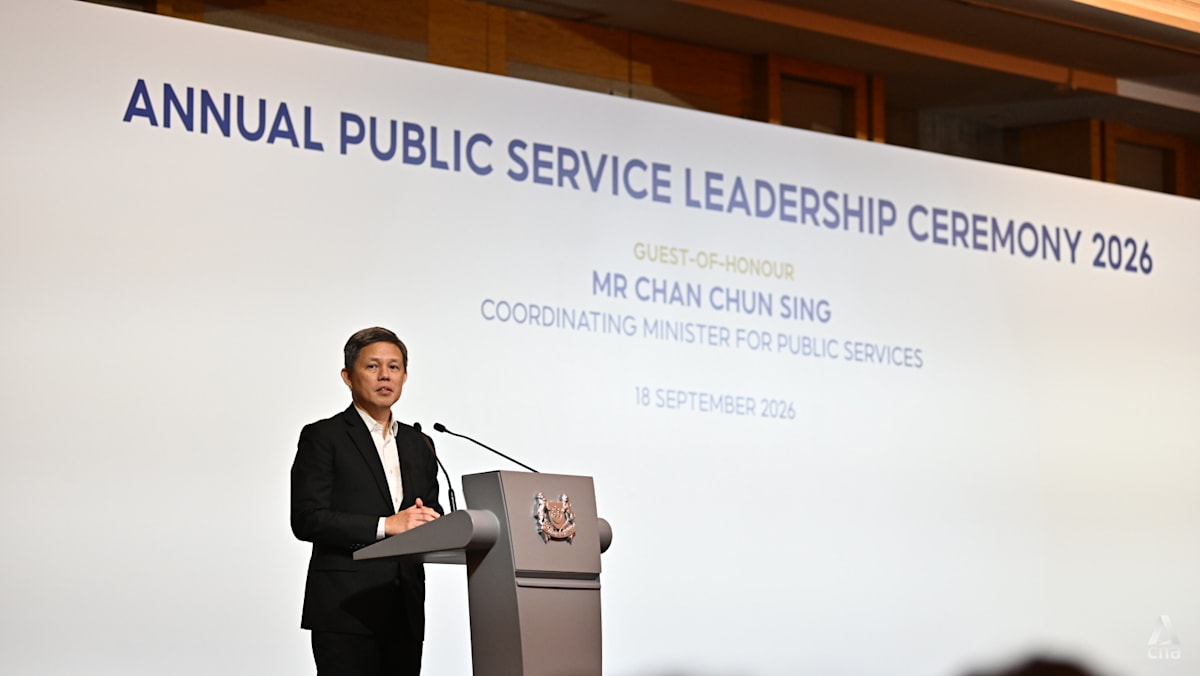
Coordinating Minister for Public Services Chan Chun Sing delivering an opening speech during the Annual Public Service Leadership Ceremony at Marina Bay Sands Expo & Convention Centre on Sep 18, 2026. (Photo: CNA/Raydza Rahman)
This audio is generated by an AI tool.
SINGAPORE: Public servants need to shift away from doing things “for” Singaporeans to doing things “with” them instead, while honestly airing the trade-offs on policy decisions, said Coordinating Minister for Public Services Chan Chun Sing on Friday (Sep 18).
Addressing an audience of around 800 public servants during a leadership ceremony at the Marina Bay Sands Expo and Convention Centre, Mr Chan urged them to engage people and build common ground, instead of solely focusing on brokering agreements for individual issues.
“Bringing people together seems straightforward, but to ensure that everyone walks out of the room with the same shared understanding of the bigger picture is a different challenge,” he said.
The public service can do better to bridge understanding, added Mr Chan, who is also defence minister.
CNA Games Guess Word Crack the word, one row at a time Buzzword Create words using the given letters Mini Sudoku Tiny puzzle, mighty brain teaser Mini Crossword Small grid, big challenge Word Search Spot as many words as you can Show More Show Less “This will require us to convene different stakeholders, listen genuinely to their different interests, and articulate trade-offs honestly to create a shared understanding.” He then raised the example of the recent debates on Maju Forest and Gillman Barracks. Earlier this year, proposed residential development plans at the two locations drew public outcry , with residents and nature groups calling for stronger environmental safeguards. The government eventually decided to retain more greenery , resulting in fewer homes planned in those areas. “Everyone has their preferred outcomes, everyone has their strongly held personal convictions. But there is a need to align on the bigger picture, the trade-offs and the range of considerations – housing needs, land use, energy, transport, and even sewage planning,” said Mr Chan. To this, he added that public servants must be “clear-eyed” about what they can do. “We do not need to possess every answer or capability ourselves. We need to know what we must be good at and have a responsibility to decide, what others are better placed to do, and how to bring citizens, communities, businesses and government towards a common outcome,” he said. MORE COMPLEX CHALLENGES Earlier in his speech, Mr Chan noted that amid a more complex and contested world, the demands on leadership are changing. Workforce transformation, for instance, must navigate the disruption brought about by artificial intelligence, while leveraging the opportunities it presents, all against the backdrop of an ageing population and sustaining economic growth, said Mr Chan. “These issues before us are increasingly interconnected and cut across conventional organisational boundaries,” he said. Hence, Singapore’s public service leadership must continue to evolve as the world changes, said Mr Chan. “We start from strong foundations, built by generations of officers and leaders before us,” he said. “But we are never complacent and we can never assume that what brought us here thus far will be enough to take us forward. Every generation must earn our relevance anew, and build what Singapore will need next.” OVERSEAS EXPERIENCE To that end, Mr Chan also urged public sector leaders to be “entrepreneurs” of governance excellence and strategic space. Mr Chan said Singapore’s public service leaders must not only keenly understand the world and Singapore’s partners, but also actively forge new bilateral and multilateral partnerships. “Where we can find common ground, we must grow those opportunities and forge new partnerships,” he said. “Where we find differences, we must contain them and redirect our energies to those areas where we can still work constructively together with our partners.” Where existing frameworks no longer work, they must reimagine and reinvent new ones rather than wait passively, said Mr Chan. He cited how the government constantly refreshes Singapore’s network of free trade agreements and creates new frameworks, such as Singapore’s digital economy partnership agreement with Chile and New Zealand, which was a world’s first. Mr Chan encouraged public servants to deliberately deepen their external and international exposure. This includes pursuing development opportunities, such as civil service exchange programmes or overseas development programmes, and overseas attachments to international organisations or foreign public agencies, he said. “These experiences give our officers a deeper understanding of our international partners and norms, and help us build critical networks and relationships,” he said. The messier geopolitical landscape may seem like a challenge, but it is also an opportunity for new possibilities and partnerships with like-minded partners, said Mr Chan. He cited the example of Singapore’s bilateral relationships with New Zealand and Australia, along with its ASEAN chairmanship next year. “These are not partnerships of convenience. They are deliberate efforts to create new space for cooperation and advance our shared interests,” he said. PROACTIVELY TACKLING CHALLENGES Mr Chan said that even as Singapore addresses its own national challenges, it should do so in ways that develop solutions and capabilities others find valuable. He cited Singapore’s semiconductor ecosystem and the government’s delivery of public services as positive examples. “But the point is not a single successful initiative. The point is whether we continually challenge ourselves to experiment, innovate and reimagine what’s possible,” he said. “Whether it is educating and supporting youths to thrive in an AI-driven world, strengthening social cohesion, or tackling the next challenge we cannot yet foresee, we must proactively scan the horizon and reimagine the solutions with courage and creativity.” When governance is done well, it is not just good public administration, but a form of “strategic relevance”, said Mr Chan.
“This will require us to convene different stakeholders, listen genuinely to their different interests, and articulate trade-offs honestly to create a shared understanding.”
He then raised the example of the recent debates on Maju Forest and Gillman Barracks.
Earlier this year, proposed residential development plans at the two locations drew public outcry , with residents and nature groups calling for stronger environmental safeguards. The government eventually decided to retain more greenery , resulting in fewer homes planned in those areas.
“Everyone has their preferred outcomes, everyone has their strongly held personal convictions. But there is a need to align on the bigger picture, the trade-offs and the range of considerations – housing needs, land use, energy, transport, and even sewage planning,” said Mr Chan.
To this, he added that public servants must be “clear-eyed” about what they can do.
“We do not need to possess every answer or capability ourselves. We need to know what we must be good at and have a responsibility to decide, what others are better placed to do, and how to bring citizens, communities, businesses and government towards a common outcome,” he said.
MORE COMPLEX CHALLENGES
Earlier in his speech, Mr Chan noted that amid a more complex and contested world, the demands on leadership are changing.
Workforce transformation, for instance, must navigate the disruption brought about by artificial intelligence, while leveraging the opportunities it presents, all against the backdrop of an ageing population and sustaining economic growth, said Mr Chan.
“These issues before us are increasingly interconnected and cut across conventional organisational boundaries,” he said.
Hence, Singapore’s public service leadership must continue to evolve as the world changes, said Mr Chan.
“We start from strong foundations, built by generations of officers and leaders before us,” he said.
“But we are never complacent and we can never assume that what brought us here thus far will be enough to take us forward. Every generation must earn our relevance anew, and build what Singapore will need next.”
To that end, Mr Chan also urged public sector leaders to be “entrepreneurs” of governance excellence and strategic space.
Mr Chan said Singapore’s public service leaders must not only keenly understand the world and Singapore’s partners, but also actively forge new bilateral and multilateral partnerships.
“Where we can find common ground, we must grow those opportunities and forge new partnerships,” he said.
“Where we find differences, we must contain them and redirect our energies to those areas where we can still work constructively together with our partners.”
Where existing frameworks no longer work, they must reimagine and reinvent new ones rather than wait passively, said Mr Chan.
He cited how the government constantly refreshes Singapore’s network of free trade agreements and creates new frameworks, such as Singapore’s digital economy partnership agreement with Chile and New Zealand, which was a world’s first.
Mr Chan encouraged public servants to deliberately deepen their external and international exposure.
This includes pursuing development opportunities, such as civil service exchange programmes or overseas development programmes, and overseas attachments to international organisations or foreign public agencies, he said.
“These experiences give our officers a deeper understanding of our international partners and norms, and help us build critical networks and relationships,” he said.
The messier geopolitical landscape may seem like a challenge, but it is also an opportunity for new possibilities and partnerships with like-minded partners, said Mr Chan.
He cited the example of Singapore’s bilateral relationships with New Zealand and Australia, along with its ASEAN chairmanship next year.
“These are not partnerships of convenience. They are deliberate efforts to create new space for cooperation and advance our shared interests,” he said.
PROACTIVELY TACKLING CHALLENGES
Mr Chan said that even as Singapore addresses its own national challenges, it should do so in ways that develop solutions and capabilities others find valuable.
He cited Singapore’s semiconductor ecosystem and the government’s delivery of public services as positive examples.
“But the point is not a single successful initiative. The point is whether we continually challenge ourselves to experiment, innovate and reimagine what’s possible,” he said.
“Whether it is educating and supporting youths to thrive in an AI-driven world, strengthening social cohesion, or tackling the next challenge we cannot yet foresee, we must proactively scan the horizon and reimagine the solutions with courage and creativity.”
When governance is done well, it is not just good public administration, but a form of “strategic relevance”, said Mr Chan.
Get our pick of top stories and thought-provoking articles in your inbox
Stay updated with notifications for breaking news and our best stories
Join our channel for the top reads for the day on your preferred chat app
陈先生以最近马朱森林和吉尔曼军营的重建为例,表示公共服务部门必须诚实地阐明政策决定中的权衡取舍。
2026年9月18日,公共服务统筹部长陈振声在滨海湾金沙会展中心举行的年度公共服务领袖颁奖典礼上致开幕词。(图片:CNA/Raydza Rahman)
这段音频是由人工智能工具生成的。
新加坡:公共服务统筹部长陈振声周五(9月18日)表示,公务员需要转变思路,从“为”新加坡人做事转变为“与”新加坡人一起做事,同时诚实地公开政策决定中的权衡取舍。
陈先生在滨海湾金沙会展中心举行的领导层仪式上向约 800 名公务员发表讲话,敦促他们与民众互动,建立共同立场,而不是仅仅专注于就个别问题达成协议。
他说:“把人们聚集在一起似乎很简单,但要确保每个人走出会议室时都对大局有相同的共同理解,则是另一个挑战。”
国防部长陈先生补充说,公共服务部门可以做得更好,以增进相互理解。
CNA游戏 猜词游戏 逐行破解单词 流行词游戏 用给定的字母组成单词 迷你数独 小谜题,脑力挑战 迷你填字游戏 小方格,大挑战 单词搜索 尽可能多地找出单词 显示更多 显示更少 “这将需要我们召集不同的利益相关者,认真倾听他们不同的利益诉求,并坦诚地阐明权衡取舍,以达成共识。” 他随后举了最近关于马朱森林和吉尔曼军营的辩论为例。今年早些时候,这两个地点的住宅开发计划引发了公众的强烈抗议,居民和自然保护团体呼吁加强环境保护。政府最终决定保留更多绿地,导致这些地区规划的房屋数量减少。“每个人都有自己偏好的结果,每个人都有自己坚定的个人信念。但我们需要在大局、权衡取舍和一系列考量因素上达成一致——住房需求、土地利用、能源、交通,甚至污水处理规划,”陈先生说。他补充说,公务员必须“清醒地认识到”自己的能力范围。“我们不需要掌握所有答案或能力。我们需要知道自己擅长什么,以及哪些事情需要我们去决定,哪些事情其他人更适合做,以及如何才能让公民、社区、企业和政府朝着共同的目标前进。”他说。更复杂的挑战 陈先生在演讲中早些时候指出,在一个更加复杂和充满竞争的世界中,对领导力的要求也在发生变化。例如,劳动力转型必须应对人工智能带来的冲击,同时利用人工智能带来的机遇,所有这一切都必须在人口老龄化和保持经济增长的背景下进行。陈先生说:“我们面临的这些问题日益相互关联,并超越了传统的组织界限。” 因此,随着世界的变化,新加坡的公共服务领导力必须不断发展。陈先生说:“我们拥有坚实的基础,这是由我们之前的几代官员和领导者奠定的。” “但我们绝不自满,也绝不能想当然地认为,过去的经验足以引领我们走向未来。每一代人都必须重新证明自身的价值,并为新加坡的未来发展奠定基础。” 海外经验 为此,陈先生还敦促公共部门领导人成为卓越治理和战略空间的“企业家”。他表示,新加坡的公共服务领导人不仅要深刻了解世界和新加坡的合作伙伴,还要积极建立新的双边和多边伙伴关系。“在能够找到共同点的地方,我们必须抓住机遇,建立新的伙伴关系,”他说。“在存在分歧的地方,我们必须控制分歧,并将精力集中在那些我们仍然可以与合作伙伴进行建设性合作的领域。” 陈先生指出,如果现有的框架不再适用,他们必须重新构想和创造新的框架,而不是被动地等待。他举例说,新加坡政府不断更新其自由贸易协定网络,并创建新的框架,例如新加坡与智利和新西兰签署的数字经济伙伴关系协定,这是全球首个此类协定。陈先生鼓励公务员主动拓展其对外和国际视野。他表示,这包括寻求发展机会,例如公务员交流项目或海外发展项目,以及到国际组织或外国公共机构进行海外派遣。“这些经历能让我们的官员更深入地了解我们的国际伙伴和规范,并帮助我们建立重要的网络和关系,”他说。陈先生表示,日益复杂的地缘政治格局看似充满挑战,但也为与志同道合的伙伴建立新的伙伴关系提供了机遇。他以新加坡与新西兰和澳大利亚的双边关系以及明年担任东盟轮值主席国为例。“这些伙伴关系并非权宜之计,而是我们为创造新的合作空间、增进共同利益而做出的深思熟虑的努力,”他说。积极应对挑战 陈先生表示,新加坡在应对自身国家挑战的同时,也应以能够发展出对其他国家有价值的解决方案和能力的方式进行。他以新加坡的半导体生态系统和政府提供的公共服务为例,指出这些都是积极的例证。“但关键不在于某一项成功的举措,而在于我们是否不断挑战自我,进行试验、创新和重新构想各种可能性,”他说道。“无论是教育和支持青年在人工智能驱动的世界中茁壮成长,加强社会凝聚力,还是应对我们目前无法预见的下一个挑战,我们都必须积极展望未来,并以勇气和创造力重新构想解决方案。” 陈先生表示,良好的治理不仅仅是良好的公共行政,更是一种“战略相关性”。
“这将要求我们召集不同的利益相关者,认真倾听他们不同的利益诉求,并坦诚地阐明权衡取舍,以达成共识。”
然后,他举了最近关于马朱森林和吉尔曼兵营的辩论为例。
今年早些时候,这两个地点的住宅开发计划引发了公众的强烈抗议,居民和自然保护组织呼吁加强环境保护措施。政府最终决定保留更多绿地,导致这些地区的住宅开发计划减少。
陈先生说:“每个人都有自己偏好的结果,每个人都有自己坚定的个人信念。但我们需要在大局、权衡利弊以及一系列考量因素上达成共识——住房需求、土地利用、能源、交通,甚至污水处理规划。”
对此,他还补充说,公务员必须“清醒地认识到”自己能做什么。
他说:“我们不需要掌握所有的答案或能力。我们需要知道自己擅长什么,有责任做出哪些决定,其他人更适合做什么,以及如何让公民、社区、企业和政府朝着共同的目标前进。”
更复杂的挑战
陈先生在演讲的前半部分指出,在一个更加复杂和充满竞争的世界中,对领导力的要求也在发生变化。
陈先生表示,例如,劳动力转型必须应对人工智能带来的颠覆性影响,同时利用人工智能带来的机遇,所有这一切都必须在人口老龄化和持续经济增长的背景下进行。
他说:“我们面临的这些问题日益相互关联,并且跨越了传统的组织界限。”
因此,陈先生表示,随着世界的变化,新加坡的公共服务领导层也必须不断发展。
他说:“我们拥有坚实的基础,这是前几代军官和领导人奠定的。”
“但我们从不自满,也从不能认为过去的经验足以带领我们走向未来。每一代人都必须重新证明自身的价值,并建设新加坡未来所需的一切。”
为此,陈先生还敦促公共部门领导人成为卓越治理和战略空间的“企业家”。
陈先生表示,新加坡公共服务部门的领导人不仅要深刻了解世界和新加坡的合作伙伴,还要积极建立新的双边和多边伙伴关系。
他说:“在能够找到共同点的地方,我们必须扩大这些机会,建立新的伙伴关系。”
“如果我们发现分歧,就必须控制分歧,并将精力转移到我们仍然可以与合作伙伴进行建设性合作的领域。”
陈先生表示,当现有框架不再奏效时,他们必须重新构想和创造新的框架,而不是被动地等待。
他举例说,新加坡政府不断更新其自由贸易协定网络,并创建新的框架,例如新加坡与智利和新西兰的数字经济伙伴关系协定,这是世界上第一个此类协定。
陈先生鼓励公务员有意识地加深对外和国际交流。
他表示,这包括寻求发展机会,例如公务员交流项目或海外发展项目,以及到国际组织或外国公共机构进行海外实习。
他说:“这些经历使我们的官员对我们的国际伙伴和规范有了更深入的了解,并帮助我们建立重要的网络和关系。”
陈先生表示,日益混乱的地缘政治格局看似是一个挑战,但也为与志同道合的伙伴建立新的合作关系提供了机遇。
他以新加坡与新西兰和澳大利亚的双边关系为例,并提及新加坡明年将担任东盟轮值主席国。
他说:“这些并非出于权宜之计的伙伴关系,而是为了创造新的合作空间、增进共同利益而做出的深思熟虑的努力。”
积极应对挑战
陈先生表示,即使新加坡在应对自身国家挑战的同时,也应该以能够发展出其他国家认为有价值的解决方案和能力的方式来应对。
他以新加坡的半导体生态系统和政府提供的公共服务为例,说明了积极的例子。
“但关键不在于某一项举措是否成功。关键在于我们是否不断挑战自我,进行试验、创新和重新构想各种可能性,”他说道。
“无论是教育和支持青年在人工智能驱动的世界中茁壮成长,加强社会凝聚力,还是应对我们目前无法预见的下一个挑战,我们都必须积极展望未来,并以勇气和创造力重新构想解决方案。”
陈先生表示,良好的治理不仅仅是良好的公共行政,更是一种“战略相关性”。
订阅我们的邮件,即可获取精选热点新闻和引人深思的文章。
订阅通知,第一时间获取突发新闻和精彩报道。
加入我们的频道,即可在您常用的聊天应用上获取当日热门文章。