Malaysian manufacturers still hit by West Asia war as firms shift raw‑material sourcing to Singapore, China, survey finds调查发现,受西亚战争影响,马来西亚制造商仍在遭受冲击,企业正将原材料采购转向新加坡和中国。
KUALA LUMPUR, Sept 3 — The West Asia war continues to cast a shadow over Malaysia’s manufacturing sector, with a vast majority of firms reporting that global instability...
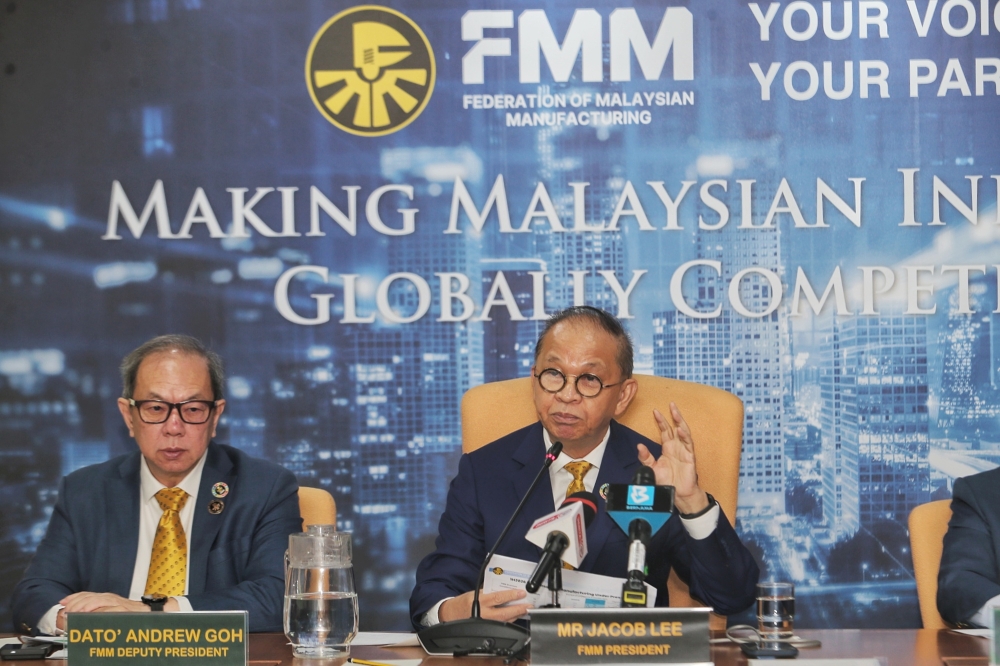
The West Asia war is negatively impacting Malaysia's manufacturing sector, with 96% of firms affected by supply-chain issues and increased input costs.
Manufacturers are turning to alternative suppliers in Singapore and China to stabilise supply chains, but high logistics costs are elevating production expenses.
The industry is calling for government intervention such as duty exemptions, fuel rebates, and tariff reductions to alleviate financial pressures and geopolitical risks.
KUALA LUMPUR, Sept 3 — The West Asia war continues to cast a shadow over Malaysia’s manufacturing sector, with a vast majority of firms reporting that global instability remains a persistent drag on their operational efficiency and bottom line.
According to the latest survey findings presented today by the Federation of Malaysian Manufacturers (FMM), nearly all manufacturers — 96 per cent of respondents — indicated they have been affected by the West Asia war in one way or another.
The data highlighted that supply-chain fragility and surging input costs remain the primary channels through which these geopolitical risks filter down to local businesses.
Raw material shortages hit key sectors
Presenting the data, FMM president Jacob Lee said raw material supply shortages and rising costs are the most pressing concerns, affecting 74 per cent of those surveyed.
“These disruptions have disproportionately impacted several high-value sectors, with the automotive, plastics and pharmaceutical industries identified as the most severely affected,” he added.
For these sectors, the inability to secure consistent raw material inputs has created significant bottlenecks in production and inventory management.
To mitigate these pressures, Lee said manufacturers are increasingly pivoting their sourcing strategies.
“Due to the disruptions in the Strait of Hormuz, a significant number of firms are turning to suppliers in Singapore and China as they seek reliable alternatives to stabilise their supply chains.
“However, the rising logistics costs have significantly increased the production cost,” Lee added.
Logistics and operational challenges
Beyond raw materials, the survey points to a broader landscape of rising overheads.
Freight, logistics, and shipping costs are weighing on 72 per cent of manufacturers, while 44 per cent are grappling with higher energy and fuel expenditures.
Other notable impacts include pressures on working capital and cash flow (20 per cent), as well as a decline in export orders or renegotiations of existing contracts (19 per cent).
While some manufacturers indicated that the intensity of these disruptions has partially eased for 40 per cent of firms, conditions have yet to normalise.
A substantial 32 per cent of respondents reported that the impact remains at the same elevated level as six months ago, while 11 per cent noted that the situation has deteriorated.
According to Lee, many manufacturers who rely on energy and raw materials from countries located around the Strait of Hormuz have found alternative ways to transport their supplies through other routes, which have become more costly.
“Some traders have to take their products through land transit before [bringing] them here to Malaysia via sea, but this is a costly process,” he added.
Strategic shift and policy calls
In response to the volatile environment, manufacturers are actively restructuring their business models.
Approximately 29 per cent of those surveyed have increased their stockholding of critical raw materials, while 25 per cent are actively switching to alternative suppliers or diversifying their sourcing countries.
Another 21 per cent have comprehensively restructured their logistics arrangements.
However, uncertainty about the long-term outlook remains, with 31 per cent of manufacturers saying it is still too early to determine the lasting effects of these disruptions.
To weather these challenges, the industry is calling for targeted government intervention rather than broad-based financial aid.
The survey shows that 56 per cent of manufacturers are advocating for duty and tax exemptions on raw materials sourced from alternative origins.
Additionally, 40 per cent are seeking industrial fuel rebates for those excluded from current diesel subsidy schemes, while 32 per cent support tariff reductions or the acceleration of trade agreements to offset mounting geopolitical costs.
Recommended reading:
Survey finds most Malaysian manufacturers favour GST, saying SST’s cascading taxes raise costs and erode competitiveness
Malaysian manufacturers’ Budget 2027 wish list: Lower SME taxes, billions for tech and R&D
Asian markets rebound as US Fed tempers rate fears — but oil remains a threat
Airbus finds the problem behind months of A330 delays: A lost tool
Trump wants a smaller US trade gap, AI demand is pulling it the other way
Appeals court grants Najib and son stay of bankruptcy action in RM1.7b tax case
EC reaffirms commitment to fairness and transparency on 69th anniversary
Three girls caught fighting in viral social media video in Kuala Pilah
西亚战争对马来西亚制造业造成了负面影响,96% 的企业受到供应链问题和投入成本增加的影响。
为了稳定供应链,制造商正在转向新加坡和中国的替代供应商,但高昂的物流成本推高了生产成本。
该行业呼吁政府采取干预措施,例如免税、燃油退税和降低关税,以缓解财务压力和地缘政治风险。
吉隆坡,9月3日讯——西亚战争继续给马来西亚制造业蒙上阴影,绝大多数企业表示,全球不稳定仍然是其运营效率和利润的持续拖累因素。
根据马来西亚制造商联合会(FMM)今天公布的最新调查结果,几乎所有制造商(96%的受访者)都表示,他们以某种方式受到了西亚战争的影响。
数据显示,供应链脆弱性和投入成本飙升仍然是这些地缘政治风险传导至当地企业的主要渠道。
原材料短缺冲击关键行业
马来西亚制造商联合会主席雅各布·李在介绍数据时表示,原材料供应短缺和成本上涨是最紧迫的问题,影响了 74% 的受访者。
“这些干扰对几个高价值行业的影响尤为严重,其中汽车、塑料和制药行业受到的影响最为严重,”他补充道。
对于这些行业而言,无法确保稳定的原材料供应,已在生产和库存管理方面造成了严重的瓶颈。
李表示,为了缓解这些压力,制造商们正在不断调整采购策略。
“由于霍尔木兹海峡的交通中断,许多公司正在转向新加坡和中国的供应商,以寻求可靠的替代方案来稳定其供应链。
“然而,物流成本的上涨也大幅增加了生产成本,”李补充道。
物流和运营挑战
除了原材料成本上涨之外,调查还指出了更广泛的成本上升问题。
货运、物流和运输成本给 72% 的制造商带来了压力,而 44% 的制造商则面临着能源和燃料支出增加的困境。
其他显著影响包括营运资金和现金流压力(20%),以及出口订单减少或现有合同重新谈判(19%)。
虽然一些制造商表示,40% 的企业受到的干扰强度已有所缓解,但情况尚未恢复正常。
32% 的受访者表示,疫情的影响仍然处于六个月前的高位,而 11% 的受访者表示,情况已经恶化。
据李说,许多依赖霍尔木兹海峡周边国家能源和原材料的制造商已经找到了替代方法,通过其他路线运输他们的物资,但这些路线的成本越来越高。
“有些贸易商必须先通过陆路运输产品,然后再通过海运运到马来西亚,但这成本很高,”他补充道。
战略转变和政策呼吁
为了应对动荡的市场环境,制造商们正在积极调整其商业模式。
约 29% 的受访者增加了关键原材料的库存,而 25% 的受访者正在积极转向其他供应商或使其采购国家多元化。
另有 21% 的企业对其物流安排进行了全面重组。
然而,长期前景仍存在不确定性,31% 的制造商表示,现在判断这些干扰的持久影响还为时过早。
为了应对这些挑战,该行业呼吁政府采取有针对性的干预措施,而不是提供大范围的财政援助。
调查显示,56%的制造商主张对来自其他来源的原材料免征关税和税收。
此外,40% 的人正在寻求为那些被排除在当前柴油补贴计划之外的人提供工业燃料回扣,而 32% 的人支持降低关税或加快贸易协定的达成,以抵消不断增加的地缘政治成本。
推荐阅读:
调查发现,大多数马来西亚制造商支持消费税(GST),他们认为销售与服务税(SST)的累进税会增加成本并削弱竞争力。
马来西亚制造商对2027年财政预算案的愿望清单:降低中小企业税收,数十亿资金用于科技和研发
随着美联储降低利率预期,亚洲股市反弹——但石油仍构成威胁
空客发现A330延误数月的真正原因:丢失了一个工具
特朗普希望缩小美国贸易逆差,但人工智能的需求却朝着相反的方向发展。
上诉法院批准纳吉及其子暂缓执行17亿令吉税务案件的破产程序
欧盟委员会在成立69周年之际重申对公平和透明的承诺
在瓜拉庇劳,三名女孩打架的视频在社交媒体上疯传。