NATO is measuring Russian adaptation the wrong way北约衡量俄罗斯适应能力的方式有误。
For NATO, reproducibility should become a distinct measure of Russian military capability, driving how the alliance plans for the future.
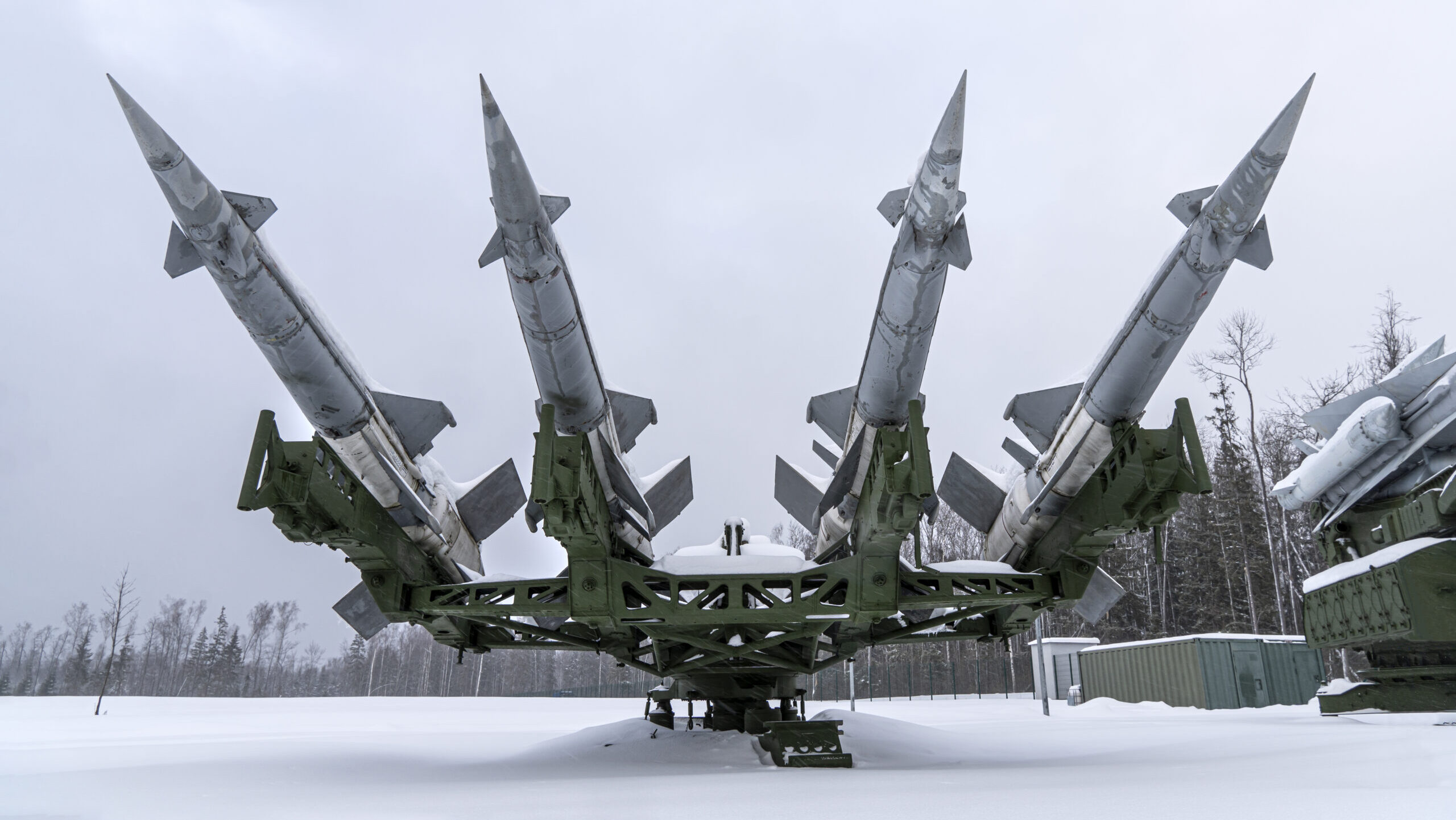
Ground-to-air missiles on snow in winter. Air defense. defensive system. located in Patriot Park is a military-patriotic park of culture and recreation of the Armed Forces of the Russian Federation. Federal State Autonomous Institution "Military-Patriotic Park of Culture and Recreation of the Armed Forces of the Russian Federation "Patriot". The park is located near the town of Kubinka, Odintsovo district, Moscow region. (Getty images)
Russia’s war in Ukraine has generated an extraordinary reservoir of combat experience . NATO has understandably focused on what Moscow has learned: new approaches to unmanned systems, electronic warfare, reconnaissance-strike integration, command-post survivability, air defense, assault operations and logistics.
However, the future Russian threat will depend less on what its forces have learned in Ukraine than on what the Russian military can reproduce elsewhere with different personnel, after casualties, rotation and organizational turnover. A brigade can discover a successful method for dispersing command posts or integrating drones with fires, without the Russian Armed Forces as a whole acquiring that capability. Other formations may copy it, a military academy can teach it, but there is no proof that a newly-generated formation can recreate the same military effect after the original innovators and their informal networks have gone.
That distinction should change what NATO watches, what it models in exercises and how it thinks about disrupting Russian forces. For NATO, reproducibility , not adaptation alone, should become a distinct measure of Russian military capability — and drive how the alliance is making its military plans going forward.
From Battlefield Innovation To Reproducible Capability
Russian military sources suggest that the General Staff and Ministry of Defense understand this problem increasingly well. Their learning architecture extends from battlefield lessons groups through command bodies, military-scientific committees, research institutes and military universities to training organizations and industry.
Of course, producing a recommendation is easier than changing battlefield behavior. But the push reveals something consequential: Moscow is attempting to build an institutional system that can capture experience, generalize it, teach it, test it, revise it and eventually regenerate the resulting capability.
Unmanned systems provide the clearest example. Russian drone warfare initially grew through a highly uneven ecosystem of military units, volunteers, commercial manufacturers and specialist organizations. The important development now is not another FPV drone or a higher operator count; it is the attempt to build permanent command structures, specialist education, training centers, repair and supply systems, military-scientific support and mechanisms for generating complete units.
Europe’s military advantage depends on sovereign command of the ground truth
As NATO and European governments accelerate investment in space-based intelligence, decision advantage will depend on how quickly sovereign and commercial capabilities can be fused into a trusted operational picture.
In July 2026, the Russian Defense Ministry said more than 8,000 specialists had been trained for its Unmanned Systems Forces during the first half of the year. The more important claim was that training was moving beyond individual specialists toward collective preparation of formed units on their assigned equipment.
For NATO intelligence, the 8,000 figure is less important than the institutional question behind it: can a newly generated Russian unmanned-systems unit deploy, integrate with other arms, maintain its equipment, replace casualties and continue generating operational effects without an exceptional external support network? That is the threshold between possessing combat experience and possessing a reproducible military capability.
NATO therefore needs to supplement traditional force assessment with what might be called force-generation intelligence. Orders of battle, equipment inventories and production rates remain essential, but they tell NATO primarily what Russia possesses. They are less effective at revealing what the Russian military is becoming capable of generating repeatedly.
Some of the most important indicators may consequently appear in institutions before they become visible in inventories: Changes in military-school curricula; new specialties and qualification systems; instructor assignments and battlefield placements; expansion of training centers; revised collective-training standards; methodological publications; maintenance arrangements; new command relationships; and, above all, the performance of newly generated or rotated formations.
A new missile is obvious intelligence. A revised curriculum is not. Yet the second may offer earlier warning that a battlefield practice is becoming a durable component of Russian military power.
The distinction also helps avoid a recurrent analytical problem: extrapolating from Russia’s best units to the whole force. Russian adaptation has produced islands of considerable competence alongside much weaker average performance. A capability may be deeply institutionalized inside Rubicon or another specialist ecosystem while remaining difficult to reproduce in ordinary formations. Conversely, a method can spread widely while remaining shallow because units lack the training, maintenance or specialist support needed to execute it consistently. NATO assessments should therefore distinguish depth from breadth, rather than treating “Russia has adapted” as a useful conclusion in itself.
Destroying A Capability Is Not The Same As Defeating It
The same problem should enter NATO exercise design and operational planning. If a Russian reconnaissance-fire process depends on a small group of unusually experienced specialists, destroying that group may produce a substantial operational effect. If the organization has already trained replacements, standardized technical procedures, rehearsed alternative command relationships and built the support structure needed to recreate the process, the same strike may produce little more than temporary disruption.
NATO therefore needs to ask not only whether it can break a Russian military system, but how quickly Russia can restore an adequate version of it. After a command post is destroyed, are alternative headquarters already prepared to assume its functions? After a drone detachment is suppressed, how rapidly can replacement operators and equipment be introduced? If a logistics network is disrupted, are alternate routes and command arrangements already rehearsed? When specialist personnel are lost, does the replacement force inherit their competence through an institution, or must it relearn the problem from first principles?
These questions change the value assigned to tactical success. A capability that can be reproduced demands different targeting, exercise and campaign assumptions from one that remains dependent on a few people or privileged formations.
Watch What Russia Can Regenerate
None of this means Russian institutionalization is inevitably succeeding. Lessons can become obsolete before they reach the force. Scaling can dilute competence. Ukraine-specific solutions can be generalized beyond the conditions that made them effective. Elite formations can create a false impression of force-wide transformation. And Russian military institutions may improve operational execution while remaining resistant to lessons that challenge hierarchy or politically protected strategic assumptions. Those weaknesses are precisely why the analytical standard needs to become more demanding.
The relevant question is no longer whether Russia has learned a lesson — it is whether that lesson survives time, scale, casualties, organizational transfer and changing battlefield conditions; and whether new personnel can reproduce the military effect after the people who originally discovered it have disappeared.
For NATO, the most consequential warning signal will not be another Russian battlefield innovation. It will be the point at which Russia no longer needs the people who invented it.
Roger N. McDermott specializes in Russian military strategy, military thought and operational adaptation. He is a Senior Fellow on Russian Military Strategy at the Saratoga Foundation and a Visiting Senior Research Fellow at the Department of War Studies, King’s College London.
冬季雪地上的地对空导弹。防空系统。位于“爱国者”公园内的防御系统。“爱国者”公园是俄罗斯联邦武装部队的军事爱国主义文化休闲公园。该公园隶属于俄罗斯联邦武装部队“爱国者”军事爱国主义文化休闲公园联邦国家自治机构,位于莫斯科州奥金佐沃区库宾卡镇附近。(Getty Images)
俄罗斯在乌克兰的战争积累了极其丰富的作战经验。北约自然而然地将重点放在了莫斯科从中汲取的经验教训上:无人系统、电子战、侦察打击一体化、指挥所生存能力、防空、突击作战和后勤保障等方面的新方法。
然而,俄罗斯未来的威胁与其说是取决于其部队在乌克兰的经验,不如说是取决于俄军在人员轮换、伤亡和组织结构调整之后,能否在其他地区复制同样的战术。一个旅级单位或许能摸索出分散指挥所或将无人机与火力整合的有效方法,但这并不意味着整个俄罗斯武装部队都能掌握这种能力。其他部队或许会效仿,军事院校或许会教授,但没有任何证据表明,在最初的创新者及其非正式网络离开之后,新组建的部队能够重现同样的军事效果。
这一区别应改变北约的关注重点、演习模拟对象以及应对俄罗斯军队的思路。对北约而言,可复制性而非仅仅是适应性,应成为衡量俄罗斯军事能力的独特标准,并指导北约未来制定军事计划的方向。
从战场创新到可复制能力
俄罗斯军方消息人士称,总参谋部和国防部对这个问题的认识日益加深。他们的学习体系涵盖了从战场经验总结小组到指挥机构、军事科学委员会、科研院所和军事院校,再到培训机构和工业界的各个层面。
当然,提出建议比改变战场行为容易得多。但这一举措揭示了一些重要的东西:莫斯科正试图构建一个制度体系,该体系能够收集经验、概括经验、教授经验、测试经验、修正经验,并最终再生由此产生的能力。
无人系统就是最明显的例子。俄罗斯无人机作战最初是通过一个极不均衡的生态系统发展起来的,该系统由军事单位、志愿者、商业制造商和专业组织组成。如今,重要的发展并非是制造更多的第一人称视角(FPV)无人机或增加操作人员数量,而是尝试构建永久性的指挥体系、专业教育、训练中心、维修和补给系统、军事科技支持以及组建完整作战单元的机制。
欧洲的军事优势取决于其对实际情况的主权掌控。
随着北约和欧洲各国政府加快对天基情报的投资,决策优势将取决于主权能力和商业能力能够多快地融合到一个可信的作战图景中。
2026年7月,俄罗斯国防部表示,上半年已为其无人系统部队培训了8000多名专家。更重要的是,培训内容正从针对单个专家转向针对成队的集体装备操作培训。
对北约情报部门而言,8000这个数字本身并不重要,重要的是其背后的制度性问题:一支新组建的俄罗斯无人系统部队能否在缺乏特殊外部支持网络的情况下,完成部署、与其他兵种整合、维护装备、补充伤亡并持续产生作战效果?这关乎拥有实战经验与拥有可复制的军事能力之间的界限。
因此,北约需要用所谓的“兵力生成情报”来补充传统的兵力评估。作战序列、装备库存和生产率仍然至关重要,但它们主要告诉北约俄罗斯拥有什么。对于揭示俄罗斯军队正在逐渐具备的持续生产能力,这些信息的作用则相对较小。
因此,一些最重要的指标可能会在清单中显现之前就出现在机构中:军事院校课程的变化;新的专业和资格体系;教员分配和战场部署;训练中心的扩建;修订的集体训练标准;方法论出版物;维护安排;新的指挥关系;以及最重要的,新组建或轮换部队的表现。
新型导弹显然是情报,而修订后的课程则不然。然而,后者或许能更早地发出预警,表明某种战场演练正逐渐成为俄罗斯军事力量的持久组成部分。
这种区分还有助于避免一个反复出现的分析难题:将俄罗斯最优秀部队的表现外推至整个部队。俄罗斯的适应性调整造就了一些能力卓越的部队,但同时也导致平均水平普遍偏低。某种能力可能在鲁比孔特种部队或其他专业体系内得到深度制度化,但在普通部队中却难以复制。反之,一种方法可能传播广泛,但由于部队缺乏持续执行所需的训练、维护或专业支持,其应用可能仍然浅薄。因此,北约的评估应该区分深度和广度,而不是将“俄罗斯已经适应”本身视为一个有用的结论。
摧毁一项能力并不等同于击败它。
同样的问题也应纳入北约演习设计和作战计划中。如果俄罗斯的侦察火力部署依赖于一小群经验异常丰富的专家,那么摧毁这支队伍可能会产生重大的作战影响。但如果该组织已经训练了替代人员,规范了技术程序,演练了替代指挥关系,并建立了重建该部署所需的支持体系,那么同样的打击可能只会造成暂时的干扰。
因此,北约不仅需要思考能否摧毁俄罗斯的军事体系,还需要思考俄罗斯能在多快的时间内重建一个功能完善的体系。指挥所被摧毁后,是否有备用指挥部准备好接管其职能?无人机分队被击溃后,能否迅速补充人员和装备?后勤网络中断后,是否有备用路线和指挥安排进行演练?专业人员损失后,补充部队能否通过现有机构继承其能力,还是必须从头开始学习?
这些问题改变了人们对战术成功的价值判断。可复制的能力与依赖少数人或特权部队的能力相比,在目标选择、演习和战役策略方面需要不同的假设。
看看俄罗斯能重获新生
这并不意味着俄罗斯的制度化必然会成功。经验教训可能在到达部队之前就已过时。规模化可能会削弱能力。针对乌克兰的具体解决方案可能会被推广到超出其有效适用条件的地区。精英部队可能会给人一种全军转型已成假象的错觉。俄罗斯军事机构或许能够提高作战执行力,但仍然会抵制那些挑战等级制度或受政治保护的战略假设的经验教训。正是由于这些弱点,分析标准才需要更加严格。
相关的问题不再是俄罗斯是否吸取了教训,而是这个教训能否经受住时间、规模、伤亡、组织转移和战场条件变化的考验;以及在最初发现这种军事效果的人消失后,新的人员能否重现这种军事效果。
对北约而言,最具警示意义的并非俄罗斯在战场上推出的又一项创新,而是俄罗斯不再需要发明这些创新技术的人才之时。
罗杰·N·麦克德莫特专攻俄罗斯军事战略、军事思想和作战适应。他是萨拉托加基金会俄罗斯军事战略高级研究员,也是伦敦国王学院战争研究系访问高级研究员。