OCBC’s blue-chip plan gains traction with young investors, with 1 in 4 customers now under 35华侨银行的蓝筹股计划受到年轻投资者的青睐,目前四分之一的客户年龄在35岁以下。
OCBC’s blue-chip investment plan attracts more young investors with automated, regular savings from $100, offering steady exposure to Singapore equities and dividends. Read more at straitstimes.com.
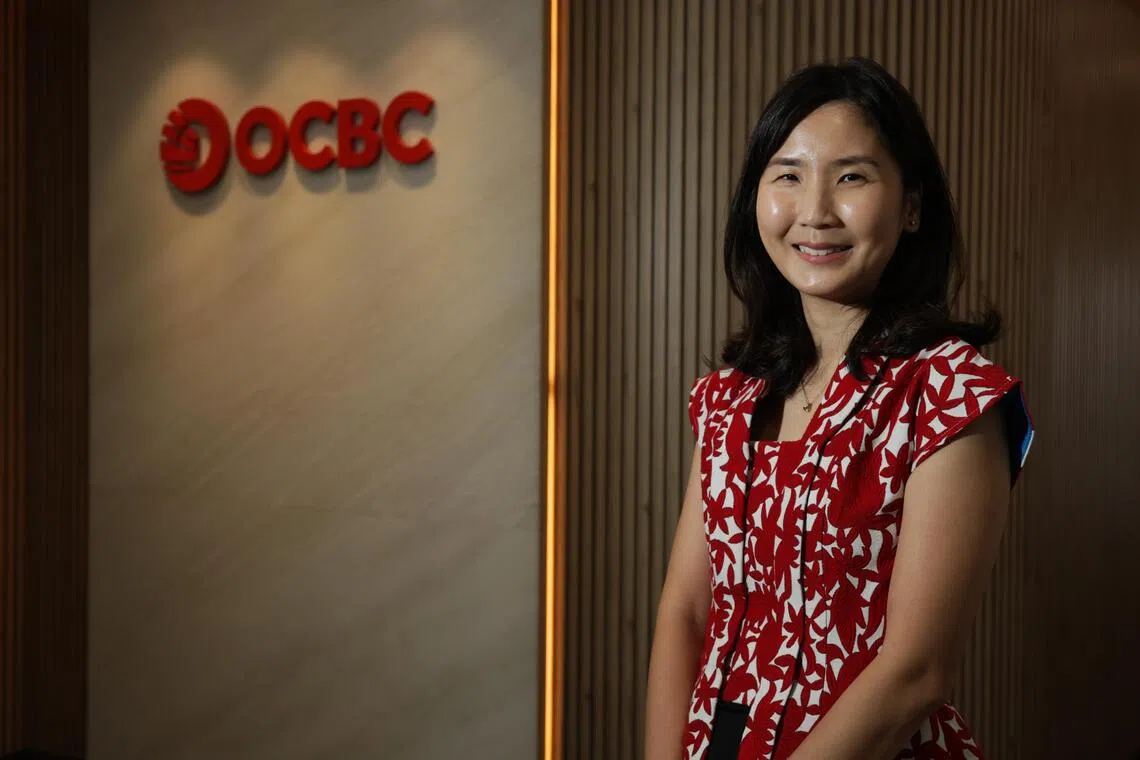
OCBC head of treasury products and equities Germaine Tan says the growing attention on the STI and Singapore being seen as a safe haven have contributed to the growth of its BCIP.
Published Sep 19, 2026, 05:00 AM
Updated Sep 19, 2026, 05:00 AM
OCBC's blue-chip investment plan (BCIP) attracts younger investors, with over 25% under 35, growing 35% in the first half of 2026 due to its convenience and dollar-cost averaging benefits.
The BCIP offers access to major Singapore stocks and ETFs with automated monthly investments starting at $100, appealing to both new and mass affluent investors increasing their investment amounts.
Experts note BCIP reduces emotional market timing but has limited diversification and control; fees impact returns, so investors should weigh BCIP convenience against broader options via brokerage accounts.
SINGAPORE – OCBC customer Chen Shu Ying began investing in the bank’s blue-chip investment plan (BCIP) more than five years ago, as the demands of her full-time job left her with little time to trade in the market herself.
“The plan was very helpful in that it helped to remove the mental burden and extra time required to purchase investments on my own, freeing up bandwidth for me to focus on my job, while also allowing me to stay invested in the market,” said the 37-year-old legal counsel.
The mother of two also values the convenience of automating her investments with a fixed monthly sum, while benefiting from the discipline of dollar-cost averaging – a strategy that automatically buys more shares or units when prices are low and fewer when prices are high, lowering the average cost per unit over time.
Chen is among a growing number of younger investors in Singapore turning to BCIPs as a way to start investing small and build up savings steadily.
Younger investors form the majority of overall and new BCIP investors, with total investors rising 35 per cent in the first half of 2026 compared with the year-ago period.
Those under 35 make up more than 25 per cent of OCBC’s total BCIP investors, while more than one in five of all BCIP investors are aged 35 to 39.
The OCBC BCIP, which was launched in 2013 and requires a minimum investment of $100 a month, allows investors to choose from a range of counters such as the three Singapore banks, Singapore Airlines, Singtel and ST Engineering, as well as exchange-traded funds (ETFs).
Similar regular savings plans starting from $100 a month are also offered by other local lenders.
These include DBS’ Invest-Saver, which invests in unit trusts, ETFs or digiPortfolio – ready-made investment portfolios – as well as UOB’s Regular Investment Scheme, which invests in selected funds.
Meanwhile, MariBank’s Mari Invest Singapore Equity product gives investors access to Singapore stocks through the Amova Singapore Dividend Equity Fund from $1.
OCBC saw significant growth between 2024 and 2025, with the number of BCIP investors rising by nearly 30 per cent year on year.
This was also significantly higher than the low single-digit growth rate on average between 2020 and 2024.
Germaine Tan, OCBC head of treasury products and equities, attributed the uptick to various factors.
Speaking to The Straits Times at OCBC Centre, Tan said the BCIP offers investors an accessible option to gain exposure to Singapore equities amid growing attention to and interest in the Straits Times Index (STI) .
The benchmark index has risen over 20 per cent so far in 2026.
Against the backdrop of the global environment, the STI outperformed the US S&P 500 in 2025, while Singapore’s reputation as a safe haven also helped drive growing investor interest in the local market, Tan noted.
Among the current holdings in OCBC’s BCIP, DBS, OCBC and the STI ETF together account for around 84 to 85 per cent of all unrealised customer gains.
OCBC said that first-time investors are putting more money to work.
The average monthly amount for new investors has grown by more than 40 per cent in the first half of 2026 compared with the year-ago period. The average amount per transaction for new investors has also grown by nearly 30 per cent year on year.
While nine in 10 of overall BCIP investors are personal banking customers, the proportion of new-to-BCIP investors with assets under management above $350,000 – or the mass affluent – has been increasing year on year.
BCIPs offer investors an accessible option to gain exposure to Singapore equities, says Germaine Tan. ST PHOTO: GIN TAY
BCIPs offer investors an accessible option to gain exposure to Singapore equities, says Germaine Tan.
Gerald Wong, founder of Singapore-based investment advisory platform Beansprout, said that dollar-cost averaging is a useful approach for investors who are building their growth pot for long-term compounding.
Investors often hesitate when markets are rising because they worry prices are too high, and hesitate when markets are falling because they fear prices may fall further.
Investing a fixed amount regularly takes some of that emotion out of the decision and helps investors stay consistent through different market conditions, he said.
“It does not guarantee better returns or protect investors from losses, but it reduces the need to make a market timing decision every month,” said Wong.
He added that the key is not to assume that regular investing eliminates investment risk, as investors need to be comfortable with the assets they are buying and the level of exposure they have to the Singapore market.
Investors should pay attention to the fees they are paying as well, he said.
For OCBC’s BCIP, customers below 30 enjoy a preferential fee of 0.88 per cent per transaction with no minimum fee, for investments of up to $500 per counter per month. For other customers, the standard fee is 0.3 per cent of the investment amount or $5 per counter, whichever is higher.
“That $5 minimum is particularly important for investors putting in small amounts. If someone invests $100 into one counter and pays a $5 fee, that is already 5 per cent of the amount invested,” said Wong.
Over a long investment horizon, costs matter because every dollar paid in fees is a dollar that is no longer compounding for the investor, he noted, adding that it is worth comparing the convenience of BCIPs against the fees and wider investment choices available through a brokerage account.
There are also limitations to a BCIP.
Wong said that a BCIP may be less ideal for investors whose main objective is to build a broadly diversified global portfolio, as the investment universe available through the plan is still relatively limited.
It may also be unsuitable for investors who want access to stocks, ETFs, markets or investment themes that are not offered under the BCIP, or who want greater control over their entry price and timing.
In this case, some investors may prefer buying directly through a brokerage which offers a wider range of assets, gives them greater control over when and at what price they invest, or offers more competitive transaction costs for the amounts they are investing, Wong noted.
While BCIPs do not offer a wide variety of counters, Chen said they could serve as a foundation for younger investors who have just started working or embarking on their investment journeys.
Such investors need to ensure that they are not plunging straight into high-risk investments, she noted.
“I would liken investing in BCIP to running at a measured and steady pace on a treadmill, rather than doing interval sprints, where you can get gassed out quite quickly,” she said.
Banks and financial institutions
华侨银行财资产品及股票主管 Germaine Tan 表示,人们对海峡时报指数的日益关注以及新加坡被视为避险天堂,都促进了其 BCIP 的增长。
发布于 2026 年 9 月 19 日上午 5:00
更新于2026年9月19日凌晨5:00
华侨银行的蓝筹股投资计划 (BCIP) 因其便利性和美元成本平均法的优势,吸引了众多年轻投资者,其中超过 25% 的投资者年龄在 35 岁以下,预计到 2026 年上半年将增长 35%。
BCIP 提供投资新加坡主要股票和 ETF 的机会,每月自动投资额从 100 美元起,对新投资者和增加投资额的富裕投资者都具有吸引力。
专家指出,BCIP 可以减少情绪化的市场择时,但分散化和控制能力有限;费用会影响收益,因此投资者应该权衡 BCIP 的便利性与通过经纪账户进行更广泛的投资选择。
新加坡——华侨银行客户陈淑英五年前开始投资该银行的蓝筹股投资计划(BCIP),因为她全职工作繁忙,几乎没有时间自己进行市场交易。
这位37岁的法律顾问表示:“该计划非常有帮助,因为它减轻了我独自购买投资所需的精神负担和额外时间,让我有精力专注于工作,同时也让我能够继续投资于市场。”
这位有两个孩子的母亲也十分看重每月固定金额自动投资的便利性,同时还能享受美元成本平均法的纪律性——这种策略会在价格低时自动购买更多股票或单位,在价格高时自动购买更少,从而随着时间的推移降低每单位的平均成本。
陈先生是新加坡越来越多年轻投资者中的一员,他们开始利用商业投资计划(BCIP)进行小额投资,并稳步积累储蓄。
年轻投资者占BCIP整体投资者和新投资者的大多数,2026年上半年投资者总数比上年同期增长了35%。
35 岁以下的投资者占华侨银行 BCIP 投资者总数的 25% 以上,而 35 至 39 岁的投资者占 BCIP 所有投资者总数的五分之一以上。
华侨银行 BCIP 于 2013 年推出,每月最低投资额为 100 美元,投资者可以从一系列股票中进行选择,例如新加坡的三家银行、新加坡航空公司、新加坡电信和新加坡科技工程公司,以及交易所交易基金 (ETF)。
其他本地贷款机构也提供类似的定期储蓄计划,每月最低存款额为 100 美元。
其中包括星展银行的 Invest-Saver 计划,该计划投资于单位信托基金、ETF 或 digiPortfolio(现成的投资组合);以及大华银行的定期投资计划,该计划投资于精选基金。
与此同时,MariBank 的 Mari Invest Singapore Equity 产品让投资者可以通过 Amova Singapore Dividend Equity Fund 以 1 美元起的价格投资新加坡股票。
华侨银行在 2024 年至 2025 年间实现了显著增长,BCIP 投资者数量同比增长近 30%。
这比 2020 年至 2024 年平均个位数低增长率也高得多。
华侨银行财资产品及股票主管陈嘉敏将这一增长归因于多种因素。
陈先生在华侨银行中心接受《海峡时报》采访时表示,随着海峡时报指数(STI)日益受到关注和关注,BCIP 为投资者提供了一个便捷的途径来投资新加坡股票。
基准指数在2026年至今已上涨超过20%。
谭指出,在全球环境的大背景下,新加坡海峡时报指数在2025年的表现优于美国标准普尔500指数,而新加坡作为避险天堂的声誉也推动了投资者对本地市场日益增长的兴趣。
在华侨银行 BCIP 的现有持仓中,星展银行、华侨银行和海峡时报指数 ETF 合计占所有未实现客户收益的 84% 至 85% 左右。
华侨银行表示,首次投资者正在投入更多资金。
2026年上半年,新投资者的月均投资额较去年同期增长超过40%。新投资者的单笔交易平均金额也同比增长近30%。
虽然 BCIP 投资者中十分之九是个人银行客户,但资产管理规模超过 35 万美元(即大众富裕阶层)的 BCIP 新投资者比例逐年增加。
Germaine Tan表示,BCIP为投资者提供了一种便捷的方式来投资新加坡股票。ST图片:GIN TAY
Germaine Tan表示,BCIP为投资者提供了一种便捷的方式来投资新加坡股票。
新加坡投资咨询平台 Beansprout 的创始人 Gerald Wong 表示,美元成本平均法对于希望积累长期复利增长资金的投资者来说是一种有用的方法。
投资者在市场上涨时常常犹豫不决,因为他们担心价格太高;在市场下跌时也常常犹豫不决,因为他们担心价格会进一步下跌。
他表示,定期投资固定金额可以减少决策中的情绪因素,并帮助投资者在不同的市场条件下保持投资的一致性。
黄先生表示:“它不能保证获得更好的回报或保护投资者免受损失,但它减少了每个月进行市场择时决策的必要性。”
他还补充说,关键在于不要以为定期投资就能消除投资风险,因为投资者需要对他们购买的资产以及他们对新加坡市场的风险敞口感到放心。
他还表示,投资者也应该关注他们支付的费用。
华侨银行的BCIP计划为30岁以下客户提供优惠手续费,每笔交易仅需0.88%,且无最低手续费限制,每月每笔交易最高投资额为500新元。其他客户的标准手续费为投资额的0.3%或每笔交易5新元,以较高者为准。
“5美元的最低投资额对于小额投资者来说尤其重要。如果有人投资100美元购买一只股票,并支付5美元的手续费,那么这已经占到投资额的5%了,”黄先生说。
他指出,从长远的投资角度来看,成本很重要,因为支付的每一美元费用都意味着投资者不再获得复利收益。他还补充说,值得将 BCIP 的便利性与经纪账户的费用和更广泛的投资选择进行比较。
BCIP也存在局限性。
黄先生表示,对于以构建广泛多元化的全球投资组合为主要目标的投资者而言,BCIP 可能不太理想,因为该计划提供的投资范围仍然相对有限。
对于希望投资 BCIP 未提供的股票、ETF、市场或投资主题,或者希望更好地控制入场价格和时机的投资者来说,这可能也不合适。
黄指出,在这种情况下,一些投资者可能更喜欢通过经纪公司直接购买,因为经纪公司提供更广泛的资产选择,让他们能够更好地控制投资的时间和价格,或者为他们的投资金额提供更具竞争力的交易成本。
陈先生表示,虽然 BCIP 提供的股票种类不多,但它们可以作为刚刚开始工作或开始投资之旅的年轻投资者的基础。
她指出,这类投资者需要确保自己不会直接投入高风险投资。
“我会把投资 BCIP 比作在跑步机上以匀速跑步,而不是进行间歇冲刺,那样你会很快筋疲力尽,”她说。
银行和金融机构