What laws or rules apply to civil servants when using information obtained from work?公务员在使用工作中获得的信息时,应遵守哪些法律或规则?
A study claims civil servants disproportionately bought property near unannounced MRT stations. Read more at straitstimes.com.
新闻视频
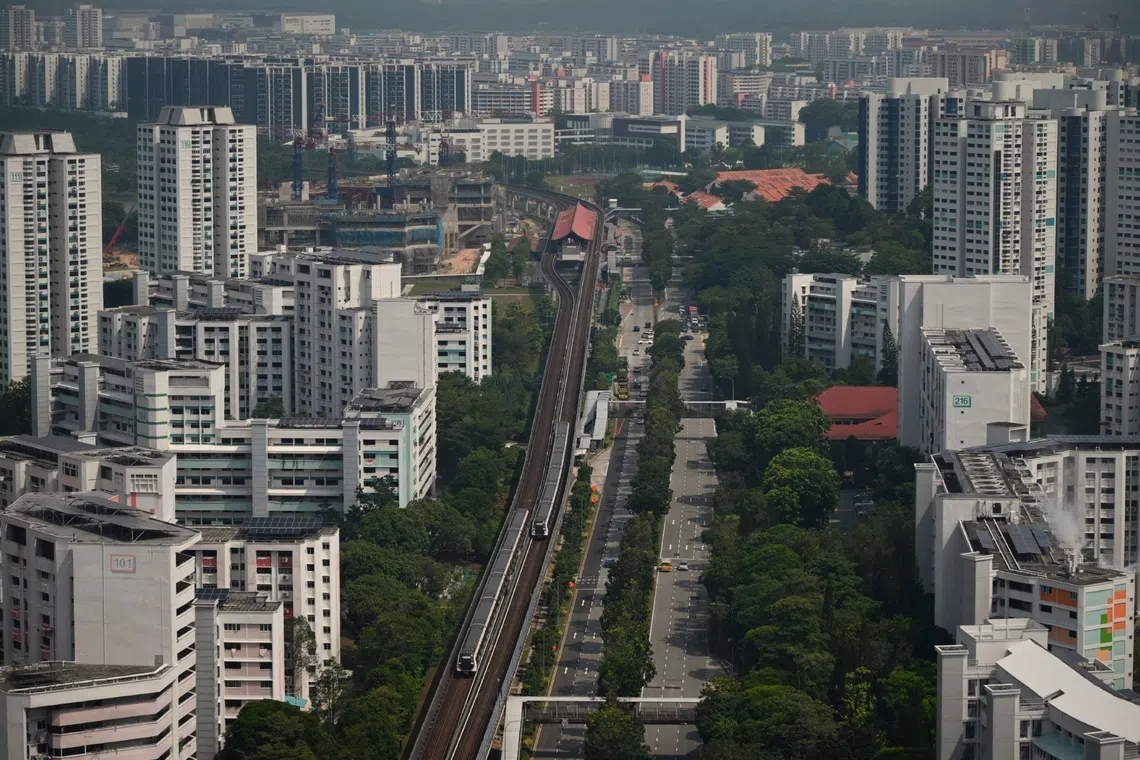
A study claimed civil servants disproportionately bought homes near MRT stations that had not yet been publicly announced.
ST PHOTO: KUA CHEE SIONG
Published Sep 19, 2026, 12:00 PM
Updated Sep 19, 2026, 12:00 PM
SINGAPORE – Questions about the laws and rules governing what civil servants can do with information obtained through their work have surfaced recently.
They come after a study claiming they and their relatives disproportionately bought homes near MRT stations that had not yet been publicly announced.
The Public Service Division (PSD) said in its initial response to the paper that it is reviewing the data and methodology and would refer the matter to the Corrupt Practices Investigation Bureau (CPIB) if there is “material basis” to do so.
Current rules include annual declarations.
Civil servants have to make declarations of interests in investments and properties to their head of agency every year, as well as when they acquire significant assets, according to a 2024 written parliamentary reply by current Coordinating Minister for Public Services Chan Chun Sing.
ST understands that these declarations could include private residential property, commercial property or any land in Singapore or abroad. The rules could also apply to properties acquired by the public officer’s spouse or financially dependent children.
There are also rules stating that officers are not allowed to use privileged information, including information that has not been made public, when buying property for personal gain.
In 2023, then senior minister Teo Chee Hean told Parliament that the Public Service Code of Conduct requires all public officers to take an annual quiz and make declarations including their freedom from financial embarrassment, investments in non-owner-occupied properties and investments in private firms.
He said officers must also make ad hoc declarations when they buy private residential or commercial properties or land.
National University of Singapore corporate governance expert Mak Yuen Teen said the Government should recognise that there are always risks of abuse, regardless of the merits of the working paper.
Pointing to a recent court case involving a former Housing Board group director accused of breaching the agency’s database, he said the episode illustrated the need for safeguards.
“Regardless of whether we believe the findings are accurate, we should make sure we have safeguards to minimise such risks,” he said.
Legislation, codes of conduct that may apply
Some have assumed that the mention of CPIB means that any potential offence highlighted by the study is corruption-related, but lawyers told The Straits Times that the legal implications depend heavily on the circumstances of each case.
Noting that the study does not provide any specific facts for any individuals, lawyers suggested several possible pieces of legislation that could be relevant beyond the Prevention of Corruption Act, as well as internal codes of conduct by which civil servants are bound.
The CPIB is the only agency authorised to investigate corruption offences under the Prevention of Corruption Act (PCA), which covers corrupt transactions involving “gratification” – such as money, property, services, favours or other advantages – given or received to induce a person to do something with corrupt intent.
But lawyers said the fact that a civil servant may have used information obtained through work to make a profitable property purchase does not, by itself, establish a corruption offence.
The working paper, authored by four academics based in the US and Hong Kong, claimed that civil servants – in particular those involved in rail planning – disproportionately bought private property near an MRT station, compared with a control group with similar demographics.
It was published by the National Bureau of Economic Research, a US-based non-profit organisation, in September.
Lawyer Gino Singh of Abbots Chambers said the PCA is not an obvious fit based on these facts.
The conventional corruption offences under the Act require corrupt gratification operating as an inducement or reward, he noted. “Here, nobody has offered or given the officer anything. He has simply acted upon information already in his possession,” he said.
Benjamin Joshua Ong, an assistant professor of law at Singapore Management University, said merely misusing information for personal gain is not necessarily an offence that the CPIB has the power to investigate.
“The CPIB’s main remit is to investigate corruption-related offences. It does have the power to investigate other offences, but only arrestable offences which are disclosed in the course of investigations into corruption-related offences,” he told ST.
Professor Walter Woon, a former Attorney-General, said investigations can be conducted by any agency, and CPIB investigations often lead to Penal Code charges.
“What charge might be disclosed is an entirely separate matter. It may not be corruption, but there could be other offences,” he said.
Instead of the PCA, lawyers flagged Section 169 of the Penal Code and Section 7(3) of the Public Sector (Governance) Act as possibilities.
Section 169 of the Penal Code states that it is an offence for a public servant who is legally prohibited from buying or bidding for certain property to nonetheless do so. If convicted, a person can be jailed for up to two years, fined, or both, while the property, if purchased, is liable to be confiscated.
Ong said whether this applies depends on whether the civil servant in question was legally bound not to purchase the property, which could come under internal civil service rules that employees are contractually bound to follow.
Section 7(3) states that it is an offence for a relevant public official to use information under the control of a public sector agency and, as a result of that use, obtain a gain for himself or another person, or cause harm or loss to another person. A person can be fined up to $5,000, jailed for up to two years, or both, under this provision.
Lawyers ST spoke to said this Act could be more directly relevant to a scenario involving the use of government information for a private property gain.
But Ong noted that there appear to be no decided cases in which the courts have had an occasion to deal with or interpret Section 7(3), or any other part of the Public Sector (Governance) Act.
Therein lies a possible defence for the civil servant, which is to prove that the information used was “generally available information”, he said.
Ong said this could cover a possibility raised in several online comments so far – that future MRT stations may be reasonably inferred from the type of construction works being carried out in an area.
Singh said the Official Secrets Act could come into play if an officer told relatives to buy property based on internal knowledge of where an MRT station is going to be announced.
“That is no longer merely an officer privately acting upon information. There has been a communication of official information to another person,” he said.
There is a possibility that any wrong behaviour flagged in the study would not fall under the purview of the law but under internal civil service rules, said lawyers.
Singh said a breach of an employment or ethical obligation should not automatically be equated with the commission of a criminal offence.
Ong added that not all the standards explicitly list behaviours that are forbidden. Some take the form of principles and values, which involve an element of judgment.
For example, one of the core principles outlined in the Public Service Code of Conduct is for public officers to be “fair and impartial in carrying out responsibilities, and not be corrupt or seen to be so”.
They may also vary in stringency depending on the department.
Ong pointed to rules requiring all public officers to declare visits to local casinos if they visit more than four times a month or purchase an annual pass, while tighter restrictions apply to certain groups of officers.
ST has contacted the PSD and several government agencies involved in transport and land-use planning, including the Land Transport Authority and Urban Redevelopment Authority, for more details on the rules governing property purchases.
Public Service Division
Residential property
一项研究声称,公务员购买的房屋大多位于尚未公开宣布的地铁站附近。
《海峡时报》摄影:郭志雄
发布于 2026 年 9 月 19 日下午 12:00
更新于2026年9月19日中午12:00
新加坡——最近出现了一些关于公务员如何处理通过工作获得的信息的法律和规则方面的问题。
此前有研究声称,他们及其亲属不成比例地购买了位于尚未公开宣布的地铁站附近的房屋。
公共服务署(PSD)在对该报的初步回应中表示,正在审查数据和方法,如果存在“实质性依据”,将把此事移交给贪污调查局(CPIB)。
现行规定包括年度申报。
根据现任公共服务统筹部长陈振声在 2024 年提交的书面议会答复,公务员每年必须向其部门主管申报投资和财产方面的利益,并且在获得重大资产时也必须申报。
《海峡时报》了解到,这些申报可能包括新加坡境内外的私人住宅、商业地产或任何土地。这些规定也可能适用于公职人员配偶或经济上依赖其的子女所购置的房产。
还有规定指出,警官在为个人利益购买房产时,不得使用特权信息,包括尚未公开的信息。
2023 年,时任高级部长张志贤向国会表示,《公共服务行为准则》要求所有公职人员每年参加一次测试,并作出声明,包括他们是否没有财务困境、是否投资于非自住物业以及是否投资于私人公司。
他说,警员在购买私人住宅或商业地产或土地时,也必须进行临时申报。
新加坡国立大学公司治理专家麦源添表示,无论工作文件本身的优点如何,政府都应该认识到始终存在滥用职权的风险。
他指出最近一起涉及前房屋委员会集团董事被控入侵该机构数据库的法庭案件,并表示该事件说明了安全保障的必要性。
他说:“无论我们是否相信调查结果准确,我们都应该确保采取保障措施,将此类风险降到最低。”
适用的法律法规和行为准则
有人认为,提到贪污调查局(CPIB)意味着该研究指出的任何潜在罪行都与贪污有关,但律师告诉《海峡时报》,法律影响很大程度上取决于每个案件的具体情况。
律师指出,该研究并未提供任何个人的具体事实,因此建议除了《防止腐败法》之外,还应考虑其他几项可能相关的立法,以及公务员必须遵守的内部行为准则。
贪污调查局是唯一有权根据《防止贪污法》调查贪污罪行的机构,该法涵盖涉及“好处费”(例如金钱、财产、服务、恩惠或其他利益)的贪污交易,这些好处费是为诱使他人出于贪污目的而给予或接受的。
但律师表示,公务员利用工作中获得的信息进行有利可图的房产购买这一事实本身并不构成腐败犯罪。
这份由四位分别居住在美国和香港的学者撰写的工作论文声称,与人口统计特征相似的对照组相比,公务员(尤其是参与铁路规划的公务员)在地铁站附近购买私人房产的比例过高。
该报告由总部位于美国的非营利组织——国家经济研究局于9月发布。
Abbots Chambers 的律师 Gino Singh 表示,根据这些事实,PCA 并不明显适用。
他指出,该法规定的传统腐败罪行要求以贿赂或奖励为手段进行腐败行为。“在本案中,没有人向这名官员提供或给予任何东西。他只是根据自己掌握的信息采取了行动。”他说。
新加坡管理大学法学助理教授王本杰明表示,仅仅滥用信息谋取私利并不一定是贪污调查局有权调查的罪行。
“贪污调查局的主要职责是调查与贪污有关的罪行。它确实有权调查其他罪行,但仅限于在调查与贪污有关的罪行过程中披露的可逮捕罪行,”他告诉《海峡时报》。
前司法部长沃尔特·伍恩教授表示,任何机构都可以进行调查,而贪污调查局的调查往往会导致违反刑法的指控。
“具体会披露什么指控是完全不同的另一回事。可能不是贪污,但也可能涉及其他罪行,”他说。
律师们没有选择《防止腐败法》,而是指出《刑法典》第 169 条和《公共部门(治理)法》第 7(3) 条也是可能的适用条款。
《刑法》第169条规定,公职人员如依法被禁止购买或竞购某些财产,却仍然购买或竞购,即属违法行为。一经定罪,可判处最高两年监禁、罚款或两者并罚;所购财产亦可被没收。
Ong表示,这是否适用取决于相关公务员是否依法不得购买该房产,这可能涉及公务员内部规章制度,员工有合同义务遵守这些规定。
第7(3)条规定,相关公职人员使用公共部门机构控制下的信息,并因此为自己或他人谋取利益,或对他人造成损害或损失,即属违法行为。根据该条规定,违法者可被处以最高5,000美元的罚款、最高两年的监禁,或两者并罚。
ST采访的律师表示,该法案可能与利用政府信息谋取私人财产利益的情况更为直接相关。
但翁指出,目前似乎还没有任何已决案件,法院有机会处理或解释《公共部门(治理)法》第 7(3) 条或任何其他部分。
他说,这或许能为这位公务员提供辩护,那就是证明所使用的信息是“普遍可获得的信息”。
Ong表示,这可能涵盖了目前一些网络评论中提出的可能性——未来的地铁站可以根据某个地区正在进行的建筑工程类型进行合理推断。
辛格表示,如果一名官员利用内部消息透露地铁站的选址,并以此为由让亲属购买房产,那么《官方保密法》就可以发挥作用。
他说:“这不再仅仅是一名警官私下根据情报采取行动。而是将官方信息传递给了其他人。”
律师表示,研究中指出的任何不当行为都有可能不属于法律管辖范围,而是属于公务员内部规章制度的管辖范围。
辛格表示,违反雇佣或道德义务不应自动等同于犯下刑事罪行。
翁补充说,并非所有标准都明确列出禁止的行为。有些标准以原则和价值观的形式呈现,其中包含判断的成分。
例如,《公共服务行为准则》中概述的核心原则之一是,公职人员在履行职责时要“公平公正,不得腐败或被视为腐败”。
不同部门的规定严格程度也可能有所不同。
Ong指出,相关规定要求所有公职人员如果每月到访当地赌场超过四次或购买年票,则必须申报到访情况;而某些特定群体的公职人员则适用更严格的限制。
《海峡时报》已联系公共服务署和参与交通及土地利用规划的多个政府机构,包括陆路交通管理局和市区重建局,以了解更多有关物业购买规则的详情。
公共服务部
住宅物业