PM Anwar vows to strengthen pondok schools, introduce AI and modern fields安华总理承诺加强民间学校建设,引进人工智能和现代领域。
PUTRAJAYA, Sept 19 — The government will help streamline and elevate pondok institutions (traditional religious schools), including in terms of physical facilities, academic...
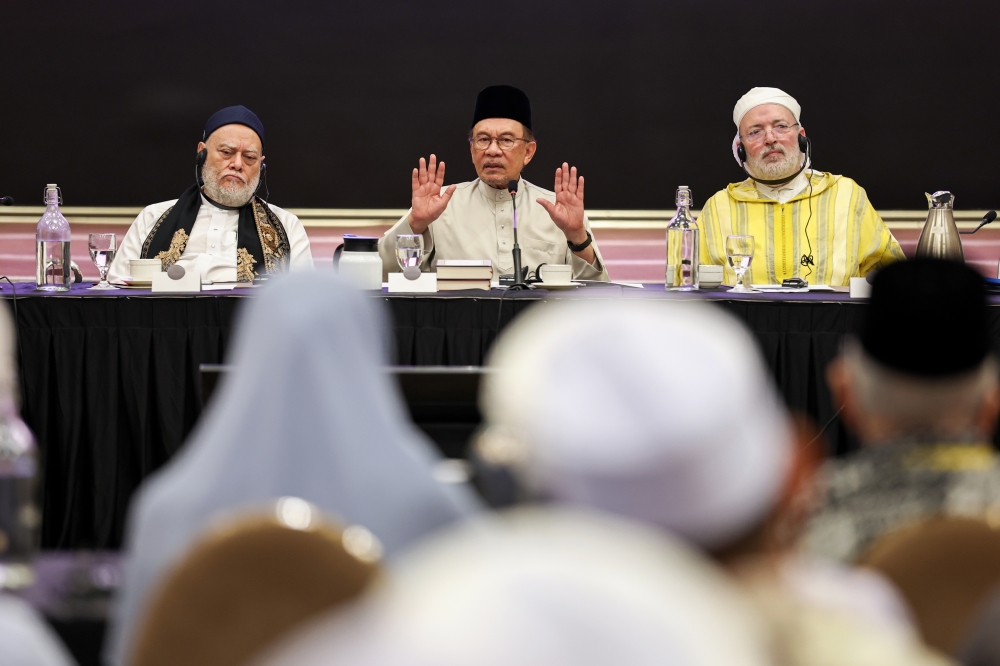
The Malaysian government, led by Prime Minister Datuk Seri Anwar Ibrahim, plans to enhance pondok institutions by improving physical facilities and integrating contemporary fields of study, such as artificial intelligence, into their curricula.
These efforts aim to modernize the traditional religious schools while respecting their specializations, supporting diverse educational pathways for students, and establishing links to higher education.
Anwar stressed the importance of instilling ethics and morality in AI education and acknowledged that not all pondok students would pursue careers as religious scholars, allowing for broader academic and professional ambitions.
PUTRAJAYA, Sept 19 — The government will help streamline and elevate pondok institutions (traditional religious schools), including in terms of physical facilities, academic disciplines and the introduction of new fields of study suited to current needs, said Datuk Seri Anwar Ibrahim.
The Prime Minister said that, as an initial step, several pondok institutions would be selected to pioneer new traditions of learning based on their respective areas of specialisation and tarbiah or disciplines.
“Since independence in 1957, governments have changed, but this is the first time we are truly assisting.
“I want to emphasise this because many people have raised questions. I will not decide what the (pondok) curriculum is, as it is not my field. I am just proposing how to improve its dignity and position, including through new areas of knowledge and disciplines,” he said in his speech at the opening ceremony of the National Turath Scholars’ Consultation, held in conjunction with the Malaysia Islamic Turath Festival 2026, here today.
Also present were Minister in the Prime Minister’s Department (Religious Affairs) Dr Zulkifli Hasan, Selangor Menteri Besar Datuk Seri Amirudin Shari, former Grand Mufti of Egypt Sheikh Prof Dr Ali Jum’ah Muhammad Abdul Wahab and prominent Moroccan scholar Sheikh Prof Dr Sayyid Idris al-Fasi al-Fihri.
Anwar said pondok institutions also need to be exposed to new disciplines, including artificial intelligence (AI), which he said has great potential as a tool for Islamic outreach and the development of the Muslim community.
“AI is an important tool for Islamic outreach and the revival of Islam, and AI without a system of ethics and morality can become a problem and a major threat that could ultimately harm us.
“There are dangers associated with AI, just as there are with phones and computers. So children in pondok institutions must also be trained to master AI,” he said.
The Prime Minister said efforts to strengthen pondok institutions should also take into account the diverse educational pathways available to their students, adding that not all such institutions necessarily need to produce religious scholars.
“If we say that all pondok institutions must produce religious scholars, that is not possible. Some are specialised (in the religious field).
“Some of them want to go into engineering, want to become pilots, want to venture into TVET (Technical and Vocational Education and Training), I think that is not a problem. At least they have sufficient knowledge and a religious foundation,” he added.
At the same time, Anwar said some pondok institutions need to have pathways to universities to enable their graduates to contribute to the public education system.
“I agree that even if we recognise pondok programmes up to the higher-education level, it does not necessarily mean their graduates must go to university. That is fine. I agree. There is no problem with that.
“But we must remember that for some pondok institutions, having a pathway to university is also important as their graduates will go on to influence the public education system,” he added. — Bernama
MACC says Najib’s conditional pardon does not alter ongoing 1MDB case status quo
Perodua Alza driver dies after collision with Volvo trailer lorry near Sungai Tong, Terengganu
MACC records Mat Sabu’s statement in fertiliser supply probe, 37 witnesses called so far
马来西亚政府在总理拿督斯里安华·易卜拉欣的领导下,计划通过改善硬件设施并将人工智能等现代研究领域融入课程,来提升私立学校(pondok)的水平。
这些努力旨在使传统宗教学校现代化,同时尊重其特色,支持学生多样化的教育途径,并建立与高等教育的联系。
安瓦尔强调了在人工智能教育中灌输伦理道德的重要性,并承认并非所有禅修学生都会从事宗教学者的职业,从而允许他们拥有更广泛的学术和职业抱负。
布城,9月19日讯——拿督斯里安华·易卜拉欣表示,政府将帮助精简和提升传统宗教学校(pondok)的水平,包括改善硬件设施、学术学科以及引入适合当前需求的新学习领域。
首相表示,作为第一步,将选择几所伊斯兰学校(pondok institutions)根据各自的专业领域和学科(tarbiah)开创新的学习传统。
“自 1957 年独立以来,政府几经更迭,但这是我们第一次真正提供援助。”
“我想强调这一点,因为很多人都提出了疑问。我不会决定(伊斯兰学院)的课程设置,因为这并非我的专业领域。我只是提出如何提升其尊严和地位的建议,包括通过引入新的知识领域和学科,”他在今天于此举行的全国伊斯兰学者咨询会开幕式上发表讲话时说道。此次咨询会与2026年马来西亚伊斯兰学院节同期举行。
出席的还有首相署部长(宗教事务)祖基菲里·哈山博士、雪兰莪州务大臣拿督斯里·阿米鲁丁·沙里、埃及前大穆夫提谢赫教授阿里·朱姆阿·穆罕默德·阿卜杜勒·瓦哈卜博士和著名摩洛哥学者谢赫·赛义德·伊德里斯·阿尔法西·菲赫里教授博士。
安华表示,伊斯兰学校也需要接触新的学科,包括人工智能(AI),他认为人工智能作为伊斯兰教推广和穆斯林社区发展的工具具有巨大的潜力。
“人工智能是伊斯兰传播和复兴的重要工具,但如果没有伦理道德体系,人工智能可能会成为一个问题,并构成重大威胁,最终可能对我们造成伤害。”
他说:“人工智能和手机、电脑一样,都存在危险。因此,寄宿学校的孩子们也必须接受人工智能方面的培训。”
总理表示,加强宗教学校的努力也应该考虑到学生可选择的各种教育途径,并补充说,并非所有此类学校都必须培养宗教学者。
“如果我们说所有宗教机构都必须培养宗教学者,那是不可能的。有些机构是专门从事(宗教领域的)。”
“他们中有些人想学工程,有些人想当飞行员,有些人想从事技术职业教育与培训(TVET),我认为这都没问题。至少他们拥有足够的知识和宗教信仰基础,”他补充道。
与此同时,安华表示,一些民间学校需要有通往大学的途径,使毕业生能够为公共教育系统做出贡献。
“我同意,即使我们承认pondok课程可以达到高等教育水平,但这并不一定意味着其毕业生必须上大学。这没问题,我同意。这没有任何问题。”
“但我们必须记住,对于一些私立学校来说,提供升入大学的途径也很重要,因为它们的毕业生将会影响公共教育体系,”他补充道。——马新社
反贪污委员会表示,纳吉布的有条件赦免不会改变正在进行的1MDB案件的现状。
Perodua Alza 司机在登嘉楼州双溪塘附近与沃尔沃拖车相撞后死亡
反贪污委员会记录了马特·萨布在化肥供应调查中的证词,目前已传唤37名证人。