Ukraine ramps up arms production, but a key bottleneck remains乌克兰加大武器生产力度,但仍存在关键瓶颈。
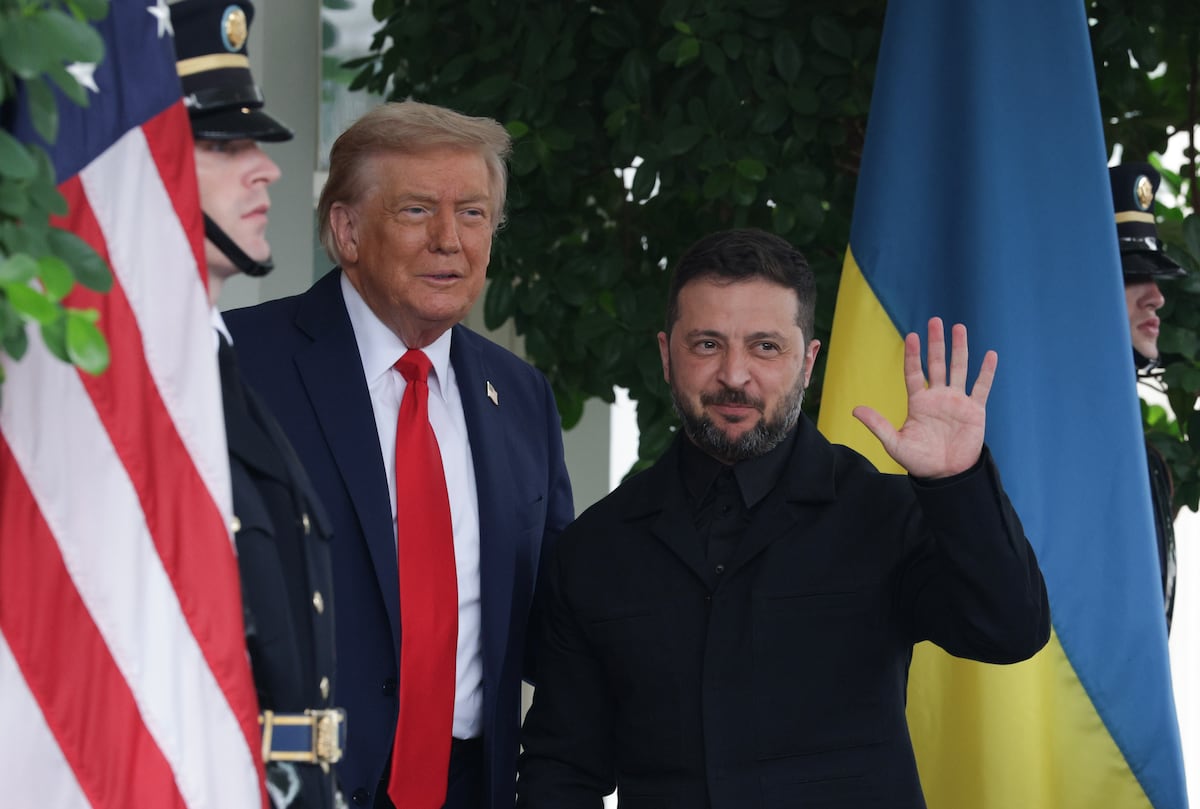
Since taking office in January, President Donald Trump’s view on U.S. assistance to Ukraine has fluctuated considerably.
LONDON — Ukrainian leaders are concerned about the United States’ wavering support and have urged local manufacturers to boost self-sufficiency as a hedge, though air defense remains a complex bottleneck, according to the Ukrainian defense-procurement chief.
“We are very much concerned about that. It is something that’s kept us awake six months ago for sure,” Arsen Zhumadilov, director of the Defense Procurement Agency of Ukraine, told reporters on the sidelines of the DSEI trade show here last week.
Since taking office in January, President Donald Trump’s view on U.S. assistance to Ukraine has fluctuated considerably. In March, his administration suspended delivery of all American aid, prompting Ukrainian President Volodymyr Zelensky to say that the end of the war felt “very far away.”
Trump responded on his Truth Social media platform, calling Zelensky’s assessment “the worst statement” and warning that the U.S. “would not put up with it for much longer.”
By July, following a major Russian attack on Ukrainian cities, Trump shifted his position again. At a press conference, he announced plans to send additional weapons, stating, “They’re getting hit very hard now. I am disappointed that President Putin has not stopped.”
America’s stance has created pressure on local defense companies to be more self-reliant and produce more, Zhumadilov said. This comes at a time when Ukraine’s industry is already facing strains stemming primarily shaky supply chains, especially in obtaining critical components.
Zhumadilov highlighted air defense as a category of weapons that “cannot be as easily procured or produced” by the country’s national industry, at least to the extent “that would cover the whole needs we have.”
In contrast to other recent defense shows, Ukraine did not have a significant presence at DSEI. The country is hosting a similar event, the Defense Tech Valley investment summit, on Sept. 16-17 in Lviv.
The Ukrainian military-procurement boss noted that one of his priorities in attending the London fair was to shop for systems and components that remain hard to source locally.
“Some components are still scarce … which we need to import, as we cannot develop those capacities very quickly locally in Ukraine. … We want a better understanding of how we can make sure our contracts with producers don’t get de-prioritized because of some political or commercial reason,” he said.
Elisabeth Gosselin-Malo was a Europe correspondent for Defense News. She covers a wide range of topics related to military procurement and international security, and specializes in reporting on the aviation sector. She is based in Milan, Italy.
伦敦——乌克兰国防采购负责人表示,乌克兰领导人对美国摇摆不定的支持感到担忧,并敦促当地制造商提高自给自足能力以防万一,尽管防空仍然是一个复杂的瓶颈。
“我们对此非常担忧。六个月前,这件事确实让我们彻夜难眠,”乌克兰国防采购局局长阿尔森·朱马迪洛夫上周在DSEI防务展期间告诉记者。
自今年1月上任以来,唐纳德·特朗普总统对美国援助乌克兰的态度摇摆不定。3月,他的政府暂停了所有美国援助,这促使乌克兰总统弗拉基米尔·泽连斯基表示,战争的结束“遥遥无期”。
特朗普在他的“真相社交媒体”平台上回应称,泽连斯基的评估是“最糟糕的声明”,并警告说美国“不会再容忍这种情况太久”。
7月,在俄罗斯对乌克兰城市发动大规模袭击后,特朗普再次改变了立场。在一次新闻发布会上,他宣布计划向乌克兰提供更多武器,并表示:“他们现在遭受了沉重打击。我对普京总统没有停止袭击感到失望。”
朱马迪洛夫表示,美国的立场给乌克兰本土国防企业带来了压力,迫使它们提高自给自足能力并增加产量。与此同时,乌克兰工业正面临着供应链不稳定的困境,尤其是在关键零部件的获取方面。
朱马迪洛夫强调,防空武器是该国国家工业“无法轻易采购或生产”的武器类别,至少无法“满足我们全部的需求”。
与其他近期举办的防务展相比,乌克兰在DSEI防务展上并没有占据显著位置。该国将于9月16日至17日在利沃夫举办类似的活动——国防科技谷投资峰会。
乌克兰军方采购负责人指出,他参加伦敦展会的首要任务之一是采购在当地仍然难以获得的系统和零部件。
他说:“有些零部件仍然短缺……我们需要进口,因为我们无法在乌克兰本地迅速发展这些产能。……我们希望更好地了解如何确保我们与生产商的合同不会因为某些政治或商业原因而被降低优先级。”
伊丽莎白·戈斯林-马洛曾任《防务新闻》欧洲通讯员。她的报道涵盖军事采购和国际安全等广泛领域,尤其擅长航空领域的报道。她常驻意大利米兰。