Austria sticks to Euro Sky Shield under moderate coalition government奥地利在温和派联合政府领导下继续留在欧洲天空盾计划。
Previously it had appeared as though Austria would exit the German-founded Sky Shield air defense project under a far-right government.
BERLIN — Austria will remain in the European Sky Shield Initiative and increase its defense expenditures to 2% of the country’s GDP annually under a new government, the incoming coalition announced on Thursday.
Previously it had appeared as though Austria would exit the German-founded Sky Shield air defense project under a far-right government. The negotiations between the extreme-right Freedom Party and the conservative People’s Party have since failed, paving the way for a more moderate coalition. Elections were held in September of 2024.
On Thursday, the incoming government, led by the conservatives and with participation of the social democrats and the economic liberals, announced that they had arrived at a coalition agreement, which includes a detailed plan of proposed policies and some appointments.
The three-way coalition – a historic first in Austrian history – is expected to present a relative continuation of the preceding Austrian government, which was made up of the conservative and green parties. This also applies to defense policy, where most of the coalition’s positions reflect those of the previous government. The chancellorship will remain with the conservative people’s party though it was unclear at the time of writing whether the defense ministry, too, would remain the People’s Party’s domain.
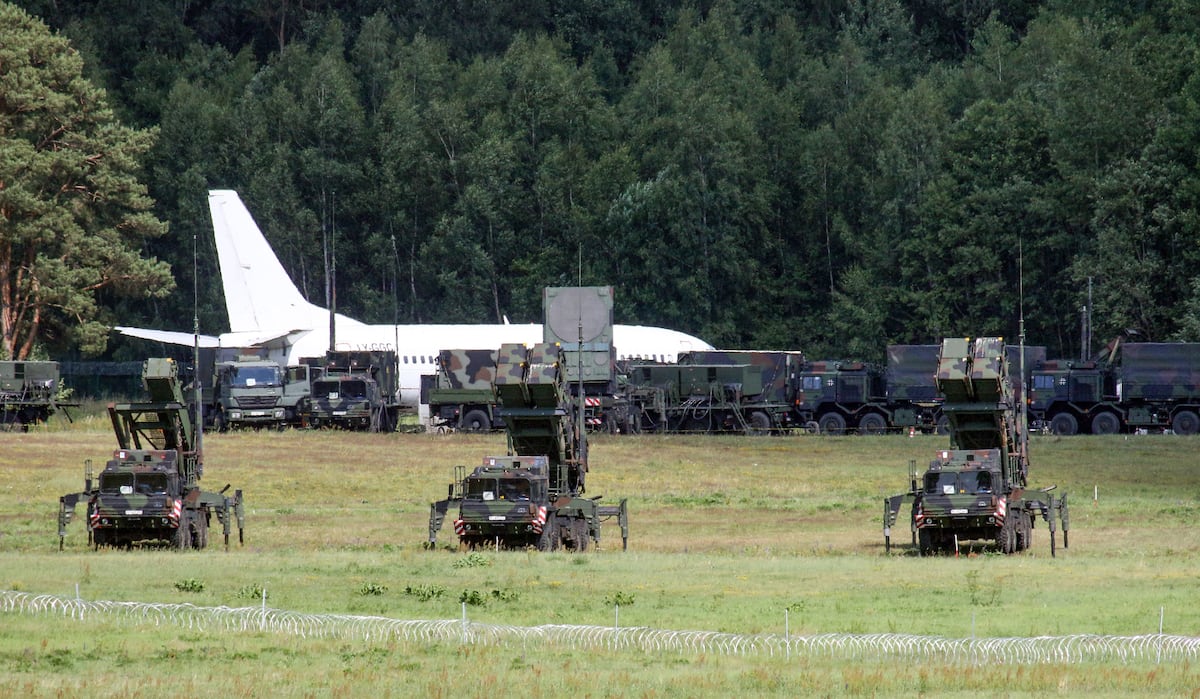
Under the previous government and defense minister Klaudia Tanner, Austria had decided to join the European Sky Shield Initiative, which to date counts 23 countries stretching in a continuous bloc from Scandinavia to Turkey. The military initiative seeks to coordinate the procurement and interoperability of air-defense systems among its members to protect against the threat of Russian missiles and drones.
The far-right and Russia-friendly freedom party had made exiting Sky Shield a campaign promise, claiming that it is not compatible with Austria’s constitutionally enshrined “perpetual neutrality.” With the euroskeptic party in charge, it was also expected that Austria would be a stumbling block for consensus in the European Union and would drop or significantly reduce its support from Ukraine on the international stage.
In accordance with its neutrality policy, Austria does not send weapons to Kyiv – but it does support the country in the diplomatic arena and send non-lethal aid.
The government that ended up being formed, however, reaffirmed its support for Ukraine and called out Russia for its invasion of its smaller neighbor in their coalition document.
In a trend also started by the Ukraine war, Austria will continue to invest in its military, sticking to the “construction plan 2023+,” which seeks to invest around €17 billion ($17.7 billion) in additional funds into its armed forces by 2032. A novelty, however, is the mention of a specific goal of 2% of the country’s GDP going toward the military by the same year. Although the same number as the goal for military spending among NATO members, Austria remains outside the alliance.
Additionally, Vienna intends to set up a so-called standby force to “be able to respond quickly to unexpected threats.” It is supposed to be manned by a combination of professional soldiers and parts of the country’s militia. Austria maintains mandatory conscription for all men at age 18.
Another major piece of news is expected in the near future, with the government reiterating their intention of phasing out the country’s fleet of 15 Eurofighter Typhoons which currently form the backbone of the Alpine republic’s air force.
A “decision of principle” is to be taken “soon” on this question, officials said. Austria intends to procure 36 new jets with both the American F-35 and the Swedish JAS-39 Gripen reportedly being in the running. The Austrian air force has in the past been a significant operator of Saab aircraft, flying a custom-made variant of the Saab 105 until recently, when it was retired in favor of the Italian M-346. Austria also operated the Saab Gripen, Tunnan, B17A and Safir airframes in the past.
Linus Höller is Defense News' Europe correspondent and OSINT investigator. He reports on the arms deals, sanctions, and geopolitics shaping Europe and the world. He holds master’s degrees in WMD nonproliferation, terrorism studies, and international relations, and works in four languages: English, German, Russian, and Spanish.
柏林——即将上任的联合政府周四宣布,奥地利将继续留在欧洲天空之盾倡议中,并在新政府的领导下将国防开支提高到该国GDP的2%。
此前,奥地利似乎将在极右翼政府的领导下退出德国发起的“天空之盾”防空项目。但极右翼自由党和保守派人民党之间的谈判最终破裂,为组建更为温和的联合政府铺平了道路。选举于2024年9月举行。
周四,由保守党领导、社会民主党和经济自由党参与的新政府宣布,他们已达成联合执政协议,其中包括详细的政策提案计划和一些人事任命。
奥地利历史上首次出现的三党联合政府预计将基本延续前任奥地利政府的政策,前任政府由保守党和绿党组成。国防政策方面亦是如此,联合政府的大部分立场与前任政府一致。总理职位仍将由保守的人民党担任,但截至发稿时,国防部是否也将继续由人民党掌控尚不明确。
在前任政府和国防部长克劳迪娅·坦纳的领导下,奥地利决定加入欧洲天空盾牌倡议。该倡议目前拥有23个成员国,其疆域从斯堪的纳维亚半岛一直延伸到土耳其。这项军事倡议旨在协调成员国之间防空系统的采购和互操作性,以应对俄罗斯导弹和无人机的威胁。
这个极右翼且亲俄的自由党曾将退出“天空之盾”作为竞选承诺,声称该协议与奥地利宪法规定的“永久中立”原则不符。人们还预期,如果这个疑欧派政党执政,奥地利将成为欧盟达成共识的绊脚石,并会在国际舞台上放弃或大幅减少对乌克兰的支持。
根据其中立政策,奥地利不向基辅输送武器,但它在外交领域支持该国,并提供非致命性援助。
然而,最终组建的政府在其联合文件中重申了对乌克兰的支持,并谴责俄罗斯入侵其较小的邻国。
奥地利延续了乌克兰战争开启的趋势,将继续加大军费投入,坚持执行“2023+建设规划”,该规划旨在到2032年向其武装部队追加约170亿欧元(177亿美元)的资金。然而,该规划的新颖之处在于,它明确提出到2032年将国内生产总值(GDP)的2%用于军事开支。尽管这一比例与北约成员国的军费开支目标相同,但奥地利仍是北约成员国。
此外,维也纳计划组建一支所谓的待命部队,以便“能够迅速应对突发威胁”。这支部队预计将由职业军人和部分民兵组成。奥地利实行对所有18岁男性强制征兵制。
预计近期还将有另一则重大消息公布,政府将重申其逐步淘汰该国15架欧洲台风战斗机的意图,这些战斗机目前是这个阿尔卑斯山共和国空军的中坚力量。
官员表示,将就此问题“很快”做出“原则性决定”。奥地利计划采购36架新型战机,据报道,美国的F-35和瑞典的JAS-39“鹰狮”都在竞标之列。奥地利空军过去一直是萨博飞机的重要用户,曾使用过萨博105的定制改进型,直到最近才被意大利的M-346取代。奥地利过去也曾使用过萨博“鹰狮”、“Tunnan”、“B-17A”和“Safir”等机型。
林努斯·霍勒是《防务新闻》的欧洲记者和开源情报调查员。他报道影响欧洲乃至全球的军火交易、制裁和地缘政治。他拥有大规模杀伤性武器不扩散、恐怖主义研究和国际关系三个硕士学位,并精通英语、德语、俄语和西班牙语四种语言。