Ukraine, EU defense firms discuss setting up local production乌克兰与欧盟国防企业商讨建立本地生产设施
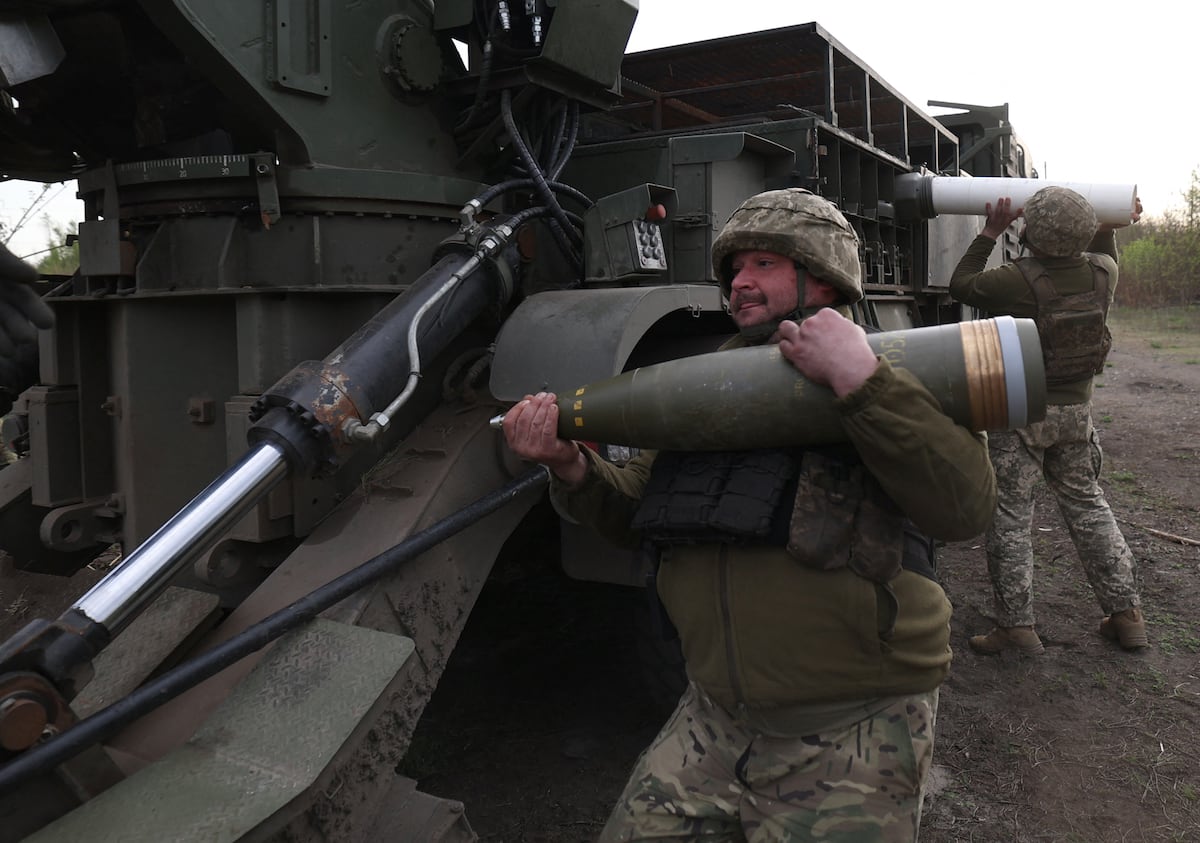
An more integrated defense industry could help solve compatibility issues plaguing the use of 155mm artillery shells, said Foreign Minister Dmytro Kuleba.
PARIS — More than 100 Ukrainian and European defense firms gathered in Brussels on Monday to discuss direct investment in Ukraine’s defense industry as well as setting up local production to help the country fight off Russia’s invasion.
Ukraine’s weapon-production capacity far exceeds its financial resources, Foreign Minister Dmytro Kuleba said in a speech by video at the EU-Ukraine Defence Industries Forum. The gap between what the local defense industry can produce and the funds available for weapons procurement amounts to $10 billion, Minister of Strategic Industries Oleksandr Kamyshin said at the meeting.
The goal of the meeting is for concrete joint proposals from Ukrainian and European firms, said Josep Borrell, the European Union’s foreign policy chief. Europe has started to adjust its military-aid strategy to bolster Ukraine’s defense-industrial base, with Denmark in April allocating 200 million kroner ($29 million) for investment in the country’s defense industry.
“Denmark has shown the example, starting the path of directly investing in Ukrainian defense industry,” Borrell said. “If the military equipment that Ukraine needs can be rapidly produced by the Ukrainian defense industry, I say let’s buy from them. Let’s help them to produce at home and let’s provide the financial capacity to buy this production.”
Borrell said more than 140 companies from 25 European Union member states were attending the forum, while Kamyshin said 39 Ukrainian companies were present, including state-owned weapons producer Ukroboronprom.
Some EU defense companies are already investing in Ukraine, with Germany’s Rheinmetall saying in February said it would set up a joint venture to manufacture 155mm artillery ammunition in the country. That follows last year’s joint venture between Rheinmetall and Ukroboronprom to locally repair and maintain equipment supplied by allies to Ukraine.
Producing locally will save on transportation costs and reduce delays, bringing manufacturing to where it is needed, Borrell said. Once EU member state agree on using the revenue generated by frozen Russian assets , those resources will be channelled to Ukraine to help with its pressing military needs and contribute directly to its defense industry, according to the high representative.
Ukraine could become a world leader in drones and electronic warfare, according to Borrell, who said Europe’s defense industry has a lot to offer Ukraine, but can also learn from the country.
“This war, with the groundbreaking role of the 21st-century technology, like drones destroying the most advanced tanks, is revolutionizing warfare,” Borrell said. “And we have learned a lot from the Ukrainians in this regard.”
Ukraine’s defense industry has shown it is capable and price competitive, Kamyshin said in remarks before the start of the meeting. He said the country’s industry is “adjacent” to the European defense industry. “We don’t compete, but we produce those simple things that work well, proven on the battlefield.”
Expanding defense-industrial capacities in Ukraine and the EU is a political issue, Foreign Minister Kuleba said. Russia’s pace of militarization is the highest since Soviet times, and the only way to win what is a new arms race, and to deter Russia, is to show that Europe has the means to defend itself, the minister said.
The European Union, with partner and candidate countries, needs a common defense-industrial space, according to Kuleba. Such an arrangement could help overcome the lack of interchangeability in urgently needed 155mm artillery munition, for example, he added, noting how French shells can only be fired from French howitzers, and German cannons only accepting U.S. and German shells.
The minister called for long-term planning of contracts and procurement, saying “predictability is the fuel that drives the defense industries.” He said Ukraine has combat experience, technological ingenuity and rapidly expanding capabilities, but lacks funding.
“Investing in Ukrainian defense enterprises is a great way to provide Ukraine with more weapons,” Kuleba said. “Every euro invested in Ukraine’s ability to produce more weapons generates lucrative security and financial returns for European partners.”
Rudy Ruitenberg is a Europe correspondent for Defense News. He started his career at Bloomberg News and has experience reporting on technology, commodity markets and politics.
巴黎——周一,100多家乌克兰和欧洲国防公司齐聚布鲁塞尔,讨论对乌克兰国防工业的直接投资以及建立本地生产,以帮助该国抵御俄罗斯的入侵。
乌克兰外交部长德米特罗·库列巴在欧盟-乌克兰国防工业论坛上发表视频讲话时表示,乌克兰的武器生产能力远远超过其财政资源。战略工业部长奥列克桑德·卡梅申在会上指出,乌克兰国防工业的产能与可用于武器采购的资金之间存在100亿美元的缺口。
欧盟外交政策负责人博雷尔表示,此次会议的目标是促使乌克兰和欧洲企业提出具体的联合提案。欧洲已开始调整其军事援助战略,以加强乌克兰的国防工业基础。今年4月,丹麦拨款2亿克朗(约合2900万美元)用于投资乌克兰的国防工业。
博雷尔说:“丹麦已经树立了榜样,率先走上了直接投资乌克兰国防工业的道路。如果乌克兰需要的军事装备能够由乌克兰国防工业快速生产,我认为我们应该从他们那里购买。我们应该帮助他们实现国内生产,并提供购买这些产品的资金支持。”
博雷尔表示,来自 25 个欧盟成员国的 140 多家公司参加了此次论坛,而卡米申则表示,有 39 家乌克兰公司出席,其中包括国有武器生产商乌克兰国防工业公司。
一些欧盟国防企业已经开始在乌克兰投资。德国莱茵金属公司今年2月宣布,将在乌克兰成立一家合资企业,生产155毫米炮弹。此前,莱茵金属公司和乌克兰国防工业公司去年也成立了一家合资企业,负责在乌克兰本地维修和维护盟国提供给乌克兰的装备。
博雷尔表示,本地化生产将节省运输成本,减少延误,并将制造业转移到最需要的地方。他还指出,一旦欧盟成员国同意使用冻结的俄罗斯资产所产生的收入,这些资源将用于帮助乌克兰满足其紧迫的军事需求,并直接促进其国防工业发展。
博雷尔表示,乌克兰有可能成为无人机和电子战领域的全球领导者。他还说,欧洲国防工业可以为乌克兰提供很多帮助,但也可以向乌克兰学习。
博雷尔说:“这场战争中,21世纪的尖端科技发挥了开创性作用,例如无人机摧毁了最先进的坦克,这正在彻底改变战争的格局。在这方面,我们从乌克兰人身上学到了很多。”
卡梅申在会议开始前发表讲话时表示,乌克兰国防工业已经证明其具备能力和价格竞争力。他说,乌克兰的国防工业与欧洲国防工业“相邻”。“我们不竞争,但我们生产那些简单却行之有效、经受过战场考验的产品。”
乌克兰外长库列巴表示,扩大乌克兰和欧盟的国防工业能力是一个政治问题。他指出,俄罗斯的军事化速度是苏联时代以来最快的,赢得这场新的军备竞赛并遏制俄罗斯的唯一途径,就是展现欧洲拥有自卫能力。
库列巴认为,欧盟及其伙伴国和候选国需要一个共同的国防工业空间。他补充说,这样的安排有助于解决急需的155毫米炮弹缺乏互换性的问题,例如,法国炮弹只能由法国榴弹炮发射,而德国火炮只能使用美国和德国的炮弹。
这位部长呼吁对合同和采购进行长期规划,并表示“可预测性是国防工业发展的动力”。他指出,乌克兰拥有实战经验、技术创新能力和快速增长的实力,但缺乏资金。
库列巴表示:“投资乌克兰国防企业是为乌克兰提供更多武器的绝佳途径。每一欧元投资于乌克兰武器生产能力的提升,都会为欧洲伙伴带来丰厚的安全和经济回报。”
鲁迪·鲁伊滕贝格是《防务新闻》的欧洲记者。他的职业生涯始于彭博新闻社,拥有报道科技、大宗商品市场和政治方面的经验。