NATO chief continues push to let Ukraine hit Russian-based targets北约秘书长继续推动允许乌克兰打击俄罗斯境内的目标。
Jens Stoltenberg, secretary general of NATO, said that Ukraine's right to self defense should give it the right to hit military targets across the border.
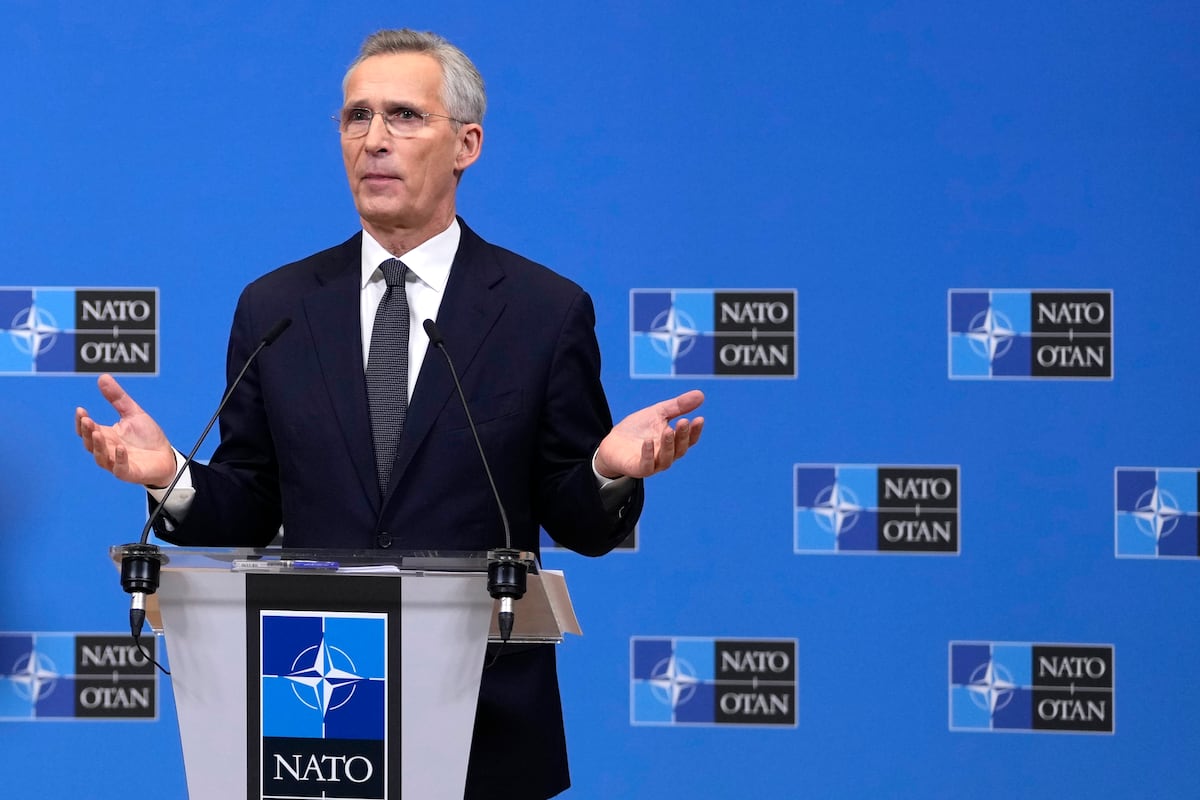
BRUSSELS — NATO’s top official said he “welcomed” the choice by many countries in the alliance to let Ukraine fire across the border into Russia, arguing that the former restrictions in place ignored Ukraine’s right to protect itself.
“The right of self-defense includes also striking legitimate military targets on the territory of the aggressor: Russia,” said Jens Stoltenberg, the secretary general of NATO.
Stoltenberg spoke to a crowd of reporters near the entrance of the alliance’s headquarters in Brussels. Behind him, American and European officials entered ahead of a meeting of countries that gather each month to coordinate support for Kyiv.
In opening remarks shortly after, U.S. Secretary of Defense Lloyd Austin updated the list of numbers showing Russia’s costs incurred during the war: 350,000 casualties, 24 ships sunk or damaged, 2,600 armored vehicles destroyed.
This is the first such meeting since the U.S., following others in the alliance, loosened the rules on some of the weapons it’s sending Ukraine. To this point in the war, America hasn’t allowed Ukrainian forces to fire any munitions it’s provided into Russia, fearing escalation with a nuclear-armed adversary.
That policy changed in late May, when the administration made a carve-out for targets around Kharkiv, Ukraine’s second-largest city. Russia opened a new offensive around the city earlier that month, which forced Western countries to rethink their restrictions.
“The border and the front line is more or less the same” near Kharkiv, which sits close to Russia, Stoltenberg said. “If the Russian forces — the artillery, the missile batteries — were safe as soon as they were on the Russian side of the border, it would become extremely difficult for Ukrainians to defend themselves.”
Ukraine has since taken advantage of the policy change to hit Russian forces across the border — one of the reasons U.S. officials have said the front lines near Kharkiv have steadied.
Earlier this week, Ukraine’s General Staff reported hitting Russian air defense batteries in Crimea, a Ukrainian peninsula Russian forces seized in 2014. The range of the strikes would likely have required western weapons, such as the longer-range Army Tactical Missile System, or ATACMS, which can fire up to around 200 miles.
The U.S. still doesn’t allow Ukraine to fire these longer-range weapons into Russia. Ukrainian officials, including President Volodomyr Zelenskyy, have chafed at that restriction, saying they’re at once grateful for the policy shift but think it’s insufficient.
One of the reasons is a target still outside Ukraine’s reach. Russian bombers parked on airfields farther back have been pounding Ukrainian cities for the last year.
American officials have two concerns about lifting the remaining restrictions.
One is to make sure Ukraine makes the best use of the weapons provided, which involves concentrating the fires as much as possible. And another is the concern over escalation. Russia has the world’s largest nuclear arsenal and has threatened their use multiple times during the war.
Stoltenberg, who publicly supported lifting the earlier restrictions before the U.S. did so, argued that the burden shouldn’t be on Ukraine or its allies to avoid escalation, given that Russia started this war to begin with.
“Ukraine has the right to strike military targets on Russian territory, part of the right to self defense, and we have the right to support them in defending themselves,” he said.
The question will grow more pressing later in the summer when Ukraine receives F-16 fighter jets, an effort the Netherlands and Denmark are leading as Ukrainian pilots complete training in the U.S.
On the flight to Brussels, Gen. CQ Brown, America’s top military officer, said in a short interview that those planes would lengthen Ukraine’s range of fire and support the country’s defense. He declined, though, to say whether they should be able to fire across the border, deferring the question to policymakers.
U.S. officials often urge the public not to focus on any one weapon or rule as a breakthrough during the war, and Brown too mentioned the broader set of equipment being provided as more important.
“It all comes together to give them just added capability to defend themselves,” he said.
Noah Robertson is the Pentagon reporter at Defense News. He previously covered national security for the Christian Science Monitor. He holds a bachelor’s degree in English and government from the College of William & Mary in his hometown of Williamsburg, Virginia.
布鲁塞尔——北约最高官员表示,他“欢迎”联盟中许多国家选择允许乌克兰向俄罗斯越境开火,并辩称之前的限制忽视了乌克兰自卫的权利。
北约秘书长延斯·斯托尔滕贝格表示:“自卫权也包括打击侵略者(俄罗斯)领土上的合法军事目标。”
斯托尔滕贝格在布鲁塞尔联盟总部入口附近向一群记者发表了讲话。在他身后,美国和欧洲官员陆续进入大楼,准备参加每月一次的各国会议,协调对基辅的支持。
在随后的开幕致辞中,美国国防部长劳埃德·奥斯汀更新了显示俄罗斯在战争期间所遭受损失的数字列表:350,000 人伤亡,24 艘舰船被击沉或损坏,2,600 辆装甲车被摧毁。
这是自美国效仿其他盟国放宽对乌克兰部分武器的限制以来举行的首次此类会议。此前,美国一直不允许乌克兰军队向俄罗斯发射任何其提供的弹药,担心与拥有核武器的对手发生冲突升级。
这一政策在5月下旬发生了变化,当时美国政府对乌克兰第二大城市哈尔科夫周边的目标做出了例外规定。俄罗斯在当月早些时候对该市发动了新的攻势,迫使西方国家重新考虑其限制措施。
斯托尔滕贝格说,在靠近俄罗斯的哈尔科夫附近,“边界和前线几乎是一回事”。“如果俄罗斯军队——炮兵、导弹阵地——一旦进入俄方一侧的边界就能安全无虞,那么乌克兰人将很难自卫。”
此后,乌克兰利用政策变化打击了边境另一侧的俄罗斯军队——这也是美国官员所说的哈尔科夫附近前线局势趋于稳定的原因之一。
本周早些时候,乌克兰总参谋部报告称,他们袭击了位于克里米亚的俄罗斯防空阵地。克里米亚是乌克兰的一个半岛,于2014年被俄罗斯军队占领。此次袭击的范围可能需要西方武器,例如射程更远的陆军战术导弹系统(ATACMS),该系统射程可达约200英里。
美国仍然不允许乌克兰向俄罗斯发射这些远程武器。包括总统泽连斯基在内的乌克兰官员对这一限制感到不满,他们表示,虽然对政策转变表示感谢,但认为这还远远不够。
其中一个原因是目标仍然超出乌克兰的攻击范围。过去一年来,部署在更远机场的俄罗斯轰炸机一直在轰炸乌克兰城市。
美国官员对解除剩余限制措施有两个担忧。
一是确保乌克兰充分利用所提供的武器,这意味着尽可能集中火力。二是担心局势升级。俄罗斯拥有世界上最大的核武库,并在战争期间多次威胁使用核武器。
斯托尔滕贝格曾公开支持在美国解除此前的限制之前就解除这些限制,他认为,鉴于这场战争是俄罗斯挑起的,避免局势升级的责任不应该落在乌克兰或其盟友身上。
他说:“乌克兰有权打击俄罗斯境内的军事目标,这是自卫权的一部分,我们也有权支持他们进行自卫。”
今年夏天晚些时候,随着乌克兰接收F-16战斗机,这个问题将变得更加紧迫。这项工作由荷兰和丹麦牵头,而乌克兰飞行员正在美国完成训练。
在飞往布鲁塞尔的航班上,美国最高军事长官布朗将军在接受简短采访时表示,这些战机将扩大乌克兰的射程,并支持该国的国防。但他拒绝就这些战机是否应该能够越境开火发表评论,而是将这个问题留给了政策制定者。
美国官员经常敦促公众不要将战争期间的任何一种武器或规则视为突破,布朗也提到,提供的更广泛的装备更为重要。
他说:“这一切加在一起,就赋予了他们更强的自卫能力。”
诺亚·罗伯逊是《防务新闻》的五角大楼记者。他此前曾为《基督教科学箴言报》报道国家安全新闻。他拥有弗吉尼亚州威廉斯堡威廉与玛丽学院的英语和政治学学士学位。