Singapore’s foreign policy based on realism, but it’s not just a passive observer: Tommy Koh新加坡的外交政策基于现实主义,但它并非被动的观察者:汤米·科
With autonomy, S'pore can uphold its principles and act in its own interests amid complicated geopolitics, he said. Read more at straitstimes.com.
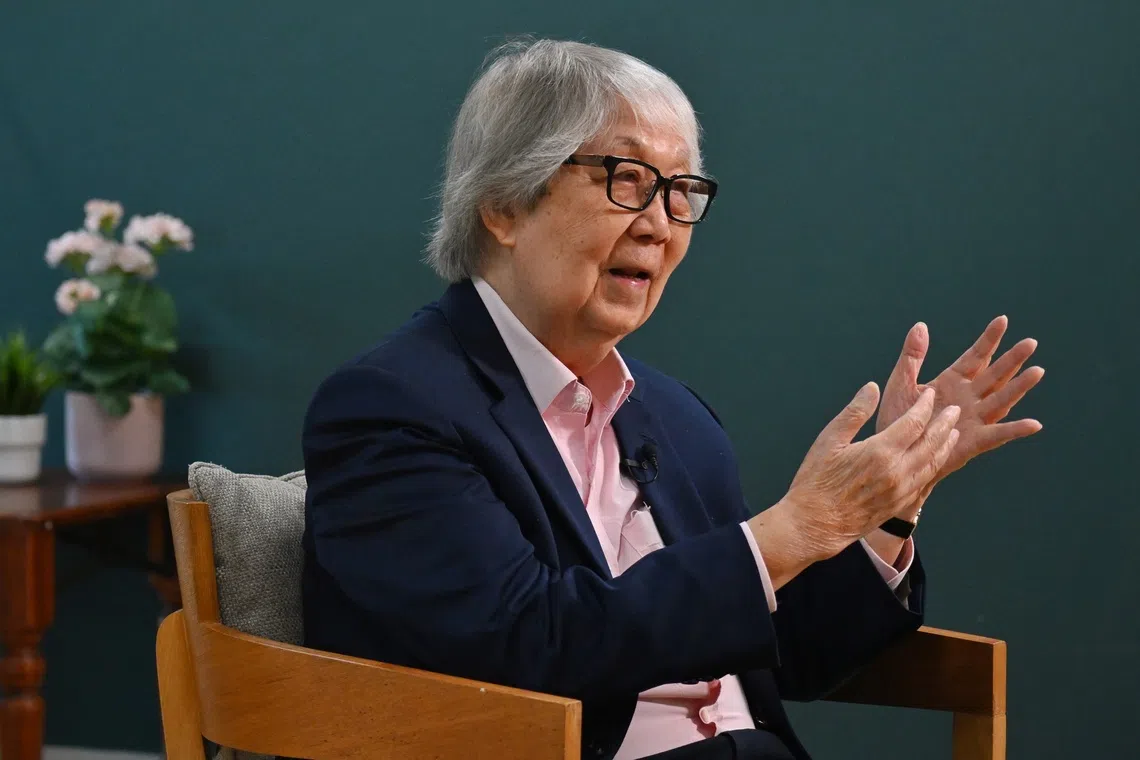
Professor Tommy Koh, who just retired from the Ministry of Foreign Affairs after 55 years, speaking to The Straits Times on Sept 15. at his office at the Centre for International Law.
ST PHOTO: KUA CHEE SIONG
Published Sep 20, 2026, 05:00 AM
Updated Sep 20, 2026, 05:00 AM
SINGAPORE – Just three years after Singapore gained independence , a young Tommy Koh learnt one of his most abiding lessons in international relations – might is right for powerful countries.
The law academic-turned-diplomat was barely a month into his posting as Singapore’s representative to the United Nations when the Soviet Union invaded Czechoslovakia.
Czechoslovakia was then aligned with the Soviet Union . But it was undergoing political and economic liberalisation , which Moscow was worried would lead to widespread rebellion in the Eastern bloc.
The invasion on Aug 20, 1968, took Czechoslovakia and the world by surprise.
“It was a shocking event that this superpower would send in its army to invade a smaller country and overthrow its government,” Koh said, recounting the episode in an interview with The Straits Times on Sept 15.
At the United Nations, he saw how efforts in the UN Security Council to pass a resolution condemning the attacks were repeatedly blocked by the Soviet Union and eventually quashed.
“You know, it makes you sit back and say, ‘Is there a role for law in a world governed by force and by power?’” Koh said.
Ultimately, it was a reality check for him.
“It made me aware that the world is not governed by law, but that powerful countries will use their power to assert their will, and that’s the reality,” he said.
But while such use of force might produce results in the short term, it rarely prevails in the long term, said Koh, 88, Singapore’s longest-serving diplomat who retired at the end of August after 55 years in the foreign service.
History has shown the limits of power, he added, citing America’s loss in the Vietnam War that lasted from 1954 to 1975, and the Soviet Union’s withdrawal from Afghanistan in 1989 after a decade-long invasion.
The Czechoslovakia invasion, coming early on in Koh’s career, solidified his resolve to defend international law and the rule of law.
This has become especially important in the current climate, as major global powers increasingly flout multilateral rules through the use of force, and undermine key international institutions.
For Singapore, it is about survival, as international law provides the legal framework for a small country to defend their sovereignty against arbitrary action by bigger countries.
“Of course, they will continue to do things like kidnapping (former president Nicolas) Maduro from Venezuela. I suppose when you are very powerful, you are tempted to use your force,” he said.
“(But) I’m clear in my mind. I don’t want to build a world governed by force. I want to build a different world… governed by the rule of law. I want to build a world in which countries cooperate with each other. I want to build a world in which we will protect the global commons.”
Koh, a principal architect behind major international agreements like the UN Convention on the Law of the Sea (UNCLOS) and founding chairman of the Centre for International Law, added that the world must not accept the flouting of international law by powerful countries as reality.
“Sure, you will do this, but I’m not accepting it. I’m telling you what you’ve done is wrong. I hold you to account,” he said.
Countries have agency. This is true even for a small country like Singapore, which hews to the principle of taking the world as it is, he said.
As examples of how Singapore has pushed back, Koh pointed to the Republic speaking out in August against Israel’s plans to build more residential settlements in the West Bank, which are illegal under international law.
It was important for Singapore to call out the illegal settlements and settler violence against Palestinians, he added.
“Israel is militarily very powerful… but it doesn’t mean that Israel can do whatever it wants. And it doesn’t mean that because we are a good friend of Israel, we must either support Israel no matter what it does, or keep silent,” he said.
In the past, Singapore had condemned Vietnam’s invasion and occupation of Cambodia in 1978 and led a concerted effort to table an annual resolution at the United Nations General Assembly to call for the withdrawal of the troops over 10 years.
Singapore had also condemned the Soviet Union’s invasion and occupation of Afghanistan in 1979 and the United States’ invasion of Grenada in 1983.
While Singapore’s foreign policy is based on realism, it does not mean that it is just a passive observer of reality, he said.
“Accepting the world as it is doesn’t mean that we have no agency… we will push back, and we will have the courage to hold the big countries to account,” said Koh, who had delivered Singapore’s statement about Grenada at the UN all those years ago.
As a diplomat, Koh said he has held the two principles in balance – recognising the reality of the world, while working hard to defend Singapore’s sovereign rights and principles so as to ensure its agency.
To this end, one of Singapore’s most important contributions to international relations is the Forum of Small States, said Koh.
Koh, as a diplomat, has held the two principles in balance – recognising the reality of the world, while working hard to defend Singapore’s sovereign rights and principles so as to ensure its agency. ST PHOTO: KUA CHEE SIONG
Koh, as a diplomat, has held the two principles in balance – recognising the reality of the world, while working hard to defend Singapore’s sovereign rights and principles so as to ensure its agency.
In 1992, Singapore co-founded the informal grouping of small states in New York, with an initial membership of 16 countries. Today, it comprises 108 countries which meet regularly to discuss issues of concerns to small states.
Before this, small countries had no platform of their own and were disadvantaged in a world that favours the big over the small and the strong over the weak, said Koh.
By bringing the countries together, the forum has allowed them to amplify their voice and increase their leverage, he added.
Things could well have worked out differently for Singapore in 1991.
When the Cold War ended with the formal dissolution of the Soviet Union, and the world was left with one superpower in the United States, the Ministry of Foreign Affairs held a major brainstorming exercise.
The question Singapore was grappling with then was whether it should become an ally of the remaining one superpower, or stay independent.
Recounting the brainstorming session, Koh said there were good arguments for both options , but the eventual consensus was for Singapore to be close to the US but not aligned with it.
Allies are obligated to defend each other, he explained, and this can constrain Singapore’s ability to speak out according to its own principles.
“We wanted to maintain our autonomy and our room for manoeuvre,” he said.
“Looking back on 1991, I think we made the right choice.”
As the global order moves towards more multi-polarity, this will be important for Singapore, he said.
Koh believes that China, now a prospective superpower, will become a complete superpower and a rival to the United States.
But the two countries will not be the only poles. There will also be other spheres of influence, such as the European Union, Tokyo, New Delhi, as well as the BRICS developing countries among others.
With autonomy, Singapore can better uphold its principles and act in its own interests even as the world gets more complicated, he added.
But Singapore’s external strength and sovereignty also depend on domestic unity.
Koh said the Government must be able to convince Singaporeans that its foreign policy is correct and serves the national interest.
For example, in the contest for influence between the US and China, Singapore has not chosen to take sides. Yet, there may be some Singaporeans who believe Singapore should support China.
In the same way, some Singaporeans may feel that Singapore should take a stronger position against Israel in the Gaza war that broke out in 2023 .
“So it is the job of the Ministry of Foreign Affairs and the whole of government to convince our own people, that our policy is correct, that at the end of the day, we mustn’t allow our emotions to override our rationality,” he said.
Besides building consensus back home, Singapore has also continued to build bridges abroad, such as by continuing to champion multilateral organisations and cooperation.
The majority of the 193 member states of the UN still believe in the importance of the international organisation, said Koh.
While countries have violated the UN Charter and damaged the system – the Russians by invading Ukraine, the US by waging a war against Iran without just cause, and Israel by its excessive actions in Gaza – the treaty is still “standing tall”.
“They don’t represent the world,” said Koh of these countries. “It is true that a few member states have become disenchanted. They are important, but they are a minority. The rest of us will carry on without them.”
Koh added that the US is doing itself harm by withdrawing from so many multilateral platforms, such as the Trans Pacific Partnership, the Paris Agreement and the World Health Organization.
“My message to my American friends is: You are important, but you’re not indispensable, and the rest of us will carry on without you. The danger is that we will have a world without America. Not good for the world, and not good for America,” he said.
Closer to home, there is also ASEAN, which is another platform Koh has championed.
When the grouping was founded in 1967, South-east Asia was poor and unstable, with insurgencies in many of the countries.
Since then, the region has become stable and prosperous and has been transformed, he added.
“We have inculcated in us a culture of consulting each other, seeking to accommodate each other’s view, and we have an ability to, most of the time, find a consensus,” said Koh, noting that there is no such successful regional organisation for North-east Asia or South Asia.
“So we (ASEAN) are not perfect. But when I look at ourselves and look at other regions of the world, I’m just so glad that we (Singapore) are located here.”
He added that ASEAN is a force for peace, which has intervened when disputes arise between its members.
Most recently, when fighting erupted between Cambodia and Thailand on their border in 2025, ASEAN had stepped in to try to help defuse the tension.
Koh said the government must be able to convince Singaporeans that its foreign policy is correct and serves the national interest. ST PHOTO: KUA CHEE SIONG
The two countries also have a dispute at sea, and are engaged in conciliation talks under UNCLOS .
Even then, ASEAN has come under criticism in recent years, as the 11-member regional grouping deals with a deadlock caused by Myanmar’s military coup in 2021 and ongoing civil war.
An ASEAN-backed peace plan has failed to end the war, leading some critics to cast doubt about the grouping’s effectiveness.
Asked about this, Koh said the problem in Myanmar is not interstate, but intrastate, and the result of a military coup staged by the army against Myanmar’s elected government.
“We can’t solve the problem. The Myanmar people must solve their own problem. All we can do is encourage them,” he said.
But he admitted that ASEAN is divided on whether or not to recognise Myanmar junta chief-turned-president Min Aung Hlaing, who led the military coup and remains barred from the official ASEAN leaders’ summits.
Within ASEAN, Thailand, Vietnam, Cambodia and Laos have hosted him on bilateral and official visits, which critics warn runs the risk of providing legitimacy to his military-run government.
Myanmar will be on the agenda as Singapore takes over the ASEAN chairmanship in 2027 , and unless the military is willing to have a fundamental rethink of the use of force, ASEAN is likely to be at an impasse, he said.
Still, Koh remains a supporter and believer of ASEAN’s consensus model, which is based on consultation and unanimity, rather than majority voting,
He said there was only one occasion in ASEAN’s history – the grouping marks its 60th year next year – that it had failed to adopt a joint communique.
That happened when Cambodia, on behalf of China, decided to block the adoption of a paragraph on the South China Sea in the official document released after the annual ASEAN Foreign Ministers’ Meeting that outlines the grouping’s consensus.
“But I think Cambodia learnt the lesson that it shouldn’t act as a proxy of China, and after that, we’ve never had problem adopting or joint communique. So consensus works,” he said.
Koh, who is known for his personal approach to foreign relations and often refers to his counterparts as friends, added: “We shouldn’t take decisions by vote because it will destroy the family.”
This non-confrontational approach is also favoured by Koh in the civic realm at home.
Widely seen as one of the Singapore government’s foremost “loving critics” – a term he coined in asking the Government not to reflexively dismiss those with dissenting views – he said being confrontational may work in other countries but not Singapore.
“Being adversarial is not our style. Confrontation is not a technique that works in Singapore. It’s better to be persuasive,” he said.
He cites AWARE and Nature Society Singapore , which he is a patron of, as non-governmental organisations that have been effective and successful in championing their cause by harnessing facts, rational arguments and persuasion.
On the health of Singapore’s civic space, he said while Singapore has many strengths, one of its weaknesses is the “relatively low tolerance for people with different views or dissenting views”.
While the space for intellectuals and artists have expanded over the past 61 years, Singapore could do better, he added.
“If you look at the trajectory, I think we are growing towards greater tolerance, more acceptance… the trajectory is in the right direction.”
Ministry of Foreign Affairs
Singapore foreign policy
刚刚从外交部退休、任职 55 年的 Tommy Koh 教授于 9 月 15 日在国际法中心办公室接受《海峡时报》采访。
《海峡时报》摄影:郭志雄
发布于 2026 年 9 月 20 日上午 5:00
更新于2026年9月20日 上午5:00
新加坡——新加坡独立仅仅三年后,年轻的许通美就学到了他在国际关系中最深刻的教训之一——对于强大的国家来说,强权即真理。
这位从法学学者转型为外交官的人,上任新加坡驻联合国代表还不到一个月,苏联就入侵了捷克斯洛伐克。
当时的捷克斯洛伐克与苏联结盟。但它正在经历政治和经济自由化,莫斯科担心这会导致东欧集团出现大规模叛乱。
1968 年 8 月 20 日的入侵令捷克斯洛伐克和全世界都感到措手不及。
“这是一件令人震惊的事情,这个超级大国竟然派军队入侵一个小国,推翻其政府,”许先生在9月15日接受《海峡时报》采访时回忆道。
在联合国,他亲眼目睹了联合国安理会为通过一项谴责袭击的决议所做的努力如何屡次遭到苏联的阻挠,最终被扼杀。
“你知道,这会让你停下来思考,‘在一个由武力和权力统治的世界里,法律还有存在的意义吗?’”科赫说道。
最终,这对他来说是一次现实的考验。
“这让我意识到,世界并非由法律统治,而是强权国家会利用其权力来贯彻自己的意志,这就是现实,”他说。
但现年 88 岁的许文远表示,虽然这种武力使用在短期内可能会产生效果,但从长远来看却很少奏效。许文远是新加坡任职时间最长的外交官,他在外交部门工作了 55 年后于 8 月底退休。
他补充说,历史已经表明了权力的局限性,并列举了美国在1954年至1975年持续的越南战争中的失败,以及苏联在长达十年的入侵后于1989年从阿富汗撤军的例子。
科赫职业生涯早期发生的捷克斯洛伐克入侵事件,更加坚定了他捍卫国际法和法治的决心。
在当前形势下,这一点变得尤为重要,因为主要全球大国越来越多地通过武力藐视多边规则,并破坏关键的国际机构。
对新加坡而言,这关乎生存,因为国际法为小国捍卫自身主权免受大国任意行为侵害提供了法律框架。
“当然,他们还会继续做像从委内瑞拉绑架(前总统尼古拉斯·)马杜罗这样的事情。我想,当你权力很大的时候,你就会忍不住动用武力,”他说。
“(但是)我的想法很明确。我不想建立一个由武力统治的世界。我想建立一个不同的世界……一个由法治统治的世界。我想建立一个各国相互合作的世界。我想建立一个我们能够保护全球公域的世界。”
许志贤是《联合国海洋法公约》(UNCLOS)等重大国际协议的主要设计者之一,也是国际法中心的创始主席。他补充说,世界绝不能接受强国藐视国际法的现实。
“当然,你会这么做,但我不会接受。我要告诉你,你这样做是错的。我会追究你的责任。”他说。
他说,各国都拥有自主权。即使是像新加坡这样的小国,奉行“接受世界现状”的原则,也同样如此。
许文远举例说明了新加坡是如何进行反击的,他指出,新加坡共和国在8月份公开反对以色列在西岸建造更多居民定居点的计划,这些定居点在国际法下是非法的。
他补充说,新加坡必须谴责非法定居点和定居者对巴勒斯坦人的暴力行为。
“以色列军事实力非常强大……但这并不意味着以色列可以为所欲为。这也不意味着因为我们是以色列的好朋友,我们就必须无条件支持以色列,或者保持沉默,”他说。
过去,新加坡曾谴责越南在 1978 年入侵和占领柬埔寨,并带头向联合国大会提交年度决议,呼吁在 10 年内撤出越南军队。
新加坡也曾谴责苏联在 1979 年入侵和占领阿富汗,以及美国在 1983 年入侵格林纳达。
他说,虽然新加坡的外交政策以现实主义为基础,但这并不意味着它只是被动地观察现实。
“接受世界的现状并不意味着我们没有自主权……我们将奋起反抗,我们将有勇气追究大国的责任,”许文远说道。多年前,他曾在联合国代表新加坡就格林纳达问题发表声明。
许文远表示,作为一名外交官,他一直秉持着两个原则的平衡——既要认识到世界的现实,又要努力捍卫新加坡的主权权利和原则,以确保其自主性。
许文远表示,为此,新加坡对国际关系最重要的贡献之一就是小国论坛。
作为一名外交官,许文远始终坚持两项原则的平衡——既要认清世界现实,又要努力捍卫新加坡的主权权利和原则,以确保其自主性。海峡时报摄影:柯志雄
作为一名外交官,许文远一直秉持着两个原则——既要认识到世界的现实,又要努力捍卫新加坡的主权权利和原则,以确保其自主性。
1992年,新加坡与他人共同创立了位于纽约的小国非正式组织,最初由16个国家组成。如今,该组织已发展到108个国家,定期举行会议,讨论小国关心的问题。
Koh表示,在此之前,小国没有自己的平台,在一个有利于大国而非小国、强国而非弱国的世界里处于不利地位。
他补充说,该论坛将各国聚集在一起,使它们能够扩大自身的影响力,增强自身的议价能力。
1991年新加坡的局势原本可能会有所不同。
随着苏联正式解体,冷战结束,世界只剩下美国一个超级大国,外交部为此进行了一次重要的头脑风暴。
当时新加坡面临的问题是,它应该成为仅存的一个超级大国的盟友,还是保持独立。
回顾那次头脑风暴会议,许先生说,两种方案都有充分的理由,但最终达成的共识是新加坡要与美国保持密切联系,但又不与美国结盟。
他解释说,盟友有义务互相保卫,这可能会限制新加坡按照自身原则发声的能力。
他说:“我们希望保持自主性和回旋余地。”
“回首1991年,我认为我们做出了正确的选择。”
他表示,随着全球秩序朝着多极化方向发展,这对新加坡来说至关重要。
Koh认为,中国现在是一个有潜力的超级大国,将来会成为一个真正的超级大国,成为美国的竞争对手。
但两国不会是唯一的极点。还会有其他的影响范围,例如欧盟、东京、新德里以及金砖国家等发展中国家。
他补充说,有了自主权,即使世界变得越来越复杂,新加坡也能更好地坚持自己的原则,维护自身利益。
但新加坡的外部实力和主权也取决于国内团结。
许文远表示,政府必须能够让新加坡人相信其外交政策是正确的,并且符合国家利益。
例如,在中美争夺影响力的博弈中,新加坡没有选择选边站队。然而,可能有一些新加坡人认为新加坡应该支持中国。
同样,一些新加坡人可能认为,在2023年爆发的加沙战争中,新加坡应该对以色列采取更强硬的立场。
他说:“因此,外交部和整个政府的职责就是说服我们的人民,我们的政策是正确的,归根结底,我们绝不能让情绪凌驾于理性之上。”
除了在国内凝聚共识外,新加坡还继续在国外搭建桥梁,例如继续倡导多边组织与合作。
许先生表示,联合国193个成员国中的大多数仍然相信该国际组织的重要性。
尽管各国违反了《联合国宪章》并破坏了该体系——例如俄罗斯入侵乌克兰、美国无故对伊朗发动战争以及以色列在加沙采取过度行动——但该条约仍然“屹立不倒”。
“他们并不能代表全世界,”许先生谈到这些国家时说。“的确,一些成员国已经感到失望。他们很重要,但他们只是少数。我们其他人会继续前进,没有他们也会如此。”
Koh补充说,美国退出众多多边平台,例如跨太平洋伙伴关系协定、巴黎协定和世界卫生组织,是在损害自身利益。
“我想对我的美国朋友们说:你们很重要,但并非不可或缺,没有你们,我们其他人也能继续运转。危险在于,我们将迎来一个没有美国的世界。这对世界不利,对美国也不利。”他说道。
就近而言,还有东盟,这也是许宝琨大力倡导的另一个平台。
该组织于 1967 年成立时,东南亚贫穷且动荡不安,许多国家都爆发了叛乱。
他补充说,自那以后,该地区变得稳定繁荣,发生了翻天覆地的变化。
“我们已经培养了一种互相协商、努力包容彼此观点的文化,而且我们大多数时候都能达成共识,”许先生说,并指出东北亚或南亚地区还没有这样成功的区域组织。
“所以我们(东盟)并不完美。但当我审视我们自身,再看看世界其他地区时,我真的非常庆幸我们(新加坡)身处此地。”
他还补充说,东盟是和平的力量,当成员国之间发生争端时,东盟会进行干预。
最近一次是在 2025 年柬埔寨和泰国边境爆发冲突时,东盟曾介入试图帮助缓和紧张局势。
许文远表示,政府必须能够让新加坡民众相信,其外交政策是正确的,符合国家利益。(海峡时报照片:柯志雄)
两国在海洋领域也存在争端,目前正在根据《联合国海洋法公约》进行调解谈判。
即便如此,近年来东盟也受到了批评,因为这个由 11 个成员国组成的区域组织正努力应对缅甸 2021 年军事政变和持续内战造成的僵局。
东盟支持的和平计划未能结束战争,导致一些批评人士对该组织的有效性表示怀疑。
当被问及此事时,许先生表示,缅甸的问题不是国家间的冲突,而是国家内部的冲突,这是军队发动军事政变推翻缅甸民选政府的结果。
“我们无法解决这个问题。缅甸人民必须自己解决他们的问题。我们所能做的只是鼓励他们,”他说。
但他承认,东盟对于是否承认缅甸军政府首脑、后来的总统敏昂莱存在分歧。敏昂莱领导了军事政变,至今仍被禁止参加东盟领导人峰会。
在东盟内部,泰国、越南、柬埔寨和老挝都曾接待过他进行双边和正式访问,批评人士警告说,这可能会使他的军政府获得合法性。
他表示,随着新加坡在 2027 年接任东盟轮值主席国,缅甸问题将成为议程上的重要议题。除非缅甸军方愿意从根本上反思武力的使用,否则东盟可能会陷入僵局。
尽管如此,许文远仍然是东盟共识模式的支持者和信奉者,该模式基于协商一致,而不是多数投票。
他表示,东盟历史上只有一次未能通过联合公报——该组织明年将迎来成立60周年。
事情的起因是,柬埔寨代表中国决定阻止在东盟外长年会后发布的官方文件中通过有关南海问题的段落,该文件概述了东盟的共识。
“但我认为柬埔寨吸取了教训,不应该充当中国的代理人。从那以后,我们在通过联合公报方面再也没有遇到过问题。所以,共识是有效的。”他说。
以亲力亲为的外交方式著称的许通美经常称其外交对手为朋友,他补充说:“我们不应该通过投票来做决定,因为这会破坏外交大家庭。”
Koh在国内的公民领域也推崇这种非对抗性的做法。
他被广泛认为是新加坡政府最杰出的“爱的批评家”之一——这个词是他创造的,用来要求政府不要不假思索地驳斥那些持不同意见的人——他说,对抗性的做法在其他国家可能有效,但在新加坡行不通。
“对抗不是我们的风格。在新加坡,对抗不是行之有效的策略。说服才是更好的选择。”他说道。
他列举了 AWARE 和新加坡自然协会(他本人也是这两个组织的赞助人),称它们是非政府组织,通过运用事实、理性论证和说服力,有效地、成功地倡导了它们的事业。
关于新加坡公民空间的健康状况,他表示,虽然新加坡有很多优势,但其弱点之一是“对持有不同观点或异议观点的人的容忍度相对较低”。
他补充说,虽然过去 61 年来知识分子和艺术家的空间有所扩大,但新加坡还可以做得更好。
“从发展轨迹来看,我认为我们正朝着更加宽容、更加接纳的方向发展……发展方向是正确的。”
外交部
新加坡外交政策