The liftoff scenario that terrifies AI doomsayers令人工智能末日预言家们恐惧的发射场景
"Recursive self-improvement" is the idea that artificial intelligence could learn to build and train itself, creating exponential new progress – and risk.
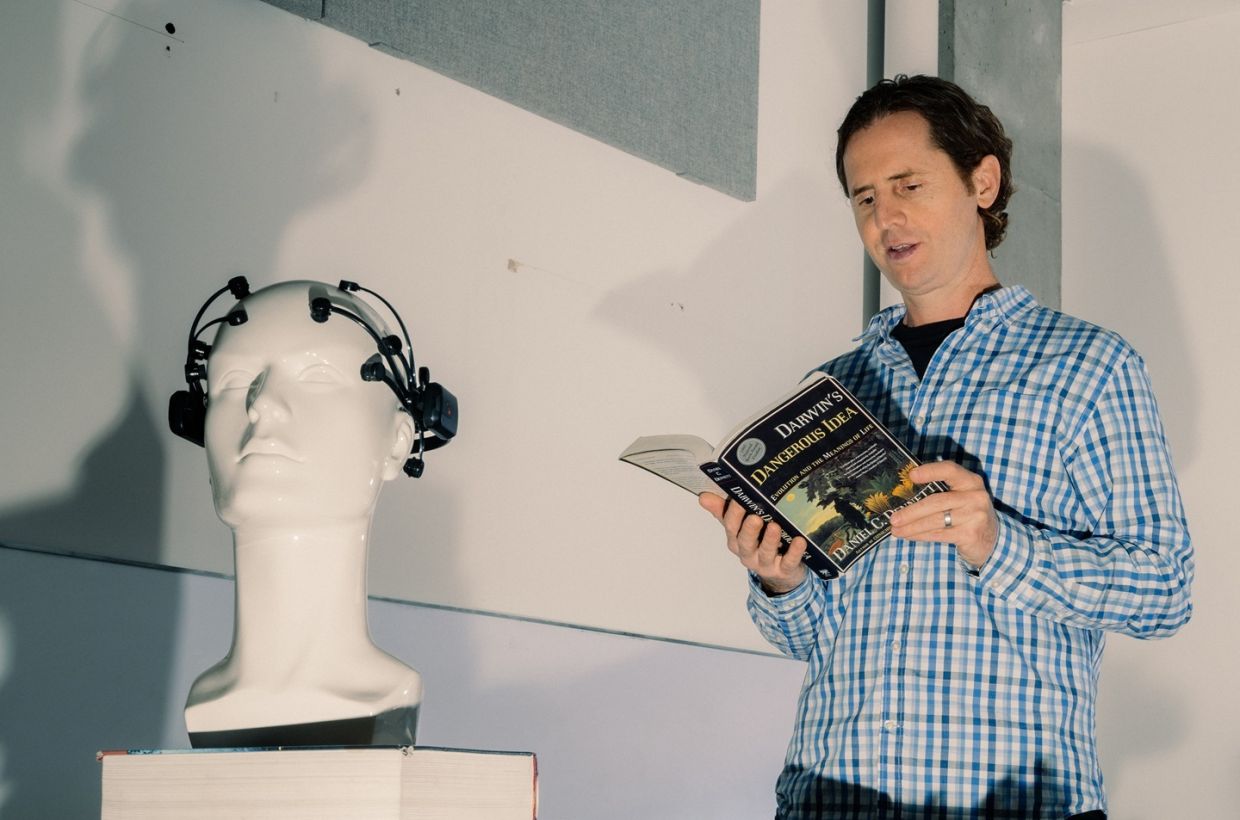
Jeff Clune, a computer scientist and co-founder of Recursive Superintelligence, one of the start-ups chasing “recursive self-improvement,” in Vancouver. — ALANA PATERSON/The New York Times
SAN FRANCISCO : In December, Edward Hughes and Louis Kirsch, two of the world’s leading artificial intelligence (AI) researchers, left Google. Their goal: to build an AI system smart enough to build a better AI system.
At their new London startup, Inherent, they now spend their days working alongside a prototype called Faraday. Named for 19th-century English physicist Michael Faraday, it gathers mountains of data capturing the daily activities of Hughes, Kirsch and Inherent’s other researchers: emails, instant messages, meeting transcripts and their ongoing chats with Faraday itself. The company then uses this data to build a better version of Faraday.
Why it’s difficult for tech companies to rein in AI
New warnings about the risks of AI to humanity revive a long-running debate
Thank you for your report!
An MIT report warns AI is causing ‘cognitive surrender.’ Universities are in a bind
Four signs using AI might be affecting your mental health
Trump says he will appoint a new AI adviser, without providing details
杰夫·克伦是一位计算机科学家,也是温哥华一家致力于“递归式自我提升”的初创公司——递归超级智能公司的联合创始人。——阿拉娜·帕特森/《纽约时报》
旧金山:去年12月,两位世界顶尖的人工智能(AI)研究员爱德华·休斯和路易斯·基尔希离开了谷歌。他们的目标是:构建一个足够智能的AI系统,以便构建一个更好的AI系统。
在他们位于伦敦的新创业公司 Inherent,他们现在每天都与一个名为 Faraday 的原型系统并肩工作。该系统以 19 世纪英国物理学家迈克尔·法拉第的名字命名,它收集了海量数据,记录了休斯、基尔希以及 Inherent 其他研究人员的日常活动:电子邮件、即时消息、会议记录以及他们与 Faraday 系统本身的持续对话。然后,该公司利用这些数据来构建 Faraday 系统的改进版本。
为什么科技公司难以控制人工智能
关于人工智能对人类风险的新警告再次引发了一场由来已久的争论。
感谢您的报告!
麻省理工学院一份报告警告称,人工智能正在导致“认知能力下降”。大学陷入两难境地。
人工智能的四个使用迹象可能影响你的心理健康
特朗普表示将任命一位新的人工智能顾问,但未透露详情。