More young S’poreans seeking recovery treatments at longevity-related wellness centres and clinics越来越多的新加坡年轻人前往与长寿相关的健康中心和诊所寻求康复治疗
These establishments noted that young customers are keen to prioritise muscle recovery and cognitive well-being. Read more at straitstimes.com.
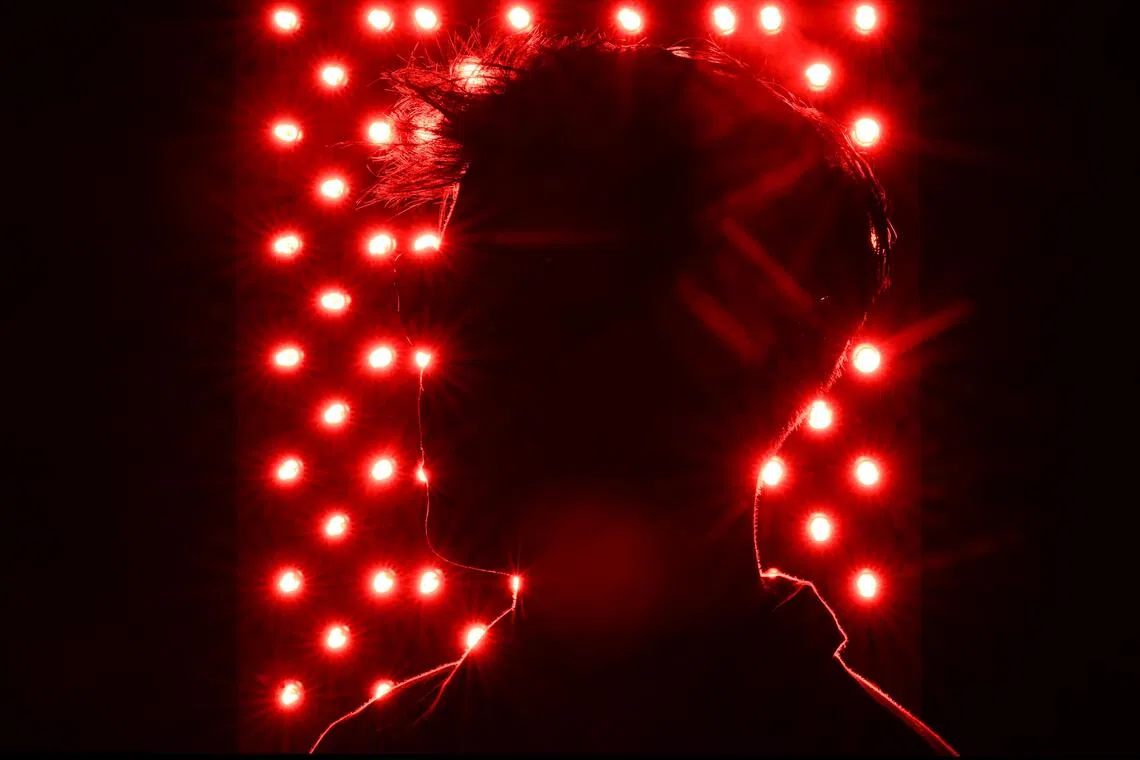
House Longevity is among at least eight longevity-centred wellness centres and clinics that have cropped up here in recent years.
ST PHOTO: AZMI ATHNI
BNB Diviyadhaarshini
Published Sep 20, 2026, 02:00 PM
Updated Sep 20, 2026, 02:00 PM
SINGAPORE – Once every two weeks, 24-year-old Garrison Lim spends an hour going for a sauna, cold plunge, magnesium salt bath and red light therapy session.
These sessions – marketed as ways to promote longevity – help speed up his physical and mental recovery, as well as support his overall well-being, said the occupational therapy assistant.
The sessions at House Longevity and Sauna Bath House at Singapore Land Tower have become part of his routine since June. He has spent $400 so far.
House Longevity, which opened mid-2026, is among at least eight longevity-centred wellness centres and clinics that have cropped up here in the past four years. It markets itself as an urban recovery house for busy professionals and wellness enthusiasts, along with its sister brand, Sauna Bath House.
Some of these establishments that The Straits Times spoke to noted a growing trend of young customers, many of whom are keen to prioritise muscle recovery and cognitive well-being in pursuit of ‘longevity’.
House Longevity co-founder Chew Zhi Wei, 36, said he began the brand with his wife, Stephanie Ong, after experiencing burnout.
Through saunas and other wellness treatments, the medical doctor, who trained in Singapore and previously worked at a public hospital here, discovered the importance of psychological recovery.
The centre’s brand manager Lukas Kok, 26, said there is a growing trend of younger people like him wanting to prioritise their wellness and being willing to commit time and money to it.
The majority of House Longevity’s 50-odd clients are in their early 30s, he said.
Kok said affordability and the non-invasive nature of House Longevity’s services are factors that attract clients. “We do not want people to just follow the trends and end up causing more harm than good,” he added.
When asked how House Longevity’s treatments relate to longevity, Chew said they aim to target the root cause of the problems people experience such as poor sleeping habits or anxiety.
The cold pool at House Longevity studio. For some youth, the sessions are about more than just physical and mental recovery. ST PHOTO: AZMI ATHNI
The cold pool at House Longevity studio. For some youth, the sessions are about more than just physical and mental recovery.
Some young people like Lim hope that by prioritising their well-being, they can continue doing what they enjoy for longer.
Content creator Michelle Layanto, 28, said she has been interested in nutrition and wellness since she was 20, with the aim of prolonging her healthspan.
“I believe deeply that everything you do for your body compounds. The small, consistent choices you make in your 20s and 30s - nutrition, movement, recovery - show up decades later in your skin, your joints, your bones, your energy.”
Layanto said some might see it as being afraid about ageing, but they should instead see it as ageing well.
“I think younger people are waking up to that, and centres like House of Longevity are making it accessible and approachable with their affordability and by not being clinical or intimidating,” she added.
Chen Lou, an associate professor at Nanyang Technological University who studies consumer psychology, said young people are increasingly exposed to the idea of “healthy longevity”, particularly through social media.
It fits into a broader culture of younger consumers hustling, seeking self-improvement and self-optimisation, she added.
“These treatments are also quite experiential and ‘shareable’ so they can become not only a wellness activity, but also part of someone’s lifestyle and social identity that is sharable online and on social media,” said Lou.
Chi Longevity’s chief medical operations officer Shamandree Govender, also a doctor by training, said more young clients have been visiting the longevity clinic since its founding in 2023.
This might be because they are now more informed and in touch with their health, she added.
Chi Longevity’s chief medical operations officer Shamandree Govender said young people are now more informed and in touch with their health. ST PHOTO: NG SOR LUAN
Chi Longevity’s chief medical operations officer Shamandree Govender said young people are now more informed and in touch with their health.
ST PHOTO: NG SOR LUAN
“They have access to a wide range of data from their wearable technologies, from their sleep, diet, movement and nutrition,” she said, adding that young people also tend to ask better questions about the needs of their mind and body.
Starting such programmes earlier in life gives young people more time and greater opportunity to intervene in their health trajectories, she added.
They also often want to understand their health trajectory in relation to their family’s medical history, she said, adding that her clients range from people in their early 20s to older people. She declined to provide specifics on the number of younger clients.
Yulise Wang, general manager at local wellness facility REKOOP, said the centre has about 300 clients, 90 per cent of whom are aged between 30 and 40.
“With social media, (young people) have more exposure to the services that we offer, so we have many curious young people who come to us to try the sessions,” she said.
Branded as a biohacking studio, REKOOP, a technology-driven wellness studio founded in 2024, offers services such as oxygen and red light therapy, cryotherapy, and lymphatic drainage.
Clients who come for sessions with longevity in mind usually go for the oxygen and red light therapies, said Wang.
Singapore University of Social Sciences associate professor Kelvin Tan, who studies gerontology, said it is never too young to start focusing on wellness for longevity.
Foundational cellular changes related to ageing begin in one’s 20s and 30s, he added.
Treatments also need to work in tandem with proper sleep, diet, exercise and also social connectedness, Tan said.
While sleep is an underpinning factor for all sorts of restoration, including brain and tissue repair, such treatments can be appealing as complementary wellness measures at an affordable cost, he added.
Recent digital innovations such as artificial intelligence and personalised health care stimulate curiosity and interest in aspiration for longevity, he said, noting that the Republic is one of the world’s blue zones, with an increasing number of centenarians.
Pre- and postnatal coach and personal trainer Alyaa Rauff, 32, said she feels more alive and refreshed after recovery sessions such as red light therapy.
She tried it for the first time after a 6km run in July, with a session at O2 Light Bar. She did not experience the usual fatigue she usually does after a workout, she said.
Though not a fan of cold plunges, which she said leaves her with lingering headaches, Rauff said she enjoys saunas and red light therapies.
She said: “There are constantly new recovery and wellness treatments coming up, so I’m always curious to see what is out there and what might be worth exploring.”
Health and well-being
House Longevity是近年来这里涌现的至少八家以长寿为中心的健康中心和诊所之一。
ST 摄影:AZMI ATHNI
BNB Diviyadhaarshini
发布于 2026 年 9 月 20 日下午 2:00
更新于2026年9月20日下午2:00
新加坡——24岁的加里森·林每两周会花一个小时去做一次桑拿、冷水浴、镁盐浴和红光疗法。
这位职业治疗助理表示,这些疗程——被宣传为促进长寿的方式——有助于加快他的身心恢复,并支持他的整体健康。
自六月起,在新加坡置地大厦的养生院和桑拿浴场进行疗程已成为他日常生活的一部分。迄今为止,他已花费了400新元。
House Longevity于2026年中期开业,是过去四年里这里涌现的至少八家以长寿为主题的健康中心和诊所之一。它及其姊妹品牌Sauna Bath House将自己定位为面向忙碌的专业人士和健康爱好者的都市疗养中心。
《海峡时报》采访的一些商家注意到,年轻顾客的数量呈上升趋势,其中许多人热衷于优先考虑肌肉恢复和认知健康,以追求“长寿”。
House Longevity 联合创始人周志伟(36 岁)表示,他和妻子 Stephanie Ong 在经历职业倦怠后创立了这个品牌。
这位曾在新加坡接受培训、并在本地一家公立医院工作的医生,通过桑拿和其他养生疗法,发现了心理康复的重要性。
该中心的品牌经理卢卡斯·科克(26岁)表示,像他这样的年轻人越来越重视自身健康,并愿意为此投入时间和金钱。
他说,House Longevity 的 50 多位客户中,大多数都在 30 岁出头。
Kok表示,价格实惠且“长寿之家”服务的非侵入性是吸引客户的关键因素。“我们不希望人们盲目跟风,最终弊大于利,”他补充道。
当被问及长寿之家疗法与长寿有何关系时,周先生表示,他们的目标是找出人们所面临的问题的根本原因,例如不良的睡眠习惯或焦虑。
House Longevity工作室的冷水池。对一些年轻人来说,这些疗程不仅仅是为了恢复身心健康。ST摄影:AZMI ATHNI
House Longevity工作室的冷水池。对一些年轻人来说,这些疗程不仅仅是为了恢复身心健康。
像林这样的年轻人希望,通过优先考虑自己的身心健康,他们可以更长时间地继续做自己喜欢的事情。
28岁的内容创作者米歇尔·拉扬托表示,她从20岁起就对营养和健康感兴趣,目的是延长自己的健康寿命。
“我深信,你为身体所做的一切都会累积效应。你在二三十岁时做出的那些细微而持续的选择——营养、运动、恢复——会在几十年后体现在你的皮肤、关节、骨骼和精力上。”
莱扬托表示,有些人可能会认为这是害怕衰老,但他们应该将其视为优雅地老去。
她补充说:“我认为年轻人正在逐渐意识到这一点,像长寿之家这样的中心,凭借其价格实惠、不带任何临床色彩或令人望而生畏的特点,让长寿变得更加平易近人。”
南洋理工大学研究消费者心理学的副教授陈楼表示,年轻人越来越多地接触到“健康长寿”的概念,尤其是在社交媒体上。
她补充说,这符合年轻消费者努力奋斗、追求自我提升和自我优化的更广泛的文化。
Lou说:“这些疗法也具有很强的体验性和‘可分享性’,因此它们不仅可以成为一种健康活动,还可以成为人们生活方式和社会身份的一部分,并在网上和社交媒体上分享。”
Chi Longevity 的首席医疗运营官 Shamandree Govender 也是一名受过专业训练的医生,她说,自 2023 年成立以来,越来越多的年轻客户光顾了这家长寿诊所。
她补充说,这可能是因为他们现在更加了解自己的健康状况,也更加关注自身健康。
Chi Longevity首席医疗运营官Shamandree Govender表示,现在的年轻人更加了解自己的健康状况,也更加关注自身健康。(海峡时报照片:NG SOR LUAN)
Chi Longevity 的首席医疗运营官 Shamandree Govender 表示,现在的年轻人更加了解自己的健康状况,也更加关注自身健康。
圣徒照片:吴索銮
“他们可以通过可穿戴技术获取各种数据,包括睡眠、饮食、运动和营养方面的数据,”她说道,并补充说,年轻人也往往会提出关于身心需求的更有价值的问题。
她补充说,在人生早期就开始此类项目,可以让年轻人有更多的时间和机会来干预他们的健康轨迹。
她表示,他们通常也希望了解自身健康状况与家族病史的关系,并补充说,她的客户年龄跨度很大,从二十出头的年轻人到老年人都有。她拒绝透露年轻客户的具体人数。
当地健康中心 REKOOP 的总经理 Yulise Wang 表示,该中心约有 300 名客户,其中 90% 的年龄在 30 至 40 岁之间。
“有了社交媒体,(年轻人)更容易接触到我们提供的服务,所以有很多好奇的年轻人来我们这里尝试课程,”她说。
REKOOP 是一家成立于 2024 年的技术驱动型健康工作室,以生物黑客工作室为品牌,提供氧气和红光疗法、冷冻疗法和淋巴引流等服务。
王先生说,那些以延年益寿为目的前来接受治疗的客户通常会选择氧气疗法和红光疗法。
新加坡社会科学大学研究老年学的副教授陈凯文表示,关注健康长寿永远不会太早。
他补充说,与衰老相关的基础细胞变化从20多岁到30多岁就开始了。
谭医生表示,治疗还需要与适当的睡眠、饮食、运动以及社交联系相配合。
他补充说,虽然睡眠是各种恢复(包括大脑和组织修复)的基础因素,但此类疗法可以作为价格合理的辅助保健措施而具有吸引力。
他表示,人工智能和个性化医疗保健等近期数字创新激发了人们对长寿的好奇心和兴趣,并指出共和国是世界上的长寿蓝区之一,百岁老人数量不断增加。
32岁的产前产后教练兼私人教练Alyaa Rauff表示,在接受红光疗法等恢复疗程后,她感觉更有活力、更精神焕发。
她在7月份跑完6公里后,第一次尝试了O2 Light Bar的健身课程。她说,她没有像往常那样在锻炼后感到疲惫。
劳夫表示,虽然她不喜欢冷水浸泡(她说冷水浸泡后会头痛),但她喜欢桑拿和红光疗法。
她说:“不断有新的康复和保健疗法出现,所以我总是很好奇现在有哪些疗法,哪些值得探索。”
健康与福祉