Drone warfare in Ukraine prompts fresh thinking in helicopter tactics乌克兰的无人机战争促使人们对直升机战术进行新的思考
The shift is animated in large part by proliferating ground-based air defenses that make manned flight over the battlefield almost impossible.
MILAN — Air defense and drone warfare observed in Ukraine are changing the nature of military helicopter tactics, moving the platforms’ center of gravity away from the tip of the spear to an emphasis on combat-support missions along the front lines, according to officials and issue experts.
The shift is animated in large part by proliferating ground-based air defenses that make manned flight over the battlefield almost impossible.
“In 2024, helicopters at the front, due to the threat and saturation of anti-aircraft means, primarily perform fire support along the line of combat engagement, using the toss bombing tactics [unaimed strikes by unguided missiles] and have also been a means of countering unmanned systems,” said Serhii Kuzan, a former adviser to the Ukrainian Ministry of Defense.
He recalled the Russian emphasis on helicopters during the first days of Russia’s full-scale invasion. Moscow’s troops had planned a large-scale landing operation, which eventually failed, at the Antonov airport near Hostomel, only 25 kilometers from Kyiv.
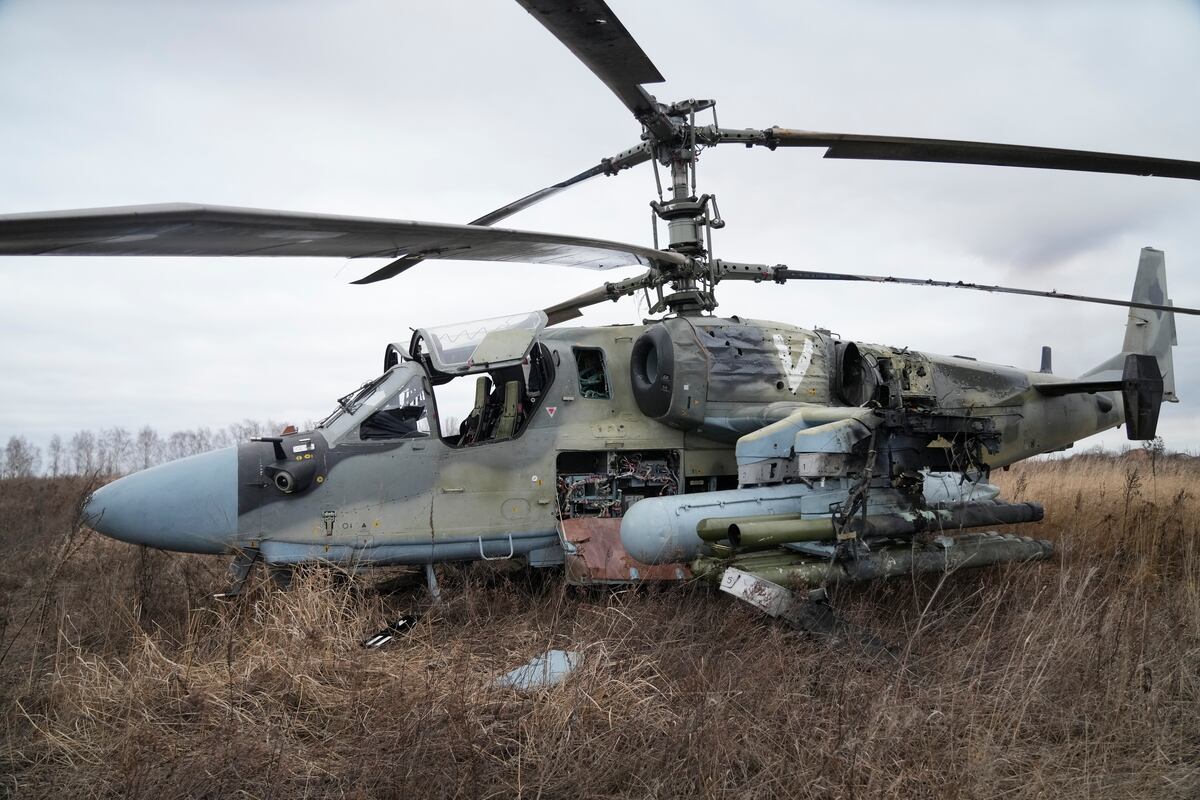
The vulnerability of combat helicopters has translated into a high number of losses on the Russian side. In February, a report published by the London-based International Institute for Strategic Studies found that the Russian Aerospace Forces had lost 40% of their pre-war Ka-52 Hokum-B attack helicopter fleet.
“Russian rotary losses have continued, but changes in tactics and the introduction of new weapons, in particular the LMUR (also known as the Kh-39) air-to-surface missile, which provides a greater stand-off range, have had an effect,” Douglas Barrie, senior fellow for military aerospace at IISS told Defense News.
Maj. Gen. Pierre Meyer, commander of the French Army Light Aviation (ALAT), said Russia’s helicopter-based landing attempt should be a cautionary tale for military planners.
“At Hostomel, we saw Russian helicopters intervening almost on parade for two days, at a certain height and arriving en masse, tightly packed – in the end, it’s not a question of whether helicopters still have their place, it’s how we use them,” Meyer told the audience at the Paris Air Forum last month.
“Had we acted like the Russian helicopters, with the mode of action I’m talking about, we would’ve had exactly the same losses,” he said.
Meyer said there is utility in teaming helicopters with drones, as many Western armed forces are already doing, with unmanned aerial vehicles providing additional “aero-combat action and maneuver” to military choppers.
According to Kuzan, the former Ukrainian defense adviser, helicopters could soon become integrated with unmanned forces, “using their command control points, powerful communication relays or as a mobile means of radio-electronic warfare and intelligence.”
Bruno Even, the CEO of Airbus Helicopters, said rotary aviation can still play its trump card of all-around utility.
“Depending on the conflict, the attack helicopter has its rightful place and role to play – their use may have to evolve towards stand-off weapons that allow the aircraft to intervene from a greater distance,” he said at the Paris Air Forum.
Rudy Ruitenberg in Paris contributed to this report.
Elisabeth Gosselin-Malo was a Europe correspondent for Defense News. She covers a wide range of topics related to military procurement and international security, and specializes in reporting on the aviation sector. She is based in Milan, Italy.
米兰——据官员和相关专家称,乌克兰的防空和无人机战争正在改变军用直升机战术的性质,使这些平台的重心从矛尖转移到前线的作战支援任务。
这种转变很大程度上是由于地面防空系统的扩散,使得有人驾驶飞机在战场上空飞行几乎成为不可能。
“到2024年,由于防空力量的威胁和饱和,前线的直升机主要在交战线上执行火力支援任务,使用投掷轰炸战术(用非制导导弹进行无目标打击),并且也成为对抗无人系统的手段,”乌克兰国防部前顾问谢尔盖·库赞说。
他回忆起俄军全面入侵初期对直升机的重视。莫斯科军队曾计划在距离基辅仅25公里的霍斯托梅尔附近的安东诺夫机场进行大规模登陆作战,但最终失败了。
俄方作战直升机的脆弱性导致了大量损失。今年2月,总部位于伦敦的国际战略研究所发布的一份报告显示,俄罗斯空天军损失了其战前装备的卡-52“霍昆-B”攻击直升机机队的40%。
“俄罗斯的旋翼机损失仍在继续,但战术的变化和新武器的引入,特别是LMUR(也称为Kh-39)空对地导弹,其射程更远,已经产生了一定的影响,”国际战略研究所(IISS)军事航空航天高级研究员道格拉斯·巴里告诉《防务新闻》。
法国陆军轻型航空兵(ALAT)司令皮埃尔·迈耶少将表示,俄罗斯的直升机着陆尝试应该给军事策划者敲响警钟。
“在霍斯托梅尔,我们看到俄罗斯直升机连续两天几乎像阅兵一样在空中盘旋,它们在一定的高度成群结队地抵达,密密麻麻地排列着——最终,问题不在于直升机是否还有存在的意义,而在于我们如何使用它们,”梅耶上个月在巴黎航空论坛上对听众说道。
他说:“如果我们像俄罗斯直升机那样采取行动,采取我所说的这种行动方式,我们也会遭受同样的损失。”
迈耶表示,将直升机与无人机结合起来是有用的,许多西方武装部队已经在这样做,无人驾驶飞行器可以为军用直升机提供额外的“空中作战行动和机动能力”。
据乌克兰前国防顾问库赞称,直升机可能很快就会与无人部队整合,“利用其指挥控制点、强大的通信中继或作为无线电电子战和情报的移动手段”。
空中客车直升机公司首席执行官布鲁诺·埃文表示,旋翼航空仍然可以发挥其全方位实用性的王牌。
“根据冲突的不同,攻击直升机有其应有的地位和作用——它们的使用可能需要向防区外武器发展,使飞机能够从更远的距离进行干预,”他在巴黎航空论坛上说。
巴黎的鲁迪·鲁伊滕贝格对本报道亦有贡献。
伊丽莎白·戈斯林-马洛曾任《防务新闻》欧洲通讯员。她的报道涵盖军事采购和国际安全等广泛领域,尤其擅长航空领域的报道。她常驻意大利米兰。