Singapore labour market expands in Q2 even as retrenchments rise and job vacancies fall尽管裁员人数增加,职位空缺减少,新加坡劳动力市场在第二季度仍保持扩张。
Retrenchments in Singapore rose to a post-pandemic high in Q2 2026 as job vacancies fell, but overall employment growth and low unemployment indicate a resilient labour market. Read more at straitstimes.com.
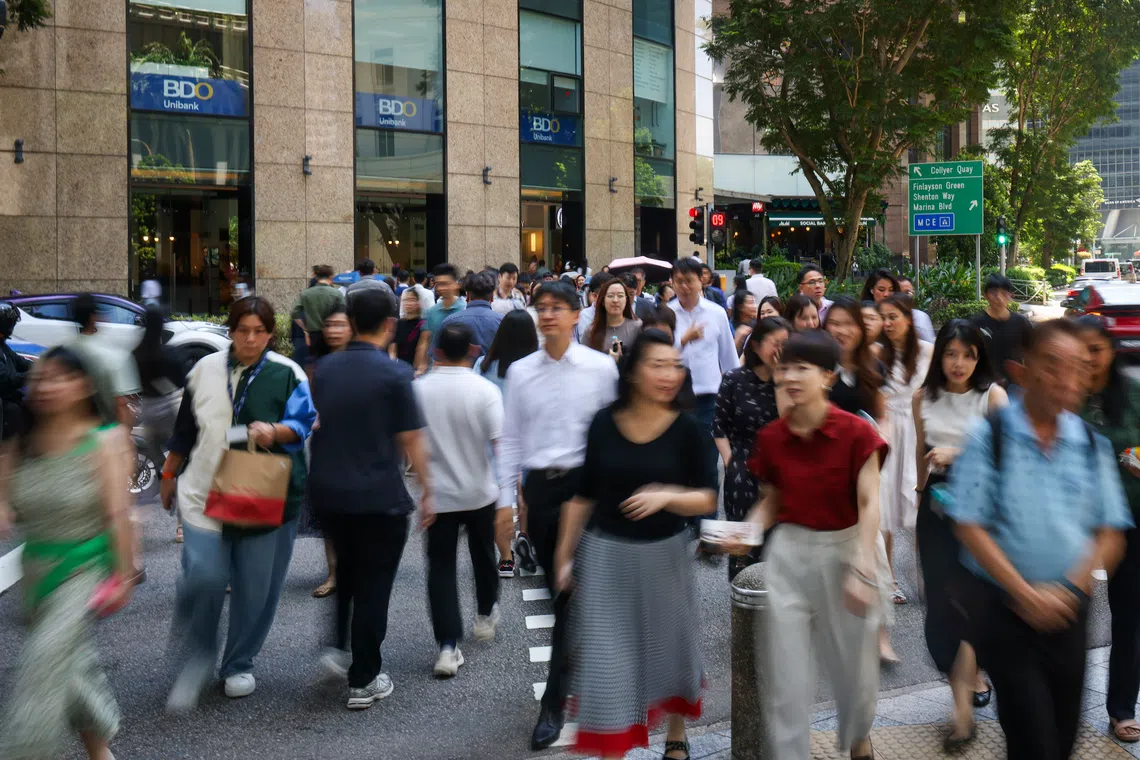
The labour market is also showing signs of softening, said the Ministry of Manpower, which released its labour report on Sept 21.
ST PHOTO: JASON QUAH
Published Sep 21, 2026, 12:00 PM
Updated Sep 21, 2026, 12:00 PM
Retrenchments in Singapore rose to 4,620 in Q2 2026, the highest since 2020, mainly in outward-oriented sectors, while job vacancies fell to 68,600, reflecting a softening labour market.
Employment grew by 11,400 in Q2, continuing 19 quarters of growth, with resident job growth slowing and long-term unemployment slightly increasing to 1%.
The government supports workers through career conversion programmes to ease job transitions, amid a cautious but positive hiring outlook and lower wage increase expectations.
SINGAPORE – Retrenchments in Singapore rose to a post-pandemic high in the second quarter of 2026, while job vacancies continued to fall.
The number of laid-off workers reached 4,620 in the second quarter, the highest level since the fourth quarter of 2020 during the Covid-19 pandemic. This means about two workers were retrenched for every 1,000 employees.
This is up from 3,830 retrenchments – or about 1.6 retrenched workers for every 1,000 employees – in the first quarter.
The increase was driven by businesses going through restructuring exercises in outward-oriented sectors like manufacturing, information and communications, and financial services.
The labour market is also showing signs of softening, said the Ministry of Manpower (MOM), which released its labour report on Sept 21.
MOM director of manpower research and statistics Ang Boon Heng said the increase in retrenchments across the past two quarters is “something worth monitoring”, but that there are no signs yet that this trend will be sustained.
But he added that the retrenchments are not broad-based across sectors, and are concentrated mostly in outward-oriented sectors.
Retrenched workers were also taking longer to find new jobs. The proportion of those who found employment within six months stood at 54.9 per cent in the second quarter, down from 60.7 per cent in the first quarter.
However, close to 70 per cent of retrenched workers could find new jobs within a year.
Acting Minister for Manpower Jasmin Lau said on the sidelines of a visit to technology company Acronis: “Some workers are finding the transition into their next role taking slightly longer. This is a concern for some Singaporeans. Now there are certainly still job opportunities, but moving from one job to the next one can be challenging.”
She added that the Government will support workers to learn and adapt, and to prepare for roles that they can move into. This is done through career conversion programmes.
“Instead of learning a new skill and then hoping to find a job that uses it, workers train for actual roles that companies need,” she said.
“They learn on the job, gain real experience and build on the skills they already have.”
Acronis has supported more than 50 of its employees since 2024 through career conversion programmes, building new skills in cybersecurity, software development and artificial intelligence.
“This is the shift I hope we can all make together, learning new skills not just to protect what we have, but to open up more possibilities for what comes next,” Lau said.
While retrenchments rose, the number of job vacancies fell to 68,600 in June, from 73,300 in March . This mainly reflects a drop in vacancies for professionals, managers, executives and technicians (PMETs) in sectors such as financial services and information and communications, the MOM report said .
However, entry-level PMET vacancies remained “broadly stable and sizeable”, accounting for 45.3 per cent of all job openings in June.
Despite the overall decline, there are still more job vacancies than unemployed people, with 1.48 vacancies per unemployed person as at June.
Overall, Singapore’s labour market expanded in the second quarter, MOM said.
Total employment rose by 11,400, marking the 19th consecutive quarter of growth, it noted.
This was also an increase from the 9,400 in the first quarter.
However, resident employment growth in the three months to June slowed from the previous quarter.
Resident employment grew mainly in domestic-oriented sectors like transportation and storage, public administration and education, and health and social services, MOM said.
Some outward-oriented sectors, such as professional services, financial services, and information and communications, also saw growth.
Meanwhile, non-resident employment growth was driven by work permit holders in the construction and manufacturing sectors.
Although the long-term unemployment rate edged up, unemployment rates remained “low and stable” in June, MOM said.
The unemployment rate stood at 1.9 per cent overall and at 2.9 per cent for residents in June.
The resident long-term unemployment rate rose slightly to 1 per cent in June, up from 0.9 per cent in March.
MOM said: “Overall, the labour market remained resilient in the second quarter, with continued employment growth and low unemployment.
“However, conditions became less favourable for some resident workers as resident employment growth moderated, retrenchments increased and six-month re-entry outcomes weakened.”
Cautious outlook and softening labour market
Looking ahead, MOM said the labour market outlook is “positive but cautious”, according to its business expectation polls in July.
The poll noted that near-term hiring expectations improved across more sectors, with the share of companies intending to hire in the next three months rising to 48.7 per cent in July, up from 43.9 per cent in June.
However, the percentage of companies intending to raise wages also fell to 27.9 per cent in July, down from 29.3 per cent in June.
“Despite the improvement, both hiring and wage expectations remained below their February levels,” MOM added.
Sue-Ann Tan is a business correspondent at The Straits Times, covering capital markets and sustainable finance.
Ministry of Manpower
人力部在9月21日发布的劳动力报告中指出,劳动力市场也出现了疲软迹象。
《海峡时报》摄影:JASON QUAH
发布于 2026 年 9 月 21 日下午 12:00
更新于2026年9月21日中午12:00
2026 年第二季度,新加坡裁员人数增至 4,620 人,为 2020 年以来最高,主要集中在对外贸易行业;与此同时,职位空缺降至 68,600 个,反映出劳动力市场疲软。
第二季度就业人数增加了 11400 人,连续 19 个季度保持增长,但居民就业增长放缓,长期失业率略微上升至 1%。
在谨慎但积极的招聘前景和较低的工资增长预期下,政府通过职业转换计划为劳动者提供支持,以帮助他们顺利过渡到新的工作岗位。
新加坡——2026年第二季度,新加坡的裁员人数升至疫情后最高水平,而职位空缺数量则持续下降。
第二季度裁员人数达到4620人,为2020年第四季度新冠疫情爆发以来的最高水平。这意味着每1000名员工中约有2人被裁员。
这一数字高于第一季度的 3830 人裁员(即每 1000 名员工中约有 1.6 人被裁员)。
这一增长是由制造业、信息通信业和金融服务业等对外导向型行业的企业进行重组所推动的。
人力部 (MOM) 在 9 月 21 日发布的劳动力市场报告中指出,劳动力市场也出现了疲软迹象。
人力部人力研究与统计主任洪文兴表示,过去两个季度裁员人数的增加“值得关注”,但目前还没有迹象表明这种趋势会持续下去。
但他补充说,裁员并非遍及各个行业,主要集中在对外导向型行业。
被裁员工找到新工作所需的时间也更长。第二季度,六个月内找到工作的员工比例为54.9%,低于第一季度的60.7%。
然而,近 70% 的被裁员工可以在一年内找到新工作。
人力部代理部长刘嘉敏在访问科技公司Acronis期间表示:“一些员工发现,他们过渡到下一份工作所需的时间稍长。这令一些新加坡人感到担忧。虽然现在仍然有很多工作机会,但从一份工作过渡到另一份工作可能充满挑战。”
她补充说,政府将支持劳动者学习和适应,并为他们未来可以从事的岗位做好准备。这可以通过职业转换计划来实现。
她说:“与其学习一项新技能后再希望找到一份能运用这项技能的工作,不如让员工接受公司实际需要的岗位培训。”
“他们边工作边学习,获得实际经验,并在已有技能的基础上不断提升。”
自 2024 年以来,Acronis 通过职业转型计划为 50 多名员工提供了支持,帮助他们培养网络安全、软件开发和人工智能方面的新技能。
“我希望我们所有人都能共同做出这样的转变,学习新技能,不仅是为了保护我们所拥有的,也是为了开拓未来更多的可能性,”刘说。
尽管裁员人数有所增加,但6月份的职位空缺数量从3月份的73300个下降到68600个。人力部报告称,这主要反映出金融服务和信息通信等行业的专业人员、经理、主管和技术人员(PMET)的职位空缺数量下降。
然而,入门级 PMET 职位空缺仍然“总体稳定且规模较大”,占 6 月份所有职位空缺的 45.3%。
尽管整体呈下降趋势,但职位空缺仍然多于失业人数,截至 6 月,每位失业人员对应 1.48 个职位空缺。
新加坡人力部表示,总体而言,新加坡劳动力市场在第二季度有所扩张。
报告指出,总就业人数增加了11400人,这是连续第19个季度实现增长。
这比第一季度的 9400 人有所增加。
然而,截至 6 月的三个月内,居民就业增长速度较上一季度有所放缓。
人力部表示,居民就业增长主要集中在以家庭为导向的行业,如交通运输和仓储、公共管理和教育以及卫生和社会服务。
一些对外开放的行业,如专业服务、金融服务以及信息和通信行业,也出现了增长。
与此同时,非居民就业增长主要由建筑业和制造业的工作许可证持有者推动。
人力部表示,尽管长期失业率略有上升,但6月份失业率仍然“低而稳定”。
6月份,总体失业率为1.9%,居民失业率为2.9%。
6月份居民长期失业率小幅上升至1%,高于3月份的0.9%。
人力部表示:“总体而言,第二季度劳动力市场保持韧性,就业持续增长,失业率保持低位。”
“然而,随着居民就业增长放缓、裁员增加以及六个月再就业率下降,一些居民工人的处境变得不那么有利了。”
谨慎的市场前景和疲软的劳动力市场
展望未来,人力部表示,根据其7月份的商业预期调查,劳动力市场前景“积极但谨慎”。
民调显示,近期各行业的招聘预期均有所改善,7 月份计划在未来三个月内招聘的公司比例上升至 48.7%,高于 6 月份的 43.9%。
然而,7 月份打算提高工资的公司比例也降至 27.9%,低于 6 月份的 29.3%。
“尽管有所改善,但招聘和工资预期仍低于2月份的水平,”人力部补充道。
Sue-Ann Tan 是《海峡时报》的商业记者,负责报道资本市场和可持续金融。
人力部