S’pore firms, households have sufficient buffers to weather financial shocks: MAS review新加坡金融管理局审查报告显示,新加坡企业和家庭拥有足够的缓冲能力来应对金融冲击。
Singapore firms, households, banks and insurers have sufficient buffers to withstand financial shocks amid global risks and AI-related investment uncertainties. Read more at straitstimes.com.
新闻视频
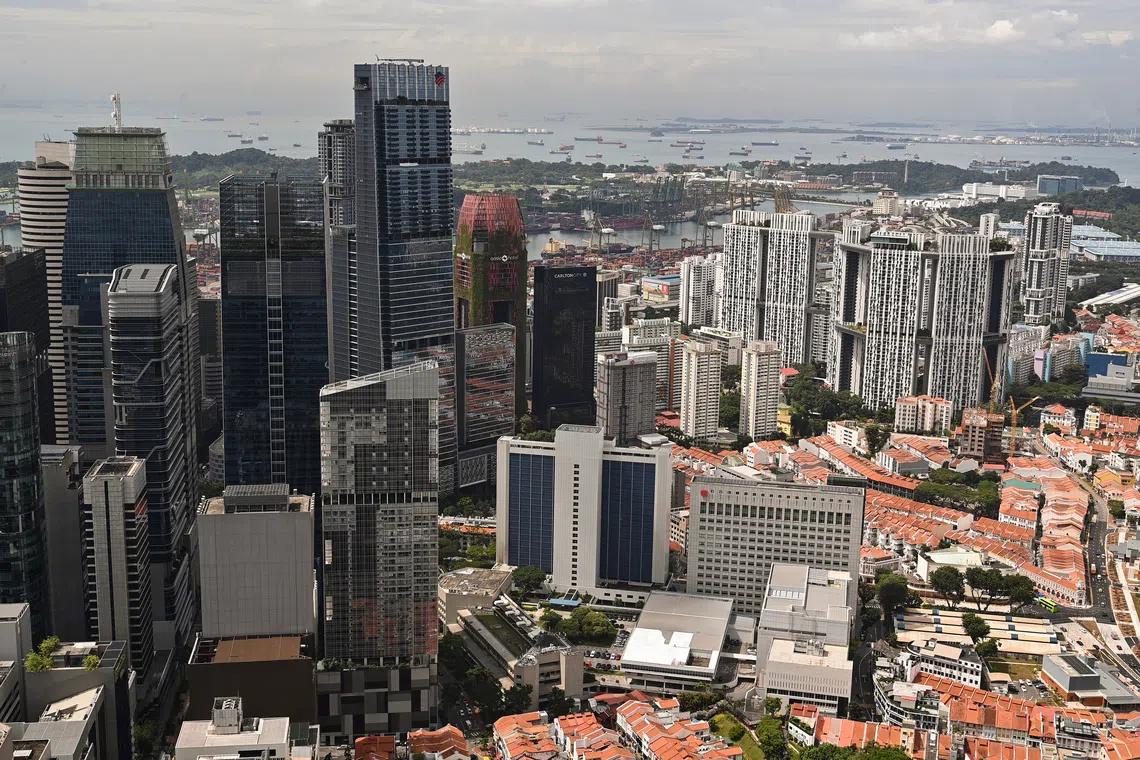
The review comes as inflation has proven more sticky than expected, with the escalation of the Middle East conflict adding to energy price pressures.
ST PHOTO: LIM YAOHUI
Published Sep 22, 2026, 01:00 PM
Updated Sep 22, 2026, 04:53 PM
Singapore firms and households have strong financial buffers and can withstand shocks to income and financing costs, though some highly leveraged firms and lower-income borrowers may face strain.
The Monetary Authority of Singapore’s stress tests highlight risks from a potential AI investment pullback, higher interest rates, and geopolitical tensions affecting firms, banks, and households.
Financial institutions like banks, insurers, and investment funds maintain robust capital and liquidity, enabling them to manage risks from global volatility and economic uncertainties effectively.
SINGAPORE – Singapore firms and households are well placed to weather shocks to their earnings, incomes and financing costs, while financial institutions such as banks have sufficient buffers should they come under stress.
This is based on stress tests done by the Monetary Authority of Singapore (MAS) as part of its annual financial stability review that assesses the resilience of Singapore’s financial system against global risks and domestic vulnerabilities.
Among households, only a small proportion of borrowers with limited savings buffers could face cash-flow constraints. However, some highly leveraged firms or those with thinner liquidity buffers could come under strain.
“In view of the uncertain macroeconomic outlook, firms and households should manage their finances prudently and maintain adequate liquidity buffers against potential stress,” said MAS on Sept 22.
The review comes as inflation has proven more sticky than expected, with the escalation of the Middle East conflict adding to energy price pressures. A persistently higher cost of capital could test global financial resilience.
Strong AI investment demand continues to strain supply capacity, and trade policy uncertainty increases business costs and inflationary pressures. These pressures have led some advanced economies to pivot to monetary policy tightening by raising interest rates.
Higher global interest rates are likely to affect Asian economies unevenly, depending on their growth prospects, financing needs and external positions.
Higher yields would also raise sovereign debt-servicing costs, with spillovers to firms and households, while weighing on asset valuations.
Economies benefiting from AI-related investment and exports are better placed to absorb higher borrowing costs, but are more exposed to a pullback in the artificial intelligence cycle.
Those with weaker AI linkages and larger fiscal or current account deficits could be more affected by tighter global financial conditions, with portfolio outflows and currency depreciation increasing risks.
Companies: Sound balance sheets but AI risks loom
Firms here showed resilience over the past year, buoyed by stable earnings and lower borrowing costs. Listed firms’ ability to repay debt improved over the past year, as lower benchmark interest rates reduced interest expenses.
Although firms drew down some cash balances, they generally maintained healthy liquidity buffers and near-term refinancing needs remained manageable.
Foreign currency risk was contained and corporate credit quality stayed healthy. Firms disclosing foreign currency borrowings in Singapore Exchange (SGX) filings generally reported either natural hedges or the use of derivatives to mitigate their financial exposures.
Corporate balance sheets are generally sound, which cushioned the impact of external shocks, including energy supply disruptions and elevated oil prices that have raised firms’ input costs.
Looking ahead, a key risk factor is a possible reassessment of AI-related asset valuations, which could prompt a retrenchment in related investments, weighing on the revenues and earnings of exposed firms.
To support this risk analysis, MAS conducted a stress test featuring a sharp pullback in AI-related investment and loss of revenue along the AI supply chain, against the backdrop of heightened geopolitical tensions.
SGX-listed corporates were subjected to severe revenue shocks of up to 30 per cent and differentiated interest rate shocks of up to 400 basis points to capture wider credit spreads under stress.
Most firms were able to weather the shock, supported by their earnings and cash reserves. Under this stress scenario, 32 per cent of firms were assessed as being at risk, accounting for 16 per cent of overall corporate debt.
Households: Assets outpace liabilities amid stable income
The household sector remained resilient with strong liquidity buffers as financial assets grew at a faster pace than household liabilities.
Household financial assets, comprising currency and deposits, grew by 9.5 per cent year on year in the second quarter of 2026, outpacing the 8.3 per cent increase in liabilities and contributing to the rise in household net worth.
Strong financial markets and continued savings helped drive growth in financial assets.
Households’ ability to repay debt improved as interest rates, including mortgage rates, fell over the past year, and income growth has been stable.
Meanwhile, household budgets saw some strain as the ongoing energy supply disruptions have kept oil prices high.
Meanwhile, household budgets saw some strains as the ongoing energy supply disruptions have kept oil prices high. ST PHOTO: LIM YAOHUI
Meanwhile, household budgets saw some strains as the ongoing energy supply disruptions have kept oil prices high.
Looking ahead, there are also risks that a sharp retrenchment in AI-related investment could weigh on global growth, business investment and semiconductor demand, adversely impacting household incomes and employment.
MAS’ stress test revealed that a vast majority of borrowers have the capacity to manage income and employment shocks amid higher debt-servicing costs.
But around 1 per cent of them could still face negative cash flows under the stress scenario, with existing savings buffers covering fewer than six months of the resulting income shortfall.
Such borrowers are mostly middle-aged HDB residents with relatively lower incomes, alongside a smaller segment of middle-income borrowers with sizeable outstanding private housing loans.
Financial institutions: Well-buffered against global volatility
Singapore banks have increased provisioning coverage to guard against a potential rise in credit costs given the uncertain economic environment. The banking system’s total provisioning coverage rose steadily over the past year to reach 147 per cent in the second quarter of 2026.
Their strong earnings have also supported their capital strength, with capital ratios remaining well above regulatory requirements.
Risks to the banks’ outlook include a potential pullback in AI-related investment that could harm growth prospects and impact corporate profitability, another round of trade tensions and further energy shocks from the Middle East.
MAS’ stress tests affirm that Singapore banks have sufficient capita l reserves to weather an adverse scenario driven by a downturn in the AI-led global growth cycle amid Middle East tensions.
Meanwhile, investment funds here continued to manage liquidity risks effectively amid this same market volatility.
Investment funds met redemption requests in an orderly manner, supported by adequate liquid holdings. Hedge funds were subject to enhanced supervision during periods of heightened volatility, with a focus on robust risk management and sufficient liquidity to meet margin calls.
Insurers have limited exposure to AI-related assets and are less susceptible to volatility associated with AI-driven equity market movements compared with other financial institutions.
Despite rising shipping and energy sector risks from the Middle East conflict, insurers have continued to provide coverage without a broad-based increase in premiums.
The only exception is higher war-risk premiums for vessels and cargo transiting affected regions. Moreover, insurers’ direct financial exposure to the region is limited.
Stress tests suggest that investment funds and insurers in Singapore are well positioned to weather global shocks.
However, renewed geopolitical tensions or a reassessment of AI earnings expectations could still trigger a broad repricing of risk assets, leading to increased fund redemptions and capital losses.
Monetary Authority of Singapore
Banks and financial institutions
此次评估出台之际,通胀形势比预期更为严峻,中东冲突升级也加剧了能源价格压力。
ST 照片:林耀辉
发布于2026年9月22日下午1点
更新于2026年9月22日下午4:53
新加坡企业和家庭拥有强大的财务缓冲能力,能够承受收入和融资成本的冲击,但一些高杠杆企业和低收入借款人可能会面临压力。
新加坡金融管理局的压力测试凸显了人工智能投资可能回落、利率上升以及地缘政治紧张局势对企业、银行和家庭造成的风险。
银行、保险公司和投资基金等金融机构保持着雄厚的资本和流动性,使它们能够有效地管理全球波动和经济不确定性带来的风险。
新加坡——新加坡企业和家庭有能力应对收入、收益和融资成本方面的冲击,而银行等金融机构也拥有足够的缓冲资金,以应对可能出现的压力。
这是基于新加坡金融管理局(MAS)进行的压力测试得出的结论,该测试是其年度金融稳定审查的一部分,旨在评估新加坡金融体系抵御全球风险和国内脆弱性的能力。
在家庭用户中,只有一小部分储蓄缓冲有限的借款人可能面临现金流紧张。然而,一些高杠杆企业或流动性缓冲较弱的企业可能会面临压力。
“鉴于宏观经济前景不明朗,企业和家庭应谨慎管理财务,并保持充足的流动性缓冲以应对潜在的压力,”新加坡金融管理局于9月22日表示。
此次评估出台之际,通胀形势比预期更为严峻,中东冲突升级加剧了能源价格压力。持续走高的资本成本可能会考验全球金融韧性。
强劲的人工智能投资需求持续给供应能力带来压力,而贸易政策的不确定性则推高了企业成本和通胀压力。这些压力促使一些发达经济体转向货币政策紧缩,提高利率。
全球利率上升可能会对亚洲经济体产生不均衡的影响,这取决于它们的增长前景、融资需求和外部状况。
更高的收益率也会增加主权债务偿还成本,对企业和家庭产生溢出效应,同时对资产估值构成压力。
受益于人工智能相关投资和出口的经济体更有能力承受更高的借贷成本,但也更容易受到人工智能周期回调的影响。
那些人工智能联系较弱、财政或经常账户赤字较大的国家可能会受到全球金融环境收紧的影响,投资组合外流和货币贬值会加剧风险。
公司:资产负债表稳健,但人工智能风险隐患犹存
过去一年,受盈利稳定和借贷成本降低的提振,本地企业展现出较强的韧性。由于基准利率下降降低了利息支出,上市公司的偿债能力在过去一年有所提升。
尽管一些公司动用了部分现金余额,但它们总体上保持了健康的流动性缓冲,近期再融资需求仍然可控。
外汇风险得到控制,企业信用质量保持良好。在新加坡交易所(SGX)披露外币借款的公司通常报告称,已采取自然对冲或使用衍生品来降低其财务风险敞口。
公司资产负债表总体稳健,这缓冲了外部冲击的影响,包括能源供应中断和油价上涨导致公司投入成本增加。
展望未来,一个关键的风险因素是人工智能相关资产估值可能重新评估,这可能导致相关投资缩减,从而对相关公司的收入和盈利造成压力。
为了支持这一风险分析,MAS 进行了一项压力测试,模拟了在地缘政治紧张局势加剧的背景下,人工智能相关投资大幅回落以及人工智能供应链收入损失的情况。
为了反映压力下的信贷利差扩大,新加坡交易所上市企业遭受了高达 30% 的严重收入冲击和高达 400 个基点的差异化利率冲击。
大多数公司凭借盈利和现金储备经受住了冲击。在这种压力情景下,32%的公司被评估为存在风险,占企业总债务的16%。
家庭:收入稳定,资产超过负债
由于金融资产增长速度快于家庭负债,家庭部门保持了较强的流动性缓冲,展现出较强的韧性。
2026 年第二季度,家庭金融资产(包括现金和存款)同比增长 9.5%,超过了负债 8.3% 的增幅,从而促进了家庭净资产的增长。
强劲的金融市场和持续的储蓄推动了金融资产的增长。
过去一年,随着包括抵押贷款利率在内的利率下降,家庭偿还债务的能力有所提高,收入增长也保持稳定。
与此同时,由于持续的能源供应中断导致油价居高不下,家庭预算也因此面临一些压力。
与此同时,由于持续的能源供应中断导致油价高企,家庭预算也面临一定压力。(海峡时报图片:林耀辉)
与此同时,由于持续的能源供应中断导致油价居高不下,家庭预算也面临一些压力。
展望未来,人工智能相关投资的急剧缩减也可能对全球经济增长、商业投资和半导体需求造成压力,从而对家庭收入和就业产生不利影响。
新加坡金融管理局的压力测试表明,绝大多数借款人有能力应对更高的偿债成本带来的收入和就业冲击。
但大约 1% 的人在压力情景下仍可能面临负现金流,现有的储蓄缓冲不足以弥补由此造成的六个月的收入缺口。
这些借款人大多是收入相对较低的中年组屋居民,此外还有一小部分中等收入的借款人背负着数额较大的未偿还私人住房贷款。
金融机构:能够很好地抵御全球波动
鉴于当前经济环境的不确定性,新加坡各银行已提高拨备覆盖率,以防范信贷成本可能上升的风险。过去一年,新加坡银行业的总拨备覆盖率稳步上升,预计到2026年第二季度将达到147%。
强劲的盈利能力也支撑了他们的资本实力,资本充足率一直远高于监管要求。
银行业前景面临的风险包括人工智能相关投资可能出现回落,这可能会损害增长前景并影响企业盈利能力;新一轮贸易紧张局势以及中东地区进一步的能源冲击。
新加坡金融管理局的压力测试证实,新加坡银行业拥有足够的资本储备,能够应对由人工智能驱动的全球增长周期放缓以及中东紧张局势带来的不利局面。
与此同时,尽管市场波动剧烈,但本地投资基金依然有效地管理了流动性风险。
投资基金在充足的流动资金支持下,有序地满足了赎回请求。对冲基金在市场波动加剧时期受到更严格的监管,重点在于稳健的风险管理和充足的流动性以满足追加保证金的要求。
与其他金融机构相比,保险公司对人工智能相关资产的敞口有限,并且受人工智能驱动的股票市场波动的影响较小。
尽管中东冲突加剧了航运和能源行业的风险,但保险公司仍在继续提供保险服务,而没有普遍提高保费。
唯一的例外是,途经受影响地区的船舶和货物需缴纳更高的战争风险保险费。此外,保险公司在该地区的直接财务风险敞口有限。
压力测试表明,新加坡的投资基金和保险公司有能力抵御全球冲击。
然而,地缘政治紧张局势的再次加剧或对人工智能盈利预期的重新评估仍可能引发风险资产的广泛重新定价,从而导致基金赎回增加和资本损失。
新加坡金融管理局
银行和金融机构