3.6m ‘shell pages’ on Facebook, Instagram found primed for scams after S’pore police tip-off: MetaMeta 报告称,新加坡警方接到线报后,在 Facebook 和 Instagram 上发现 360 万个“空壳页面”,这些页面极易被用于诈骗。
Meta and Singapore Police dismantle 3.6 million scam shell pages on Facebook and Instagram, disrupting fraud networks and protecting users in 2026. Read more at straitstimes.com.
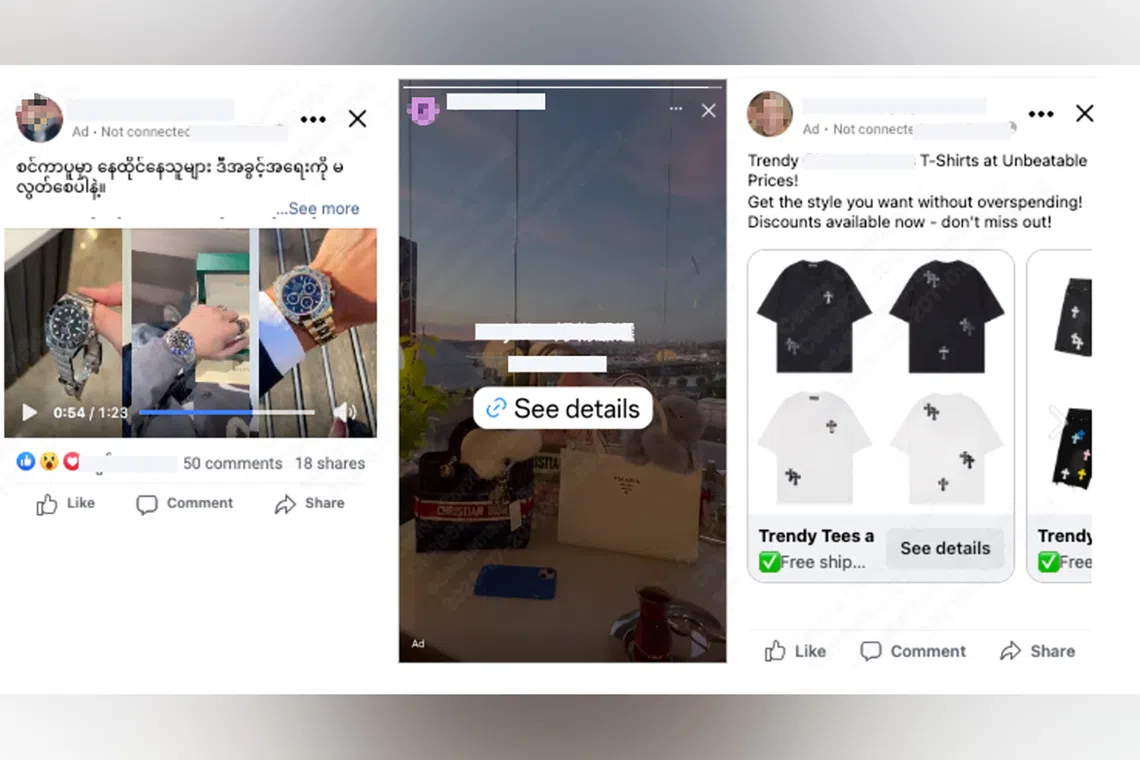
Meta took action against 3.64 million such ‘shell pages’ in July.
Published Sep 23, 2026, 09:00 AM
Updated Sep 23, 2026, 09:00 AM
Meta, with information from the Singapore Police Force, found and dismantled 3.6 million dormant 'shell pages' on Facebook and Instagram.
From January to June 2026, Meta and SPF acted against 33,600 e-commerce fraud entities and 113,000 scam accounts that were mostly involved in investment scams.
SPF's new Cyber Command and Meta's partnership enables proactive disruption of scam networks.
SINGAPORE – The pages lie dormant, appearing silent, empty and harmless with no advertisements or harmful posts.
But in an instant, scammers could make millions of them come to life, orchestrating massive scam campaigns across Facebook and Instagram to trick thousands of unsuspecting victims.
With information from the Singapore Police Force (SPF), Meta, the parent company of the two social media platforms, took action against 3.64 million such “shell pages” in July.
At a press briefing on Sept 22, Meta detailed its enforcement actions taken against scam networks from January to June 2026.
It said over the past two years, it had built an information partnership with SPF, which helps Meta’s investigators identify and dismantle entire ecosystems of scammers.
In the first half of 2026, this collaboration led to action against 113,000 scam-linked accounts and pages on Facebook and Instagram, 33,600 e-commerce fraud entities and the 3.6 million shell pages before they could be deployed.
Flagged by SPF as an emerging threat vector, these shell pages are created by syndicates to sit empty and appear indistinguishable from legitimate pages, allowing them to age without triggering security flags for new accounts.
“Shell pages” are created by syndicates to sit empty and appear indistinguishable from legitimate pages, allowing them to age without triggering security flags for new accounts. PHOTO: META
“Shell pages” are created by syndicates to sit empty and appear indistinguishable from legitimate pages, allowing them to age without triggering security flags for new accounts.
Once activated, the pages interact with one another to build a false appearance of legitimacy before launching coordinated scam campaigns across social media platforms.
Scams continue to be a problem in Singapore, with 16,821 cases reported in the first half of 2026 and victims losing over $410 million.
Aside from disrupting scams before they can happen, Meta has also worked with the police to dismantle scam operations.
Daryl Poon, director of law enforcement outreach for the Asia-Pacific region at Meta, said that for each suspicious entity or page flagged by the police, Meta acted against four more.
This led to it addressing more than 113,000 entities and pages connected to frauds and scams on Facebook and Instagram in the first half of 2026.
Most were involved in investment scams.
In June, in anticipation of the school holidays and the seasonal rise in scams, Meta and SPF conducted an enhanced disruption operation focused on e-commerce scams, taking action against more than 33,600 entities.
These were scams that promoted misleading pricing, fake promotional tactics for well-known brands, with exaggerated product claims.
Meta has also removed 65 million scam ads on Facebook and Instagram so far in 2026 , detecting 94 per cent of them before users reported them.
Poon said the collaboration with the SPF has helped Meta identify threats and act on them quickly, dismantling the scam networks before they can reach more people.
He said: “This is what effective collaboration looks like. Not just responding to scams after the fact, but proactively going after the infrastructure behind them.”
The SPF’s new Cyber Command, which was set up in July , targets scammers before they can reach victims here.
The commander of Cyber Command, Senior Assistant Commissioner of Police Justin Wong, said tackling sophisticated scam networks requires a collaboration with international and private stakeholders.
He said: “This recent operation demonstrates the power of police and private sector collaboration – scam infrastructure was decisively taken down, cutting off scammers’ ability to defraud Singaporeans.
“SPF will work with Meta and other online service providers to expand data sharing and strengthen scam disruption efforts.”
David Sun is The Straits Times’ crime correspondent. He has a background in criminology and is a licensed private investigator.
Internet crimes and scams
Meta 在 7 月份对 364 万个此类“空壳页面”采取了行动。
发布于 2026 年 9 月 23 日上午 9:00
更新于2026年9月23日上午9:00
Meta公司利用新加坡警方提供的信息,在Facebook和Instagram上发现了360万个休眠的“空壳页面”,并将其关闭。
从 2026 年 1 月到 6 月,Meta 和 SPF 对 33,600 个电子商务欺诈实体和 113,000 个诈骗账户采取了行动,这些账户大多涉及投资诈骗。
SPF新成立的网络司令部与Meta的合作能够主动打击诈骗网络。
新加坡——这些页面处于休眠状态,看起来安静、空洞且无害,没有任何广告或有害帖子。
但骗子们只需片刻就能让数百万个这样的骗局活过来,在 Facebook 和 Instagram 上策划大规模诈骗活动,欺骗成千上万毫无戒心的受害者。
根据新加坡警察部队 (SPF) 提供的信息,这两个社交媒体平台的母公司 Meta 在 7 月份对 364 万个此类“空壳页面”采取了行动。
在 9 月 22 日的新闻发布会上,Meta 详细介绍了其从 2026 年 1 月到 6 月对诈骗网络采取的执法行动。
该公司表示,在过去的两年里,它与 SPF 建立了信息合作伙伴关系,这有助于 Meta 的调查人员识别和瓦解整个诈骗者生态系统。
2026 年上半年,这项合作促成了对 Facebook 和 Instagram 上 113,000 个与诈骗有关的账户和页面、33,600 个电子商务欺诈实体以及 360 万个空壳页面采取行动,阻止了它们的部署。
这些 shell 页面被 SPF 标记为新兴威胁载体,它们由犯罪集团创建,页面内容为空,看起来与合法页面无异,因此可以长期存在而不会触发新帐户的安全警报。
“空壳页面”由犯罪集团创建,这些页面空置且外观与合法页面难以区分,使其能够长期存在而不会触发新账户的安全警报。图片:META
“空壳页面”是由犯罪集团创建的,这些页面会一直空着,看起来与合法页面没有区别,这样它们就可以长期存在而不会触发新帐户的安全警报。
一旦激活,这些页面会相互互动,营造出虚假的合法性假象,然后在社交媒体平台上发起协调一致的诈骗活动。
诈骗在新加坡仍然是一个问题,2026 年上半年报告的案件达 16,821 起,受害者损失超过 4.1 亿美元。
除了在诈骗发生之前将其阻止外,Meta 还与警方合作,捣毁诈骗团伙。
Meta亚太区执法部门联络主管潘达里尔表示,警方每标记一个可疑实体或页面,Meta就会对另外四个实体或页面采取行动。
这使得它在 2026 年上半年处理了超过 113,000 个与 Facebook 和 Instagram 上的欺诈和诈骗有关的实体和页面。
他们大多参与了投资诈骗。
6 月,为应对学校假期和季节性诈骗案件的增加,Meta 和新加坡警察部队开展了一项加强打击电子商务诈骗的行动,对超过 33,600 个实体采取了行动。
这些都是以误导性定价、知名品牌的虚假促销手段以及夸大产品功效为卖点的骗局。
截至 2026 年,Meta 已在 Facebook 和 Instagram 上删除了 6500 万条诈骗广告,其中 94% 的广告是在用户举报之前就被发现的。
Poon表示,与新加坡警察部队的合作帮助Meta识别威胁并迅速采取行动,在诈骗网络扩散到更多人之前将其瓦解。
他说:“这才是有效的合作。不仅仅是在诈骗发生后做出反应,而是主动打击诈骗背后的基础设施。”
新加坡警察部队于7月成立了新的网络指挥部,旨在阻止诈骗分子接近受害者。
网络犯罪指挥部指挥官、高级助理警务处长黄志强表示,打击复杂的诈骗网络需要与国际和私营部门的利益相关者合作。
他说:“最近的这次行动展现了警方和私营部门合作的力量——诈骗基础设施被果断摧毁,切断了诈骗分子欺骗新加坡人的能力。”
“SPF将与Meta和其他在线服务提供商合作,扩大数据共享,加强打击诈骗的力度。”
大卫·孙是《海峡时报》的犯罪记者。他拥有犯罪学背景,并且是一名持证私人侦探。
网络犯罪和诈骗