Malaysia calls for science‑based cooperation and long‑term Asean funding to tackle transboundary haze马来西亚呼吁开展基于科学的合作,并提供东盟长期资金,以应对跨境雾霾问题。
KUALA LUMPUR, Sept 23 — Malaysia has proposed a science‑driven framework and long‑term funding mechanism to strengthen Asean’s efforts in addressing transboundary haze...
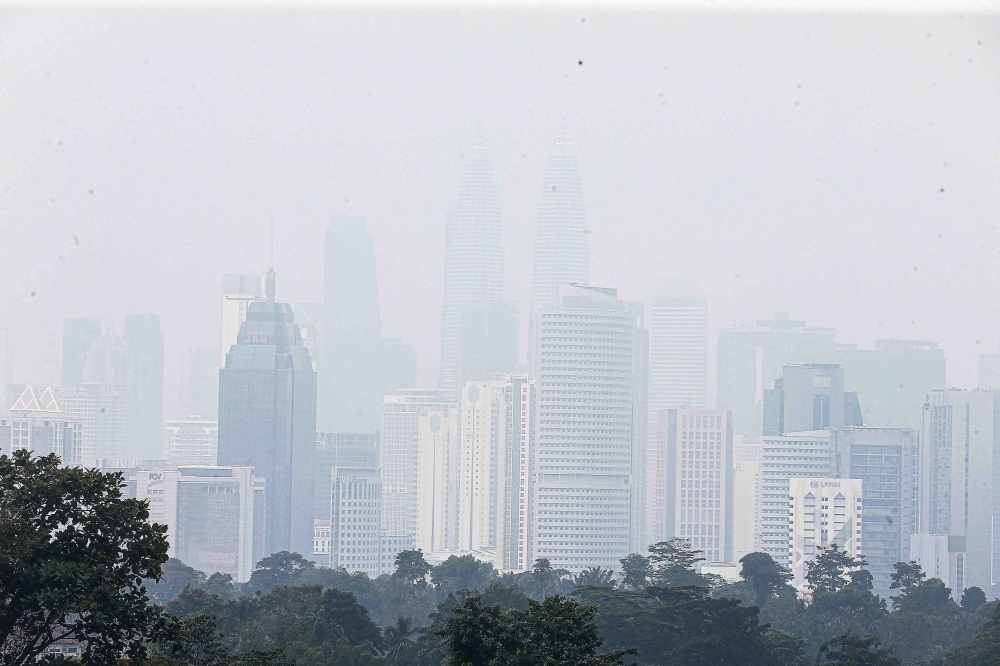
Malaysia suggested a science-driven framework and long-term funding under the Asean Agreement on Transboundary Haze Pollution to enhance regional haze management efforts.
Science Diplomacy and a Sustainable Haze Fund were proposed to support policy-making and finance prevention, research, and control activities.
The Asean Coordinating Centre for Transboundary Haze Pollution Control will be established, with Indonesia leading its initial phase and preparing operational plans.
KUALA LUMPUR, Sept 23 — Malaysia has proposed a science‑driven framework and long‑term funding mechanism to strengthen Asean’s efforts in addressing transboundary haze under the Asean Agreement on Transboundary Haze Pollution (AATHP).
The science‑driven framework refers to Science Diplomacy, which would allow Asean countries to jointly use scientific data, research and expertise, while the long‑term funding mechanism involves a Sustainable Haze Fund to support monitoring, fire prevention, research and haze‑control activities.
The proposals were raised by Natural Resources and Environmental Sustainability Minister Datuk Seri Arthur Joseph Kurup at the 27th Sub‑Regional Ministerial Steering Committee on Transboundary Haze Pollution meeting in Bali recently, according to the New Straits Times.
“The approach is expected to strengthen regional cooperation and support science‑ and evidence‑based policy and decision‑making,” Arthur said.
He said Science Diplomacy would help translate shared scientific findings into coordinated regional policies and operational decisions, while the Sustainable Haze Fund would provide continuous financing for long‑term haze‑mitigation efforts.
He said the meeting agreed that the Asean Secretariat should study the feasibility of Science Diplomacy and explore ways to increase contributions to and use of the Asean Haze Fund under the AATHP.
Arthur said long‑term solutions required sustained cooperation and commitment from all member states under the agreement, which was signed 24 years ago.
He said the AATHP emphasised cooperation, mutual respect, national sovereignty and consensus‑based decision‑making rather than punitive measures.
Arthur said each member state must fulfil its responsibilities, particularly in preventing and controlling fires within its borders to avoid affecting neighbouring countries.
He said Malaysia would present a stronger position on haze management at the Committee Meeting and Conference of the Parties to the Asean Agreement on Transboundary Haze Pollution in Vietnam this November.
Arthur said environment ministers and senior officials from all Asean member states attended the annual meeting to review the haze situation and preventive measures.
He said the Asean Coordinating Centre for Transboundary Haze Pollution Control (ACC THPC) would be established to help member states manage the impact of peatland and forest fires.
Arthur said all 11 Asean member states had agreed that the region should have a dedicated coordination centre for haze management.
He said Indonesia, as host country, was preparing for the centre’s operation by drafting the host country agreement, standard operating procedures, rules and procedures, business plan and work programmes.
Arthur said Indonesia had proposed to lead the initial phase of the ACC THPC, including appointing an Indonesian national as its first executive director.
He said the proposal reflected Indonesia’s role as host country and its experience in managing haze, forest fires and peatland fires.
Melaka police retirees get RM300,000 in aid as they call for dedicated state portfolio
Immigration busts van service for undocumented migrants in Kajang, Putrajaya, drivers earning up to RM1,800 a month
Rapid KL: Putrajaya MRT Line back to normal after brake fault as Kelana Jaya LRT operations stabilise following station congestion
At UNGA, Malaysia to raise Palestine, UN reform and global challenges
马来西亚建议在《东盟跨境烟霾污染协定》下建立以科学为导向的框架和长期资金,以加强区域烟霾管理工作。
为了支持政策制定和资助预防、研究和控制活动,提出了科学外交和可持续雾霾基金。
将成立东盟跨境烟霾污染控制协调中心,由印度尼西亚牵头负责初期阶段的工作并制定行动计划。
吉隆坡,9 月 23 日——马来西亚提出了一项以科学为导向的框架和长期融资机制,以加强东盟在《东盟跨境烟霾污染协定》(AATHP)下应对跨境烟霾的努力。
科学驱动框架指的是科学外交,它将允许东盟国家共同利用科学数据、研究和专业知识,而长期资金机制则包括一个可持续雾霾基金,以支持监测、防火、研究和雾霾控制活动。
据《新海峡时报》报道,这些建议是由自然资源和环境可持续发展部长拿督斯里亚瑟·约瑟夫·库鲁普最近在巴厘岛举行的第27届跨境烟霾污染次区域部长级指导委员会会议上提出的。
“预计这一举措将加强区域合作,并支持以科学和证据为基础的政策和决策,”阿瑟说。
他表示,科学外交将有助于把共同的科学发现转化为协调一致的区域政策和行动决策,而可持续雾霾基金将为长期的雾霾缓解工作提供持续的资金支持。
他表示,会议一致认为东盟秘书处应研究科学外交的可行性,并探索增加对东盟雾霾基金的捐款和使用方式,该基金隶属于东盟防灾减灾计划(AATHP)。
阿瑟表示,长期解决方案需要所有成员国根据24年前签署的协议进行持续合作和承诺。
他表示,AATHP强调合作、相互尊重、国家主权和基于共识的决策,而不是惩罚性措施。
阿瑟表示,每个成员国都必须履行其责任,尤其是在防止和控制境内火灾方面,以避免影响邻国。
他表示,马来西亚将在今年11月于越南举行的东盟跨境烟霾污染协定缔约方委员会会议暨大会上,就烟霾管理问题提出更强有力的立场。
阿瑟表示,东盟所有成员国的环境部长和高级官员出席了年度会议,审查了雾霾情况和预防措施。
他表示,将成立东盟跨境烟霾污染控制协调中心(ACC THPC),以帮助成员国应对泥炭地和森林火灾的影响。
阿瑟表示,东盟11个成员国一致同意,该地区应该设立一个专门的雾霾管理协调中心。
他表示,作为东道国,印度尼西亚正在为该中心的运营做准备,包括起草东道国协议、标准操作程序、规则和程序、商业计划和工作方案。
Arthur表示,印度尼西亚曾提议领导ACC THPC的初始阶段,包括任命一名印度尼西亚国民担任其首任执行董事。
他表示,该提议体现了印度尼西亚作为东道国的角色及其在管理雾霾、森林火灾和泥炭地火灾方面的经验。
马六甲警察退休人员获得30万令吉援助,同时呼吁设立专门的州级部门
在加影和布城,移民局查处运送非法移民的货车服务,司机每月收入高达1800令吉。
Rapid KL:布城捷运线刹车故障后恢复正常运营,格拉那再也轻轨站拥堵缓解后运营趋于稳定。
在联合国大会上,马来西亚将提出巴勒斯坦问题、联合国改革和全球挑战等议题。