US and Netherlands agree to share helicopter developments美国和荷兰同意共享直升机研发成果
To better coordinate developments in helicopter capabilities, the U.S. and Netherlands signed an agreement to allow for greater sharing of technology.
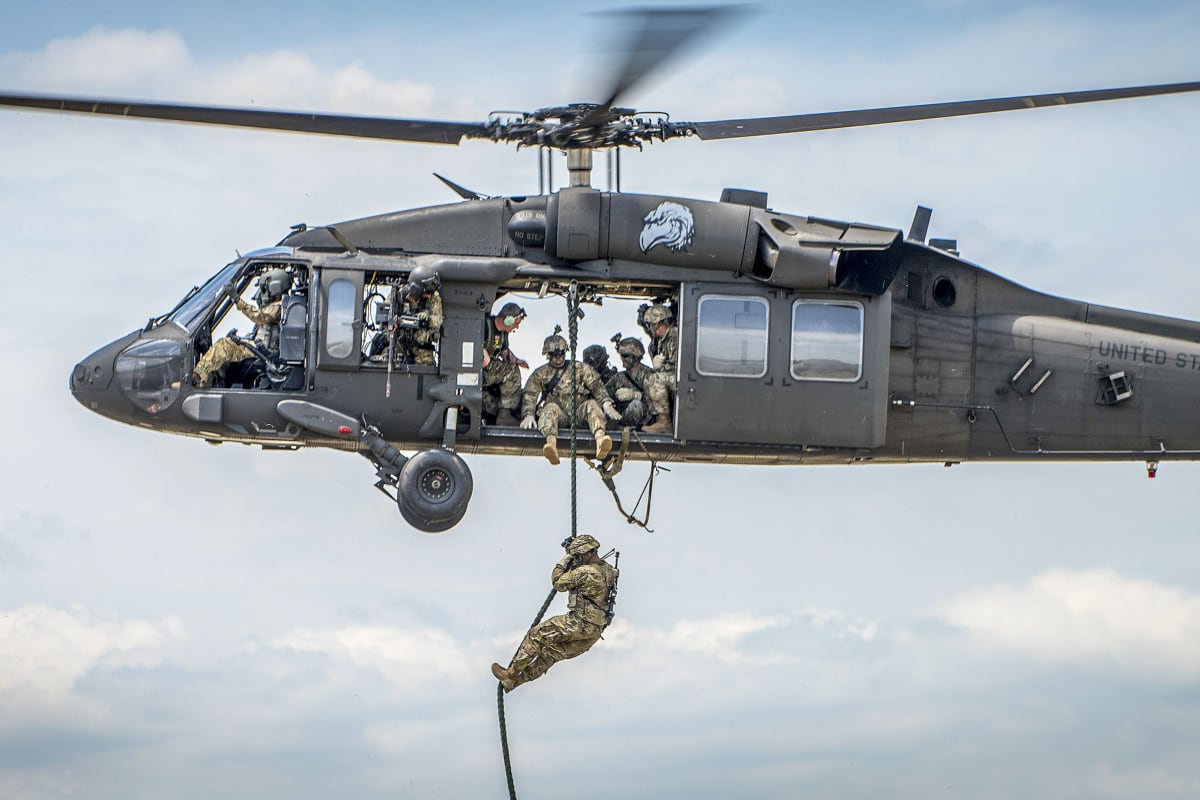
WASHINGTON ― The U.S. and Dutch militaries signed an agreement Wednesday in the Netherlands to work together on future vertical lift programs, according to a statement from the U.S. Army.
FVL is a plan to design and manufacture a generation of helicopters ― and other low-tier aviation ― with the latest in technology and capabilities. Douglas Bush, assistant secretary of the Army for acquisition, logistics and technology, said this agreement keeps the U.S. and its allies ahead of its adversaries.
“By working closely on our future efforts, we garner the greatest possible strength for the long-term advance of our mutual interest,” Bush said during the ceremony at Gilze-Rijen Air Force Base. “In today’s security environment, we must maintain superiority over determined adversaries by vastly increasing speed, range, lethality and survivability of our aviation platforms.”
The agreement allows the two countries to collaborate on aviation modernization. The U.S. Army has been intently pursuing FVL capabilities, which include Future Long-Range Attack (FLRAA) and Future Attack Reconnaissance Aircraft (FARA), as well as Future Unmanned Aerial Systems and other Department of Defense programs.
FVL is one of the top modernization priorities for Army Futures Command, which leads many of the service’s major program acquisitions. Over the next five years, the U.S. Army will spend $3.1 billion to develop FARA and $3.6 billion on FLRAA, according to fiscal year 2023 Army budget justification documents.
In February, the United Kingdom signed a similar agreement to examine how U.S. and U.K. aircraft could be more closely integrated. U.S. Maj. Gen. Walter Rugen, director of the FVL Cross-Functional Team at Army Futures Command, said such agreements allow for greater openness with vital allies.
“It allows us to talk concepts at sensitive levels,” Rugen said. “It allows us to talk requirements, and allows us to talk science and technologies.”
Last month, the Netherlands signed onto a memorandum of understanding with five other NATO allies ― Italy, France, Germany, Greece and the United Kingdom ― to commit $28 million for a Next-Generation Rotocraft Capability (NGRC) project. With many helicopters in the specified countries reaching the end of their expected life, the goal of the collective is focused on getting those aircraft replaced by 2035.
And there remains potential for future agreements on helicopter modernization and coordination, but no specific allies were mentioned during the press conference. Regardless, Bush said, this type of coordination among allies has proven valuable.
“We’ve seen the benefits for interoperability among our forces, especially in aviation,” Bush said. “Knowing that your ally on your flank has equipment every bit as good as yours, that they can operate day and night, in bad weather and that their tactics and training are similar to yours, is the key to successful military operations.”
Although more than 2,000 miles away, the invasion of Ukraine remained an issue during the signing. For a country the size of the Netherlands, Dutch Maj. Gen. Andre Steur said, maintaining strong relationships with allies militarily have become even more necessary for security.
“You can not have enough friends in the world we live in right now,” Steur said. “Not too long ago we were celebrating 75 years of peace in Europe, and now we have war in Europe. We have war at the eastern edges of the alliance, and I think it’s upon all of us to be able to counter future threats as one fighting force.”
Zamone “Z” Perez is a reporter at Military Times. He previously worked at Foreign Policy and Ufahamu Africa. He is a graduate of Northwestern University, where he researched international ethics and atrocity prevention in his thesis. He can be found on Twitter @zamoneperez.
华盛顿——据美国陆军发表的一份声明称,美国和荷兰军方周三在荷兰签署了一项协议,将在未来的垂直起降项目上开展合作。
FVL计划旨在设计和制造新一代直升机以及其他低层航空器,使其具备最新技术和能力。美国陆军负责采购、后勤和技术的助理部长道格拉斯·布什表示,这项协议将使美国及其盟友保持领先于其对手。
布什在吉尔泽-里延空军基地的仪式上说:“通过密切合作,共同推进未来的工作,我们才能为实现共同利益的长期发展积蓄最大的力量。在当今的安全环境下,我们必须大幅提升航空平台的速度、航程、杀伤力和生存能力,才能保持对顽固对手的优势。”
该协议允许两国在航空现代化方面开展合作。美国陆军一直在积极推进未来垂直起降(FVL)能力建设,其中包括未来远程攻击机(FLRAA)、未来攻击侦察机(FARA)、未来无人机系统以及其他国防部项目。
未来垂直起降(FVL)是陆军未来司令部最重要的现代化优先事项之一,该司令部负责领导陆军的许多重大项目采购。根据2023财年陆军预算说明文件,未来五年,美国陆军将花费31亿美元用于开发《未来自动化升级法案》(FARA),并花费36亿美元用于开发《未来自动化升级法案》(FLRAA)。
今年2月,英国签署了一项类似协议,旨在探讨如何更紧密地整合美英两国的飞机。美国陆军未来司令部未来垂直起降跨职能团队主任沃尔特·鲁根少将表示,此类协议有助于与重要盟友保持更开放的沟通。
“它使我们能够探讨一些敏感的概念,”鲁根说。“它使我们能够讨论需求,也使我们能够讨论科学和技术。”
上个月,荷兰与意大利、法国、德国、希腊和英国这五个北约盟国签署了一份谅解备忘录,承诺出资2800万美元用于下一代旋翼机能力(NGRC)项目。由于这些国家许多直升机已接近使用寿命终点,该合作项目的目标是在2035年前完成这些飞机的替换。
布什表示,未来在直升机现代化和协调方面仍有可能达成协议,但新闻发布会上并未提及具体盟友。不过,布什指出,这种盟友间的协调已被证明卓有成效。
布什说:“我们已经看到了部队间互操作性带来的好处,尤其是在航空领域。知道侧翼盟友拥有与你一样先进的装备,能够昼夜作战,在恶劣天气下作战,并且他们的战术和训练与你相似,这是军事行动成功的关键。”
尽管远隔两千多英里,乌克兰战争在签字仪式上仍然是一个重要议题。荷兰少将安德烈·施特尔表示,对于荷兰这样幅员辽阔的国家而言,与盟友保持牢固的军事关系对于安全而言变得更加必要。
“在当今世界,朋友永远不嫌多,”施特尔说。“不久前我们还在庆祝欧洲和平75周年,现在欧洲又陷入了战争。联盟东部边缘也战火纷飞,我认为我们所有人都有责任团结一致,共同应对未来的威胁。”
扎莫内·“Z”·佩雷斯是《军事时报》的记者。他曾就职于《外交政策》和《乌法哈姆非洲》。他毕业于西北大学,毕业论文研究国际伦理和暴行预防。他的推特账号是@zamoneperez。