No evidence of formalin found in cabbage, other vegetables imported from China: SFA食品安全局:未在从中国进口的卷心菜和其他蔬菜中发现甲醛。
There had been reports of cabbage from Hebei, China, being treated with formalin. Read more at straitstimes.com.
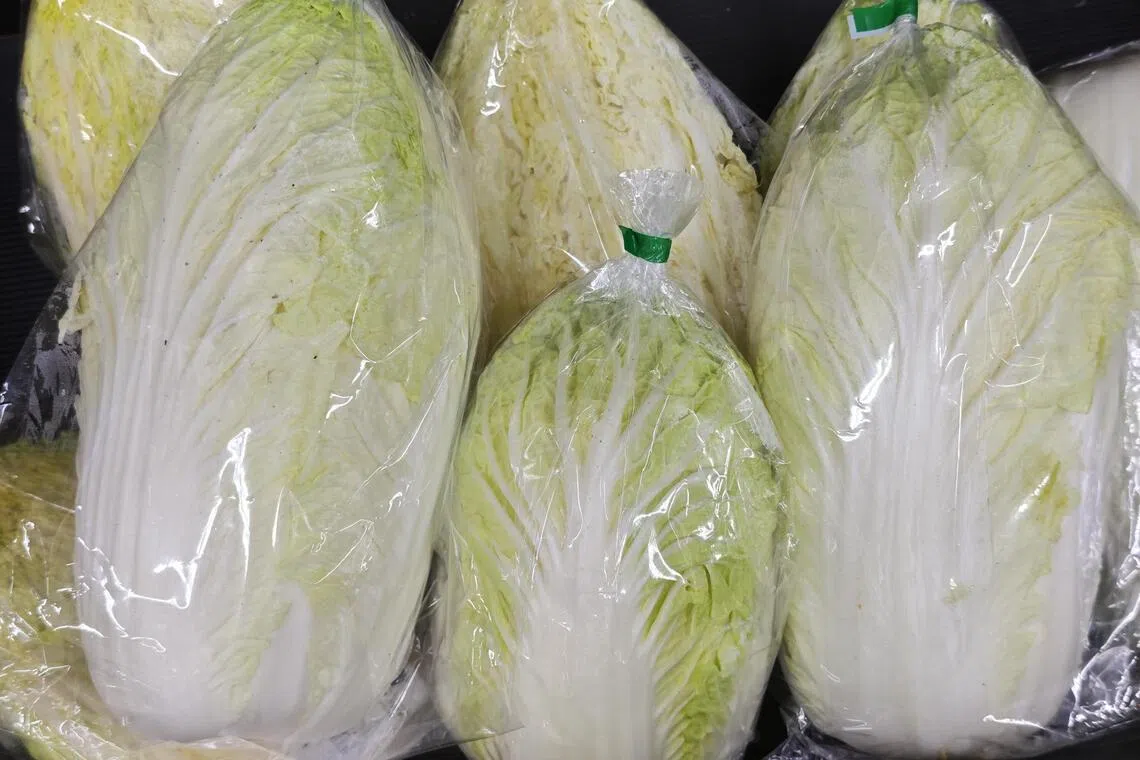
SFA said it will continue monitoring, sampling and testing to ensure all food products sold, including vegetables from China, are safe for consumption.
PHOTO: LIANHE ZAOBAO FILE
Published Sep 04, 2026, 04:10 PM
Updated Sep 04, 2026, 04:13 PM
SINGAPORE – Tests on vegetables imported from China, including cabbage, have showed no evidence of formalin contamination, said the Singapore Food Agency (SFA).
The tests were carried out as part of the agency’s stepped-up surveillance following reports of cabbage from Hebei, China, being treated with formalin , a formaldehyde solution, said SFA in a media reply on Sept 4.
SFA said it has in place a food sampling and testing programme as part of its science-based risk management approach to ensure food products comply with Singapore’s food regulations.
It said: “We will continue to conduct monitoring, sampling, and testing to ensure all food products sold, including vegetables from China, are safe for consumption.”
On Sept 1, SFA said it was aware of reports regarding the alleged use of formaldehyde on cabbage in China.
SFA said then that it was monitoring the developments closely and had stepped up surveillance and testing of cabbage as part of its food safety monitoring programme.
China launched spot checks and market inspections after videos circulated widely online, showing cabbage being dipped into the industrial chemical – which is used by morgues to preserve dead bodies, among other applications – to make them last longer.
The food safety scandal erupted after footage circulated online showing workers in China’s Kangbao county, in northern Hebei province, dipping cabbage roots into liquid before loading the vegetables onto trucks.
The local authorities confirmed that formaldehyde had been used during the purchasing and transport process, according to Chinese and South Korean media reports.
In its Sept 4 statement, SFA said consumers can follow food safety tips to consume vegetables safely, such as washing hands before and after handling vegetables and washing non-ready-to-eat vegetables thoroughly.
More information on food safety of raw vegetables can be found on SFA’s website .
SFA/Singapore Food Agency
新加坡食品局表示,将继续进行监测、抽样和检测,以确保所有销售的食品,包括来自中国的蔬菜,均可安全食用。
照片:联合早报档案
发布于 2026 年 9 月 4 日下午 4:10
更新于2026年9月4日下午4:13
新加坡——新加坡食品局(SFA)表示,对从中国进口的蔬菜(包括卷心菜)进行的检测显示,没有发现甲醛污染的证据。
新加坡食品局在9月4日的媒体回复中表示,这些测试是该机构加强监管的一部分,此前有报道称,来自中国河北省的白菜用甲醛溶液(福尔马林)处理过。
新加坡食品局表示,作为其基于科学的风险管理方法的一部分,该局已实施食品抽样和检测计划,以确保食品符合新加坡的食品法规。
声明称:“我们将继续进行监测、抽样和检测,以确保所有销售的食品,包括来自中国的蔬菜,均可安全食用。”
9月1日,国家食品局表示,已注意到有关中国涉嫌在白菜中使用甲醛的报道。
新加坡食品局当时表示,他们正在密切关注事态发展,并已加强对卷心菜的监督和检测,作为其食品安全监测计划的一部分。
一些视频在网上广泛流传,视频显示有人将白菜浸泡在工业化学品中(这种化学品被太平间用于保存尸体等用途),以延长白菜的保质期。事后,中国展开了抽查和市场检查。
食品安全丑闻爆发的起因是网上流传的一段视频,视频显示中国河北省北部康宝县的工人们在将白菜装上卡车之前,将白菜根浸入液体中。
据中国和韩国媒体报道,当地政府证实,在采购和运输过程中使用了甲醛。
新加坡食品局在9月4日的声明中表示,消费者可以遵循食品安全提示来安全食用蔬菜,例如在处理蔬菜前后洗手,以及彻底清洗非即食蔬菜。
有关生鲜蔬菜食品安全的更多信息,请访问新加坡食品局 (SFA) 网站。
新加坡食品局