Oil fund bleeds nearly 5 billion baht a week as government struggles to cope with Middle Eastern crisis由于政府难以应对中东危机,石油基金每周损失近50亿泰铢。
Thailand’s Oil Fuel Fund bleeds ฿700 million daily and heads beyond ฿100 billion in the red. Akanat weighs massive new borrowing as Middle East turmoil… Read More ›
新闻视频
September 23, 2026 at 10:16 pm
in Economy , Living , Media , Politics , Thailand
Energy Minister Akanat Promphan faces a deepening crisis as Thailand’s Oil Fuel Fund haemorrhages cash protecting consumers from soaring energy costs. Already ฿92 billion in the red, it is losing ฿700 million daily. Another ฿100 billion borrowing facility is under consideration, while eventual requirements could run far higher. Prime Minister Anutin Charnvirakul’s government faces a stark dilemma: keep subsidising diesel and cooking gas or pass more costs to households and businesses. Meanwhile, Middle East fighting and Strait of Hormuz risks threaten another oil shock. Brent’s recent retreat offers only temporary relief. Akanat, who previously tackled public-lighting charges and pursued a Chinese-linked steelmaker, now confronts losses approaching ฿5 billion every week.
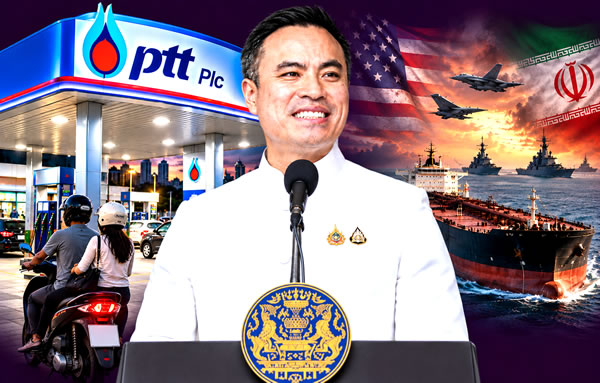
Energy Minister Akanat Promphan faces a ฿92bn Oil Fuel Fund deficit, losing ฿700m daily as Middle East turmoil threatens another oil shock and massive borrowing. ( Source: Matichon )
Energy Minister Akanat Promphan faces a mounting headache as Thailand’s Oil Fuel Fund burns through cash at an accelerating rate. Meanwhile, the Middle East conflict continues exposing the country to volatile international energy prices. The Fund was approximately ฿92 billion in deficit on September 20. Moreover, it is losing around ฿700 million every day. Officials expect the shortfall to exceed ฿100 billion around late September or early October.
The problem is rapidly becoming a major test for Prime Minister Anutin Charnvirakul’s government. Thailand is spending heavily to prevent the full cost of energy reaching consumers. Yet the mechanism supporting those prices is running dangerously short of liquidity. Previous borrowing has already been consumed. Consequently, the Energy Ministry is considering another borrowing programme approaching ฿100 billion.
Ministry sources suggest the eventual requirement could be substantially larger. Indeed, officials have raised the possibility of borrowing running into hundreds of billions of baht. Much will depend on global energy prices and future subsidy levels. Furthermore, any prolonged Middle East conflict could keep international fuel prices elevated despite their recent retreat.
Crude price retreat offers temporary relief as Thailand’s oil subsidy losses continue mounting fast
For now, falling crude prices have provided some breathing room. Brent fell for six consecutive sessions amid improved supplies and hopes surrounding US-Iran diplomacy. On September 23, Reuters reported Brent at around $98.16 during Asian trading. Later, however, prices recovered above $100. Only two weeks earlier, Brent had surged above $100 following renewed attacks and growing supply concerns.
Thailand remains particularly exposed because it depends heavily on imported energy. At the same time, the Strait of Hormuz remains crucial to international supplies. Before the current conflict, roughly 20% of global oil supply passed through the strategic waterway. Accordingly, disruption there can quickly move international prices and Thailand’s import costs.
The recent crude retreat has therefore provided relief without solving the underlying problem. The Oil Fuel Fund still carries accumulated losses approaching ฿100 billion. In addition, it must continue financing subsidies while meeting existing financial obligations. The daily outflow remains around ฿700 million under current conditions.
The scale of intervention becomes clearer at Thailand’s diesel pumps. Ordinary diesel sold at ฿40.69 per litre on September 18. However, that price incorporated an ฿8.62-per-litre contribution from the Oil Fuel Fund. Separately, refiners were providing another ฿4-per-litre discount. Without both interventions, the calculated retail price was approximately ฿54.19 per litre.
Diesel subsidy gap exposes mounting Fund costs as LPG support adds further pressure on state finances
That difference amounts to ฿13.50 on every litre under the September 18 calculation. As a result, the gap between the pump price and underlying cost remains substantial. The government has not announced an immediate withdrawal of those interventions. Nevertheless, the figures show why supporting diesel is consuming money so quickly.
LPG creates another significant burden. The government is maintaining a standard 15-kilogramme cooking-gas cylinder at ฿423. In parallel, the Fund is subsidising LPG by almost ฿10 per kilogramme. Thus, financial support extends beyond motorists and businesses directly into household cooking costs.
The deterioration in the Fund’s accounts has been striking. On July 19, its deficit stood at approximately ฿61.5 billion. By August 9, it had climbed to ฿72.26 billion. Just seven days later, the shortfall reached ฿75.56 billion. By September 20, it stood at approximately ฿92 billion.
In barely two months, the deficit therefore widened by more than ฿30 billion. At the current daily rate, another ฿4.9 billion disappears every week. Over 30 days, losses would approach ฿21 billion if that pace continued. Hence, even stable international prices leave the government facing a substantial financing requirement.
Previous loans are exhausted as officials prepare another borrowing facility approaching ฿100 billion
Previous borrowing has already provided only temporary relief. Energy Ministry sources said an earlier ฿20 billion loan had been fully utilised. The money was used to meet existing debt obligations. Subsequently, another ฿10 billion was borrowed last week. Ministry sources said those funds had also been completely used.
“The 20 billion baht that was borrowed has been fully utilised. It was used to repay debt,” a ministry source said. “Last week, another 10 billion baht was borrowed, and that has also been fully used.”
In response, officials are preparing another liquidity plan. They must first calculate the Fund’s existing liabilities before determining the next borrowing requirement. Preliminary discussions indicate another facility around ฿100 billion may be required.
“If you ask how much we need to borrow, we have to look at covering the debt first,” the source said. The requirement “might need to reach 100 billion baht”, according to the same source. Even so, officials would not necessarily draw down the entire facility immediately.
“But the disbursement of the funds is another matter,” the source added. “It will likely be disbursed gradually, like in the past, not as a single 100 billion baht lump sum.”
Fund borrowing could reach hundreds of billions as government weighs future fuel price support plans
Despite that approach, ministry sources acknowledge that overall requirements could eventually reach hundreds of billions of baht. The final figure will depend heavily on future policy decisions. In particular, the government must determine how aggressively it continues suppressing retail fuel prices.
The matter will require discussions with the new Permanent Secretary of the Ministry of Energy. Crucially, Akanat will also have to determine the ministry’s approach. Those decisions will directly affect how much additional financing the Fund requires.
Domestic commercial banks are expected to provide any new borrowing. However, the eventual structure will depend on interest rates and prevailing financial conditions. On another front, officials may seek a Finance Ministry guarantee. Thailand used a similar arrangement during the Russia-Ukraine energy shock.
At that time, the total borrowing limit reached ฿105.33 billion. Meanwhile, existing Oil Fuel Fund principal debt currently remains around ฿10 billion. The Fund continues making scheduled interest payments. Officials want to prevent those obligations from becoming bad debt.
Borrowing, however, does not remove the underlying subsidy cost. Instead, it provides liquidity while the government decides how much longer current support should continue. For that reason, the Energy Ministry is also considering reductions in the Fund’s compensation payments.
Reducing fuel subsidies would slow Fund losses but push higher costs throughout Thailand’s economy
That presents the second side of the government’s problem. Reducing subsidies would slow the Fund’s daily losses. Conversely, more of the underlying energy cost would reach consumers. Higher diesel prices would quickly increase costs across transport, logistics, agriculture and manufacturing.
Those increases could also feed into food and other consumer prices. Diesel remains central to Thailand’s commercial transport system. Trucks carry food, manufactured goods, construction materials and consumer products nationwide. Consequently, higher transport costs can move through distribution networks into retail prices.
Agriculture faces similar exposure. Farmers use fuel for machinery, transport and distribution. Manufacturers also face higher logistics and production expenses when energy costs increase. Therefore, diesel support extends well beyond motorists filling their vehicles.
There is already evidence of wider price pressure. Krungsri Research reported headline inflation at 2.53% in August. That compared with 1.95% in July. Notably, energy was an important driver of the increase. Krungsri also warned that inflation could increase again during the fourth quarter.
Households are simultaneously facing weaker incomes and high household debt. Many lower-income households also have limited financial buffers. Against this backdrop, any sharp increase in essential energy costs would arrive during a difficult period for consumers.
Bank of Thailand sees energy costs spreading as government spends another ฿43 billion on consumers
The Bank of Thailand has separately identified the transmission of energy costs into the wider economy. According to the central bank, higher energy prices contributed to Thailand’s second-quarter slowdown. They also increased the country’s fuel import bill. More importantly, higher costs were already passing into prepared food and other prices.
That economic pressure comes as Anutin’s government spends elsewhere to support consumption. On Tuesday, Cabinet approved another ฿43 billion extension of consumer subsidies. The measure is intended to support household purchasing power.
At almost the same time, the Oil Fuel Fund is approaching a ฿100 billion deficit. The two programmes address pressure on consumers through different channels. One puts additional purchasing power into households. The other prevents more energy costs reaching those same households.
Both, however, require substantial financial resources. As matters stand, maintaining fuel support requires increasing amounts of financing. That leaves the Energy Ministry facing an increasingly narrow set of choices.
The Middle East conflict has made that balancing exercise considerably harder. Energy Ministry assessments indicate fighting could remain prolonged. Additionally, global fuel prices could stay elevated despite recent declines. The government therefore cannot assume several days of cheaper crude will reverse the Fund’s financial position.
Trump’s comments add uncertainty as Thailand weighs subsidies against another global oil supply shock
November adds another element of uncertainty. US President Donald Trump has repeatedly discussed the Iran conflict alongside the US midterm congressional elections. This week, he said his Iran policy was not being determined by those elections. However, Trump also reiterated his expectation that the war would end afterwards.
For Thailand, the timing matters because energy prices remain sensitive to military and diplomatic developments. Still, the future direction of those prices remains uncertain. The recent Brent retreat demonstrates how rapidly market sentiment can change. Earlier price spikes showed the opposite movement just as clearly.
A sustained crude decline would reduce the cost of supporting domestic prices. Potentially, it could provide room for gradually reducing subsidies without producing the same increase at pumps. Another major supply disruption, however, would produce the opposite effect.
Thailand would then enter another energy shock with the Fund already around ฿100 billion underwater. Furthermore, previous borrowing has already been consumed. Another substantial credit facility would therefore become increasingly important.
As part of its response, the Energy Ministry can gradually reduce price freezes or compensation payments. Such changes would immediately slow cash leaving the Fund. Yet retail fuel prices would rise unless falling global prices offset those reductions.
Akanat faces tightening timetable as Fund losses mount and another ฿100 billion facility is considered
Officials must therefore assess the impact before making adjustments. The government could also consider targeted assistance or other measures alongside reduced fuel support. So far, no final course has been announced.
For Akanat, the timetable is tightening rapidly. The Fund was ฿61.5 billion underwater on July 19. Two months later, its deficit had reached approximately ฿92 billion. Meanwhile, around ฿30 billion of recent borrowing has already been consumed.
Another facility around ฿100 billion is now under consideration. Beyond that, ministry sources acknowledge the eventual requirement could run considerably higher. Every decision on diesel and LPG subsidies will directly affect that figure.
The financing itself will carry additional costs. Commercial bank borrowing requires interest payments. Likewise, another Finance Ministry guarantee would again bring the state behind the Fund’s financing arrangements. Thailand previously used that approach during the Russia-Ukraine energy crisis.
Yet the immediate arithmetic remains dominated by daily losses. At ฿700 million every day, the Fund loses around ฿21 billion over 30 days. At that pace, another ฿100 billion would disappear in less than five months.
Diesel support shows scale of losses as Akanat’s past interventions put his record under scrutiny
The diesel calculation shows what those losses are buying. Motorists paid ฿40.69 per litre on September 18. Without the Fund subsidy and refinery discount, the calculated figure was ฿54.19. The difference stood at ฿13.50 per litre.
The government is therefore maintaining a substantial buffer between underlying energy costs and retail prices. In turn, the cost of maintaining that buffer is accumulating rapidly inside the Fund.
For now, lower international oil prices offer Akanat some room. Yet the existing deficit remains, while earlier borrowing has already been spent. Meanwhile, the Middle East conflict continues threatening one of the world’s most important energy routes.
The next decisions will centre on borrowing, subsidy levels and the pace of any price adjustment. Those choices now sit squarely with the Energy Ministry and the wider Anutin government.
Akanat enters that decision with a record of forceful intervention in previous ministerial roles. Earlier this year, he challenged a long-standing charge embedded in electricity bills for public lighting. He said the practice cost consumers around ฿10 billion annually.
Subsequently, the National Energy Policy Council approved separating public-lighting costs from ordinary electricity bills. The July 15 decision formed part of seven electricity measures championed by Akanat.
Before taking the Energy portfolio, Akanat served as Industry Minister. There, he pursued Chinese-linked steelmaker Xin Ke Yuan Steel after the March 2025 Bangkok earthquake. Steel from the company was found at the collapsed State Audit Office building. Tests subsequently found two types of reinforcing bars failed to meet required standards.
Akanat stands by failed steel tests as Oil Fuel Fund heads towards a deficit exceeding ฿100 billion
Xin Ke Yuan disputed the findings and denied wrongdoing. However, Akanat rejected its demand for parallel testing and said the ministry’s findings were final.
Later, he personally joined a raid on the company’s Rayong factory. The action became one of the most visible enforcement campaigns during his period at the Industry Ministry.
Those episodes established a record of direct intervention when Akanat identified specific costs or regulatory failures. This time, however, the numbers are considerably larger.
By early October, officials expect the Oil Fuel Fund to exceed ฿100 billion in the red. Meanwhile, losses continue at around ฿700 million every day. Another borrowing programme is already under consideration.
The recent fall in crude has bought Thailand some time. Nevertheless, cheaper oil alone cannot quickly repair accumulated losses approaching ฿100 billion.
For Akanat, the immediate problem is now clear. The Fund must finance existing obligations while continuing to shield consumers from much higher underlying energy costs.
At the same time, Thailand remains exposed to an unpredictable Middle East conflict and volatile international oil markets. The next move now rests with Akanat, the Energy Ministry and Anutin’s government.
Finance Minister warns Thailand faces challenges including higher oil prices and an ageing population
Something gone wrong in the business world as confidence plummets to a three year low in survey
Crackdown on foreign nominee firms and business concerns moves into Krabi with 1,000 firms hot listed
Now the government’s crackdown targets unlicensed hotels. Five managers arrested in Phuket raids
90 Day cannabis shop crackdown launched by deputy minister in Phuket as concerns about Pot sales spiral
Smuggled cannabis exports activity grows rapidly with thousands of tourist cases to the UK intercepted
Thai police issue warning as Bangkok is left red faced after massive exported cannabis seizures abroad
Top Bhumjaithai Party figure defends the party’s position on cannabis. Only supported medical use
Massive cannabis seizure from Thailand by Polish and German officials piles further pressure on Bangkok
Thai Laotian couple arrested in Loei linked to heroin trafficking and the jailed Thai Airways hostess
Thai hostess to face the music for her actions as Prime Minister pushes to close drug trafficking gaps
Police in Thailand and Australia hunt to track down network behind the arrest of a Thai Airways hostess
Joseph Anthony is an expat from Ireland who has lived in Thailand for the last decade. He has worked extensively in the media including editorial positions in Ireland and Thailand. He is focused on economic and business stories in Thailand as well as the expat lifestyle.
All posts by Joseph O' Connor
Irate daughter in law kills mother in law at home and also tried to execute estranged partner and others September 20, 2026 Durian dispute turns deadly as Thanyathorn Songserm
Defence volunteers killed in Narathiwat insurgency bomb and gun ambush. Bangkok seeks peace talks September 19, 2026 Bomb and gun ambush leaves two Volunteer Defence Corps
Anutin urged officials to expel undesirable foreigners. On cemeteries, the PM urged them to die at home September 18, 2026 Anutin tells governors to use new deportation powers
Thai star Lisa hits big time in US with ‘SaWaDiKa’ shooting into the Hot 100 before a Jimmy Fallon spot September 17, 2026 Lisa conquers another US milestone as “SaWaDiKa”
Former minister in Anutin’s first government appears on Congress list for sanctions over scam industry September 17, 2026 Woraphak Thanyawong faces a US sanctions investigation
Udon Thani police hunt killer of a 24 year old woman found naked and strangled with electrical cord September 17, 2026 Phattharawarin “Pim” Piadok, 24, was found naked
Thailand joins minimum tax regime aimed at large global corporations as it hooks into world networks September 16, 2026 Thailand joins the global tax net with a 15% minimum
Probe into 11,000 firms linked to foreigners holding 85 billion baht in property to be complete by Sept 30th September 16, 2026 Thailand races to resolve 11,000 company probes by
US man arrested in Phuket based a warrant issued in Texas over 4 years ago for a strangulation offence September 16, 2026 American fugitive Brad is arrested outside his Phuket
United Nations process begins with hearing in Singapore. Thai Foreign Minister took a bold, hard line September 15, 2026 Thailand and Cambodia face off in Singapore over
From stalls to smartphones, Thai Revenue pulls in a growing cohort of online traders in new economy September 15, 2026 Thailand’s taxman chases the smartphone economy as
Tighter ‘bottleneck’ regime on money transfers in force across financial system per central bank orders September 15, 2026 Bank of Thailand Governor Vitai Ratanakorn orders
PM Anutin accompanies King and Queen on a historic visit to Vietnam for three days hours before verdict September 14, 2026 King and Queen begin historic Hanoi State Visit as
Election Commission creates more questions than answers as it refers 77 people to the Supreme Court September 14, 2026 Senate scandal heads for court as EC targets 77
Gauntlet thrown down to the Election Commission before it votes on explosive Senate collusion scandal cases September 14, 2026 Monday’s Senate showdown could open a new political
Police raids on nightlife venues in Bangkok’s Wang Thonglang area as clandestine foreign control grows September 14, 2026 Bangkok police swoop on 17 venues in Wang
TH AI plan runs into problems and bottlenecks. New AIS deal offering cheap 29 baht per month internet September 13, 2026 Thailand’s flagship ฿1.6 billion AI scheme hits
45 year old Australian Simon Peter Carman is refused bail as he pleaded not guilty to murder in Pattaya September 19, 2026
Time for government to tighten its belt as debt ceiling looms and public debt surges from the pre Covid era September 18, 2026
Thailand prepares to impose a 30% tax on EVs built outside the kingdom in a move to boost its auto base September 18, 2026
Good Samaritan in Pattaya gets punched for his trouble by erratic farang after he lost motorbike keys with girlfriend September 17, 2026
Purchaser of foreclosed Chiang Mai property shocked on Tuesday to find skeletal remains of former owner September 17, 2026
Mother urges police to find Chinese national involved in road traffic crash that claimed her son’s life September 17, 2026
Thaksin seeks injunctive relief from Revenue efforts to collect 17 billion tax judgment in August 2025 September 16, 2026
British man attacked and slashed by drunk motorbike duo on Tuesday as they tried to steal his smartphone September 16, 2026
Election Commission member derails PM Anutin Charnvirakul’s efforts to put senate scandal in the past September 16, 2026
Partnership between Nestlé and the billionaire Mahagitsiri family descends into all out legal warfare September 15, 2026
Four bodies removed Tuesday from a Jewish cemetery in Chachoengsao in new crackdown on illegal burials September 15, 2026
Election Commission exposed based on Monday’s sweeping decisions and judgments warns opposition September 15, 2026
Chinese man arrested after he fled to Thailand in 1991. Firm’s capital raised weeks before his shock downfall September 14, 2026
Thailand’s K-shaped economy sees a large number of people cut back on food and meals to make ends meet September 14, 2026
Opinion poll shows public concern about Israeli misbehaviour in Thailand amid a febrile political mood September 14, 2026
Ex Pheu Thai minister warns Commission members that soon they could be judged as crunch vote looms September 13, 2026
Sex and financial scandal at famous monastery rocks Thailand. Abbot and girlfriend amassed huge wealth September 13, 2026
Thailand hailed as a haven for retirees and digital nomads but officials breed doubt and uncertainty September 12, 2026
Commerce Minister Suphajee responds to Sondhi Limthongkul’s attack on new liberal investment rules September 12, 2026
Pressure movement against Israel in Thailand gains momentum as it combines with street protests September 12, 2026
Bank bandit arrested at a Bangkok resort. 54 year old Saifa Kasemut has a history of armed robbery crime September 12, 2026
Former Prime Minister and Democrat Party leader cites a lack of public trust in the Election Commission September 11, 2026
© 2026 Thai Examiner. All rights reserved.
2026年9月23日晚上10:16
经济、生活、媒体、政治、泰国
泰国能源部长阿卡纳·普罗姆潘正面临日益严重的危机,泰国石油燃料基金为保护消费者免受能源价格飙升的影响而大量亏损。该基金目前已负债920亿泰铢,每天亏损7亿泰铢。政府正在考虑增设1000亿泰铢的贷款机制,而最终所需资金可能远高于此。总理阿努廷·查恩维拉库尔领导的政府面临着一个严峻的困境:是继续补贴柴油和液化石油气,还是将更多成本转嫁给家庭和企业?与此同时,中东战乱和霍尔木兹海峡的风险威胁着可能再次引发石油危机。布伦特原油价格近期的回落只能带来暂时的缓解。阿卡纳此前曾着手解决公共照明收费问题,并对一家与中国有关联的钢铁企业提起诉讼,如今却面临着每周近50亿泰铢的亏损。
能源部长阿卡纳特·普罗姆潘面临920亿泰铢的石油燃料基金缺口,由于中东动荡局势可能再次引发石油危机,导致巨额借贷,该基金每天损失7亿泰铢。(来源:Matichon)
泰国能源部长阿卡纳·普罗姆潘面临着日益严峻的挑战,因为泰国石油燃料基金的资金消耗速度正在加快。与此同时,中东冲突持续加剧,使泰国面临国际能源价格波动的风险。截至9月20日,该基金的资金缺口约为920亿泰铢,并且每天还在亏损约7亿泰铢。官员们预计,到9月底或10月初,资金缺口将超过1000亿泰铢。
这个问题正迅速成为阿努廷·查恩维拉库尔总理领导的政府面临的一项重大考验。泰国正投入巨资防止消费者承担全部能源成本。然而,支撑这些价格的机制正面临严重的流动性短缺。此前的借款已经用完。因此,能源部正在考虑一项规模接近1000亿泰铢的新借款计划。
能源部消息人士称,最终所需资金可能远不止于此。事实上,官员们已经提出可能需要借贷数千亿泰铢。最终结果很大程度上取决于全球能源价格和未来的补贴水平。此外,尽管国际燃料价格近期有所回落,但任何旷日持久的中东冲突都可能导致其居高不下。
原油价格回落带来暂时缓解,但泰国石油补贴损失仍在快速增加。
目前,原油价格下跌暂时缓解了市场压力。受供应改善和美伊外交进展预期提振,布伦特原油价格连续六个交易日下跌。9月23日,路透社报道称,布伦特原油在亚洲交易时段报每桶98.16美元左右。但随后价格回升至每桶100美元以上。而就在两周前,由于伊朗再次发生袭击事件以及供应担忧加剧,布伦特原油价格曾一度飙升至每桶100美元以上。
泰国尤其容易受到影响,因为它严重依赖进口能源。同时,霍尔木兹海峡对国际能源供应至关重要。在当前冲突爆发前,全球约20%的石油供应都要经过这条战略水道。因此,霍尔木兹海峡的中断会迅速影响国际油价和泰国的进口成本。
因此,近期原油价格回落虽缓解了部分市场压力,但并未解决根本问题。石油燃料基金仍累计亏损近1000亿泰铢。此外,该基金还必须在履行现有财务义务的同时,继续为补贴提供资金。在目前情况下,每日资金流出仍约为7亿泰铢。
泰国柴油加油站的干预规模更加清晰地展现了这一点。9月18日,普通柴油售价为每升40.69泰铢。然而,该价格包含了石油燃料基金每升8.62泰铢的补贴。此外,炼油厂还额外提供了每升4泰铢的折扣。如果没有这两项干预措施,计算出的零售价约为每升54.19泰铢。
柴油补贴缺口暴露了基金不断上涨的成本,而液化石油气补贴则进一步加剧了国家财政压力。
根据9月18日的计算,每升汽油的价格差额为13.50泰铢。因此,零售价与实际成本之间的差距仍然很大。政府尚未宣布立即取消这些干预措施。然而,这些数据表明,补贴柴油价格为何会如此迅速地消耗资金。
液化石油气造成了另一项重大负担。政府将15公斤装的标准液化石油气钢瓶价格维持在423泰铢。与此同时,该基金对液化石油气提供每公斤近10泰铢的补贴。因此,财政支持不仅惠及驾车人士和企业,还直接延伸至家庭烹饪支出。
基金组织账目的恶化令人震惊。7月19日,其赤字约为615亿泰铢。到8月9日,赤字攀升至722.6亿泰铢。仅仅七天后,赤字就达到了755.6亿泰铢。到9月20日,赤字约为920亿泰铢。
短短两个月内,赤字就扩大了300多亿泰铢。按目前的日均速度,每周又将损失49亿泰铢。如果这种速度持续下去,30天内的损失将接近210亿泰铢。因此,即使国际物价稳定,政府仍面临着巨大的融资需求。
此前的贷款已用尽,官员们正准备另一笔金额接近1000亿泰铢的借款。
此前的借贷仅提供了暂时的缓解。能源部消息人士称,早前200亿泰铢的贷款已全部用完,用于偿还现有债务。随后,上周又借入了100亿泰铢。能源部消息人士称,这笔资金也已全部用完。
一位财政部消息人士称:“借入的200亿泰铢已全部使用完毕,用于偿还债务。上周又借入了100亿泰铢,也已全部使用完毕。”
为此,官员们正在制定另一项流动性计划。他们必须先计算基金的现有负债,才能确定下一笔借款需求。初步讨论表明,可能需要另一笔约1000亿泰铢的融资。
“如果你问我们需要借多少钱,我们首先要考虑的是如何偿还债务,”消息人士说。据同一消息人士透露,所需资金“可能需要达到1000亿泰铢”。即便如此,官员们也不一定会立即动用全部贷款额度。
“但资金的拨付是另一回事,”消息人士补充说。“很可能会像过去一样分期拨付,而不是一次性拨付1000亿泰铢。”
政府正在权衡未来的燃油价格支持计划,资金借贷规模可能达到数千亿美元。
尽管如此,该部消息人士承认,最终所需资金总额可能高达数千亿泰铢。最终数字将很大程度上取决于未来的政策决定。特别是,政府必须决定继续以多大的力度抑制零售燃油价格。
此事需要与能源部新任常务秘书进行磋商。至关重要的是,阿卡纳特还必须确定能源部的应对策略。这些决定将直接影响基金所需的额外融资额。
预计国内商业银行将提供任何新增贷款。然而,最终的贷款结构将取决于利率和当前的金融状况。另一方面,官员们可能会寻求财政部的担保。泰国在俄乌能源危机期间也采用了类似的安排。
当时,总借款限额达到1053.3亿泰铢。与此同时,石油燃料基金现有本金债务目前约为100亿泰铢。该基金仍在按期支付利息。官员们希望防止这些债务变成坏账。
然而,借贷并不能消除补贴的根本成本。相反,它只是在政府决定现有支持措施应持续多久期间提供流动性。因此,能源部也在考虑削减基金的补偿金。
削减燃油补贴虽然可以减缓基金的损失,但会推高泰国经济的整体成本。
这就引出了政府面临的第二个问题。削减补贴会减缓基金的每日亏损。但反过来,更多的能源成本将转嫁到消费者身上。柴油价格上涨会迅速推高运输、物流、农业和制造业的成本。
这些增长也可能推高食品和其他消费品的价格。柴油仍然是泰国商业运输系统的核心。卡车在全国范围内运输食品、制成品、建筑材料和消费品。因此,运输成本的上涨会通过分销网络最终转嫁到零售价格上。
农业也面临类似的风险。农民需要燃料来驱动机械、运输和配送。能源成本上涨也会增加制造商的物流和生产成本。因此,柴油补贴的影响范围远远超出了为车辆加油的驾车者。
已有迹象表明物价上涨压力正在加剧。Krungsri Research报告称,8月份总体通胀率为2.53%,高于7月份的1.95%。值得注意的是,能源价格上涨是推动通胀的重要因素。Krungsri还警告称,第四季度通胀率可能再次上升。
家庭同时面临收入减少和家庭债务高企的双重困境。许多低收入家庭的财务缓冲能力也十分有限。在此背景下,任何能源成本的急剧上涨都将对消费者而言雪上加霜,因为此时正值经济困难时期。
泰国银行认为,随着政府向消费者额外支出430亿泰铢,能源成本将会蔓延。
泰国央行已单独指出能源成本对整体经济的影响。据央行称,能源价格上涨是导致泰国第二季度经济放缓的原因之一,同时也增加了该国的燃料进口支出。更重要的是,更高的成本已经开始反映在预制食品和其他商品的价格上。
在阿努廷政府加大对其他领域消费的投入以刺激经济的同时,也面临着经济压力。周二,内阁批准再次延长430亿泰铢的消费补贴。此举旨在提升家庭购买力。
与此同时,石油燃料基金的赤字也逼近1000亿泰铢。这两个项目通过不同的渠道缓解消费者的压力。一个项目旨在增强家庭的购买力,另一个项目则旨在防止能源成本上涨转嫁到这些家庭身上。
然而,这两项措施都需要大量的财政资源。就目前情况而言,维持燃料供应需要越来越多的资金。这使得能源部面临的选择越来越少。
中东冲突使这种平衡工作变得更加困难。能源部评估表明,战斗可能会持续很长时间。此外,尽管近期有所下降,但全球燃料价格可能仍将居高不下。因此,政府不能指望几天的原油价格下跌就能扭转基金组织的财务状况。
特朗普的言论加剧了泰国面临的不确定性,泰国正在权衡补贴政策与另一场全球石油供应冲击之间的关系。
11月又增添了一份不确定性。美国总统唐纳德·特朗普多次将伊朗冲突与美国中期国会选举联系起来。本周,他表示他的伊朗政策不会受此次选举的影响。然而,特朗普也重申了他此前的预期,即这场战争将在选举后结束。
对泰国而言,时机至关重要,因为能源价格仍然对军事和外交局势的发展十分敏感。然而,这些价格的未来走向仍然不明朗。近期布伦特原油价格的回落表明市场情绪变化之快。此前的价格飙升也同样清晰地显示了相反的走势。
原油价格持续下跌将降低国内油价的支撑成本。这或许能为逐步削减补贴提供空间,而不会导致加油站油价出现同样的上涨。然而,另一次重大的供应中断则会产生相反的效果。
届时,泰国将再次面临能源危机,而基金组织届时已负债约1000亿泰铢。此外,此前的借款也已耗尽。因此,另一笔数额可观的信贷安排将变得愈发重要。
作为应对措施的一部分,能源部可以逐步减少价格冻结或补偿金的支付。此类调整将立即减缓资金流出基金的速度。然而,除非全球油价下跌抵消这些削减,否则零售燃油价格仍将上涨。
随着基金亏损不断增加,Akanat面临着越来越紧迫的时间表,而且另一笔1000亿泰铢的融资也在考虑之中。
因此,官员们必须先评估影响,然后再做出调整。政府还可以考虑在减少燃料补贴的同时,提供有针对性的援助或其他措施。目前,尚未公布最终方案。
对阿卡纳特而言,时间紧迫。截至7月19日,该基金负债615亿泰铢。两个月后,其赤字已达约920亿泰铢。与此同时,近期借入的约300亿泰铢已被消耗殆尽。
另一项价值约1000亿泰铢的设施正在考虑之中。除此之外,该部消息人士承认,最终所需资金可能远高于此。任何关于柴油和液化石油气补贴的决定都将直接影响这一数字。
融资本身也会产生额外成本。商业银行贷款需要支付利息。同样,财政部再次提供担保,意味着国家将再次参与基金组织的融资安排。泰国此前在俄乌能源危机期间就曾采用过这种做法。
然而,眼前的损失仍然主要体现在每日亏损上。如果每天亏损7亿泰铢,该基金30天内将损失约210亿泰铢。照此速度,不到五个月,又将损失1000亿泰铢。
柴油车支持率凸显了损失的规模,而阿卡纳特过去的干预行为也使其过往记录受到审查。
柴油价格的计算结果显示了这些亏损最终带来了哪些好处。9月18日,车主支付的柴油价格为每升40.69泰铢。如果没有基金补贴和炼油厂折扣,计算出的价格为每升54.19泰铢,差价为每升13.50泰铢。
因此,政府在基础能源成本和零售价格之间维持着相当大的缓冲空间。反过来,维持这一缓冲空间的成本也在基金内部迅速累积。
目前,国际油价下跌为阿卡纳特提供了一些回旋余地。然而,现有的财政赤字依然存在,而此前的借款已经用完。与此同时,中东冲突持续威胁着世界上最重要的能源运输通道之一。
接下来的决策将围绕借贷、补贴水平以及价格调整的步伐展开。这些选择权现在完全掌握在能源部和阿努廷政府手中。
阿卡纳特在做出这项决定之前,曾在担任部长期间有过强硬干预的记录。今年早些时候,他曾对电费账单中长期存在的公共照明附加费提出质疑。他表示,这种做法每年给消费者造成约100亿泰铢的损失。
随后,国家能源政策委员会批准将公共照明费用从普通电费中分离出来。7月15日的这项决定是阿卡纳特倡导的七项电力改革措施之一。
在担任能源部长之前,阿卡纳特曾任工业部长。2025年3月曼谷地震后,他着手调查与中国有关联的钢铁企业新科源钢铁。在倒塌的国家审计署大楼中发现了该公司生产的钢材。随后的检测发现,其中两种钢筋不符合相关标准。
阿卡纳特坚持钢材测试失败,而石油燃料基金的赤字正逼近1000亿泰铢。
辛科源对调查结果提出异议,否认存在不当行为。然而,阿卡纳特拒绝了其进行平行测试的要求,并表示该部最终的调查结果已定。
后来,他亲自参与了对该公司罗勇工厂的突击搜查。这次行动成为他在工业部任职期间最引人注目的执法行动之一。
在之前的案例中,当阿卡纳特发现具体成本或监管失灵时,他都会直接介入,这已成定局。然而,这一次,涉及的金额要大得多。
官员预计,到10月初,石油燃料基金的赤字将超过1000亿泰铢。与此同时,每天的损失仍高达7亿泰铢左右。另一项借贷计划已经在考虑之中。
近期原油价格下跌为泰国争取了一些时间。然而,仅靠油价下跌无法迅速弥补近1000亿泰铢的累计损失。
对阿卡纳特而言,眼下的问题显而易见。基金必须在履行现有义务的同时,继续保护消费者免受大幅上涨的能源成本的影响。
与此同时,泰国仍面临中东冲突和动荡的国际石油市场的影响。下一步行动将取决于阿卡纳特、能源部和阿努廷政府。
泰国财政部长警告称,泰国面临诸多挑战,包括油价上涨和人口老龄化。
商业界出了问题,信心指数在调查中跌至三年来的最低点。
打击外国代理人公司和商业机构的行动蔓延至甲米,已有1000家公司被列入黑名单
现在,政府的打击行动目标是无证酒店。普吉岛突击检查中,五名酒店经理被捕。
普吉岛副部长发起为期90天的打击大麻商店行动,此前人们对大麻销售的担忧加剧。
走私大麻出口活动迅速增长,英国截获了数千起游客走私大麻案件。
泰国警方发出警告,曼谷因大量大麻出口到国外而被查获,颜面尽失。
泰自豪党高层人物捍卫该党对大麻的立场,仅支持医用大麻。
波兰和德国官员在泰国查获大量大麻,给曼谷带来更大压力。
一对泰老混血夫妇在黎府因涉嫌贩卖海洛因而被捕,与被监禁的泰国航空公司空姐有关。
泰国女招待将因其行为受到惩罚,总理正努力缩小毒品走私漏洞
泰国和澳大利亚警方正在追查导致一名泰国航空公司空姐被捕的犯罪团伙。
约瑟夫·安东尼是一位来自爱尔兰的侨民,过去十年一直居住在泰国。他曾在爱尔兰和泰国的媒体行业担任过编辑职务,拥有丰富的媒体从业经验。他主要关注泰国的经济和商业新闻,以及侨民的生活方式。
约瑟夫·奥康纳的所有帖子
2026年9月20日,因榴莲纠纷引发致命冲突,Thanyathorn Songserm 在家中杀害婆婆,并试图处决分居伴侣和其他人。
那拉提瓦府叛乱分子遭炸弹和枪击伏击身亡,两名国防志愿兵丧生。曼谷寻求和平谈判。2026年9月19日,炸弹和枪击伏击导致两名国防志愿兵丧生。
阿努廷敦促官员驱逐不受欢迎的外国人。关于墓地问题,总理敦促他们在家中去世。2026年9月18日,阿努廷指示各省省长使用新的驱逐权。
泰国明星Lisa凭借歌曲《SaWaDiKa》在美国大获成功,该曲迅速跻身Billboard Hot 100榜单,并于2026年9月17日亮相吉米·法伦秀。Lisa凭借《SaWaDiKa》在美国再创佳绩。
阿努廷第一届政府的前部长沃拉帕克·塔尼亚翁因涉嫌诈骗行业被列入国会制裁名单(2026年9月17日)。沃拉帕克·塔尼亚翁面临美国制裁调查。
乌隆他尼警方追捕凶手,一名24岁女子于2026年9月17日被发现赤身裸体,遭电线勒死。死者帕塔拉瓦林·“皮姆”·皮亚多克,24岁,被发现时全身赤裸。
泰国加入针对大型跨国公司的最低税率制度,融入全球税收网络 2026年9月16日 泰国加入全球税收体系,最低税率为15%。
对与持有850亿泰铢房产的外国人有关的11000家公司的调查将于9月30日前完成 2026年9月16日 泰国正加紧解决这11000家公司的调查
2026年9月16日,一名美国男子在普吉岛被捕,逮捕令是四年前德克萨斯州签发的,罪名是勒颈。这名美国逃犯名叫布拉德,在普吉岛郊外被捕。
联合国程序在新加坡启动听证会。泰国外交部长于2026年9月15日采取强硬立场,泰国和柬埔寨在新加坡就此问题展开对峙。
从摊位到智能手机,泰国税务部门正积极监管新兴经济中的新一代在线交易者(2026年9月15日) 泰国税务部门正追寻智能手机经济的足迹
根据泰国央行2026年9月15日发布的命令,金融系统将实施更严格的资金转移“瓶颈”机制。泰国央行行长维泰·拉达那空下令
阿努廷总理陪同国王和王后对越南进行为期三天的历史性访问,就在2026年9月14日判决公布前几个小时。国王和王后开始了对河内的历史性国事访问。
选举委员会将77人移交最高法院,引发更多疑问而非解答(2026年9月14日) 参议院丑闻将诉诸法庭,选举委员会将目标对准77人
在选举委员会就爆炸性的参议院勾结丑闻案进行投票之前,各方已向其发出挑战。2026年9月14日星期一,参议院的摊牌可能会开启新的政治局面。
2026年9月14日,曼谷警方突击搜查旺通朗区夜生活场所,外国势力暗中控制该地区的现象日益严重。警方突击搜查了旺通朗区的17家场所。
泰国人工智能计划遭遇困境和瓶颈。新的AIS协议提供每月29泰铢的低价互联网服务,预计于2026年9月13日生效。泰国耗资16亿泰铢的旗舰人工智能计划遭遇挫折。
2026年9月19日,45岁的澳大利亚男子西蒙·彼得·卡曼在芭堤雅被控谋杀,但他拒不不认罪,保释申请被拒绝。
随着债务上限临近,公共债务较新冠疫情前水平大幅飙升,政府是时候勒紧裤腰带了。(2026年9月18日)
泰国准备对境外生产的电动汽车征收30%的税,以促进其汽车产业发展(2026年9月18日)
2026年9月17日,芭堤雅一名好心人因帮女友找回丢失的摩托车钥匙,被一名行为怪异的外国人殴打。
2026年9月17日,一名买家在清迈购买了一处法拍房产,周二震惊地发现前房主遗骸。
2026年9月17日,一位母亲敦促警方寻找涉嫌造成其儿子死亡的交通事故的中国公民。
他信寻求法院颁布禁令,阻止税务部门在2025年8月追缴170亿比索的税款判决。2026年9月16日
2026年9月16日,一名英国男子周二遭两名醉酒摩托车手袭击并被割伤,当时两人试图抢走他的智能手机。
选举委员会成员阻挠总理阿努廷·查恩维拉库尔平息参议院丑闻的努力 2026年9月16日
雀巢与亿万富翁马哈吉西里家族的合作关系于2026年9月15日演变为全面法律战。
2026年9月15日,在打击非法埋葬的新一轮行动中,四具遗体于周二从北柳府一处犹太人墓地被移走。
反对派警告:根据周一的一系列决定和判决,选举委员会的真面目暴露无遗 2026年9月15日
一名中国男子于1991年逃往泰国后被捕。该公司在他于2026年9月14日突然倒闭前几周筹集了资金。
泰国经济呈K型波动,许多人为了维持生计不得不减少食物和餐饮开支。(2026年9月14日)
民意调查显示,在当前紧张的政治氛围下,公众对以色列在泰国的不当行为感到担忧 2026年9月14日
前为泰党部长警告欧盟委员会成员,关键投票即将到来,他们可能很快就会受到评判(2026年9月13日)
泰国著名寺院爆出性丑闻和财务丑闻。住持及其女友聚敛巨额财富。2026年9月13日
泰国被誉为退休人士和数字游民的天堂,但官方却散布疑虑和不确定性 2026年9月12日
商务部长苏帕吉回应桑迪·林通库对新自由投资规则的抨击 2026年9月12日
泰国针对以色列的施压运动与街头抗议活动相结合,势头强劲 2026年9月12日
曼谷一家度假村逮捕了一名银行劫匪。54岁的赛法·卡塞穆特曾有持械抢劫前科。2026年9月12日
前总理兼民主党领袖指出公众对选举委员会缺乏信任 2026年9月11日
© 2026 Thai Examiner。版权所有。