What prolonged extreme heat means for Malaysia’s poultry: Growth slows, eggs dip, but no automatic shortage持续高温对马来西亚家禽业的影响:生长速度放缓,产蛋量下降,但不会立即出现短缺。
KUALA LUMPUR, Sept 24 — With Malaysia bracing for an intensification of El Niño conditions, prolonged extreme heat could affect the country’s poultry production, particularly...
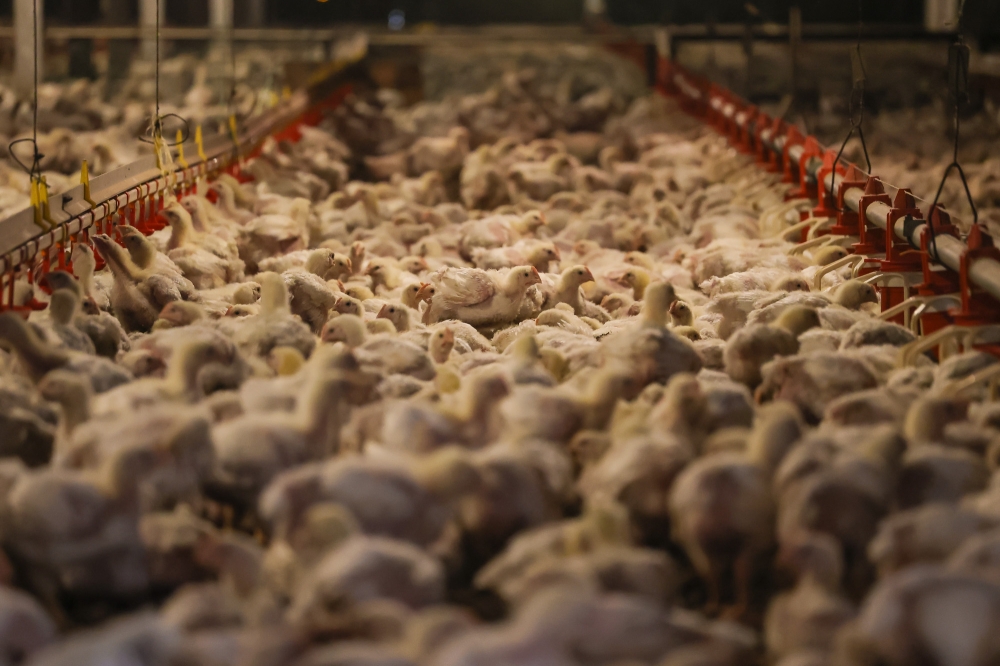
Prolonged extreme heat due to El Niño could affect Malaysia's poultry production, causing slower growth, higher mortality, and lower egg production, impacting chicken and egg supply.
The impact on supply depends on the severity of heat and farm preparedness, with proper management potentially mitigating adverse effects.
Experts suggest farms with better environmental controls and early preparations can better handle prolonged heat, reducing risks to poultry production and supply.
KUALA LUMPUR, Sept 24 — With Malaysia bracing for an intensification of El Niño conditions, prolonged extreme heat could affect the country’s poultry production, particularly if high temperatures persist for days or weeks.
The effects could include slower growth in broiler chickens, higher mortality and lower egg production, potentially putting pressure on Malaysia’s chicken and egg supply.
However, experts and poultry farmers caution that extreme heat will not automatically lead to a national shortage.
Professor Datuk Zulkifli Idrus, director of the Institute of Tropical Agriculture and Food Security at Universiti Putra Malaysia, said the severity and duration of the heat, as well as how well farms are prepared, would determine the impact on production.
“A short heatwave is not likely to seriously disrupt national supply.
“It’s the prolonged, widespread extreme heat that worries people, but how much depends on farm preparedness.
“A Super El Niño wouldn’t necessarily lead to a national chicken or egg shortage,” he said.
How could heat affect chicken production?
Broiler chickens consume less feed during hot weather because digestion and metabolism generate additional body heat.
As a result, heat-stressed birds can grow more slowly and become less efficient at converting feed into body weight.
“Heat stress also increases the release of stress hormones, particularly corticosterone, which can alter metabolism, reduce growth, harm gut health and impair feed efficiency,” Zulkifli said.
Modern broilers are particularly vulnerable because they grow rapidly and generate considerable body heat.
Heavier birds nearing market weight can have greater difficulty shedding excess heat, making them more susceptible during prolonged periods of high temperatures.
Severe or prolonged heat stress can also increase mortality.
Zulkifli said deaths could occur within hours during a severe heat event, particularly among heavier birds, if the chickens are unable to dissipate enough body heat.
However, he said there was no single estimate for how much mortality could increase across Malaysia because losses would vary between farms.
Factors such as housing, ventilation, cooling, stocking density, bird age, water supply and farm management would all influence the outcome.
What about egg production?
Laying hens can also experience reduced productivity during prolonged heat.
When temperatures rise, hens eat less, reducing the nutrients and energy available for egg production.
Prolonged heat exposure can also increase stress hormone levels and interfere with reproductive processes and egg development.
This can result in fewer and smaller eggs, as well as poorer eggshell quality.
“Laying hens can lose egg production quickly as they reduce their feed intake,” Zulkifli said.
While laying hens are generally more heat tolerant than heavier broilers, prolonged heat can still have a significant effect on their productivity.
Could this affect Malaysia’s chicken supply?
Potentially, but the impact would not be immediate.
For broilers, slower growth could mean birds take longer to reach market weight, while higher mortality could reduce the number available for sale.
For eggs, lower production could reduce the quantity entering the market.
If these effects occur across a large number of farms at the same time, overall supply could come under pressure.
Zulkifli said prolonged and widespread extreme heat could therefore affect supply, but the extent would depend on how severe the conditions are and how effectively farmers can mitigate the heat stress.
Mohd Muzamri Shoib, a broiler farmer and chairman of the Selangor Poultry Farmers Association, likewise cautioned against directly linking hot weather to a chicken shortage.
“I would be cautious about saying that hot weather causes a shortage of broiler chickens.
“It would be more accurate to say that excessive and prolonged heat stress can affect broiler production performance, particularly if temperature, drinking water, nutrition and ventilation cannot be properly managed,” he said.
For Muzamri, the key issue is therefore not simply how hot temperatures become, but whether farms can maintain conditions that allow chickens to continue growing normally.
Why farm preparedness matters
Zulkifli said farms with better environmental controls should be better equipped to withstand prolonged heat.
Closed-house systems with environmental controls provide greater control over ventilation, temperature and cooling, although they are more expensive to build and operate.
Backup generators are also important, particularly for closed-house farms, where a power failure could stop ventilation and cooling systems.
Nutritional strategies such as probiotics, prebiotics and some phytogenic feed additives may also help chickens cope with heat stress, although these should complement rather than replace proper cooling, ventilation and water supply.
Muzamri said farmers should begin preparing before their chickens show signs of heat stress.
“If El Niño conditions result in a prolonged period of hot weather, in my view, farmers need to make preparations early rather than waiting until the chickens begin showing signs of heat stress.
“Fans, cooling pads, water pumps, sensors, generators and water supplies need to be inspected and maintained more frequently,” he said.
He said his farm also incurs additional costs to purchase ice to help cool the poultry houses during the hottest part of the day, between 11am and 3pm.
So, should consumers expect a chicken shortage?
A short heatwave is unlikely to seriously disrupt Malaysia’s national chicken and egg supply.
The bigger concern is a prolonged and widespread period of extreme heat that affects production across multiple farms.
Even then, the extent of any impact on supply would depend on the severity and duration of the heat and how well poultry farmers are able to manage the conditions.
In short, Super El Niño does not automatically mean a chicken shortage, but prolonged heat stress could put pressure on poultry production if farms are unable to keep losses under control.
UUCA replacement Bill expected to be tabled in December, says Zambry
ADB raises Malaysia’s 2026, 2027 growth forecasts to 4.9pc, 4.7pc
SPR: Postal voting applications for Melaka polls open today
厄尔尼诺现象导致的持续极端高温可能会影响马来西亚的家禽生产,造成生长速度减慢、死亡率升高和产蛋量下降,从而影响鸡肉和鸡蛋的供应。
对供应的影响取决于高温的严重程度和农场的准备情况,适当的管理可以减轻不利影响。
专家建议,环境控制措施更完善、准备更充分的农场能够更好地应对持续高温,从而降低家禽生产和供应的风险。
吉隆坡,9月24日讯——随着马来西亚准备应对厄尔尼诺现象的加剧,持续的极端高温可能会影响该国的家禽生产,特别是如果高温持续数天或数周的话。
这些影响可能包括肉鸡生长速度减慢、死亡率升高和产蛋量下降,从而可能对马来西亚的鸡肉和鸡蛋供应造成压力。
然而,专家和家禽养殖户提醒说,极端高温并不一定会导致全国范围内的家禽短缺。
马来西亚博特拉大学热带农业与粮食安全研究所所长拿督祖基菲里·伊德鲁斯教授表示,高温的严重程度和持续时间,以及农场的准备情况,将决定对产量的影响。
“短暂的热浪不太可能严重扰乱国家供应。”
“持续、大范围的极端高温令人担忧,但担忧程度取决于农场的准备情况。
“超级厄尔尼诺现象不一定会导致全国范围内的鸡肉或鸡蛋短缺,”他说。
高温会对鸡的产量产生什么影响?
肉鸡在炎热天气下采食量减少,因为消化和新陈代谢会产生额外的体热。
因此,受热应激的家禽生长速度会变慢,饲料转化为体重的效率也会降低。
“热应激还会增加应激激素的释放,特别是皮质酮,这会改变新陈代谢,降低生长速度,损害肠道健康,并降低饲料转化率,”祖尔基夫利说。
现代肉鸡特别容易感染,因为它们生长迅速,而且会产生大量的体热。
体重较重的家禽在接近上市体重时,散热能力会下降,因此在长时间高温天气下更容易受到伤害。
严重或持续的热应激也会增加死亡率。
祖尔基夫利表示,在严重高温天气下,如果鸡无法散发足够的体热,死亡可能会在数小时内发生,尤其是体重较重的鸡。
但他表示,由于不同农场的损失情况各不相同,因此无法对马来西亚全国的死亡率可能增加多少做出统一估计。
住房条件、通风、降温、饲养密度、禽龄、供水和农场管理等因素都会影响结果。
产蛋情况如何?
蛋鸡在长时间高温天气下也会出现产蛋量下降的情况。
气温升高时,母鸡进食量减少,导致用于产蛋的营养和能量减少。
长时间暴露在高温下还会增加应激激素水平,干扰生殖过程和卵子发育。
这会导致鸡蛋数量减少、个头变小,以及蛋壳质量变差。
“蛋鸡会因为减少采食量而迅速失去产蛋量,”祖尔基夫利说。
虽然蛋鸡通常比体型较大的肉鸡更耐热,但长时间的高温仍然会对它们的生产性能产生重大影响。
这会影响马来西亚的鸡肉供应吗?
有可能,但影响不会立即显现。
对于肉鸡而言,生长速度减慢可能意味着鸡需要更长时间才能达到上市体重,而死亡率升高可能会减少可供出售的数量。
对于鸡蛋而言,产量下降可能会减少进入市场的数量。
如果这些影响同时发生在大量农场,整体供应可能会面临压力。
祖尔基夫利表示,持续且大范围的极端高温可能会影响供应,但影响程度取决于高温天气的严重程度以及农民缓解高温压力的有效性。
肉鸡养殖户兼雪兰莪家禽养殖户协会主席莫哈末·穆扎姆里·肖伊布也同样告诫人们不要将炎热天气与鸡肉短缺直接联系起来。
“我不太愿意说炎热天气会导致肉鸡短缺。”
他说:“更准确的说法是,过度和长时间的热应激会影响肉鸡的生产性能,尤其是在温度、饮水、营养和通风无法得到适当管理的情况下。”
因此,对穆扎姆里来说,关键问题不仅仅是气温会升高到什么程度,而是农场能否维持让鸡继续正常生长的条件。
为什么农场防灾准备至关重要
祖尔基夫利表示,环境控制措施更完善的农场应该更有能力抵御长时间的高温。
封闭式房屋系统配备环境控制系统,可以更好地控制通风、温度和制冷,但建造和运营成本更高。
备用发电机也很重要,特别是对于封闭式农场而言,因为停电可能会导致通风和冷却系统停止运行。
益生菌、益生元和一些植物性饲料添加剂等营养策略也可能有助于鸡应对热应激,尽管这些措施应该作为补充,而不是取代适当的降温、通风和供水。
穆扎姆里表示,农民应该在鸡出现中暑症状之前就开始做好准备。
“如果厄尔尼诺现象导致持续高温天气,我认为农民需要提前做好准备,而不是等到鸡开始出现中暑症状才采取行动。
他说:“风扇、冷却垫、水泵、传感器、发电机和供水系统需要更频繁地进行检查和维护。”
他说,他的农场还需要额外花费购买冰块,以便在一天中最热的时段(上午 11 点到下午 3 点)为家禽舍降温。
那么,消费者是否应该预料到鸡肉短缺?
短暂的热浪不太可能严重扰乱马来西亚的全国鸡肉和鸡蛋供应。
更令人担忧的是,持续时间长、范围广的极端高温天气会影响多个农场的生产。
即使如此,对供应的影响程度也将取决于高温的严重程度和持续时间,以及家禽养殖户应对高温条件的能力。
简而言之,超级厄尔尼诺现象并不一定意味着鸡肉短缺,但如果养殖场无法控制损失,持续的热应激可能会给家禽生产带来压力。
赞布里表示,UUCA替代法案预计将于12月提交。
亚洲开发银行将马来西亚2026年和2027年的经济增长预期分别上调至4.9%和4.7%。
新加坡人民共和国通讯社:马六甲州选举邮寄投票申请今日开放