Former Justice Minister hails major bankruptcy reform which could help reduce the household debt burden前司法部长盛赞重大破产改革,认为这有助于减轻家庭债务负担。
Thailand moves towards a landmark debt rescue system after MPs vote 444–0. Ex Justice Minister Thawee Sodsong says borrowers owing from ฿100,000 could restructure debts,… Read More ›
新闻视频
September 24, 2026 at 7:57 pm
in Economy , Living , Media , Politics , Thailand
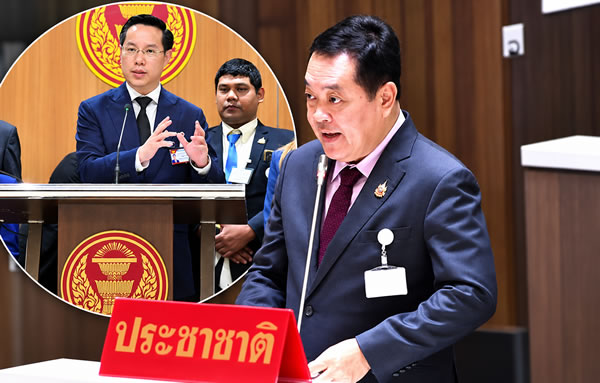
Former Minister of Justice Thawee Sodsong has hailed a landmark bankruptcy reform offering indebted Thais a new route out of financial collapse. Backed by MPs 444–0, it lets borrowers owing from ฿100,000 seek court protection and restructure debts before bankruptcy. Farmers, freelancers and seasonal workers can qualify, while courts gain powerful restructuring powers. Crucially, covered civil servants could keep their jobs even if rehabilitation fails. The breakthrough comes with household debt at ฿16.4 trillion, or 85.9% of GDP. Thawee says the reform shifts Thailand from asset seizure and bankruptcy towards restructuring, preserving businesses and protecting jobs. The bill returns to the Senate on September 28.
Former Minister of Justice Thawee Sodsong hails debt reform letting Thais owing from ฿100,000 restructure before bankruptcy, as household debt hits ฿16.4 trillion. ( Source: Khaosod )
Former Justice Minister Pol Col Thawee Sodsong has welcomed sweeping bankruptcy reforms overwhelmingly backed by MPs on Wednesday. The legislation creates Thailand’s first dedicated personal financial rehabilitation route since the Bankruptcy Act was introduced in 1940. Crucially, ordinary people with debts from ฿100,000 can enter a court-supervised process before bankruptcy. Farmers, freelancers and seasonal workers are included because applicants do not need regular monthly income.
Pol Col Thawee, now a Prachachart Party list MP, described the overhaul in striking terms. “From bankruptcy law to a law for the recovery of people, businesses, and the economy,” he said. Meanwhile, the legislation introduces significant protection for government workers. Civil servants will not automatically lose their jobs when failed rehabilitation subsequently results in bankruptcy.
The House of Representatives approved the joint parliamentary committee’s Bankruptcy Act amendment on September 23. MPs voted 444 to zero for the compromise, with one abstention and one member not voting. In addition, all 446 participating MPs endorsed the joint committee’s observations. The agreed legislation returns to the Senate on September 28.
Bankruptcy reform survives two dissolutions as lawmakers agree four routes for debt rehabilitation
The vote follows a lengthy legislative battle spanning successive parliaments. During the 25th House, Pol Col Thawee served as first vice-chairman of the original ad hoc committee. It held nine meetings before parliament was dissolved under then-prime minister Prayut Chan-o-cha. Consequently, the unfinished legislation returned during the 26th House, with Pol Col Thawee chairing another 23 committee meetings.
During that work, MPs heard from the public, businesses, lawyers, financial institutions and relevant government agencies. Furthermore, committee members travelled to Nakhon Ratchasima, Songkhla and Chiang Mai to gather evidence. Another dissolution later interrupted Senate consideration under Prime Minister Anutin Charnvirakul. The bill was subsequently revived under Section 147 of the Constitution after the Cabinet requested continued consideration.
Senators amended four areas before the House rejected some of their changes. Accordingly, a joint parliamentary committee was established to settle the differences. Pol Col Thawee joined that body and served as an adviser. Its work covered repayment priorities, secured creditors, individual income requirements and employment protection for government workers.
The final compromise establishes four separate rehabilitation systems. Large businesses owing at least ฿50 million remain covered by rehabilitation provisions under Section 3/1. By contrast, smaller businesses receive a separate process with lower entry thresholds. Individual entrepreneurs qualify with debts from ฿1 million to below ฿50 million.
New debt routes open access to freelancers as automatic court stays halt lawsuits and asset seizures
Legal entities qualify from ฿2 million to below ฿50 million. Separately, accelerated rehabilitation allows debtors and creditors to negotiate a plan before approaching the court. The completed agreement can then be submitted for judicial consideration. According to Pol Col Thawee, that procedure is designed to reduce stages, costs and time.
The fourth route covers ordinary individuals and represents the biggest departure from the existing framework. Under Section 90/151, applicants need income and debts of at least ฿100,000. However, the joint committee rejected a Senate requirement that this income must be regular. That preserves access for farmers, freelancers and people earning money seasonally.
There is also a separate band for individuals operating businesses. Those with debts from ฿100,000 to ฿1 million fall within the individual rehabilitation provisions. Above that level, qualifying individual entrepreneurs move into the SME framework. The structure therefore creates different routes according to debt size and commercial status.
Beyond those categories, the legislation contains five major procedural changes. First, an automatic stay begins when a court accepts a qualifying rehabilitation petition. Lawsuits, asset seizures and specified enforcement proceedings can then be temporarily suspended. This gives the parties time to negotiate and develop a plan.
Courts gain cram-down powers while secured creditors receive safeguards on rates and repayments
Second, courts receive a new power commonly described as “cram down”. A court can approve a qualifying plan despite insufficient creditor support under specified conditions. However, the plan must be fair, feasible and satisfy legal requirements. The provision prevents individual creditors from automatically blocking an otherwise qualifying restructuring.
At the same time, secured creditors receive statutory protection. Under Section 90/116, they must receive at least 3% annually where the provision applies. Repayment can extend for no more than 20 years without written creditor consent. Importantly, the joint committee said 20 years was a ceiling rather than an automatic repayment term.
Instead, individual circumstances must be examined. These include repayment capacity, cash flow and the viability of the rehabilitation. The committee also called for the cram-down mechanism to be monitored after implementation. Its observations specifically cited the need to balance restructuring with secured-creditor rights.
Third, the legislation changes the treatment of overdue loan repayments. Under Section 90/106, plans must establish an order covering principal, interest and legal expenses. The intention is to ensure payments actually reduce outstanding debt. In parallel, guarantor liabilities must be handled under the applicable legal framework.
Debt counselling expands as civil servants gain job protection after failed financial rehabilitation
Fourth, court officials receive a larger role in assisting smaller debtors. The legislation lays the foundations for a debt counselling system. Assistance can include understanding procedures, preparing plans and exercising rights correctly. Thus, the court-supervised system is not confined to large corporate debtors.
Fifth, Section 90/170 introduces the critical employment protection for government workers. If rehabilitation fails and subsequently produces bankruptcy, that judgment will not automatically disqualify covered employees. The protection applies to government service and other employment covered by relevant legislation. However, it does not cover every bankruptcy involving a civil servant.
That distinction became a significant issue during Wednesday’s debate. Democrat Party leader Abhisit Vejjajiva questioned why civil servants would receive different treatment depending on how bankruptcy occurred. In response, the joint committee recommended broader legislation dealing with bankruptcy-related employment restrictions. It called for a central law to be completed within two years after the amendment takes effect.
Pheu Thai list MP Suchart Thada-Thamrongvech also supported retaining Section 90/170, paragraph two. Additionally, he called for civil-service legislation to be amended accordingly. For now, however, the protection remains tied to bankruptcy following unsuccessful rehabilitation under this legislation.
Creditor threshold falls as failed SME regime and huge teacher debts sharpen pressure for reform
Ruam Thai Sang Chart Party list MP Atthawich Suwannaphakdee highlighted another major procedural change. The existing small-business rehabilitation regime normally requires creditor meetings and two-thirds support. Under the revised arrangements, consent representing at least 50% of total debt can be sufficient. Moreover, a formal creditors’ meeting may not always be necessary.
Instead, sufficient creditor consent can support an application to the court. Mr Atthawich linked the change directly to the poor performance of the existing SME system. That regime has operated since 2016. Yet only 10 rehabilitation petitions reached courts during the following decade.
Of those cases, courts approved only two plans. Neither debtor subsequently completed rehabilitation successfully, according to Mr Atthawich. The figures provided lawmakers with a stark benchmark for the revised system. They also explain the drive to remove procedural barriers from smaller cases.
The civil-service provision carries particular significance for Thailand’s heavily indebted teaching profession. Government figures show 116 teachers’ savings cooperatives have 862,539 members. Their outstanding loans total ฿1.142 trillion. Average lending interest stands at 5.6%, while rates at some cooperatives reach 9%.
Teacher salary protections widen as Thailand’s ฿16.4 trillion household debt burden weighs on borrowers
Separately, the Education Ministry is already targeting the impact of repayments on teachers’ salaries. Its measures seek to leave indebted teachers with at least 30% of monthly income after deductions. The bankruptcy amendment addresses a different risk at the severe end of indebtedness. Covered employees can retain government employment despite bankruptcy following unsuccessful rehabilitation.
Mr Atthawich said continued employment also leaves workers with money to support their families. Importantly, their salaries provide continuing income from which creditors can receive payments. The protection extends beyond teachers to qualifying civil servants and permanent government employees. Police officers can therefore also fall within the affected workforce.
The legislation arrives while household borrowing remains one of Thailand’s largest financial pressures. Household loans stood at ฿16.4 trillion during the first quarter of 2026. That was equivalent to 85.9% of gross domestic product. Meanwhile, the Bank of Thailand continues to classify household credit risk as elevated.
Consumer lending also contracted during the second quarter of 2026. Against that background, the amendment creates formal procedures before conventional bankruptcy reaches its conclusion. However, it does not extinguish debts or exempt borrowers from liability. Debtors remain responsible for payments required under court-supervised plans.
Creditors retain rights as reform shifts bankruptcy towards restructuring, jobs and economic recovery
Likewise, creditors retain enforceable rights within the new framework. The joint committee also called for measures promoting financial discipline and preventing unnecessary excessive borrowing. Additionally, debtor income should be assessed for its source, continuity and adequacy. Those assessments would determine whether proposed repayments can realistically be maintained.
Pol Col Thawee characterised the central change as moving beyond conventional insolvency procedures. He contrasted “asset seizure – business closure – bankruptcy” with “debt restructuring – business preservation – job retention – opportunities for a fresh start.” The legislation accordingly combines business rehabilitation, individual restructuring and employment protection within one amended framework.
Nevertheless, the House vote does not finally enact the legislation. The joint committee text must return to senators on September 28. If approved, it will have secured parliamentary consent and move through the remaining constitutional stages. The legislation provides for commencement 180 days after publication in the Royal Gazette.
Stark and disturbing data shows Thai households are losing out in an economy that is driving inequality
Business lobby urges Anutin to improve climate for inward investment by axing old laws and red tape
Tax and welfare revolution as Thailand moves ahead with Negative Income Tax that expands reporting
Thumbs up from economic gurus for 2027 Negative Income Tax plan. It’s a game-changer for progress
Huge economic change as Reverse Tax plan is being pushed by the Pheu Thai government as it battles on
Expert warns foreign tourism has become Thailand’s curse, fueling inertia and a widespread malaise
No more surprises or shocks. Thai foreign tourism players warn of a bad year with arrivals down 6.56%
Tourism chief rebuts distorted scam centre reports linked to Taiwanese tourists. Now, a new, safer order
Tourism chief targets European tourists in the second half of 2025 while cabinet orders shorter visas
Thai economy thrown into disarray by Trump’s tariffs. Exports and Tourism may both be far lower in 2025
Pichai’s team not to fly to the United States this week but next week as US-Chinese tensions escalate
Joseph Anthony is an expat from Ireland who has lived in Thailand for the last decade. He has worked extensively in the media including editorial positions in Ireland and Thailand. He is focused on economic and business stories in Thailand as well as the expat lifestyle.
All posts by Joseph O' Connor
Engineers work through night after Sunday’s fire on Bangkok’s Blue Line saw more damage than thought September 20, 2026 Race to save Bangkok’s Monday commute after MRT fire
Thailand’s Royal Navy announces ambitious South Korean deal to build next frigate partly at home September 20, 2026 Thailand turns to South Korea for a ฿16.73 billion
Irate daughter in law kills mother in law at home and also tried to execute estranged partner and others September 20, 2026 Durian dispute turns deadly as Thanyathorn Songserm
Defence volunteers killed in Narathiwat insurgency bomb and gun ambush. Bangkok seeks peace talks September 19, 2026 Bomb and gun ambush leaves two Volunteer Defence Corps
Anutin urged officials to expel undesirable foreigners. On cemeteries, the PM urged them to die at home September 18, 2026 Anutin tells governors to use new deportation powers
Thai star Lisa hits big time in US with ‘SaWaDiKa’ shooting into the Hot 100 before a Jimmy Fallon spot September 17, 2026 Lisa conquers another US milestone as “SaWaDiKa”
Former minister in Anutin’s first government appears on Congress list for sanctions over scam industry September 17, 2026 Woraphak Thanyawong faces a US sanctions investigation
Udon Thani police hunt killer of a 24 year old woman found naked and strangled with electrical cord September 17, 2026 Phattharawarin “Pim” Piadok, 24, was found naked
Thailand joins minimum tax regime aimed at large global corporations as it hooks into world networks September 16, 2026 Thailand joins the global tax net with a 15% minimum
Probe into 11,000 firms linked to foreigners holding 85 billion baht in property to be complete by Sept 30th September 16, 2026 Thailand races to resolve 11,000 company probes by
US man arrested in Phuket based a warrant issued in Texas over 4 years ago for a strangulation offence September 16, 2026 American fugitive Brad is arrested outside his Phuket
United Nations process begins with hearing in Singapore. Thai Foreign Minister took a bold, hard line September 15, 2026 Thailand and Cambodia face off in Singapore over
From stalls to smartphones, Thai Revenue pulls in a growing cohort of online traders in new economy September 15, 2026 Thailand’s taxman chases the smartphone economy as
Tighter ‘bottleneck’ regime on money transfers in force across financial system per central bank orders September 15, 2026 Bank of Thailand Governor Vitai Ratanakorn orders
PM Anutin accompanies King and Queen on a historic visit to Vietnam for three days hours before verdict September 14, 2026 King and Queen begin historic Hanoi State Visit as
Election Commission creates more questions than answers as it refers 77 people to the Supreme Court September 14, 2026 Senate scandal heads for court as EC targets 77
Gauntlet thrown down to the Election Commission before it votes on explosive Senate collusion scandal cases September 14, 2026 Monday’s Senate showdown could open a new political
Assistant Headman dies in Yala attack on night of mayhem in the southern province into Sunday September 20, 2026
Phuket drug checkpoint scandal. Defence Corps unit set up to target the menace is accused of extortion September 20, 2026
Thaksin era minister reflects on Thailand’s 2006 coup d’état. Calls for a democracy dedicated to people September 20, 2026
45 year old Australian Simon Peter Carman is refused bail as he pleaded not guilty to murder in Pattaya September 19, 2026
Time for government to tighten its belt as debt ceiling looms and public debt surges from the pre Covid era September 18, 2026
Thailand prepares to impose a 30% tax on EVs built outside the kingdom in a move to boost its auto base September 18, 2026
Good Samaritan in Pattaya gets punched for his trouble by erratic farang after he lost motorbike keys with girlfriend September 17, 2026
Purchaser of foreclosed Chiang Mai property shocked on Tuesday to find skeletal remains of former owner September 17, 2026
Mother urges police to find Chinese national involved in road traffic crash that claimed her son’s life September 17, 2026
Thaksin seeks injunctive relief from Revenue efforts to collect 17 billion tax judgment in August 2025 September 16, 2026
British man attacked and slashed by drunk motorbike duo on Tuesday as they tried to steal his smartphone September 16, 2026
Election Commission member derails PM Anutin Charnvirakul’s efforts to put senate scandal in the past September 16, 2026
Partnership between Nestlé and the billionaire Mahagitsiri family descends into all out legal warfare September 15, 2026
Four bodies removed Tuesday from a Jewish cemetery in Chachoengsao in new crackdown on illegal burials September 15, 2026
Election Commission exposed based on Monday’s sweeping decisions and judgments warns opposition September 15, 2026
Chinese man arrested after he fled to Thailand in 1991. Firm’s capital raised weeks before his shock downfall September 14, 2026
Thailand’s K-shaped economy sees a large number of people cut back on food and meals to make ends meet September 14, 2026
Opinion poll shows public concern about Israeli misbehaviour in Thailand amid a febrile political mood September 14, 2026
Ex Pheu Thai minister warns Commission members that soon they could be judged as crunch vote looms September 13, 2026
Sex and financial scandal at famous monastery rocks Thailand. Abbot and girlfriend amassed huge wealth September 13, 2026
Thailand hailed as a haven for retirees and digital nomads but officials breed doubt and uncertainty September 12, 2026
Commerce Minister Suphajee responds to Sondhi Limthongkul’s attack on new liberal investment rules September 12, 2026
© 2026 Thai Examiner. All rights reserved.
2026年9月24日晚上7:57
经济、生活、媒体、政治、泰国
前司法部长塔维·索颂盛赞一项具有里程碑意义的破产改革,该改革为负债累累的泰国人提供了一条摆脱财务困境的新途径。这项改革获得444名议员以压倒性多数通过,允许欠款10万泰铢及以上的借款人在破产前寻求法院保护并进行债务重组。农民、自由职业者和季节性工人均可申请,法院也被赋予了强大的重组权力。至关重要的是,即使重组失败,符合条件的公务员也能保住工作。这项突破性改革出台之际,泰国家庭债务高达16.4万亿泰铢,占GDP的85.9%。塔维表示,这项改革使泰国的破产程序从资产没收和破产转向债务重组,从而保住企业并保护就业。该法案将于9月28日返回参议院审议。
泰国前司法部长塔维·索颂称赞债务改革,该改革允许负债10万泰铢以上的泰国人在破产前进行债务重组,目前泰国家庭债务已高达16.4万亿泰铢。(来源:考索德报)
前司法部长塔维·索颂上校对周三获得议员压倒性支持的全面破产改革表示欢迎。该法案创建了自1940年《破产法》颁布以来泰国首个专门的个人财务重组途径。至关重要的是,负债10万泰铢以上的普通民众可以在申请破产前进入法院监督的程序。农民、自由职业者和季节性工人也被纳入其中,因为申请人无需有固定的月收入。
现任普拉查查特党议员的塔维上校对此次改革进行了措辞强烈的描述。他说:“这从破产法转变为一部旨在帮助个人、企业和经济复苏的法律。”与此同时,该法案也为政府工作人员提供了重要的保护。公务员不会因为重组失败而自动失去工作,即使最终导致破产。
9月23日,众议院批准了联合议会委员会对《破产法》的修正案。议员们以444票赞成、0票反对、1票弃权、1票未投票的结果通过了这项妥协方案。此外,所有446名参与投票的议员都赞同联合委员会的意见。该修正案将于9月28日返回参议院。
破产改革方案在两次议会解散后得以保留,立法者就债务重组的四种途径达成一致。
此次投票是在一场跨越数届议会的漫长立法斗争之后进行的。在第25届国会期间,塔维上校担任最初特设委员会的第一副主席。该委员会在时任总理巴育·占奥差领导下解散议会前召开了九次会议。因此,未完成的立法在第26届国会期间重新提交,塔维上校再次主持了23次委员会会议。
在此期间,议员们听取了公众、企业、律师、金融机构和相关政府机构的意见。此外,委员会成员还前往呵叻府、宋卡府和清迈府收集证据。之后,在阿努廷·查恩维拉库尔总理的领导下,参议院再次解散,中断了对法案的审议。在内阁要求继续审议后,该法案随后根据宪法第147条重新启动。
参议员们对四个方面进行了修改,但众议院否决了其中的一些修改。因此,双方成立了一个联合议会委员会来解决分歧。塔维上校加入了该委员会,担任顾问。委员会的工作涵盖了还款优先顺序、担保债权人、个人收入要求以及政府工作人员的就业保障等问题。
最终妥协方案设立了四套独立的债务重组体系。负债至少5000万泰铢的大型企业仍适用第3/1条规定的重组条款。相比之下,小型企业则适用不同的重组程序,准入门槛更低。负债在100万泰铢至5000万泰铢以下的个体经营者符合重组条件。
新的债务融资渠道为自由职业者提供了更多机会,法院自动中止诉讼和资产扣押措施也随之停止。
资产规模在200万泰铢至5000万泰铢以下的法人实体符合资格。此外,加速重组程序允许债务人和债权人在向法院提起诉讼前协商制定重组方案。最终达成的协议随后可提交法院审议。据塔维警上校称,该程序旨在减少程序步骤、降低成本并缩短时间。
第四条途径面向普通民众,与现有框架的差异最大。根据第90/151条规定,申请人需要至少10万泰铢的收入和债务。然而,联合委员会驳回了参议院关于该收入必须是定期收入的要求。这保障了农民、自由职业者和季节性收入者的申请资格。
此外,还设有针对个体经营者的单独类别。负债在10万泰铢至100万泰铢之间的个体经营者适用个人债务重组条款。超过该金额的符合条件的个体企业家则进入中小企业框架。因此,该结构根据债务规模和商业状况设置了不同的重组路径。
除了上述类别之外,该法案还包含五项主要的程序性变更。首先,当法院受理符合条件的重组申请时,自动中止令即生效。诉讼、资产扣押和特定强制执行程序均可暂时中止。这为各方提供了协商和制定方案的时间。
法院获得强制执行权,而有担保债权人则在利率和还款方面获得保障。
其次,法院获得了一项新的权力,通常被称为“强制批准”。在特定条件下,即使债权人支持不足,法院也可以批准符合条件的重组计划。但是,该计划必须公平、可行并满足法律要求。这项规定防止个别债权人自动阻止原本符合条件的重组计划。
与此同时,有担保债权人享有法定保护。根据第90/116条规定,在适用该条款的情况下,他们必须每年至少获得3%的收益。未经债权人书面同意,还款期限不得超过20年。值得注意的是,联合委员会指出,20年是还款期限的上限,而非自动到期期限。
相反,必须审查具体情况,包括偿还能力、现金流和重组方案的可行性。委员会还呼吁在强制重组机制实施后对其进行监督。委员会的意见特别指出,需要在重组与担保债权人的权利之间取得平衡。
第三,该法案改变了逾期贷款偿还的处理方式。根据第90/106条,还款计划必须制定涵盖本金、利息和法律费用的还款顺序。其目的是确保还款能够真正减少未偿债务。同时,担保人的责任必须按照适用的法律框架进行处理。
随着公务员在财务重组失败后获得工作保障,债务咨询服务范围扩大。
第四,法院官员在帮助小型债务人方面发挥着更大的作用。该立法为债务咨询体系奠定了基础。提供的帮助包括了解程序、制定还款计划以及正确行使权利。因此,法院监管的体系并非仅限于大型企业债务人。
第五,第90/170条引入了对政府雇员至关重要的就业保护条款。如果重组失败并最终导致破产,该判决不会自动取消受保护雇员的资格。该保护条款适用于政府部门及其他相关法律涵盖的就业。但是,它并非涵盖所有涉及公务员的破产案件。
这一区别在周三的辩论中成为一个重要议题。民主党领袖阿披实·维乍集瓦质疑,为何公务员会因破产方式的不同而受到区别对待。对此,联合委员会建议制定更广泛的法律,以规范与破产相关的就业限制。委员会呼吁在修正案生效后的两年内完成一项中央法律的制定。
为泰党议员苏查·塔达-塔姆隆维奇也支持保留第90/170条第二款。此外,他还呼吁对公务员法进行相应修订。然而,目前这项保护措施仍然仅限于根据该法进行破产重组失败的情况。
中小企业监管体系的失败和教师巨额债务加剧了改革的压力,导致债权人门槛降低。
泰国人民党议员阿塔维奇·苏万纳帕克迪强调了另一项重要的程序性变化。现行的小企业重组机制通常需要债权人会议并获得三分之二债权人的支持。根据修订后的安排,只要获得至少50%债务总额的债权人同意即可。此外,正式的债权人会议并非总是必要的。
相反,只要债权人同意充分,即可向法院提出申请。阿特萨维奇先生将这一变化直接归咎于现有中小企业重组体系的低效运作。该体系自2016年开始实施,但在接下来的十年里,仅有10起重组申请提交至法院。
在这些案件中,法院仅批准了两项计划。据阿特哈维奇先生称,这两名债务人最终均未能成功完成债务重组。立法者提供的这些数据为修订后的制度设定了一个明确的基准。这些数据也解释了为何要努力消除小额案件的程序障碍。
公务员制度对泰国负债累累的教师群体尤为重要。政府数据显示,泰国共有116个教师储蓄合作社,成员862,539人,未偿贷款总额达1.142万亿泰铢。平均贷款利率为5.6%,部分合作社的利率甚至高达9%。
泰国16.4万亿泰铢的家庭债务负担加重,教师薪资保障范围扩大
此外,教育部已着手解决还款对教师薪资的影响。其措施旨在确保负债教师在扣除各项费用后,至少还能保留30%的月收入。破产法修正案则针对的是负债严重的教师所面临的另一种风险。符合条件的雇员即使破产重组失败,仍可继续保留政府工作。
阿特哈维奇先生表示,继续就业还能让员工有钱养家糊口。更重要的是,他们的工资能提供持续的收入,债权人可以从中获得偿付。这项保障不仅限于教师,还涵盖符合条件的公务员和政府正式雇员。因此,警察也可能属于受影响的群体。
这项立法出台之际,家庭借贷仍然是泰国面临的最大金融压力之一。2026年第一季度,泰国家庭贷款总额高达16.4万亿泰铢,相当于国内生产总值的85.9%。与此同时,泰国央行继续将家庭信贷风险评为“高风险”。
2026年第二季度,消费信贷也出现萎缩。在此背景下,该修正案在传统破产程序结束前设立了正式程序。然而,它并不免除债务或豁免借款人的责任。债务人仍需按照法院监督的还款计划支付款项。
随着改革将破产程序转向重组、创造就业机会和促进经济复苏,债权人仍保留权利。
同样,债权人在新框架下仍保留可强制执行的权利。联合委员会还呼吁采取措施促进财务纪律,防止不必要的过度借贷。此外,应评估债务人的收入来源、持续性和充足性。这些评估将决定拟议的还款计划是否切实可行。
塔维上校指出,此次改革的核心在于超越传统的破产程序。他将“资产扣押—企业关闭—破产”与“债务重组—企业保全—就业保留—重新开始的机会”进行了对比。因此,新法将企业重组、个人重组和就业保护整合到一个修订后的框架内。
然而,众议院的投票并不意味着该法案最终生效。联合委员会的文本必须在9月28日提交参议院。如果获得批准,该法案将获得议会的同意,并进入剩余的宪法程序。该法案规定,自皇家公报公布之日起180天后生效。
触目惊心且令人不安的数据显示,泰国家庭在加剧不平等的经济环境中处于不利地位。
商业游说团体敦促阿努廷通过废除旧法律和繁文缛节来改善对外来投资的环境。
泰国推进负所得税政策,扩大申报范围,税收和福利制度迎来革命性变革。
经济专家们对2027年负所得税计划表示赞赏。这将是推动经济进步的变革性举措。
为泰政府正力推逆向税收计划,这将带来巨大的经济变革,因为该政府正在与……作斗争。
专家警告:外国游客已成为泰国的祸根,加剧了经济停滞和普遍的萎靡不振。
一切如常,毫无意外。泰国外国旅游业人士警告称,今年将是糟糕的一年,入境游客人数下降了6.56%。
旅游局局长驳斥有关台湾游客的歪曲报道,称诈骗中心正在实施新的、更安全的秩序。
旅游局长计划在2025年下半年吸引更多欧洲游客,同时内阁下令缩短签证期限。
特朗普的关税政策使泰国经济陷入混乱。到2025年,出口和旅游业可能都会大幅下滑。
由于中美紧张局势升级,皮查伊的团队本周不会飞往美国,而是下周前往。
约瑟夫·安东尼是一位来自爱尔兰的侨民,过去十年一直居住在泰国。他曾在爱尔兰和泰国的媒体行业担任过编辑职务,拥有丰富的媒体从业经验。他主要关注泰国的经济和商业新闻,以及侨民的生活方式。
约瑟夫·奥康纳的所有帖子
2026年9月20日,曼谷地铁蓝线周日发生火灾,损失比预想的更为严重,工程师们连夜抢修。为挽救曼谷地铁周一的通勤,各方争分夺秒。
泰国皇家海军宣布与韩国达成一项雄心勃勃的协议,将在泰国本土部分建造下一代护卫舰(2026年9月20日)。泰国向韩国寻求价值167.3亿泰铢的援助。
2026年9月20日,因榴莲纠纷引发致命冲突,Thanyathorn Songserm 在家中杀害婆婆,并试图处决分居伴侣和其他人。
那拉提瓦府叛乱分子遭炸弹和枪击伏击身亡,两名国防志愿兵丧生。曼谷寻求和平谈判。2026年9月19日,炸弹和枪击伏击导致两名国防志愿兵丧生。
阿努廷敦促官员驱逐不受欢迎的外国人。关于墓地问题,总理敦促他们在家中去世。2026年9月18日,阿努廷指示各省省长使用新的驱逐权。
泰国明星Lisa凭借歌曲《SaWaDiKa》在美国大获成功,该曲迅速跻身Billboard Hot 100榜单,并于2026年9月17日亮相吉米·法伦秀。Lisa凭借《SaWaDiKa》在美国再创佳绩。
阿努廷第一届政府的前部长沃拉帕克·塔尼亚翁因涉嫌诈骗行业被列入国会制裁名单(2026年9月17日)。沃拉帕克·塔尼亚翁面临美国制裁调查。
乌隆他尼警方追捕凶手,一名24岁女子于2026年9月17日被发现赤身裸体,遭电线勒死。死者帕塔拉瓦林·“皮姆”·皮亚多克,24岁,被发现时全身赤裸。
泰国加入针对大型跨国公司的最低税率制度,融入全球税收网络 2026年9月16日 泰国加入全球税收体系,最低税率为15%。
对与持有850亿泰铢房产的外国人有关的11000家公司的调查将于9月30日前完成 2026年9月16日 泰国正加紧解决这11000家公司的调查
2026年9月16日,一名美国男子在普吉岛被捕,逮捕令是四年前德克萨斯州签发的,罪名是勒颈。这名美国逃犯名叫布拉德,在普吉岛郊外被捕。
联合国程序在新加坡启动听证会。泰国外交部长于2026年9月15日采取强硬立场。泰国和柬埔寨在新加坡就此问题展开对峙。
从摊位到智能手机,泰国税务部门正积极监管新兴经济中的线上交易者群体(2026年9月15日) 泰国税务部门正追查智能手机经济的发展
根据泰国央行2026年9月15日发布的命令,金融系统将实施更严格的资金转移“瓶颈”机制。泰国央行行长维泰·拉达那空下令
阿努廷总理陪同国王和王后对越南进行为期三天的历史性访问,就在2026年9月14日判决公布前几个小时。国王和王后开始了对河内的历史性国事访问。
选举委员会将77人移交最高法院,引发更多疑问而非解答(2026年9月14日) 参议院丑闻将诉诸法庭,选举委员会将目标对准77人
在选举委员会就爆炸性的参议院勾结丑闻案进行投票之前,各方已向其发出挑战。2026年9月14日星期一,参议院的摊牌可能会开启新的政治局面。
2026年9月20日星期日,南部省份亚拉发生骚乱,一名助理村长在当晚的袭击中丧生。
普吉岛毒品检查站丑闻。为打击毒品犯罪而设立的国防军小组被指控敲诈勒索。2026年9月20日
他信时代部长回顾泰国2006年政变,呼吁建立以人民为中心的民主制度。2026年9月20日
2026年9月19日,45岁的澳大利亚男子西蒙·彼得·卡曼在芭堤雅被控谋杀,但他拒不不认罪,保释申请被拒绝。
随着债务上限临近,公共债务较新冠疫情前水平大幅飙升,政府是时候勒紧裤腰带了。(2026年9月18日)
泰国准备对境外生产的电动汽车征收30%的税,以促进其汽车产业发展(2026年9月18日)
2026年9月17日,芭堤雅一名好心人因帮女友找回丢失的摩托车钥匙,被一名行为怪异的外国人殴打。
2026年9月17日,一名买家在清迈购买了一处法拍房产,周二震惊地发现前房主遗骸。
2026年9月17日,一位母亲敦促警方寻找涉嫌造成其儿子死亡的交通事故的中国公民。
他信寻求法院颁布禁令,阻止税务部门在2025年8月追缴170亿比索的税款判决。2026年9月16日
2026年9月16日,一名英国男子周二遭两名醉酒摩托车手袭击并被割伤,当时两人试图抢走他的智能手机。
选举委员会成员阻挠总理阿努廷·查恩维拉库尔平息参议院丑闻的努力 2026年9月16日
雀巢与亿万富翁马哈吉西里家族的合作关系于2026年9月15日演变为全面法律战。
2026年9月15日,在打击非法埋葬的新一轮行动中,四具遗体于周二从北柳府一处犹太人墓地被移走。
反对派警告:根据周一的一系列决定和判决,选举委员会的真面目暴露无遗 2026年9月15日
一名中国男子于1991年逃往泰国后被捕。该公司在他于2026年9月14日突然倒闭前几周筹集了资金。
泰国经济呈K型波动,许多人为了维持生计不得不减少食物和餐饮开支。(2026年9月14日)
民意调查显示,在当前紧张的政治氛围下,公众对以色列在泰国的不当行为感到担忧 2026年9月14日
前为泰党部长警告欧盟委员会成员,关键投票即将到来,他们可能很快就会受到评判(2026年9月13日)
泰国著名寺院爆出性丑闻和财务丑闻。住持及其女友聚敛巨额财富。2026年9月13日
泰国被誉为退休人士和数字游民的天堂,但官方却散布疑虑和不确定性 2026年9月12日
商务部长苏帕吉回应桑迪·林通库对新自由投资规则的抨击 2026年9月12日
© 2026 Thai Examiner。版权所有。