80,000 to get vital AI skills training under finance sector’s workforce transformation initiatives8万人将根据金融行业劳动力转型计划接受重要的AI技能培训。
Singapore’s finance sector will train 80,000 employees in critical AI skills by 2028 to support workforce transformation and job redesign initiatives. Read more at straitstimes.com.
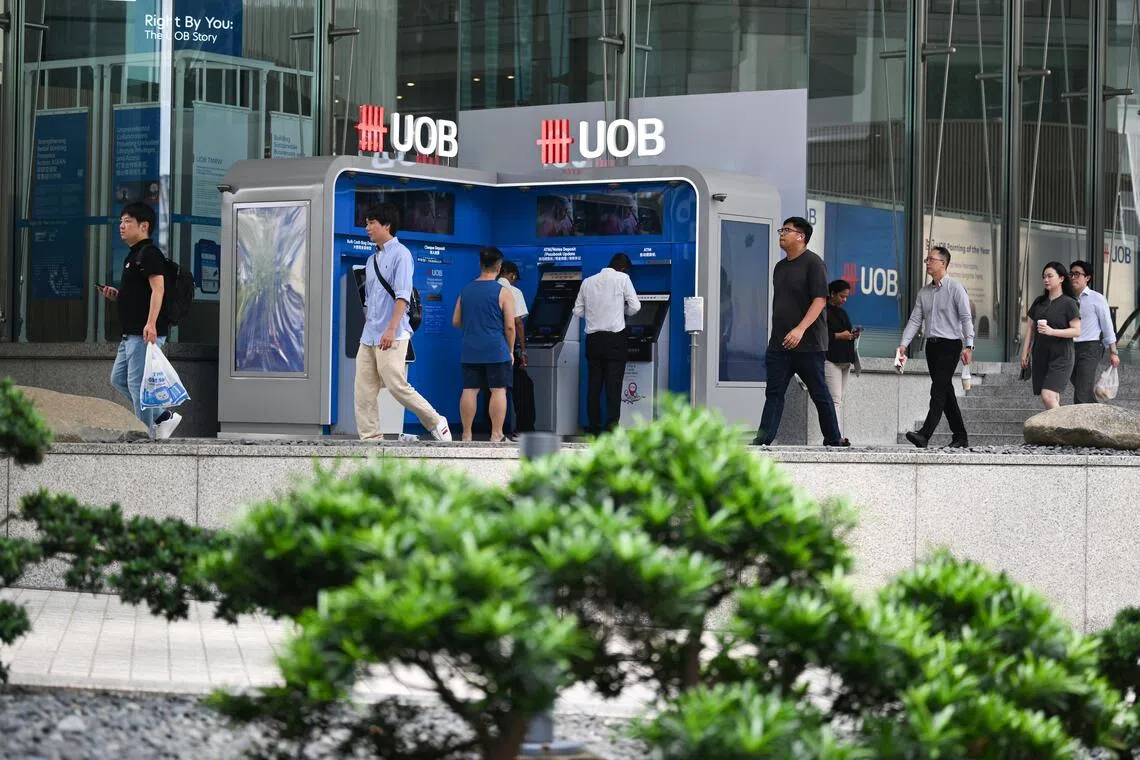
Financial institutions will get more support under five new initiatives to enable the financial sector workforce to transform.
ST PHOTO: LIM YAOHUI
Published Sep 24, 2026, 08:00 PM
Updated Sep 24, 2026, 11:06 PM
SINGAPORE – Banks and financial institutions in Singapore will get more support to help their workforce transform, with five new initiatives launched on Sept 24.
These were announced by the Institute of Banking and Finance (IBF), a not-for-profit industry association, during its awards dinner.
Among the measures is an IBF artificial intelligence workforce co-lab, which will bring companies and partners together to assess how jobs are changing and test practical approaches to training and job redesign.
These findings will be shared with the wider finance sector.
Some 23 partners across the financial sector have committed to training their entire local workforce – more than 80,000 employees in total – in critical AI skills by 2028 through IBF-recognised programmes.
These partners, which include banks, insurers and asset managers, make up 40 per cent of the financial sector workforce.
The organisations have also committed to creating reskilling pathways together with IBF for AI-enabled roles and building a stronger pipeline of young talent.
Deputy Prime Minister Gan Kim Yong, who delivered the keynote speech at the awards ceremony, said: “As AI adoption grows, some roles will expand, while others will change. Developing our workforce must therefore be part of this effort from the start.
“We want AI to translate into better careers for Singaporeans and a more productive workforce.”
He added that financial institutions must plan for their people even as they plan for AI, by identifying how jobs will change, preparing employees early and helping them benefit from these new opportunities.
Young people also need to be prepared for the next generation of careers in finance, he said.
Gan, who is also Minister for Trade and Industry (Trade) and chairman of the Monetary Authority of Singapore (MAS), said: “As AI takes on more routine work, we must give young people opportunities to build strong foundations and develop professional expertise.”
MAS managing director Chia Der Jiun, who is also chairman of IBF, said separately in his speech: “Equipping workers with new emerging skills is only part of the equation. We also need to support workers as jobs and tasks evolve.”
He added that new technologies will continue to reshape financial services and create new opportunities for the sector.
“We will need to continue strengthening capabilities, supporting people as roles evolve and building a strong talent pipeline. This will require a continued and collective effort across the sector.”
Deputy Prime Minister Gan Kim Yong said young people must be given opportunities to build strong foundations as AI takes on more routine work. ST PHOTO: ARIFFIN JAMAR
Deputy Prime Minister Gan Kim Yong said young people must be given opportunities to build strong foundations as AI takes on more routine work.
ST PHOTO: ARIFFIN JAMAR
Together with the co-lab, IBF also announced three pathways for employees to develop new skills for specific roles.
These are for: leaders who have to identify how AI can be applied and lead workforce transformation; wealth managers who have to learn to combine AI skills with client engagement and advisory expertise; and operations staff who have to develop capabilities in areas such as process improvement, exception handling, risk oversight and validating AI output.
Gan said rising demand in wealth management across Asia creates opportunities for Singapore.
“AI can help relationship managers analyse information faster and therefore spend more time with clients, while they continue to provide advice tailored to each client’s circumstances,” he added.
In operations, AI is changing how routine processes are carried out, he noted.
The operations pathway will bring together major banking and insurance employers to redesign such jobs and help develop progression for employees.
“In many cases, this will involve higher responsibilities in an existing role. In others, it may involve moving to a related job or new work involving AI,” Gan said.
To support job redesign, IBF is also launching a playbook in partnership with other agencies to give business leaders and human resources practitioners practical guidance and assistance as companies adopt AI.
IBF is also working with Ngee Ann Polytechnic on a pilot initiative that combines skills mapping, coaching and change management tools to help finance professionals and their managers take on new responsibilities.
Lastly, IBF signed an enhanced agreement with the National Trades Union Congress Financial and Professional Services Cluster of Unions and seven industry associations.
The enhanced partnership will focus on helping the workforce adapt to AI through wider industry outreach and greater access to training and career support, said Gan, who witnessed the signing.
He added that it will also create opportunities to develop programmes tailored to the needs of each sub-sector.
“As we pursue new opportunities in AI, let us bring the same commitment to developing our workforce,” he said.
“Together, we can build a more competitive financial centre, and help Singaporeans at every stage of their careers share in its success.”
Financial institutions welcomed these new measures.
OCBC Bank head of group human resources Lee Hwee Boon said the co-lab initiative builds on what the bank is doing, with almost all its employees here having attended AI, digital or data-related programmes.
She said: “As AI continues to reshape how work is done, we will ramp up our efforts even more to support colleagues so that they keep learning, adapting and building critical skills.”
She added that in parallel with the three pathways, OCBC also maps out career pathways based on a skills-first growth and mobility strategy, so staff can explore adjacent roles, acquire new skills and pursue career growth within the bank.
DBS Bank has also worked with IBF to equip some 14,800 Singapore-based employees with foundational AI capabilities.
UOB head of group human resources Dean Tong said the co-lab initiative provides a platform for financial institutions and ecosystem partners to better understand how jobs are evolving.
He said UOB’s focus is on ensuring its staff have the opportunities, support and skills needed to grow with the business and build sustainable careers in a changing industry.
He added that the bank has made good progress in building foundational AI capabilities among its staff, but that the next phase is about helping employees adapt as jobs and skills evolve, while strengthening enduring human capabilities such as judgment, critical thinking, communication and leadership.
Deep Thomas, JPMorgan Chase’s Asia-Pacific chief data and analytics officer, said AI’s “true promise” is in empowering people.
He noted that the company is focused on enterprise AI tools, practical upskilling and the guidance required to deploy AI responsibly at scale.
Sue-Ann Tan is a business correspondent at The Straits Times, covering capital markets and sustainable finance.
Banks and financial institutions
Artificial Intelligence
五项新举措将为金融机构提供更多支持,以促进金融行业从业人员的转型。
ST 照片:林耀辉
发布于2026年9月24日晚上8点
更新于2026年9月24日晚上11:06
新加坡——新加坡的银行和金融机构将获得更多支持,以帮助其员工队伍转型。9月24日,新加坡推出了五项新举措。
这些奖项是由非营利性行业协会——银行与金融协会(IBF)在其颁奖晚宴上宣布的。
这些措施之一是成立 IBF 人工智能劳动力合作实验室,该实验室将汇集公司和合作伙伴,评估工作的变化情况,并测试培训和工作重新设计的实用方法。
这些研究结果将与更广泛的金融界分享。
金融领域的约 23 家合作伙伴承诺,到 2028 年,将通过 IBF 认可的计划,对其所有本地员工(总计超过 80,000 名员工)进行关键人工智能技能培训。
这些合作伙伴包括银行、保险公司和资产管理公司,占金融行业从业人员的 40%。
这些组织还承诺与 IBF 一起为人工智能岗位创建再技能培训途径,并建立更强大的年轻人才储备。
在颁奖典礼上发表主旨演讲的副总理颜金勇表示:“随着人工智能的应用日益普及,一些岗位将会扩展,而另一些岗位将会发生变化。因此,从一开始就必须将人才培养纳入这项工作之中。”
“我们希望人工智能能够为新加坡人带来更好的职业发展机会,并打造一支更高效的劳动力队伍。”
他还补充说,金融机构在规划人工智能的同时,也必须为员工做好规划,明确工作将如何变化,尽早为员工做好准备,并帮助他们从这些新机遇中受益。
他还表示,年轻人也需要为下一代金融从业人员做好准备。
兼任贸易及工业部长和新加坡金融管理局主席颜金勇表示:“随着人工智能承担更多日常工作,我们必须为年轻人提供机会,让他们打下坚实的基础,发展专业技能。”
新加坡金融管理局董事总经理兼IBF主席谢德俊在另一场讲话中表示:“为员工提供新兴技能只是问题的一部分。随着工作和任务的演变,我们还需要为员工提供支持。”
他还补充说,新技术将继续重塑金融服务业,并为该行业创造新的机遇。
“我们需要继续加强能力建设,随着岗位职责的演变为员工提供支持,并建立强大的人才储备。这需要整个行业持续不断的共同努力。”
越南副总理颜金勇表示,随着人工智能承担更多日常工作,必须为年轻人提供机会,让他们打下坚实的基础。(海峡时报图片:阿里芬·贾马尔)
韩国副总理颜金勇表示,随着人工智能承担更多日常工作,必须为年轻人提供机会,让他们打下坚实的基础。
圣路易斯照片:阿里芬·贾马尔
IBF 与合作实验室一起宣布了员工发展特定岗位新技能的三条途径。
这些内容适用于:需要确定如何应用人工智能并领导员工队伍转型的领导者;需要学习如何将人工智能技能与客户互动和咨询专业知识相结合的财富管理人员;以及需要在流程改进、异常处理、风险监督和验证人工智能输出等领域培养能力的运营人员。
甘表示,亚洲财富管理需求的增长为新加坡创造了机遇。
“人工智能可以帮助客户经理更快地分析信息,从而有更多时间陪伴客户,同时继续提供针对每位客户具体情况的建议,”他补充道。
他指出,在运营方面,人工智能正在改变日常流程的执行方式。
运营路径将汇集主要的银行和保险公司,重新设计此类工作,并帮助员工发展职业技能。
甘表示:“在很多情况下,这意味着在现有岗位上承担更高的责任。在其他情况下,可能意味着调任到相关岗位或从事与人工智能相关的新工作。”
为了支持工作重新设计,IBF 还与其他机构合作推出了一本操作手册,旨在为企业领导者和人力资源从业人员提供实用指导和帮助,助力企业采用人工智能。
IBF 还与义安理工学院合作开展一项试点计划,该计划结合了技能映射、辅导和变革管理工具,以帮助财务专业人员及其经理承担新的职责。
最后,IBF 与全国职工总会金融和专业服务工会集群以及七个行业协会签署了一项强化协议。
见证签约仪式的甘先生表示,加强后的合作关系将着重于通过更广泛的行业推广和更便捷的培训及职业支持,帮助劳动力适应人工智能。
他还补充说,这将创造机会,制定针对每个细分领域需求的定制方案。
他说:“在我们寻求人工智能领域的新机遇的同时,让我们也同样致力于培养我们的人才队伍。”
“携手合作,我们可以打造更具竞争力的金融中心,并帮助新加坡人在职业生涯的各个阶段分享其成功。”
金融机构对这些新措施表示欢迎。
华侨银行集团人力资源主管李慧文表示,合作实验室计划建立在该银行现有工作的基础上,该银行几乎所有员工都参加过人工智能、数字或数据相关的课程。
她表示:“随着人工智能不断改变工作方式,我们将加大力度支持同事,使他们能够不断学习、适应并培养关键技能。”
她补充说,除了这三条发展路径之外,华侨银行还根据技能优先的增长和流动战略规划了职业发展路径,以便员工可以探索相关职位,获得新技能,并在银行内部追求职业发展。
星展银行还与 IBF 合作,为约 14,800 名新加坡员工配备了基础人工智能能力。
大华银行集团人力资源主管唐迪安表示,合作实验室计划为金融机构和生态系统合作伙伴提供了一个平台,以便更好地了解就业形势的变化。
他表示,大华银行的重点是确保员工拥有与公司共同成长并在这个不断变化的行业中建立可持续职业生涯所需的机会、支持和技能。
他还补充说,该银行在培养员工的人工智能基础能力方面取得了良好进展,但下一阶段的重点是帮助员工适应工作和技能的演变,同时加强判断力、批判性思维、沟通能力和领导力等持久的人类能力。
摩根大通亚太区首席数据和分析官迪普·托马斯表示,人工智能的“真正前景”在于赋能于人。
他指出,该公司专注于企业级人工智能工具、实用技能提升以及大规模负责任地部署人工智能所需的指导。
Sue-Ann Tan 是《海峡时报》的商业记者,负责报道资本市场和可持续金融。
银行和金融机构
人工智能