Malaysia, Indonesia form joint Halal Council to strengthen bilateral trade马来西亚和印度尼西亚成立联合清真理事会,以加强双边贸易
KUALA LUMPUR, Sept 25 — Malaysia announced the establishment of the Malaysia-Indonesia Halal Council in a bid to strengthen halal diplomacy between the two countries, said Deputy...
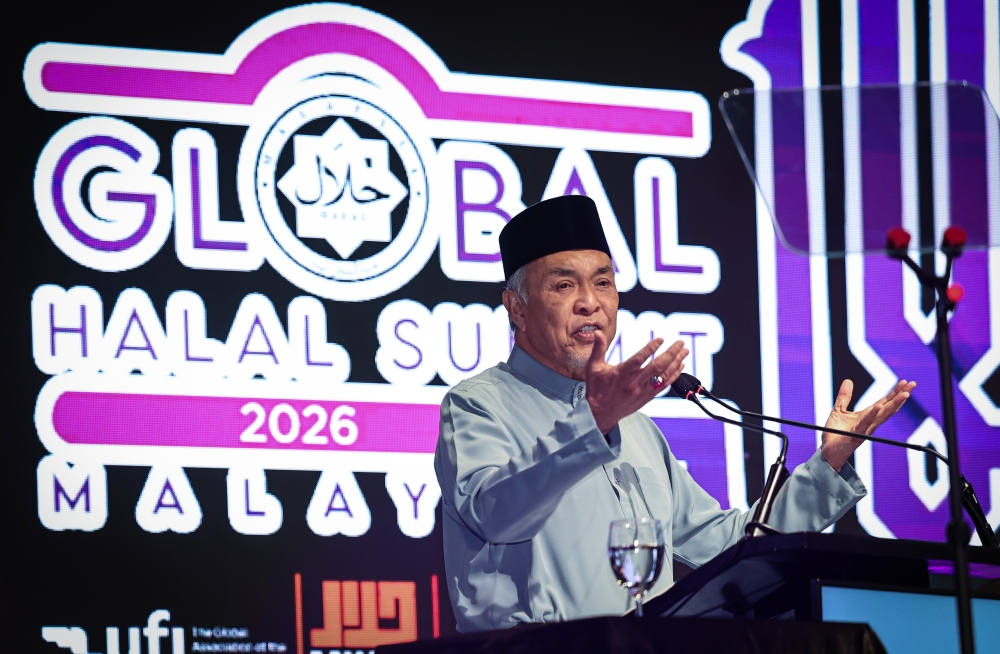
Malaysia has announced the formation of the Malaysia-Indonesia Halal Council to strengthen halal diplomacy and facilitate halal trade between the two nations, as stated by Deputy Prime Minister Datuk Seri Ahmad Zahid Hamidi.
Chaired by Indonesia's Halal Product Assurance Organising Agency, the council aims to address trade barriers, harmonize certification processes, and leverage each country's strengths in standards and production.
This initiative follows a memorandum of cooperation signed in 2023 and is part of broader efforts to enhance bilateral cooperation and boost Malaysia's halal exports.
The launch was highlighted during the Global Halal Summit 2026, alongside the International Halal Showcase (MIHAS) 2026, which reported substantial sales activity.
KUALA LUMPUR, Sept 25 — Malaysia announced the establishment of the Malaysia-Indonesia Halal Council in a bid to strengthen halal diplomacy between the two countries, said Deputy Prime Minister Datuk Seri Ahmad Zahid Hamidi today.
He added that the council would be chaired by Indonesia's Halal Product Assurance Organising Agency (BPJPH) with Malaysia serving as its secretary-general, and the first meeting would be held in October this year.
"Next month, the focus is on facilitating halal certification between Malaysia and Indonesia to ease bilateral halal trade between the two countries," he said in his speech at the Global Halal Summit 2026 here today.
Ahmad Zahid said the council would build on existing bilateral cooperation between Malaysia and Indonesia to address differing halal requirements, repeated procedures and difficulties faced by businesses seeking to enter neighbouring markets.
Malaysia and Indonesia signed a memorandum of cooperation in 2023, while bilateral negotiations on facilitating halal certification and trade between the two countries were concluded in June this year, he said.
He said closer bilateral cooperation could identify practical ways to facilitate trade, reduce duplication and connect businesses to regional supply chains.
Ahmad Zahid said Malaysia brings experience in standards, governance, Islamic finance and trade facilitation, while Indonesia offers scale, production capacity and entrepreneurship, which are at the core of halal diplomacy, where both parties can leverage the trust built to open markets, facilitate investment and create opportunities together.
He added that such cooperation should ultimately translate into fewer barriers, easier market access and more companies trading across borders.
He said small manufacturers should have a clearer route to overseas buyers, while halal-certified companies should receive the support needed to fulfil their first export orders.
"The future of halal will depend on how effectively we connect ourselves and build that trust in the future,” he said, adding that Malaysia aims to increase its halal exports to about RM80 billion by 2030.
Ahmad Zahid noted that the halal industry contributed about 11 per cent to Malaysia’s gross domestic product, yet only about 14.7 per cent of halal-certified companies were exporters.
"To realise our ambition, we must help more of these companies compete abroad. Certification is only the beginning of that journey. Companies also need consistent production, suitable packaging, working capital, reliable logistics and an understanding of their target markets,” he added.
Meanwhile, Ahmad Zahid shared that the International Halal Showcase (MIHAS) 2026 has attracted US$1.2 billion in sales over the first two days.
Hosted by the Ministry of International Trade and Industry and organised by the Malaysia External Trade Development Corporation, MIHAS 2026 is being held from Sept 23 to Sept 26, 2026.
Ahmad Zahid hopes that sales and sales potential will continue to increase until MIHAS ends on Sunday, as the annual organisation of MIHAS has established the event as a global halal exhibition brand, despite several countries also organising similar exhibitions. — Bernama
Bandar Utama school stabbing: Family plans civil suit as mother asks if tragedy could have been prevented
KTMB apologises after absent staff strands 25 riders at Anak Bukit station
‘Suspicion cannot take the place of proof’: BFM ordered to pay ex-presenter RM358,400 over 2019 dismissal
马来西亚宣布成立马来西亚-印度尼西亚清真理事会,以加强清真外交,促进两国之间的清真贸易,正如副首相拿督斯里艾哈迈德·扎希德·哈米迪所言。
该委员会由印度尼西亚清真产品保证组织机构主持,旨在解决贸易壁垒,协调认证流程,并发挥各国在标准和生产方面的优势。
这项举措是在 2023 年签署合作备忘录之后推出的,也是加强双边合作、促进马来西亚清真产品出口的更广泛努力的一部分。
此次发布会在 2026 年全球清真峰会和 2026 年国际清真产品展 (MIHAS) 上重点展示,据悉销售活动十分活跃。
吉隆坡,9月25日——马来西亚副总理拿督斯里艾哈迈德扎希德哈米迪今天表示,马来西亚宣布成立马来西亚-印度尼西亚清真理事会,以加强两国之间的清真外交。
他还补充说,该理事会将由印度尼西亚清真产品保证组织机构(BPJPH)担任主席,马来西亚担任秘书长,第一次会议将于今年10月举行。
“下个月的重点是促进马来西亚和印度尼西亚之间的清真认证,以便利两国之间的双边清真贸易,”他在今天于此举行的2026年全球清真峰会上发表讲话时说。
艾哈迈德·扎希德表示,该理事会将以马来西亚和印度尼西亚之间现有的双边合作为基础,解决清真食品要求的差异、重复的程序以及企业进入邻国市场所面临的困难。
他表示,马来西亚和印度尼西亚于 2023 年签署了合作备忘录,而关于促进两国之间清真认证和贸易的双边谈判已于今年 6 月结束。
他表示,加强双边合作可以找到促进贸易、减少重复建设以及将企业与区域供应链连接起来的切实可行的方法。
艾哈迈德·扎希德表示,马来西亚在标准、治理、伊斯兰金融和贸易便利化方面拥有丰富的经验,而印度尼西亚则具备规模、生产能力和创业精神,这些都是清真外交的核心,双方可以利用已建立的信任来共同开拓市场、促进投资和创造机遇。
他还补充说,这种合作最终应该会转化为更少的壁垒、更容易的市场准入和更多跨境贸易的公司。
他表示,小型制造商应该有更清晰的途径接触海外买家,而获得清真认证的公司应该得到必要的支持,以完成其首批出口订单。
“清真产业的未来将取决于我们未来如何有效地建立联系并建立信任,”他说道,并补充说,马来西亚的目标是到 2030 年将其清真出口额提高到约 800 亿令吉。
艾哈迈德·扎希德指出,清真产业对马来西亚国内生产总值贡献了约 11%,但获得清真认证的公司中只有约 14.7% 是出口商。
“为了实现我们的目标,我们必须帮助更多这类企业参与海外竞争。认证仅仅是这一征程的开始。企业还需要稳定的生产、合适的包装、营运资金、可靠的物流以及对目标市场的了解,”他补充道。
与此同时,艾哈迈德·扎希德透露,2026 年国际清真食品展(MIHAS)在前两天就吸引了 12 亿美元的销售额。
由马来西亚国际贸易及工业部主办,马来西亚对外贸易发展局承办的2026年马来西亚国际贸易及工业展览会(MIHAS 2026)将于2026年9月23日至26日举行。
艾哈迈德·扎希德希望,在马来西亚国际清真食品展(MIHAS)周日闭幕前,销售额和销售潜力能够持续增长。尽管其他一些国家也举办类似的展览,但MIHAS的年度举办已使其成为全球清真食品展览品牌。——马新社
万达镇学校刺伤事件:家属计划提起民事诉讼,母亲质问悲剧是否可以避免
KTMB因工作人员缺席导致25名乘客滞留Anak Bukit车站而道歉
“怀疑不能代替证据”:BFM被勒令向前主持人支付358,400令吉,原因是其在2019年被解雇。