Bombshell Supreme Court ruling links Bhumjaithai Party figure with orchestrated Senate poll collusion最高法院爆炸性裁决将泰自豪党成员与精心策划的参议院选举舞弊案联系起来
Supreme Court exposes corrupt conduct in the 2024 Senate selection and bans Bhumjaithai-linked Satchapong for 10 years. It came after PM Anutin escaped referral in… Read More ›
新闻视频
September 25, 2026 at 2:15 pm
in Living , Media , Politics , Thailand
A bombshell Supreme Court ruling has exposed corrupt conduct inside Thailand’s disputed 2024 Senate selection. Judges banned Bhumjaithai-linked political figure Satchapong Phumiphak for ten years after finding he recruited selectors, promised benefits and distributed a voting list. One named candidate became a senator. The judgment came days after the Election Commission cleared Prime Minister Anutin Charnvirakul, Newin Chidchob and 19 other political figures in the wider 427-person probe. Crucially, that decision was openly challenged by dissenting Election Commissioner Sittichote Intharawiset, who pointed to voting lists, meetings, telephone evidence and political connections. The court found no wrongdoing by Bhumjaithai or its leaders. However, it has now established corrupt conduct inside the same Senate contest at the centre of those claims.
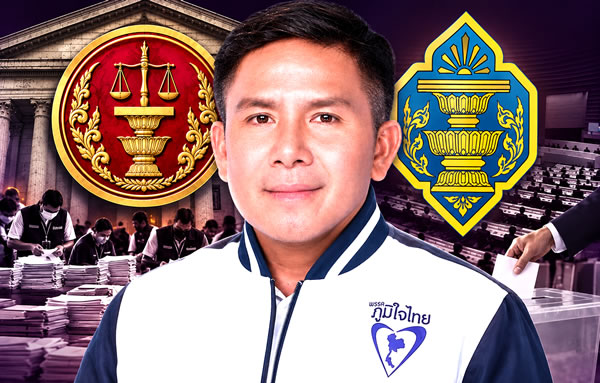
Former Udon Thani mayor and Bhumjaithai figure Satchapong Phumiphak, father of Bhumjaithai MP Suphiraphat, gets a 10-year ban for corrupt 2024 Senate election conduct. ( Source: Matichon )
Thailand’s Supreme Court has barred a significant Bhumjaithai-linked political figure from standing for election for ten years. The ruling followed findings of corrupt conduct during the disputed 2024 Senate selection. Crucially, judges accepted evidence of organised recruitment, promised benefits and directed voting. They also accepted a prepared voting list distributed through Line. One candidate identified on that list subsequently became a senator.
At the centre is Satchapong Phumiphak, former mayor of Non Sa-at Subdistrict Municipality in Udon Thani. He is the father of sitting Bhumjaithai MP Suphiraphat Phumiphak. Mr Suphiraphat represents Udon Thani constituency 8 for the ruling party. Notably, Satchapong had also presented himself publicly as a prospective Bhumjaithai parliamentary candidate.
The judgment therefore directly concerns a political figure with established Bhumjaithai connections. However, judges did not find Bhumjaithai itself responsible for his conduct. Neither did they implicate Prime Minister Anutin Charnvirakul or other party leaders in Satchapong’s operation. Instead, the court examined his own actions immediately before the decisive national Senate selection.
Court finds Satchapong recruited selectors and promised benefits before the decisive national Senate vote
The court found Satchapong recruited national-level selectors to support specified candidates. Moreover, benefits were promised in connection with those votes. Judges ruled that this amounted to corrupt conduct. Consequently, his actions prevented the Senate selection from being conducted honestly or fairly.
The Supreme Court’s Election Cases Division delivered its judgment on September 21. The ruling was published on September 23 and reported more widely on Thursday. The proceedings were black case Lor Tor Sor Wor 3/2569 and red case 72/2569.
Significantly, the judgment comes amid a far larger investigation into the same 2024 Senate selection. That inquiry covered 427 respondents and eventually produced a 75,722-page case file. Investigators examined voting patterns, meetings, telephone records, financial information and suspected voting lists. They also investigated politicians and people connected with political parties.
Yet the Supreme Court has received only part of that wider case. The Election Commission decides which qualifying cases are placed before judges. That role has become increasingly important as separate strands of the Senate investigation follow different legal routes.
Hotel and restaurant meetings reveal efforts to build a 40-50 strong voting bloc before Senate selection
The Satchapong case began with complaints about the national Senate selection on June 26, 2024. One Senate selector reported irregularities, including large numbers of duplicate votes. Investigators then traced events immediately preceding the national vote.
Before election day, an unidentified caller invited the complainant to Pathum Thani Place Hotel. Four other Senate selectors also attended discussions there. Subsequently, participants were invited to Nittaya Kai Yang restaurant in Muang Thong Thani.
That restaurant meeting took place on June 24, two days before the national selection. Those present included Somkiatnaiwikun Tae-thitipong, Direk Pornsima, Phumiphat Lekdeepisut and Ratchanee Butrat. Satchapong was also there. Importantly, three witnesses sat opposite him and could clearly hear the discussions.
The Supreme Court later considered their testimony credible and carried weight. According to the evidence, Satchapong wanted national-level selectors recruited to support specified people. He also discussed assembling a substantial voting bloc. In return, benefits would be provided to participants.
Direk received a particularly specific proposal. Satchapong told him that gathering enough selectors could improve his prospects of becoming a senator. The proposed bloc would contain between 40 and 50 national-level voters. If Direk assembled them, Satchapong would negotiate with the group.
Selectors promised expenses and cash as court hears evidence of offers reaching as high as ฿10 million
The selectors would then be encouraged to support Direk and Somkiat. Meanwhile, Satchapong said participants would be “taken care of”. Direk understood that expression to cover travel expenses and additional cash.
The EC petition went considerably further on the financial evidence. It said Satchapong offered ฿200,000 to people involved. Furthermore, Somkiat was offered as much as ฿10 million, according to the petition. That proposal related to claims he could control around 80 national-level selectors.
However, the Supreme Court did not need to establish that every proposed payment was delivered. Rather, judges accepted evidence that promised benefits accompanied attempts to influence voting. That finding became central to the sanction imposed on Satchapong.
Ratchanee supplied another important strand of corroboration. Unlike several others involved, she was not herself a national-level Senate selector. Accordingly, the court examined whether she possessed an electoral interest in implicating Satchapong.
Judges found no convincing reason for her to falsely accuse him. Ratchanee testified that Satchapong offered money or property during the discussions. Although she could not remember the precise amount, the court considered her account credible.
Line voting list before national selection named specified candidates, including one future senator
Activity continued on June 25, immediately before the national selection. Satchapong invited members of the group to Pathum Thani Place Hotel. Somkiat and Ratchanee went there. Meanwhile, another meeting produced some of the strongest documentary evidence in the case.
National-level selector Thanin Chantharobol participated in occupational group 12. At about 10 am, he met Satchapong at the Grand Ratchaphruek Hotel in Nonthaburi. The meeting took place in room 302.
According to Thanin, Satchapong instructed him to find national-level selectors by 3 pm. A voting list could then be prepared for the following day. Moreover, digital evidence established a direct connection between the two men. Satchapong and Thanin acknowledged being Line contacts and possessed each other’s telephone numbers.
Most importantly, Satchapong subsequently sent Thanin a national Senate voting list through Line. The document became a central part of the evidence accepted by judges. It went beyond a general discussion about possible candidates. Instead, it identified people to receive support during the national selection.
One person on that list was identified as occupational group 12, candidate number 22. That candidate subsequently became a senator. Thanin himself failed to secure a Senate seat.
Court rejects jurisdiction challenge and rules non-candidates can face sanctions for corrupt Senate acts
Against that background, judges considered the list alongside testimony and communications. The court accepted that Satchapong sought voters for specified people. Likewise, it accepted that benefits had been promised as part of the operation.
The EC’s original petition placed those activities within several provisions of the Senate selection law. It cited Section 77(1) concerning property or other benefits offered to influence voting. In addition, the petition referred to Sections 11 and 33 of the Organic Act. It also invoked Section 107 of the Constitution governing the Senate selection system.
For the eventual sanction, however, Sections 226 and 62 became decisive. The court found corrupt conduct had prevented the selection from being honest or fair. Satchapong nevertheless raised a fundamental jurisdictional challenge because he had never been a Senate candidate.
He argued that the EC could not seek revocation of his electoral rights under Section 62. The Supreme Court rejected that interpretation. Importantly, judges ruled that Section 62 was not confined to Senate candidates. Its wording also covers “any person” involved in corrupt conduct affecting a selection.
Thus, an organiser or intermediary does not have to contest a Senate position. Outsiders can also face Supreme Court electoral proceedings. Consequently, the court revoked Satchapong’s candidacy rights for ten years.
Supreme Court dismisses Thanawut case after EC fails to authenticate potentially damaging Line account
The second respondent, Thanawut Saengarun, received a dramatically different outcome. The EC had also sought sanctions against him. However, the Supreme Court dismissed that part of the petition after identifying serious gaps in the evidence.
Thanawut was eligible to participate in the Senate selection process in Maha Sarakham. During proceedings, evidence showed he had been persuaded to recruit national-level selectors for a Pathum Thani Place Hotel meeting. Furthermore, the case material said he intended to receive a share of money from selectors attending the planning meeting. After the case reached court, Thanawut did not file an objection.
Investigators also possessed potentially damaging material involving a LINE account bearing Thanawut’s full name. Messages associated with the account referred to substantial benefits for successful senators. One discussion concerned a claimed ฿1.5 million payment at an initial stage.
Another message referred to a van provided for five years, valued at over ฿3 million. Additionally, the material mentioned two bodyguards or assistants for each senator. Yet investigators faced a basic evidentiary problem. The EC had not established that the Line account actually belonged to Thanawut.
No witness or documentary evidence sufficiently authenticated the account. More strikingly, Thanawut had appeared before the EC investigation committee on October 4, 2024. Investigators nevertheless failed to establish whether the disputed account was his.
Evidence gaps clear Thanawut as wider EC investigation examines payments, voting lists and political links
As a result, the Supreme Court refused to rely on the damaging Line conversations. The material appeared in pages 178 to 183 of an EC exhibit. Judges also identified inconsistencies across three rounds of testimony.
Another weakness concerned a claimed ฿100,000 cash payment. A witness declined to identify whoever supposedly handed over the money. Ultimately, the court found the evidence against Thanawut insufficient and dismissed the petition.
The two respondents therefore produced sharply different outcomes inside one judgment. Against Satchapong, corroborating witnesses supported communications, promised benefits and a voting list. Against Thanawut, potentially damaging digital material lacked authentication.
That contrast now sits beside the far larger Senate investigation completed by the EC this month. On September 14, commissioners finished considering a case involving 427 respondents. Its files eventually reached 75,722 pages.
Earlier, Central Investigation and Inquiry Committee 26 recommended proceedings against 229 people. They comprised 138 senators and 91 political or other figures. The committee examined recruitment, payments, voting lists, meetings and political connections.
As part of that inquiry, investigators recorded claims about payments at different stages. District-level recruits could receive between ฿10,000 and ฿50,000, according to the evidence. Provincial-level participants could receive ฿50,000. At national level, the recorded figure rose to ฿200,000.
EC panels split sharply before commissioners refer 77 people but clear political-assistance allegations
Another account described an alleged quota system. Organisers reportedly sought about 20 candidates to secure one Senate position. Separately, evidence suggested a network sought between 110 and 120 seats. Those remain investigative claims rather than Supreme Court findings.
However, the ฿200,000 national-level figure also appears independently in the Satchapong petition. That numerical parallel does not establish a single centrally controlled operation. It nevertheless appears in two separate bodies of evidence concerning the same Senate selection.
After Committee 26 completed its work, the case passed through another EC panel. Committee 36 reached a sharply different conclusion. Its majority voted 5–2 to clear respondents under major parts of the investigation.
The seven election commissioners then considered the case themselves. Ultimately, they approved Supreme Court petitions and criminal proceedings against 77 people. That group comprises 26 serving senators and 36 other eligible Senate selectors. A further 15 respondents fall into other categories.
However, nobody was referred under the first allegation covering political assistance. That charge concerned Section 76, paragraph one, of the Organic Act. The provision covers political figures assisting Senate candidates.
EC clears 21 political figures as dissenters point to voting lists, meetings and telephone evidence
The EC considered 21 political figures under that allegation. Most were Bhumjaithai leaders, executives or MPs. Yet commissioners decided not to refer any of them.
Twelve respondents were cleared by 5–2 votes. Another two were cleared 6–1, while seven received unanimous decisions. Prime Minister and Bhumjaithai leader Anutin Charnvirakul was among the 5–2 decisions. Influential Bhumjaithai figure Newin Chidchob received the same split.
Other respondents included Bhumjaithai secretary-general Chaichanok Chidchob and deputy leader Paradorn Prissananantakul. Party executives, MPs and other office-holders also appeared on the EC voting table.
Under allegation two, commissioners considered candidates accused of consenting to political assistance. That group contained 140 respondents. They comprised 137 serving senators, one reserve-list member and two other eligible selectors. By a 5–2 majority, the EC declined proceedings against all 140 under that allegation.
Two commissioners dissented on significant parts of the political case. They were Sittichote Intharawiset and Chai Nakhonchai. Sittichote later explained that the minority considered evidence collectively rather than treating incidents separately.
He pointed to activity across Nakhon Si Thammarat, Phuket and Nong Bua Lamphu. Uthai Thani, Nakhon Sawan and Sukhothai also featured. In parallel, investigators obtained 12 suspected Senate voting lists.
Dissenters cite voting patterns and meetings while EC majority questions witnesses and telephone evidence
Sittichote highlighted patterns appearing on those documents. He said candidates in positions one through seven corresponded with subsequent finishing positions. The minority also considered telephone information, witnesses and political connections.
Further evidence concerned provincial meetings before the national selection. Another strand involved a later gathering at Bangkok’s Pullman hotel. Location information linked at least 40 senators to that meeting.
Evidence also indicated that mobile phones were collected during the gathering. Moreover, a significant political figure was reportedly seen leaving the venue. Those points formed part of the minority commissioners’ assessment, rather than Supreme Court findings.
EC Chairman Narong Klanwarin defended the majority’s approach after the September decision. He cited weaknesses involving witnesses and evidence. One issue concerned witness Ekkarat Changlao, who withdrew parts of earlier testimony involving 16 of 26 matters.
Mr Narong also questioned whether telephone-location information alone established wrongdoing. In addition, he cited an absence of abnormal financial evidence supporting some claims. The majority therefore declined to refer the political-assistance allegations.
The September decision left those allegations outside the Supreme Court. That outcome is distinct from a judicial ruling clearing the respondents. Meanwhile, the 77 other respondents face a different legal process following the EC referrals.
People’s Party challenges seven commissioners as Satchapong ruling establishes separate corrupt conduct
The commission’s decision has also produced a separate challenge. The People’s Party moved against all seven election commissioners before the National Anti-Corruption Commission. Opposition leader Nattapong Ruangpanyawut challenged the handling of the evidence.
People’s Party MP Parit Wacharasindhu also questioned the investigation and Committee 36. Those complaints remain unresolved. No finding of wrongdoing has been made against the election commissioners.
Against this wider backdrop, the Satchapong judgment provides a completed judicial finding from the same Senate selection. There is also another politically sensitive element involving Direk, whose evidence against Satchapong was considered credible.
Separately, Direk later gave a public account of the recruitment discussions. He said Satchapong told him he had been assigned by “the party” to gather candidates. According to Direk, the target was people who survived the provincial stage. Direk understood “the party” to mean Bhumjaithai.
That statement remains Direk’s account rather than a Supreme Court finding against Bhumjaithai. Judges did not find that the party instructed Satchapong. Nor did they establish that its leadership controlled his activities.
Still, the court independently established Satchapong’s own role. It accepted evidence of recruitment, promised benefits and directed voting. Furthermore, it accepted the Line voting list connecting those activities with specified Senate candidates.
Satchapong judgment follows wider EC decision but makes no finding against Bhumjaithai leaders or party
Timing has added another dimension. The judgment came one week after the EC’s September 14 decision in the wider investigation. The two proceedings therefore produced markedly different legal outcomes from the same disputed Senate selection.
In Satchapong’s case, the EC placed evidence before the Supreme Court. Judges tested it and imposed a ten-year candidacy ban. By contrast, political-assistance allegations involving 21 figures stopped at the EC.
The distinction runs both ways. The Supreme Court has not cleared Mr Anutin, Mr Newin or the other political respondents. Equally, it has not found them responsible. Those allegations simply did not proceed to judicial determination.
Satchapong’s case reached a different endpoint. He denied arranging payments or promising benefits to influence selectors. He also denied that the meetings formed part of a Senate voting plan.
Supreme Court rejects Satchapong’s defence and imposes ten-year ban after finding corrupt Senate conduct
The Supreme Court rejected that defence. Judges accepted evidence from witnesses, communications and the national voting list. They found Satchapong acted as an intermediary recruiting selectors for specified candidates in exchange for promised benefits.
Furthermore, his status as a non-candidate provided no protection under Section 62. The court ruled that the provision expressly reaches “any person”.
Satchapong therefore became subject to the electoral sanction available under the law. His right to stand for election is revoked for ten years.
Meanwhile, proceedings involving the 77 respondents referred by the EC remain on a separate legal track. The political-assistance allegations involving 21 political figures ended at the commission’s September 14 vote.
Satchapong’s case did not. His evidence reached the Supreme Court and was tested by judges. The court then found that corrupt conduct had made the Senate selection neither honest nor fair.
Legal heavyweights plan seminar to review Election Commission’s move to let top politicians off the hook
An Election Commission member derails PM Anutin Charnvirakul’s efforts to put senate scandal in the past
Election Commission exposed based on Monday’s sweeping decisions and judgments warns opposition
Election Commission creates more questions than answers as it refers 77 people to the Supreme Court
Gauntlet thrown down to the Election Commission before it votes on explosive Senate collusion scandal cases
Ex Pheu Thai minister warns Commission members that soon they could be judged as crunch vote looms
Former Prime Minister and Democrat Party leader cites a lack of public trust in the Election Commission
Abhisit shifts to active support for opposition’s efforts to expose massive collusion in 2024 Senate election
Showdown on the Senate election collusion case in August as Election Commission set to finally decide
New front for Prime Minister Anutin and Bhumjaithai Party with lawsuits over Senate election allegations
Opposition and witnesses call for Senate collusion case to go to court as Election Commission decides on huge case
New evidence of a vast conspiracy behind the 2024 Senate election as former officials file police report
Powerful video evidence raises the stakes for under fire Election Commission in Senate collusion call
Opposition and People’s Party leader attacks ‘blue regime’ on the 12th anniversary of the 2014 coup
Joseph Anthony is an expat from Ireland who has lived in Thailand for the last decade. He has worked extensively in the media including editorial positions in Ireland and Thailand. He is focused on economic and business stories in Thailand as well as the expat lifestyle.
All posts by Joseph O' Connor
Light at end of the tunnel for Thai flight attendant Meena arrested in Melbourne for drug trafficking offences September 22, 2026 Meena Kondo’s Australian drug case takes a hopeful
Anutin heads to New York but no sign yet of news on the US Thai trade deal as problems simmer at home September 21, 2026 Washington adds a fresh condition to Thailand’s US
Vietnam is taking Thailand’s quality tourists in huge numbers while Bangkok flails about with crackdowns September 21, 2026 Vietnam’s tourism boom is closing the gap on
Serving police officer investigated over commotion and shots fired on Saturday morning at Pattaya condo September 21, 2026 Gunfire tears through a South Pattaya apartment as a
Engineers work through night after Sunday’s fire on Bangkok’s Blue Line saw more damage than thought September 20, 2026 Race to save Bangkok’s Monday commute after MRT fire
Thailand’s Royal Navy announces ambitious South Korean deal to build next frigate partly at home September 20, 2026 Thailand turns to South Korea for a ฿16.73 billion
Irate daughter in law kills mother in law at home and also tried to execute estranged partner and others September 20, 2026 Durian dispute turns deadly as Thanyathorn Songserm
Defence volunteers killed in Narathiwat insurgency bomb and gun ambush. Bangkok seeks peace talks September 19, 2026 Bomb and gun ambush leaves two Volunteer Defence Corps
Anutin urged officials to expel undesirable foreigners. On cemeteries, the PM urged them to die at home September 18, 2026 Anutin tells governors to use new deportation powers
Thai star Lisa hits big time in US with ‘SaWaDiKa’ shooting into the Hot 100 before a Jimmy Fallon spot September 17, 2026 Lisa conquers another US milestone as “SaWaDiKa”
Former minister in Anutin’s first government appears on Congress list for sanctions over scam industry September 17, 2026 Woraphak Thanyawong faces a US sanctions investigation
Udon Thani police hunt killer of a 24 year old woman found naked and strangled with electrical cord September 17, 2026 Phattharawarin “Pim” Piadok, 24, was found naked
Thailand joins minimum tax regime aimed at large global corporations as it hooks into world networks September 16, 2026 Thailand joins the global tax net with a 15% minimum
Probe into 11,000 firms linked to foreigners holding 85 billion baht in property to be complete by Sept 30th September 16, 2026 Thailand races to resolve 11,000 company probes by
US man arrested in Phuket based a warrant issued in Texas over 4 years ago for a strangulation offence September 16, 2026 American fugitive Brad is arrested outside his Phuket
United Nations process begins with hearing in Singapore. Thai Foreign Minister took a bold, hard line September 15, 2026 Thailand and Cambodia face off in Singapore over
From stalls to smartphones, Thai Revenue pulls in a growing cohort of online traders in new economy September 15, 2026 Thailand’s taxman chases the smartphone economy as
Family of murdered 35 year old Thai woman in Taiwan seek return of her ashes and financial compensation September 22, 2026
Thai women ‘Freya Ice Queen’ sex trafficking ring smashed by London’s Metropolitan police after tip off September 21, 2026
Spider Man ‘peace’ protest and arrest the latest news from the ongoing Koh Samui animal park controversy September 21, 2026
Assistant Headman dies in Yala attack on night of mayhem in the southern province into Sunday September 20, 2026
Phuket drug checkpoint scandal. Defence Corps unit set up to target the menace is accused of extortion September 20, 2026
Thaksin era minister reflects on Thailand’s 2006 coup d’état. Calls for a democracy dedicated to people September 20, 2026
45 year old Australian Simon Peter Carman is refused bail as he pleaded not guilty to murder in Pattaya September 19, 2026
Time for government to tighten its belt as debt ceiling looms and public debt surges from the pre Covid era September 18, 2026
Thailand prepares to impose a 30% tax on EVs built outside the kingdom in a move to boost its auto base September 18, 2026
Good Samaritan in Pattaya gets punched for his trouble by erratic farang after he lost motorbike keys with girlfriend September 17, 2026
Purchaser of foreclosed Chiang Mai property shocked on Tuesday to find skeletal remains of former owner September 17, 2026
Mother urges police to find Chinese national involved in road traffic crash that claimed her son’s life September 17, 2026
Thaksin seeks injunctive relief from Revenue efforts to collect 17 billion tax judgment in August 2025 September 16, 2026
British man attacked and slashed by drunk motorbike duo on Tuesday as they tried to steal his smartphone September 16, 2026
Election Commission member derails PM Anutin Charnvirakul’s efforts to put senate scandal in the past September 16, 2026
Partnership between Nestlé and the billionaire Mahagitsiri family descends into all out legal warfare September 15, 2026
Four bodies removed Tuesday from a Jewish cemetery in Chachoengsao in new crackdown on illegal burials September 15, 2026
Election Commission exposed based on Monday’s sweeping decisions and judgments warns opposition September 15, 2026
Chinese man arrested after he fled to Thailand in 1991. Firm’s capital raised weeks before his shock downfall September 14, 2026
Thailand’s K-shaped economy sees a large number of people cut back on food and meals to make ends meet September 14, 2026
Opinion poll shows public concern about Israeli misbehaviour in Thailand amid a febrile political mood September 14, 2026
Ex Pheu Thai minister warns Commission members that soon they could be judged as crunch vote looms September 13, 2026
© 2026 Thai Examiner. All rights reserved.
2026年9月25日下午2:15
在生活、媒体、政治、泰国
泰国最高法院一项爆炸性裁决揭露了2024年参议院选举中存在的腐败行为。法官裁定,与泰自豪党有关联的政治人物萨查蓬·普米帕克(Satchapong Phumiphak)被禁止参与政治活动十年,原因是其招募选举人员、承诺提供好处并散布投票名单。其中一名被指定的候选人最终当选参议员。就在几天前,选举委员会刚刚宣布总理阿努廷·查恩维拉库尔(Anutin Charnvirakul)、纽因·奇乔布(Newin Chidchob)以及其他19名政治人物在涉及427人的大规模调查中无罪。关键在于,选举委员会委员西蒂乔特·因塔拉维塞特(Sittichote Intharawiset)公开挑战了这一决定,并指出了投票名单、会议记录、电话录音以及政治关系等证据。法院最终认定泰自豪党及其领导人没有不当行为,但确认了此次参议院选举中存在腐败行为,而这正是上述指控的核心所在。
前乌隆他尼府府尹、泰自豪党成员萨查蓬·普米帕克(Satchapong Phumiphak,泰自豪党议员苏皮拉帕的父亲)因在2024年参议院选举中舞弊,被禁止参政10年。(来源:Matichon)
泰国最高法院禁止一名与泰自豪党关系密切的重要政治人物在未来十年内参选。此前,法院认定该人物在备受争议的2024年参议院选举中存在腐败行为。关键在于,法官采纳了有组织的招募、承诺提供利益和操纵投票的证据。他们还采纳了一份通过Line平台分发的事先准备好的选民名单。名单上的一名候选人后来当选为参议员。
图中人物是萨查蓬·普米帕克,他是乌隆他尼府侬萨阿特镇的前任镇长,也是现任泰自豪党议员苏皮拉帕·普米帕克的父亲。苏皮拉帕先生代表执政党泰自豪党,担任乌隆他尼府第八选区的议员。值得注意的是,萨查蓬也曾公开表示有意竞选泰自豪党议员。
因此,该判决直接涉及一位与泰自豪党关系密切的政治人物。然而,法官并未认定泰自豪党本身应对其行为负责,也未将总理阿努廷·查恩维拉库尔或其他党内领导人牵扯进萨查蓬的行动中。相反,法院审查了萨查蓬在决定性的全国参议院选举前夕的行动。
法院认定,萨查蓬在参议院决定性投票前招募了选拔人员并承诺给予好处。
法院认定萨查蓬招募了国家级的遴选人员来支持特定候选人,并承诺以利益换取投票。法官裁定,这构成腐败行为。因此,他的行为妨碍了参议院选举的公正和公平进行。
最高法院选举案件庭于9月21日作出判决。判决书于9月23日公布,并于周四得到更广泛报道。该案案号分别为Lor Tor Sor Wor 3/2569(黑色案件)和72/2569(红色案件)。
值得注意的是,这项判决是在一项针对2024年参议院选举的大规模调查中作出的。该调查涵盖了427名受访者,最终形成了一份长达75722页的案卷。调查人员审查了投票模式、会议记录、电话记录、财务信息和疑似投票名单。他们还调查了政客和与政党有关联的人员。
然而,最高法院目前只受理了这起案件的一部分。选举委员会负责决定哪些符合条件的案件提交法官审理。随着参议院调查的不同分支各自走上不同的法律程序,选举委员会的作用变得日益重要。
酒店和餐厅的会面揭示了在参议院选举前建立一个拥有40至50名成员的强大投票集团的努力。
萨查蓬案始于2024年6月26日举行的全国参议院选举的投诉。一名参议院选举官员举报了违规行为,包括大量重复投票。随后,调查人员追踪了全国投票前发生的一系列事件。
选举日前,一名身份不明的来电者邀请投诉人前往巴吞他尼宫酒店。另有四名参议院选举委员会成员也参加了在那里举行的讨论。随后,与会者被邀请前往位于蒙通他尼的尼塔亚凯扬餐厅。
那次餐厅会面发生在6月24日,也就是全国选拔赛前两天。出席者包括颂吉奈维坤·泰提提蓬、导演波恩西玛、普米帕·莱迪皮苏特和拉查妮·布特拉特。萨查蓬也在场。值得注意的是,有三位证人坐在他对面,可以清楚地听到谈话内容。
最高法院后来认为他们的证词可信且具有分量。根据证据,萨查蓬希望招募国家级的遴选人员来支持特定人物。他还讨论了组建一个强大的投票集团。作为回报,参与者将获得好处。
迪雷克收到了一份特别具体的提议。萨查蓬告诉他,如果能召集到足够多的支持者,就能提高他当选参议员的几率。这个提议中的联盟将包含40到50名国家级选民。如果迪雷克能召集到这些人,萨查蓬将与他们进行谈判。
法庭听取了有关报价高达1000万泰铢的证据,称遴选人员承诺支付费用和现金。
随后,评委们将被鼓励支持导演和颂吉亚特。与此同时,萨查蓬表示,参与者们将会得到“照顾”。导演理解萨查蓬的意思是会支付差旅费和其他费用。
选举委员会的请愿书在财务证据方面提供了更深入的调查。请愿书称,萨查蓬曾向相关人员提供20万泰铢的贿赂。此外,请愿书还指出,颂吉曾被提供高达1000万泰铢的贿赂。这一提议与他能够控制约80名国家级选拔人员的说法有关。
然而,最高法院无需证明每笔拟议的款项都已兑现。相反,法官们接受了这样一种证据:承诺的利益伴随着影响投票的企图。这一认定成为对萨查蓬实施制裁的核心依据。
拉查妮提供了另一条重要的佐证线索。与其他几位涉案人员不同,她本人并非国家级参议院选举遴选员。因此,法院审查了她是否出于选举利益而陷害萨查蓬。
法官认为她没有确凿的理由诬告他。拉查妮作证说,萨查蓬在交谈中曾提出给她钱或财物。虽然她记不清具体金额,但法庭认为她的证词可信。
全国选举前的投票名单列出了指定的候选人,其中包括一位未来的参议员。
6月25日,也就是全国选拔赛前夕,活动仍在继续。萨查蓬邀请该组织成员前往巴吞他尼宫酒店。颂吉和拉查妮前往了那里。与此同时,另一次会议产生了本案中最有力的一些书面证据。
国家级选拔员塔宁·詹塔罗博参加了第12职业组。上午10点左右,他在暖武里府的拉差普鲁克大酒店与萨查蓬会面。会面在302房间举行。
据塔宁称,萨查蓬指示他下午3点前找到国家级选拔人员,以便第二天能准备好投票名单。此外,电子证据也证实了两人之间的直接联系。萨查蓬和塔宁承认彼此是Line联系人,并且都持有对方的电话号码。
最重要的是,萨查蓬随后通过Line向塔宁发送了一份全国参议院投票名单。这份文件成为法官采纳的核心证据之一。它并非泛泛地讨论可能的候选人,而是明确列出了在全国选举中需要支持的人选。
名单上有一位被认定为第12职业组、第22号候选人。该候选人后来当选为参议员。而塔宁本人则未能获得参议员席位。
法院驳回管辖权异议,并裁定非候选人可因其在参议院的腐败行为而受到制裁。
在此背景下,法官们结合证词和通信记录对名单进行了审议。法院认定萨查蓬为特定人员拉票,并认定作为该行动的一部分,曾承诺给予某些好处。
选举委员会最初的请愿书将这些活动置于参议院选举法的若干条款之下。请愿书援引了关于以财产或其他利益影响投票的第77(1)条。此外,请愿书还提及了《组织法》第11条和第33条,并援引了宪法第107条关于参议院选举制度的规定。
然而,最终的制裁决定性因素是第226条和第62条。法院认定腐败行为妨碍了选举的公正性和公平性。尽管如此,萨查蓬仍提出了一项根本性的管辖权挑战,因为他从未竞选过参议员。
他辩称,选举委员会无权依据第62条撤销他的选举权。最高法院驳回了这一解释。重要的是,法官裁定第62条并非仅限于参议院候选人。其措辞也涵盖任何参与影响选举的腐败行为的“任何人”。
因此,组织者或中间人无需亲自竞选参议员职位。局外人也可能面临最高法院的选举诉讼。因此,法院撤销了萨查蓬的候选人资格,为期十年。
最高法院驳回了 Thanawut 的案件,此前选举委员会未能核实可能造成损害的 Line 账户。
第二被告塔纳武特·桑加伦的遭遇则截然不同。选举委员会也曾寻求对其实施制裁。然而,最高法院在发现证据存在严重缺陷后,驳回了该项请求。
塔纳武特有资格参加玛哈沙拉堪府的参议员选举。庭审过程中,证据显示他曾被说服招募国家级遴选人员参加在巴吞他尼府酒店举行的会议。此外,案卷材料还显示,他打算从参加此次筹备会议的遴选人员那里收取一部分钱财。案件进入法院审理阶段后,塔纳武特并未提出异议。
调查人员还掌握了可能对案件不利的材料,这些材料涉及一个以塔纳武特全名注册的LINE账户。该账户上的聊天记录提到,当选参议员可获得丰厚的利益。其中一条信息提到,在初期阶段就能收到150万泰铢的款项。
另一条信息提到,政府提供了一辆价值超过300万泰铢的厢式货车,有效期五年。此外,材料中还提到每位参议员配备两名保镖或助理。然而,调查人员面临着一个基本的证据难题:选举委员会尚未证实该Line账户确实属于塔纳武特。
没有证人或书面证据充分证实该说法。更令人惊讶的是,塔纳武特曾于2024年10月4日出席了选举委员会的调查听证会。然而,调查人员仍然未能确定该争议账户是否属于他本人。
随着欧盟委员会扩大调查范围,审查付款、投票名单和政治联系,塔纳武特发现证据存在缺口。
因此,最高法院拒绝采纳那些对案件不利的电话聊天记录。这些记录出现在EC证据的第178页至183页。法官们还发现三轮证词中存在前后矛盾之处。
另一个疑点在于据称支付的10万泰铢现金。一名证人拒绝透露据称是谁支付了这笔钱。最终,法院认为针对塔纳武特的证据不足,驳回了诉讼请求。
因此,两人在同一份判决书中产生了截然不同的结果。针对萨查蓬的案件中,有证人证实了相关通信记录、承诺的利益以及一份投票名单。而针对塔纳武特的案件中,可能构成不利影响的数字材料缺乏真实性。
这与本月选举委员会完成的规模更大的参议院调查形成了鲜明对比。9月14日,委员会完成了对一起涉及427名女性的案件的审议。该案件的卷宗最终达到了75722页。
此前,中央调查委员会第26号建议对229人提起诉讼,其中包括138名参议员和91名政治或其他人士。该委员会审查了人员招募、报酬支付、投票名单、会面以及政治关系等问题。
作为调查的一部分,调查人员记录了不同阶段的付款情况。证据显示,区级招募人员可获得1万至5万泰铢的报酬。省级参与者可获得5万泰铢。国家级参与者的报酬最高可达20万泰铢。
欧盟委员会各小组意见严重分歧,最终将77人移交调查,但其中涉及明确的政治协助指控。
另一份报告描述了所谓的配额制度。据报道,组织者寻求约20名候选人来确保一个参议院席位。此外,有证据表明,一个网络试图获得110至120个席位。这些仍属于调查性指控,而非最高法院的裁决。
然而,20万泰铢这个国家层面的数字也独立出现在萨查蓬的请愿书中。这种数字上的相似性并不能证明存在单一的中央控制行动。尽管如此,它却出现在两份与同一参议院选举相关的独立证据中。
第26委员会完成工作后,该案提交给了另一个欧盟委员会小组。第36委员会得出了截然不同的结论。该委员会以5比2的多数票通过了对主要调查内容的审查,认定候选人无罪。
七位选举委员会委员随后自行审议了此案。最终,他们批准了针对77人的最高法院上诉和刑事诉讼。这77人包括26名现任参议员和36名其他符合资格的参议院选举委员。另有15名被告属于其他类别。
然而,第一项指控(即政治协助)并未牵涉到任何人。该指控违反了《组织法》第76条第1款,该条款涵盖协助参议院候选人的政治人物。
欧盟委员会澄清了21名政治人物的指控,反对者指出投票名单、会议记录和电话记录等证据。
选举委员会根据该指控审查了21名政治人物。其中大多数是泰自豪党领导人、高管或议员。然而,委员们最终决定不将他们中的任何一人提交调查。
12名候选人以5比2的投票结果获得通过。另有2名候选人以6比1的投票结果获得通过,7名候选人获得全票通过。总理兼泰自豪党领袖阿努廷·查恩维拉库尔(Anutin Charnvirakul)位列5比2通过的候选人名单中。泰自豪党重要人物纽因·奇乔布(Newin Chidchob)也获得了同样的投票结果。
其他受访者包括泰自豪党秘书长猜占诺·奇乔布和副党魁帕拉东·普里萨纳南塔库尔。党内高层、国会议员和其他官员也出现在选举委员会的投票名单上。
在第二项指控中,选举委员会审议了被控接受政治援助的候选人。该组共有140名被告,其中包括137名现任参议员、1名候补名单成员和2名其他符合资格的候选人。选举委员会以5比2的多数票决定,不就该项指控对所有140人提起诉讼。
两名委员对这起政治案件的重要部分持不同意见。他们分别是西蒂乔特·因塔拉维塞特和柴·纳孔猜。西蒂乔特后来解释说,少数派考虑的是整体证据,而不是将各个事件分开处理。
他指出,在洛坤府、普吉府和侬磨兰普府均有活动。乌泰他尼府、那空沙旺府和素可泰府也牵涉其中。与此同时,调查人员获得了12份疑似参议院投票名单。
反对者援引投票模式和会议记录,而选举委员会多数派则质疑证人和电话证据。
西蒂乔特着重指出了这些文件中出现的规律。他说,排名第一到第七的候选人与随后的最终排名相对应。少数派还考虑了电话信息、证人和政治关系。
其他证据涉及全国选举前的省级会议。另一条线索则与之后在曼谷铂尔曼酒店举行的一次聚会有关。地点信息显示,至少有40名参议员参加了那次会议。
证据还表明,集会期间有人收缴了手机。此外,据报道,一位重要政治人物被目击离开会场。这些要点构成了少数派专员评估的一部分,而非最高法院的裁决。
选举委员会主席纳隆·克兰瓦林在9月份的裁决后为多数派的做法辩护。他指出,该裁决存在证人和证据方面的缺陷。其中一个问题是证人埃卡拉特·昌劳,他撤回了此前就26项案件中的16项所作证词的部分内容。
纳隆先生还质疑仅凭电话定位信息是否足以认定存在不当行为。此外,他还指出缺乏异常财务证据支持某些指控。因此,多数法官拒绝将政治协助指控提交法院。
9月份的裁决将这些指控排除在最高法院审理范围之外。这一结果与司法裁决澄清选民清白截然不同。与此同时,其他77名被告在选举委员会介入后,将面临不同的法律程序。
人民党就萨查蓬案裁决认定七名委员存在腐败行为,并就此案提起诉讼。
选举委员会的决定还引发了另一项挑战。人民党向国家反腐败委员会对所有七名选举委员提起诉讼。反对党领袖纳塔蓬·鲁昂帕尼亚武特质疑了证据处理方式。
人民党议员帕里特·瓦查拉辛杜也对调查和第36委员会提出质疑。这些投诉至今仍未得到解决。选举委员会成员也未被认定有任何不当行为。
在此背景下,萨查蓬案的判决是同一参议院遴选程序得出的最终司法裁决。此外,还有另一个涉及迪雷克的政治敏感因素,他提供的针对萨查蓬的证词被认为是可信的。
此外,迪雷克后来公开讲述了招募候选人的讨论情况。他说,萨查蓬告诉他,他受“党”指派去招募候选人。据迪雷克说,目标是那些在省级选举中脱颖而出的人。迪雷克认为“党”指的是泰自豪党。
那份声明仍然是迪雷克的个人说法,而非最高法院对泰众党不利的裁决。法官们并未认定该党指示萨查蓬,也未证实该党领导层控制了他的活动。
然而,法院独立认定了萨查蓬本人的角色。法院采纳了有关招募、承诺好处和指示投票的证据。此外,法院还采纳了将这些活动与特定参议院候选人联系起来的投票名单。
萨查蓬案的判决遵循了选举委员会的更广泛决定,但并未对泰自豪党领导人或该党作出任何不利裁决。
时机又增添了一层复杂性。该判决是在欧盟委员会9月14日就更广泛的调查作出决定一周后作出的。因此,这两项诉讼程序就同一桩有争议的参议院选举产生了截然不同的法律结果。
在萨查蓬的案件中,选举委员会向最高法院提交了证据。法官们审查了这些证据,并判处他十年内不得参选。相比之下,涉及21位政治人物的政治协助指控则止步于选举委员会。
这种区别是双向的。最高法院既没有免除阿努廷先生、纽因先生或其他政治候选人的罪责,也没有认定他们负有责任。这些指控根本没有经过司法程序就此作出裁决。
萨查蓬的案件最终走向了不同的结局。他否认安排行贿或承诺提供好处以影响选举结果。他还否认这些会面是参议院投票计划的一部分。
最高法院驳回萨查蓬的辩护,并认定其在参议院存在腐败行为,对其处以十年禁入令。
最高法院驳回了这一辩护。法官们采纳了证人证词、通信记录和全国选民名单等证据。他们认定萨查蓬充当中间人,为特定候选人招募甄选人员,并承诺给予其好处。
此外,他作为非候选人的身份并不能让他受到第 62 条的保护。法院裁定,该条款明确适用于“任何人”。
因此,萨查蓬受到了法律规定的选举制裁。他的参选资格被取消,为期十年。
与此同时,欧盟委员会移交的77名被告的诉讼程序仍在单独的法律程序中进行。涉及21名政治人物的政治协助指控已于9月14日委员会投票表决后结束。
萨查蓬的案件并非如此。他的证据最终提交至最高法院,并由法官进行审查。法院随后认定,腐败行为使得参议院的选举既不公正也不诚实。
法律界重量级人物计划举办研讨会,审查选举委员会让高级政客逃脱惩罚的举措。
一名选举委员会成员阻挠了总理阿努廷·查恩维拉库尔试图将参议院丑闻抛诸脑后的努力。
根据周一一系列影响深远的决定和判决,选举委员会的真面目暴露无遗,这警告反对派
选举委员会将77人移交最高法院,此举反而引发了更多疑问而非解答。
在选举委员会就爆炸性的参议院勾结丑闻案件进行投票之前,有人向其发出了挑战。
前为泰党部长警告欧盟委员会成员,关键投票即将到来,他们可能很快就会受到评判。
前总理兼民主党领袖指出,公众对选举委员会缺乏信任。
阿披实转而积极支持反对派揭露2024年参议院选举中大规模勾结行为的努力。
参议院选举舞弊案将于8月迎来最终决战,选举委员会将做出最终决定。
阿努廷总理和泰自豪党就参议院选举指控提起诉讼,这是该党面临的新战线。
反对派和证人呼吁将参议院串谋案提交法院审理,与此同时,选举委员会正在就一起重大案件作出决定。
前官员提交警方报告,揭露2024年参议院选举背后存在巨大阴谋的新证据
强有力的视频证据让饱受争议的选举委员会在参议院勾结指控案中面临更大的压力
反对党和人民党领导人在2014年政变12周年之际抨击“蓝色政权”。
约瑟夫·安东尼是一位来自爱尔兰的侨民,过去十年一直居住在泰国。他曾在爱尔兰和泰国的媒体行业担任过编辑职务,拥有丰富的媒体从业经验。他主要关注泰国的经济和商业新闻,以及侨民的生活方式。
约瑟夫·奥康纳的所有帖子
泰国空姐米娜因涉嫌贩毒在墨尔本被捕,隧道尽头出现曙光 2026年9月22日 米娜·近藤的澳大利亚毒品案出现希望
阿努廷前往纽约,但美泰贸易协议仍未传出任何消息,国内问题持续发酵。2026年9月21日,华盛顿为泰国的贸易协议附加了新的条件。
越南正大量吸引泰国的优质游客,而曼谷却在打击非法游客方面举步维艰 2026年9月21日 越南旅游业的蓬勃发展正在缩小与泰国的差距
2026年9月21日星期六上午,芭堤雅一处公寓发生骚乱和枪击事件,一名在职警官因此接受调查。枪声响彻芭堤雅南部一处公寓。
2026年9月20日,曼谷地铁蓝线周日发生火灾,损失比预想的更为严重,工程师们连夜抢修。为挽救曼谷地铁周一的通勤,各方争分夺秒。
泰国皇家海军宣布与韩国达成一项雄心勃勃的协议,将在泰国本土部分建造下一代护卫舰(2026年9月20日)。泰国向韩国寻求价值167.3亿泰铢的援助。
2026年9月20日,因榴莲纠纷引发致命冲突,Thanyathorn Songserm 在家中杀害婆婆,并试图处决分居伴侣和其他人。
那拉提瓦府叛乱分子遭炸弹和枪击伏击身亡,两名国防志愿兵丧生。曼谷寻求和平谈判。2026年9月19日,炸弹和枪击伏击导致两名国防志愿兵丧生。
阿努廷敦促官员驱逐不受欢迎的外国人。关于墓地问题,总理敦促他们在家中去世。2026年9月18日,阿努廷指示各省省长使用新的驱逐权。
泰国明星Lisa凭借歌曲《SaWaDiKa》在美国大获成功,该曲迅速跻身Billboard Hot 100榜单,并于2026年9月17日亮相吉米·法伦秀。Lisa凭借《SaWaDiKa》在美国再创佳绩。
阿努廷第一届政府的前部长沃拉帕克·塔尼亚翁因涉嫌诈骗行业被列入国会制裁名单(2026年9月17日)。沃拉帕克·塔尼亚翁面临美国制裁调查。
乌隆他尼警方追捕凶手,一名24岁女子于2026年9月17日被发现赤身裸体,遭电线勒死。死者帕塔拉瓦林·“皮姆”·皮亚多克,24岁,被发现时全身赤裸。
泰国加入针对大型跨国公司的最低税率制度,融入全球税收网络 2026年9月16日 泰国加入全球税收体系,最低税率为15%。
对与持有850亿泰铢房产的外国人有关的11000家公司的调查将于9月30日前完成 2026年9月16日 泰国正加紧解决这11000家公司的调查
2026年9月16日,一名美国男子在普吉岛被捕,逮捕令是四年前德克萨斯州签发的,罪名是勒颈。这名美国逃犯名叫布拉德,在普吉岛郊外被捕。
联合国程序在新加坡启动听证会。泰国外交部长于2026年9月15日采取强硬立场。泰国和柬埔寨在新加坡就此问题展开对峙。
从摊位到智能手机,泰国税务部门正积极监管新兴经济中的线上交易者群体(2026年9月15日) 泰国税务部门正追查智能手机经济的发展
2026年9月22日,一名35岁泰国女子在台湾遇害,其家人要求归还骨灰并索要经济赔偿。
2026年9月21日,伦敦警察厅根据线报捣毁了以泰国女子“冰雪女王弗蕾雅”为名的性交易团伙。
蜘蛛侠“和平”抗议及逮捕事件:苏梅岛动物园争议最新进展(2026年9月21日)
2026年9月20日星期日,南部省份亚拉发生骚乱,一名助理村长在当晚的袭击中丧生。
普吉岛毒品检查站丑闻。为打击毒品犯罪而设立的国防军小组被指控敲诈勒索。2026年9月20日
他信时代部长回顾泰国2006年政变,呼吁建立以人民为中心的民主制度。2026年9月20日
2026年9月19日,45岁的澳大利亚男子西蒙·彼得·卡曼在芭堤雅被控谋杀,但他拒不不认罪,保释申请被拒绝。
随着债务上限临近,公共债务较新冠疫情前水平大幅飙升,政府是时候勒紧裤腰带了。(2026年9月18日)
泰国准备对境外生产的电动汽车征收30%的税,以促进其汽车产业发展(2026年9月18日)
2026年9月17日,芭堤雅一名好心人因帮女友找回丢失的摩托车钥匙,被一名行为怪异的外国人殴打。
2026年9月17日,一名买家在清迈购买了一处法拍房产,周二震惊地发现前房主遗骸。
2026年9月17日,一位母亲敦促警方寻找涉嫌造成其儿子死亡的交通事故的中国公民。
他信寻求法院颁布禁令,阻止税务部门在2025年8月追缴170亿比索的税款判决。2026年9月16日
2026年9月16日,一名英国男子周二遭两名醉酒摩托车手袭击并被割伤,当时两人试图抢走他的智能手机。
选举委员会成员阻挠总理阿努廷·查恩维拉库尔平息参议院丑闻的努力 2026年9月16日
雀巢与亿万富翁马哈吉西里家族的合作关系于2026年9月15日演变为全面法律战。
2026年9月15日,在打击非法埋葬的新一轮行动中,四具遗体于周二从北柳府一处犹太人墓地被移走。
反对派警告:根据周一的一系列决定和判决,选举委员会的真面目暴露无遗 2026年9月15日
一名中国男子于1991年逃往泰国后被捕。该公司在他于2026年9月14日突然倒闭前几周筹集了资金。
泰国经济呈K型波动,许多人为了维持生计不得不减少食物和餐饮开支。(2026年9月14日)
民意调查显示,在当前紧张的政治氛围下,公众对以色列在泰国的不当行为感到担忧 2026年9月14日
前为泰党部长警告欧盟委员会成员,关键投票即将到来,他们可能很快就会受到评判(2026年9月13日)
© 2026 Thai Examiner。版权所有。