The dramatic, and unusual, Oval Office moments from the first year of Trump 2.0特朗普2.0执政第一年椭圆形办公室里那些戏剧性且不同寻常的时刻
From an explosive sit-down with the leader of war-torn Ukraine to an unexpectedly friendly meeting with a Democratic socialist mayor-elect, the Oval Office has hosted some of the most dramatic moments of President Donald Trump’s first year back in office.
From an explosive sit-down with the leader of war-torn Ukraine to an unexpectedly friendly meeting with a democratic socialist mayor-elect, the Oval Office has hosted some of the most dramatic moments of President Donald Trump’s first year back in office.
The president often gathers the press in the storied space to sign bills and executive orders or to host meetings with world leaders, answering reporters’ questions on all manner of topics and often blending serious foreign policy discussion with unrelated matters. Just last week, for example, he appeared to dial back threats to strike Iran while a bottle of whole milk — part of a scheduled announcement on school lunch policy — sat in front of him on the Resolute Desk.
Here are just a few notable moments inside the Oval Office this past year.
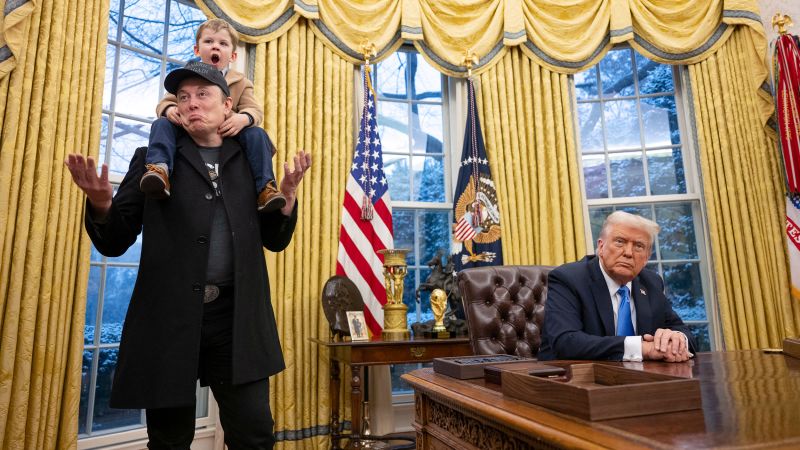
Long before their public breakup (and makeup), Elon Musk was often referred to as Trump’s “first buddy.” And that affection was on full display in February, when Musk and his young son X Æ A-12, aged 5, joined Trump in the Oval .
“Fancy meeting you here,” Musk said, wearing a black MAGA hat, as cameras set up. “Come here often?”
Trump is pretty famous for awkward moments with children (this is the guy who told a 7-year-old that belief in Santa Claus was “marginal,” ) and the interaction with Musk’s son did not disappoint.
The boy, in a tiny camel coat, started making sounds at the press. Trump turned to him. “X, are you OK? This is X, and he’s a great guy. High IQ. He’s a high IQ individual,” Trump said.
And in perhaps the most bizarre moment, Musk had his son on his shoulders while a reporter questioned him about the misleading claim that the United States was sending $50 million worth of condoms to Gaza
Kevin Lamarque/Reuters
Trump’s tense encounters with world leaders are infamous. But it wasn’t always hostile when his foreign counterparts visited the Oval. When UK Prime Minister Keir Starmer came to the White House in February, he brought a gift that clearly struck a chord with Trump.
“It is a pleasure to bring from his majesty the king — he sends his best wishes and regards, of course,” Starmer said, presenting Trump with a letter inviting the US president to Buckingham Place for a historic second state visit.
Trump read the letter silently for several seconds, before saying, “Well, that is really nice. I must make sure his signature’s on that, because otherwise, it’s not quite as meaningful — it is, that is quite a signature.”
Things weren’t so nice when Trump, who’d promised to end Russia’s war in Ukraine on “Day 1” back in office, hosted Ukrainian President Volodymyr Zelensky just a little over a month after returning to the White House. After Vice President JD Vance argued for diplomacy, Zelensky seemed to push back slightly, pointing to Russian Vladimir Putin’s history of breaking ceasefire agreements and suggesting his word was not to be trusted.
“What kind of diplomacy, JD, are you speaking about?” Zelensky said.
Then Trump jumped in, and things soon went off the rails .
“You don’t have the cards right now,” the US president said. “With us, you start having cards.”
Trump also said that Zelensky was “gambling with World War III.”
The moment marked a low point in Trump and Zelensky’s relationship. Vance attacked Zelensky for a perceived lack of gratitude: “Have you said thank you once?” Vance said . “In this entire meeting have you said thank you once?” And though things have since improved (a visit later in the year went much better for Zelensky), Trump still seems to hold a wariness toward his Ukrainian counterpart.
Eric Lee/The New York Times/Redux
Not everyone who appeared with Trump in the Oval Office was thrilled to be there. Democratic Michigan Gov. Gretchen Whitmer drew praise from Trump when he unexpectedly invited her in, and a photograph of her holding a folder over her face went viral.
A Whitmer spokesperson told CNN that “the governor was surprised that she was brought into the Oval Office during President Trump’s press conference without any notice of the subject matter. Her presence is not an endorsement of the actions taken or statements made at that event.” She’d been at the White House that day for a private meeting with Trump to discuss issues concerning Michigan, including the impact of tariffs on the automotive industry.
In other administrations, a White House meeting with the Canadian prime minister might not have made waves — just two allies and neighbors talking shared priorities. But when Mark Carney came to the Oval Office in May, Trump was asked about his comments about Canada becoming America’s 51st state. And he didn’t exactly back down, calling the border an “artificially drawn line.”
Carney held his ground, and kept the tone light: “Well, if I may, as you know from real estate, there are some places that are never for sale. We’re sitting in one right now,” he responded. And while things never devolved like they did with Zelensky, Trump made clear he wasn’t backing down from the idea of making Canada a US state.
“Never say never,” the US president said.
When South African President Cyril Ramaphosa paid a visit to the Oval, Trump came prepared.
Asking his staff to dim the lights, the US president played a nearly five-minute video alleging White genocide in Ramaphosa’s country on a TV screen that was placed in the back of the room.
“Turn the lights down, and just put this on,” Trump said.
Ramaphosa appeared taken aback and disputed the allegations. A CNN fact check found Trump’s claims were false .
Syrian Presidency/Anadolu/Getty Images
Often, the White House lists an event as “Closed Press” on its daily guidance to reporters about what they might see, only to open it up moments beforehand. But the bilateral meeting with Syrian President Ahmed Al-Sharaa at the White House, a historic first, remained closed.
This might not have been a show for cameras like other moments, but it was nonetheless remarkable. The former al Qaeda member was previously wanted for $10 million, a bounty the US removed in 2024. He also led the formerly US-designated terrorist group Hayat Tahrir al-Sham before ultimately becoming the new president. (Secretary of State Marco Rubio announced that the group’s designation was removed in July.)
November marked the Saudi Crown Prince Mohammed bin Salman’s first visit to the White House since the murder of Washington Post journalist Jamal Khashoggi in 2018.
When a reporter asked Prince bin Salman and Trump about the CIA’s conclusion that the prince orchestrated the murder of Khashoggi, Trump stepped in to defend him, calling Khashoggi “extremely controversial.”
“A lot of people didn’t like that gentleman that you’re talking about, whether you like him or didn’t like him, things happen,” Trump said. “But he knew nothing about it, and we can leave it at that. You don’t have to embarrass our guest by asking a question like that.”
The moment encapsulated just how thoroughly Prince bin Salman had been reintegrated into normal diplomacy after Khashoggi’s murder. But even before that, the crown prince had been welcomed with all the trappings of a state visit, the highest form of American diplomatic reception.
Never mind that Trump had previously derided him as a communist. When Zohran Mamdani visited the White House after winning the 2025 New York City mayoral election, Trump and he were positively chummy .
“We agree on a lot more than I would have thought,” Trump said of the young mayor-elect that he had frequently tried to tar as a communist. “I want him to do a great job, and we’ll help him do a great job.”
In arguably the most spectacular moment, Mamdani was later pressed on whether he believed Trump was a “fascist” — threatening to upend the good vibes. But Trump quickly interjected, defusing what might have been a tough question.
“That’s OK; he can just say yes. That’s easier, it’s easier than explaining it,” Trump quipped.
This month — outside of the view of live television cameras — Venezuelan opposition leader María Corina Machado presented Trump with her Nobel Peace Prize inside the Oval Office. In a photo released by the White House afterward, a smiling Trump holds the framed prize, as Machado stands next to him.
Trump has long sought the peace prize, and while it’s now in his possession, the Nobel Foundation said in a statement that “the prize remains inseparably linked to the person or organisation designated as the laureate by the Norwegian Nobel Committee.”
从与饱受战争蹂躏的乌克兰领导人进行激烈会谈,到与一位民主社会主义当选市长进行出人意料的友好会面,椭圆形办公室见证了唐纳德·特朗普总统重返执政第一年的一些最戏剧性的时刻。
总统经常在这个历史悠久的地方召集媒体,签署法案和行政命令,或与世界各国领导人举行会晤,回答记者们提出的各种问题,而且常常将严肃的外交政策讨论与一些无关的话题混杂在一起。例如,就在上周,他似乎淡化了对伊朗的打击威胁,而当时他面前的坚毅桌旁就放着一瓶全脂牛奶——这是他原定宣布学校午餐政策的一部分。
以下是过去一年里椭圆形办公室发生的一些值得关注的时刻。
早在他们公开分手(又复合)之前,埃隆·马斯克就经常被称为特朗普的“第一好友”。今年2月,这种亲密关系展现得淋漓尽致,当时马斯克带着他5岁的儿子X Æ A-12与特朗普一同出现在椭圆形办公室。
“真巧在这里碰到你,”马斯克戴着一顶黑色的MAGA帽子说道,摄像机已经架好了。“你常来这儿吗?”
特朗普与孩子相处时经常表现得十分尴尬(他曾对一个 7 岁的孩子说,相信圣诞老人是“微不足道的”),而他与马斯克儿子的互动也同样令人失望。
那个穿着小驼色外套的男孩开始对着媒体发出各种声音。特朗普转向他。“X,你还好吗?这是X,他是个很棒的人。智商很高。他是个高智商的人,”特朗普说道。
或许最令人匪夷所思的一幕是,马斯克肩上扛着儿子,而一位记者正在就美国向加沙运送价值5000万美元避孕套这一误导性说法向他提问。
凯文·拉马克/路透社
特朗普与世界各国领导人之间紧张的会面早已臭名昭著。但并非每次外国领导人访问白宫时,气氛都如此敌对。今年二月,英国首相基尔·斯塔默访问白宫时,他带来的一份礼物显然打动了特朗普。
“很荣幸能代表国王陛下带来这份邀请函——他当然也向我致以最美好的祝愿和问候,”斯塔默说道,同时向特朗普递交了一封邀请美国总统前往白金汉宫进行历史性第二次国事访问的信函。
特朗普默默地读了几秒钟信,然后说:“嗯,这真不错。我得确保他在上面签了名,否则,这封信的意义就没那么大了——这可是个了不起的签名。”
特朗普曾承诺上任“第一天”就结束俄罗斯在乌克兰的战争,但仅仅一个多月后,他就接待了乌克兰总统泽连斯基。当时情况并不乐观。副总统万斯力主通过外交途径解决问题,但泽连斯基似乎略有抵触,他指出俄罗斯总统普京曾多次撕毁停火协议,暗示普京的承诺不可信赖。
泽连斯基说:“JD,你指的是哪种外交?”
然后特朗普插手,事情很快就失控了。
“你们现在还没有筹码,”美国总统说。“加入我们,你们就能拿到筹码。”
特朗普还表示,泽连斯基是在“拿第三次世界大战做赌注”。
这一刻标志着特朗普和泽连斯基关系的低谷。万斯抨击泽连斯基缺乏感恩之心:“你说过一次谢谢吗?”万斯问道,“在整个会晤过程中,你说过一次谢谢吗?”尽管此后情况有所改善(泽连斯基在当年晚些时候的访问中表现得好得多),但特朗普似乎仍然对他的乌克兰同行抱有戒心。
Eric Lee/纽约时报/Redux
并非所有与特朗普一同出现在椭圆形办公室的人都感到高兴。密歇根州民主党州长格雷琴·惠特默因特朗普出人意料地邀请她进入办公室而受到赞扬,一张她用文件夹遮住脸的照片在网上疯传。
惠特默的一位发言人告诉CNN,“州长对在特朗普总统的新闻发布会期间被带到椭圆形办公室感到惊讶,事先她对发布会的主题毫不知情。她的出席并不代表她认可在发布会上采取的行动或发表的言论。”当天,她原本在白宫与特朗普举行了一次私人会晤,讨论与密歇根州相关的问题,包括关税对汽车行业的影响。
在其他政府时期,白宫与加拿大总理的会晤或许不会引起轩然大波——不过是两位盟友和邻国在讨论共同的优先事项。但今年五月,当马克·卡尼到访椭圆形办公室时,特朗普被问及他关于加拿大成为美国第51个州的言论。而他并没有就此退让,反而称这条边界线是“人为划定的”。
卡尼立场坚定,语气轻松:“嗯,恕我直言,正如你从房地产行业了解到的,有些地方永远不会出售。我们现在就身处其中。”他回应道。虽然事态并未像泽连斯基事件那样恶化,但特朗普明确表示,他不会放弃让加拿大成为美国一个州的想法。
“永远不要说永远,”美国总统说道。
南非总统西里尔·拉马福萨访问椭圆形办公室时,特朗普做好了充分的准备。
美国总统要求工作人员调暗灯光,然后在房间后方的一台电视屏幕上播放了一段近五分钟的视频,声称拉马福萨的国家发生了白人种族灭绝。
“把灯光调暗,然后打开这个,”特朗普说。
拉马福萨似乎感到震惊,并否认了这些指控。CNN的事实核查发现,特朗普的说法不实。
叙利亚总统府/阿纳多卢通讯社/盖蒂图片社
白宫经常会在每日记者须知中将某些活动列为“媒体闭门会议”,但往往在会议开始前几分钟才宣布开放。然而,与叙利亚总统艾哈迈德·沙拉在白宫举行的历史性双边会晤却始终保持闭门状态。
这或许不像其他一些时刻那样是为了博取镜头,但仍然令人瞩目。这位前基地组织成员曾被悬赏1000万美元通缉,美国已于2024年取消了悬赏。他还曾领导过美国认定的恐怖组织“沙姆解放组织”(Hayat Tahrir al-Sham),最终成为新任总统。(国务卿马可·卢比奥于7月宣布取消了对该组织的认定。)
11 月是沙特王储穆罕默德·本·萨勒曼自 2018 年《华盛顿邮报》记者贾迈勒·卡舒吉遇害以来首次访问白宫。
当记者就中央情报局得出的“本·萨勒曼王子策划了卡舒吉谋杀案”的结论询问本·萨勒曼王子和特朗普时,特朗普出面为他辩护,称卡舒吉“极具争议”。
“很多人不喜欢你提到的那位先生,不管你喜欢他还是不喜欢他,这种事时有发生,”特朗普说。“但他对此一无所知,我们就到此为止吧。你没必要问这种问题,让我们的客人难堪。”
这一幕充分展现了在卡舒吉遇害后,本·萨勒曼王储是如何彻底地重新融入正常外交生活的。但即便在此之前,这位王储也受到了国事访问的隆重欢迎,这是美国最高级别的外交礼遇。
尽管特朗普之前曾嘲讽他是共产主义者,但佐兰·马姆达尼在赢得2025年纽约市市长选举后访问白宫时,与特朗普的关系却非常亲密。
“我们之间的共识比我想象的要多得多,”特朗普谈到这位年轻的市长当选人时说道,他曾多次试图抹黑这位市长,称其为共产主义者。“我希望他能出色地完成工作,我们也会帮助他出色地完成工作。”
在堪称最精彩的一幕中,马姆达尼后来被追问是否认为特朗普是“法西斯分子”,这险些破坏了之前营造的良好氛围。但特朗普迅速插话,化解了这原本可能棘手的问题。
“没关系,他只要说‘是’就行了。这样更容易,比解释容易多了。”特朗普打趣道。
本月,在电视直播镜头之外,委内瑞拉反对派领导人玛丽亚·科琳娜·马查多在椭圆形办公室向特朗普颁发了诺贝尔和平奖。白宫随后发布的一张照片显示,面带微笑的特朗普手捧奖杯,马查多站在他身旁。
特朗普长期以来一直渴望获得和平奖,虽然现在他已经获得了该奖项,但诺贝尔基金会在一份声明中表示,“该奖项仍然与挪威诺贝尔委员会指定的获奖者或组织密不可分。”