Mindef launches national defence literacy drive to prepare public for new security threats国防部发起国防知识普及运动,帮助公众应对新的安全威胁
KOTA KINABALU, Sept 26 — The Defence Ministry (Mindef) today launched the National Defence Literacy Programme to boost the public’s awareness, knowledge and understanding of...
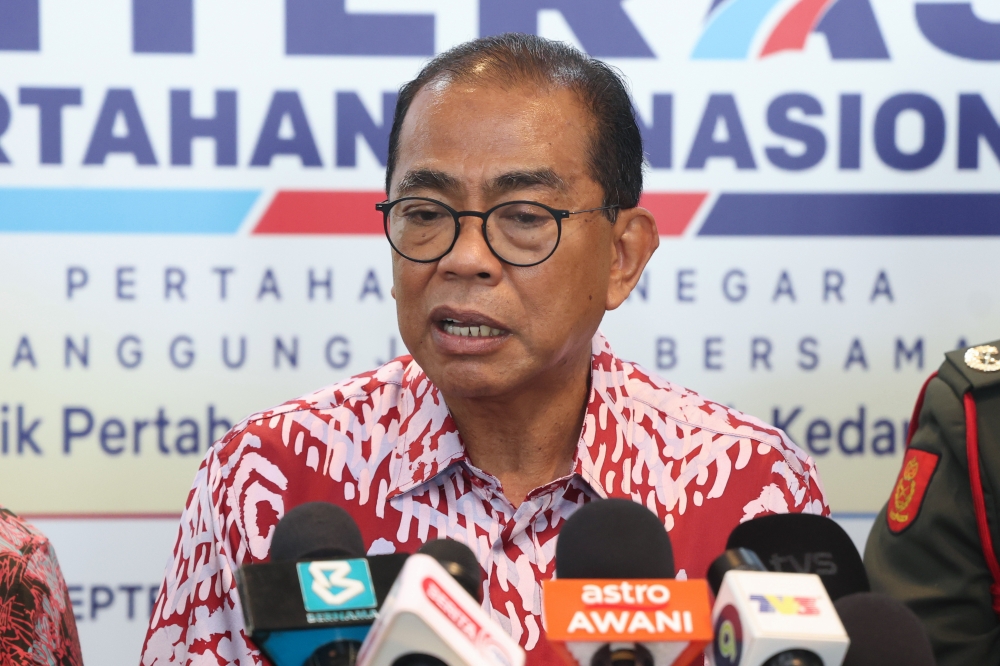
The Defence Ministry of Malaysia has launched the National Defence Literacy Programme to enhance public knowledge and awareness of national defence, security, and sovereignty in response to evolving security threats.
Defence Minister Datuk Seri Mohamed Khaled Nordin emphasized the importance of understanding non-traditional threats, particularly in the digital space, and building public resilience as a deterrent force.
The initiative, which begins in Sabah, includes awareness programs and discussions on cognitive threats and national defence roles, underscoring the collective responsibility of all citizens in safeguarding the nation.
Led by the Malaysian Institute of Defence and Security, the programme aims to foster a comprehensive understanding that every individual contributes to national security.
KOTA KINABALU, Sept 26 — The Defence Ministry (Mindef) today launched the National Defence Literacy Programme to boost the public’s awareness, knowledge and understanding of national defence, security and sovereignty.
Defence Minister Datuk Seri Mohamed Khaled Nordin said a shifting security threat landscape demands a deeper understanding of national defence, and a recognition of the role Malaysians can play in safeguarding the nation’s sovereignty.
“This is where what we call defence literacy comes in. It is an awareness, a body of knowledge and a skill that every citizen must possess,” he told reporters after launching the National Defence Literacy Programme at the Sabah International Convention Centre here today.
Also present were Defence Ministry secretary-general Datuk Lokman Hakim Ali and Army chief Jen Tan Sri Azhan Md Othman.
Others in attendance were MiDAS chief executive Laksdya Datuk Yusne Mokhtar, Office of Home Affairs and Research secretary Datuk Awang Shaminan Awang Ashaari, and Sabah National Security Council director Datuk Yahya Sulaiman.
Mohamed Khaled said the public must grasp the fact that security threats today are far more complex. They are no longer confined to physical or military danger, but are alive in the digital space too.
“That is exactly why we are running this Literacy Programme. We want to build the people’s resilience. When the people are resilient, it becomes a deterrent force,” he said.
He said defence literacy efforts must be sustained, so the public not only understands defence and security issues better, but also sees the role they can play in contributing to national defence. Sabah was picked as the first state to roll out the programme, before it is expanded nationwide.
Earlier in his speech, Mohamed Khaled framed national defence through three key components: defence as the nation’s fence or shield, defence as the nation’s umbrella, and defence as the anchor or pillar of a sovereign nation.
He said the defence literacy agenda is about showing the public that there are many ways to strengthen the people’s resilience.
“Ways that don’t require anyone to become a soldier or take up arms,” he said, adding that a range of awareness programmes on defence issues will be rolled out actively.
“We want the public to understand one thing clearly: defence issues no longer start with an enemy at our borders or waters. Threats to sovereignty are everywhere,” he said.
The one-day programme featured two headline segments: Bicara Ancaman Kognitif (Talk on Cognitive Threats) and Bicara Pahlawan Negara (Talk on National Warriors). They zeroed in on how threats now target public thought and perception in today’s security landscape.
The Bicara Pahlawan Negara session brought together Major General (Rtd) Datuk Dr Radzi Abd Hamid as moderator and four special panellists: Lieutenant General (Rtd) Datuk Seri Zain Mohd Said SP, Major General Datuk Mohd Halim Khalid PGB, Warrant Officer 1 (Rtd) Freaddey Yojod and Lance Corporal (Rtd) Abdul Rahman Maidin.
The National Defence Literacy Programme is a Mindef initiative led by the Malaysian Institute of Defence and Security (MiDAS) in collaboration with Universiti Pertahanan Nasional Malaysia.
At its core, it aims to sharpen public awareness of one simple truth: every layer of society has a role in defending the nation’s security and sovereignty. — Bernama
Anwar: UiTM Jalan Othman Campus renamed in honour of Arshad Ayub, architect of institution’s early growth
Akmal Nasrullah: Removing 30pc Bumiputera equity rule for private education will not weaken empowerment agenda
Sarawak to set up authority to manage and develop lakes, says Abang Johari
马来西亚国防部启动了国家国防知识普及计划,旨在提高公众对国防、安全和主权的认识,以应对不断变化的安全威胁。
国防部长拿督斯里穆罕默德·卡立·诺丁强调了了解非传统威胁(尤其是在数字领域)的重要性,并强调了建立公众韧性作为威慑力量的重要性。
该倡议始于沙巴,包括提高公众意识的计划和对认知威胁和国防作用的讨论,强调所有公民在保卫国家方面的集体责任。
该计划由马来西亚国防与安全研究所牵头,旨在培养人们对每个人都为国家安全做出贡献的全面认识。
哥打基纳巴卢,9月26日讯——国防部今日启动国家国防素养计划,旨在提高公众对国防、安全和主权的认识、知识和理解。
国防部长拿督斯里穆罕默德·卡立·诺丁表示,不断变化的安全威胁形势要求对国防有更深入的了解,并认识到马来西亚人在维护国家主权方面可以发挥的作用。
“这就是我们所说的国防素养的意义所在。它是一种意识、一套知识体系和一项技能,每个公民都必须具备,”他今天在沙巴国际会议中心启动国家国防素养计划后告诉记者。
出席者包括国防部秘书长拿督洛曼哈基姆阿里和陆军总司令仁丹斯里阿占奥斯曼。
其他出席者包括MiDAS首席执行官Laksdya Datuk Yusne Mokhtar、内政及研究办公室秘书Datuk Awang Shaminan Awang Ashaari和沙巴国家安全委员会主任Datuk Yahya Sulaiman。
穆罕默德·哈立德表示,公众必须认识到,如今的安全威胁远比以往复杂得多。它们不再局限于人身或军事危险,也存在于数字空间。
“这正是我们开展扫盲计划的原因。我们希望增强民众的韧性。当民众拥有韧性时,就能形成一种威慑力量。”他说道。
他表示,必须持续开展国防知识普及工作,使公众不仅更好地了解国防和安全问题,还能认识到自身在国防建设中可以发挥的作用。沙巴州被选为该计划的首个试点州,之后将推广至全国。
穆罕默德·哈立德在演讲的前面部分,将国防定义为三个关键组成部分:国防是国家的围墙或盾牌,国防是国家的保护伞,国防是主权国家的锚或支柱。
他表示,国防素养普及计划旨在向公众展示,有很多方法可以增强人民的韧性。
他说:“这些方法不需要任何人成为士兵或拿起武器”,并补充说,将积极推出一系列关于国防问题的宣传活动。
他说:“我们希望公众清楚地理解一点:国防问题不再仅仅局限于边境或水域上的敌人。主权威胁无处不在。”
为期一天的活动包含两个主要环节:“认知威胁探讨”和“国家战士探讨”。这两个环节着重探讨了在当今安全形势下,威胁如何针对公众的思想和认知。
Bicara Pahlawan Negara 会议汇聚了少将(RTD)拿督拉兹·阿卜杜勒·哈米德博士(Dr Radzi Abd Hamid)作为主持人和四位特别小组成员:中将(RTD)拿督斯里·扎因·莫哈末赛义德 SP(Datuk Seri Zain Mohd Said SP)、少将拿督 Mohd Halim Khalid PGB、一级准尉(RTD)Freaddey Yojod 和准尉(RTD)Abdul Rahman Maidin。
国家国防素养计划是国防部的一项倡议,由马来西亚国防与安全研究所 (MiDAS) 与马来西亚国防大学合作开展。
其核心目标是提高公众对一个简单的真理的认识:社会各阶层在捍卫国家安全和主权方面都负有责任。——马新社
安华:UiTM Jalan Othman 校区更名为 Arshad Ayub 校区,以纪念该校早期发展的奠基人。
阿克马尔·纳斯鲁拉:取消私立教育中土著30%的股权比例规定不会削弱赋权议程。
阿邦佐哈里表示,砂拉越将设立机构管理和开发湖泊。