AI and the latest, most existential opportunity to lay down journalism’s role人工智能及其带来的最新、也是最具生存意义的机遇,将决定新闻业的角色。
The survival of newsrooms depends on focusing on what AI can never do. Read more at straitstimes.com.
This World News Day, we must confront the reality that our survival depends not on competing with or simply harnessing machines to achieve scale – but on focusing on what AI can never do.
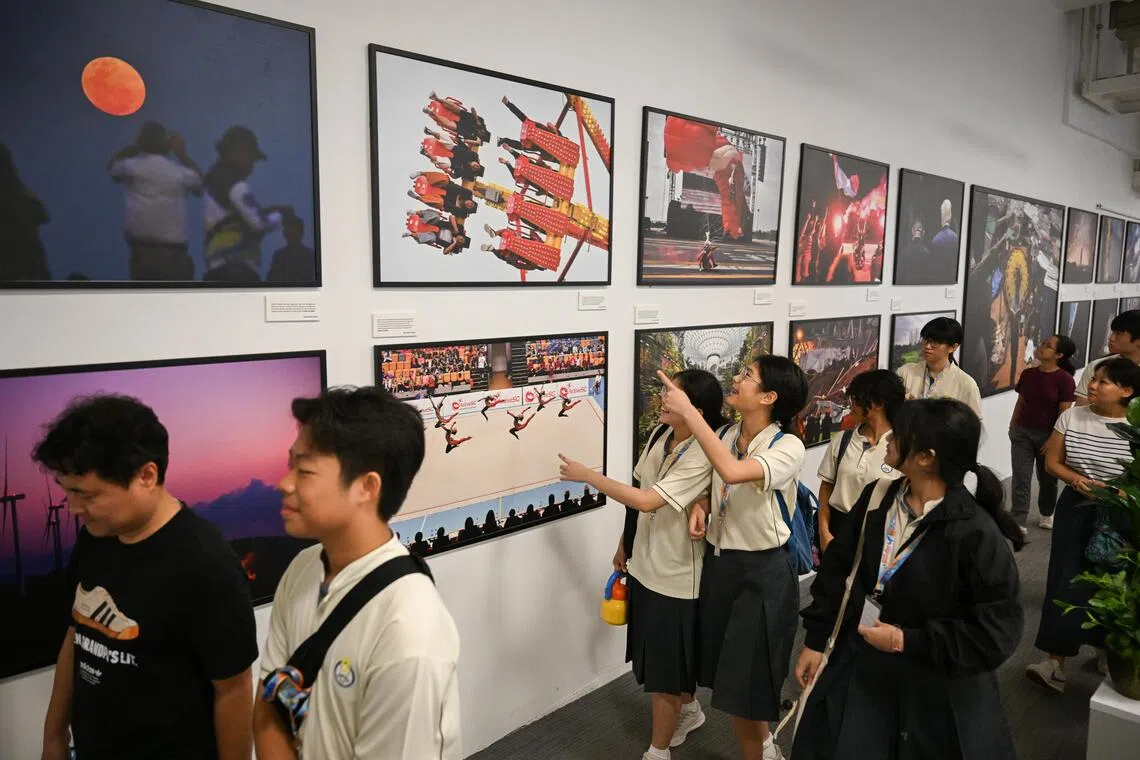
Kent Ridge Secondary School students visiting The Straits Times in May 2026. ST is committing to being a newsroom that is accessible and relatable to its community.
ST PHOTO: SHINTARO TAY
Published Sep 27, 2026, 10:00 AM
Updated Sep 27, 2026, 06:04 PM
Journalism has always had to play catch-up with technological advancement . The need to ride the next wave to reach more and newer audiences is an in-built capability and imperative for newsrooms.
But for more than a decade now, newsrooms have found themselves in a more acute and more consequential race in meeting the way news is defined, produced and consumed.
This was especially salient when social media emerged. Newsrooms responded to it with their natural impulse: Do more, make more, post more, boost more, do it faster, do it cheaper. If audience attention wavered, we looked for the next platform to conquer or the next piece of content that would find the perfect algorithmic balance of news, affirmation, entertainment or, for some, grievance.
We adapted by focusing on a relentless pursuit of scale: more articles, faster publishing cycles, new distribution channels and an endless array of digital metrics designed to measure engagement, clicks and page views.
Now, faced with a new disruption in the form of artificial intelligence , the impulse is the same, but the same playbook is not the answer.
We can and will continue to find means of reaching newer audiences in ways and at speeds which are demanded of us. But, with the knowledge that algorithms can aggregate text in milliseconds and that synthetic engines can generate basic summaries, rewrite press releases and churn out generic content much faster, and sometimes better, than we ever can, we need to do things differently.
If newsrooms treat news as a basic commodity, one whose main metric of success is production at speed, scale and low cost, journalists will inevitably be replaced by machines. At scale.
To the extent that many newsrooms are aware that the old responses are ill-suited to the new existential challenge, there is little consensus about what to do, both collectively and individually.
Some have decided to aggressively embrace AI not just to assist journalists but, in some cases, to replace them. Multiple companies have liberally published AI-generated content, with varying approaches on public declarations and accountability.
At the other end of the spectrum are those who take what we would call a progressive but cautious and considered stance on AI.
During a recent speech, New York Times publisher A.G. Sulzberger warned media leaders of the dangers of not standing up to Big Tech and how the industry needs to do more to do so.
“Our profession has been too quiet, too passive and too fragmented in the face of abuses by the companies leading the AI revolution,” Sulzberger said at the WAN-IFRA World News Media Congress in June. “We cannot allow AI cheerleaders to dominate the public conversation without interjecting to argue for the importance of ensuring a sustainable future for original journalism.”
While we may look with hope to key media leaders and governments to come together to create a set of common standards and guard rails, the more practical approach must be for individual newsrooms and journalists to do what we can now.
This World News Day , we must confront a fundamental truth: Our survival and relevance depend not on competing with or simply harnessing machines to achieve speed and scale, but on doing and explaining the very things AI can never do.
The trust imperative
This reckoning comes against a challenging global backdrop. Year after year, global studies paint a sobering picture of media consumption worldwide. In many mature democracies, overall trust in the news has drifted downwards.
Fortunately, some parts of the world seem to be holding the line. For now.
Singapore is one of them.
Trust in mainstream news institutions held at a comparatively high level , according to studies like the Reuters Institute Digital News Report and Edelman Trust Barometer. Where the Reuters Institute reports that the proportion of people who trust news has fallen to 37 per cent – the lowest the institute has ever recorded – it found that trust in The Straits Times and CNA hovers annually at just under 80 per cent.
Yet, high trust is not a permanent inheritance. ST is keenly aware that it must be earned anew every single day.
The integration of AI into public life introduces fresh uncertainties to this balance. Unchecked, automated content and deepfakes threaten to further pollute the information ecosystem, making audiences even more sceptical of what they read and see online.
Newsrooms worldwide are trying to figure out how technology can be harnessed responsibly without compromising the foundational trust of the communities they serve.
At ST, protecting this reservoir of high trust is our highest priority. We cannot afford to sit back and assume that past credibility will insulate us from future scepticism.
AI as a means to an end
How do we protect and build this trust?
First, we will be clear about what role AI will play in our newsroom. We know, for instance, that we are not an AI company and should not pretend to be one. Trust and serving the Singapore public are core pillars of ST’s mission, and we remind ourselves that those are our goals, not how much AI we use. We are a mission-, journalism- and human-centric newsroom. Not an AI-centric one.
We embrace AI to the extent that it helps us advance our mission, always keeping in mind what is actually important to us.
ST’s essential value lies in our human journalists. The responsibility of civic-mission journalism resides in holding a set of judgments: what is newsworthy, what is fair, what is true, what is contextual, what is representative and what is meaningful.
At a recent Singapore Press Club event, Minister in the Prime Minister’s Office Indranee Rajah described the value of the human touch in journalism well.
“No algorithm can substitute for the years spent understanding a beat, building sources and learning how an industry or a policy actually works. A reporter who has covered the local healthcare system for a decade will ask a different question than one relying on a search engine,” she said.
“So let technology be your tool, and not your master. The power of the written word, the lyricism of a phrase, the crispness of a sentence, and the ability to inform, enlighten and to move hearts and minds should remain irrevocably in your hands.”
How we use AI therefore safeguards the judgment of journalists and editors. Technology should augment human journalism, not replace it.
The use of generative AI in ST’s newsroom must therefore begin with humans, with factual information vetted by our journalists.
We recently launched our AI policy across ST, underpinned by four key principles: human oversight; editorial accountability and responsibility; transparency and disclosure; and care for privacy and security. A summary of this policy will be available online.
This is just a start and is by no means the end of this public conversation we will have about AI and our work.
From reach to relationships, content to community
We cannot ignore the human element of building trust. Therefore, another imperative part of this process lies in a decisive strategic and cultural shift: Moving from reach to relationships, and from content to community.
For too long, modern media success has been defined by reach. How many unique visitors clicked on a link, or how widely a story went viral. But reach is passive and fleeting. It treats readers as eyeballs to be counted or ultimately monetised, rather than people to be engaged.
Public service journalism, in contrast, thrives on real, enduring relationships built on shared purpose and mutual respect.
Building these relationships requires us to look beyond just polished digital products, user interfaces and the next platform. Excellent design and smooth user experiences matter greatly, but they are the wrapper around journalism that involves real-world interactions which foster common spaces and protect common truths.
In a fragmented digital world where algorithms can isolate individuals into personalised echo chambers, news organisations must aspire to act as the civic glue that holds society together.
At ST, we will try to do this in three ways.
1. Accessibility and transparency
We want to be a newsroom whose journalists have the closest ears to the ground – and who are the most accessible and relatable to our community. Trust grows when people understand how news is gathered, are aware of how choices are made, and know who the journalists behind the bylines are.
To achieve this, we are committing to greater transparency in our reporting processes and expanding our footprint of face-to-face engagements. Through smaller, more intimate community dialogues and reader forums, we will create physical and digital spaces where readers in Singapore can speak directly to our editors and reporters. We want to hear your critiques, answer your questions and listen to the issues that keep you up at night. We have met many of you at these forums, and we will continue to meet more of you.
As we say this, we are aware that much of this conversation does not come naturally to us as journalists. We have never been comfortable talking about ourselves, telling our audiences (and competitors) what we are doing, or explaining our journalism. It goes against our instincts. But it is precisely at this moment that journalism must re-examine its instincts in the face of larger existential questions. It may give rise to new ways of thinking and foster closer collaboration between the newsroom and community.
2. A deeper community focus
AI can analyse national datasets at scale, but it cannot sit in a heartland coffee shop, sense the mood of a neighbourhood or understand the subtle cultural nuances of a housing estate undergoing redevelopment.
We are therefore devoting even more of our reporting resources towards reporting on our community, which will be defined widely and inclusively. We will uncover stories of quiet everyday heroes, local struggles and the bonds within neighbourhoods and smaller communities. These are the human stories that only human journalists can discover and articulate.
3. Engaging our readers in more ways
We are constantly trying new ways to engage and surprise our audiences, and we intend to double down on this effort.
For instance, in 2026, we launched a crossword with a distinctly Singapore flavour . We worked with the National Library Board on a series entirely original and handcrafted with clues that reflect our local culture.
We are also investing heavily in narrative journalism that captures the full texture of the human experience. Whether through evocative long-form writing, immersive photojournalism or compelling visual storytelling, our focus will be on work that illuminates complex realities. A machine can assemble facts, but it cannot feel empathy, exercise moral intuition or convey the deep emotional weight of a lived human experience.
Embracing technology without losing our soul
At ST, we will aim to put AI into the rightful context of our larger purpose of public service journalism.
AI can help our journalists analyse vast troves of public documents, translate research, streamline administrative tasks and personalise how content is delivered to readers with different needs. Used wisely, technology frees up our journalists from routines so they can spend more time doing actual reporting.
However, we will remain acutely mindful of the known and unknown dangers that technology presents. The impact of social media on people and our journalism is a case in point we must never forget.
The future of news will not and cannot be decided by who builds the cleverest algorithms or who publishes the most content the most quickly. It will be decided by who holds the trust of the public when the noise becomes deafening, or when common truths need to prevail.
On this World News Day, our commitment to our readers is this: We will not simply do more of the same. We will focus our energy and resources where they matter most – on being present in your lives, telling the stories that matter to your communities, and nurturing the human relationships that form the foundation of a cohesive, informed and resilient society.
It will not be easy, but our mission demands that we try.
AI/artificial intelligence
值此世界新闻日之际,我们必须正视这样一个现实:我们的生存不在于与机器竞争或仅仅利用机器来实现规模化,而在于专注于人工智能永远无法做到的事情。
2026年5月,肯特岗中学学生参观了《海峡时报》。《海峡时报》致力于成为一个与社区息息相关、易于理解的新闻编辑室。
照片:郑信太郎
发布于 2026 年 9 月 27 日上午 10:00
更新于2026年9月27日下午6:04
新闻业一直以来都不得不努力追赶技术进步的步伐。抓住下一波浪潮,触及更广泛的新受众,是新闻编辑室的内在能力和必然要求。
但十多年来,新闻编辑室发现自己正面临着一场更加激烈、影响更加深远的竞赛,这场竞赛旨在满足新闻的定义、生产和消费方式的变化。
这一点在社交媒体兴起时尤为突出。新闻编辑室的应对方式也遵循着同样的本能:做得更多、制作更多、发布更多、推广更多、更快、更便宜。如果受众的注意力有所转移,我们就寻找下一个可以征服的平台,或者下一个能够完美平衡新闻、肯定、娱乐,或者(对某些人来说)抱怨的内容。
我们通过不断追求规模来适应变化:更多的文章、更快的出版周期、新的分发渠道以及一系列旨在衡量参与度、点击量和页面浏览量的数字指标。
如今,面对人工智能带来的新颠覆,人们的初衷虽然相同,但同样的策略却行不通了。
我们能够也必将继续寻找方法,以符合市场需求的方式和速度触达新的受众群体。但是,鉴于算法可以在几毫秒内聚合文本,合成引擎可以生成基本摘要、改写新闻稿并快速(有时甚至比我们做得更好)地炮制通用内容,我们需要改变做事方式。
如果新闻编辑室将新闻视为一种基本商品,其成功的主要衡量标准是快速、大规模和低成本的生产,那么记者终将被机器大规模取代。
许多新闻编辑室虽然意识到旧的应对方式已不适合应对新的生存挑战,但对于应该采取什么行动,无论是集体行动还是个人行动,都鲜有共识。
一些机构已决定积极拥抱人工智能,不仅是为了辅助记者,在某些情况下,甚至是为了取代记者。多家公司已大量发布人工智能生成的内容,但在公开声明和问责方面采取了不同的做法。
另一方面,有些人对人工智能采取了我们称之为进步但谨慎和深思熟虑的立场。
在最近的一次演讲中,《纽约时报》出版人 AG Sulzberger 警告媒体领导人,如果不挺身对抗大型科技公司,将会带来危险,并指出该行业需要采取更多措施来对抗大型科技公司。
“面对引领人工智能革命的公司滥用权力,我们这个行业一直过于沉默、过于被动、过于分散,”苏兹伯格在6月份举行的WAN-IFRA世界新闻媒体大会上表示。“我们不能允许人工智能的拥护者主导公共讨论,而不介入并强调确保原创新闻可持续发展的重要性。”
虽然我们可能满怀希望地期待主要媒体领导人和政府能够齐心协力制定一套共同的标准和保障措施,但更实际的做法是各个新闻编辑室和记者现在就尽我们所能。
值此世界新闻日之际,我们必须面对一个基本事实:我们的生存和影响力不在于与机器竞争或仅仅利用机器来实现速度和规模,而在于去做和解释人工智能永远无法做到的事情。
信任的必要性
这种反思是在全球充满挑战的背景下进行的。年复一年,全球研究都描绘出一幅令人警醒的全球媒体消费图景。在许多成熟的民主国家,公众对新闻的整体信任度已经下滑。
幸运的是,世界上的某些地区似乎还在坚守阵地。至少目前如此。
新加坡就是其中之一。
根据路透社新闻研究所《数字新闻报告》和爱德曼信任度晴雨表等研究,公众对主流新闻机构的信任度仍然相对较高。路透社新闻研究所报告称,公众对新闻的信任度已降至37%,创该研究所历史新低;但同时,《海峡时报》和亚洲新闻台(CNA)的信任度每年都稳定在80%左右。
然而,高度信任并非一成不变。ST 深知,信任必须每天重新赢得。
人工智能融入公共生活,给这种平衡带来了新的不确定性。不受监管的自动化内容和深度伪造技术有可能进一步污染信息生态系统,使受众对他们在网上阅读和看到的内容更加怀疑。
世界各地的媒体都在努力思考如何负责任地利用科技,同时又不损害其服务社区的基本信任。
在ST,维护这份高度信任是我们的首要任务。我们不能掉以轻心,认为过去的信誉就能让我们免受未来的质疑。
人工智能作为实现目标的手段
我们如何保护和建立这种信任?
首先,我们将明确人工智能在我们新闻编辑室中扮演的角色。例如,我们清楚我们并非一家人工智能公司,也不应该假装自己是。信任和为新加坡公众服务是《海峡时报》的核心使命,我们始终牢记,这才是我们的目标,而非我们使用多少人工智能。我们是一家以使命、新闻和人为中心的新闻编辑室,而非以人工智能为中心的新闻编辑室。
我们拥抱人工智能,只要它能帮助我们推进使命,我们就会始终牢记对我们真正重要的东西。
《海峡时报》的核心价值在于我们的新闻工作者。公民新闻的责任在于秉持一系列判断标准:什么是新闻价值,什么是公正,什么是真实,什么是符合语境,什么是具有代表性,什么是有意义的。
在最近一次新加坡新闻俱乐部活动中,总理公署部长英兰妮·拉贾很好地阐述了新闻报道中人情味的重要性。
“任何算法都无法替代多年来对某个领域、人脉网络以及行业或政策运作方式的深入了解。一位报道当地医疗保健系统十年的记者提出的问题,与一位依赖搜索引擎的记者提出的问题截然不同,”她说道。
“所以,让科技成为你的工具,而不是你的主人。文字的力量、词句的韵律、句子的简洁,以及传递信息、启迪智慧、打动人心的能力,都应该永远牢牢掌握在你手中。”
因此,人工智能的使用方式决定了记者和编辑的判断力。技术应该增强而非取代人类新闻工作。
因此,在《海峡时报》新闻编辑室中使用生成式人工智能必须从人开始,事实信息必须由我们的记者进行核实。
我们近期在《海峡时报》全面推行了人工智能政策,该政策以四项关键原则为基础:人工监督;编辑问责制;透明公开;以及保护隐私和安全。该政策的概要将在网上公布。
这仅仅是一个开始,绝不是我们围绕人工智能和我们的工作展开的公开对话的终点。
从触达到关系,从内容到社群
建立信任过程中,人为因素不容忽视。因此,这一过程的另一个关键环节在于做出果断的战略和文化转变:从关注触达转向关注关系,从关注内容转向关注社群。
长期以来,现代媒体的成功都以触达率来衡量,比如有多少独立访客点击了某个链接,或者某个故事传播的范围有多广。但触达率是被动的、短暂的,它将读者视为需要统计或最终变现的眼球,而不是需要互动的人。
与之相反,公共服务新闻业的蓬勃发展依赖于建立在共同目标和相互尊重基础上的真实、持久的关系。
建立这些关系需要我们超越精美的数字产品、用户界面和下一代平台。卓越的设计和流畅的用户体验固然重要,但它们只是新闻业的外在包装,新闻业的核心在于现实世界的互动,这些互动能够促进共同空间的构建,并守护共同的真相。
在一个碎片化的数字世界中,算法可以将个人隔离到个性化的回音室中,新闻机构必须努力成为维系社会团结的公民纽带。
在ST,我们将尝试通过三种方式来实现这一目标。
1. 可及性和透明度
我们希望打造一个新闻编辑室,让记者们能够最贴近基层,最容易与我们的社区建立联系。当人们了解新闻的采集方式、明白决策过程以及认识署名记者时,信任就会建立起来。
为了实现这一目标,我们致力于提高报道流程的透明度,并扩大与读者面对面交流的渠道。我们将通过规模更小、更深入的社区对话和读者论坛,创建线上线下空间,让新加坡的读者能够直接与我们的编辑和记者沟通。我们渴望听到您的批评意见,解答您的疑问,并倾听您夜不能寐的关注点。我们已经在这些论坛上与许多读者见面,未来也将继续与更多读者交流。
我们这样说,也意识到作为记者,我们并不习惯谈论这些。我们向来不擅长谈论自己,不习惯告诉读者(以及竞争对手)我们在做什么,也不习惯解释我们的新闻报道方式。这违背了我们的本能。但正因如此,新闻业才必须在面对更宏大的生存问题时重新审视自身的本能。这或许会催生新的思维方式,并促进新闻编辑室与社区之间更紧密的合作。
2. 更深入地关注社区
人工智能可以大规模分析国家数据集,但它无法坐在市中心的咖啡馆里,感受街区的氛围,也无法理解正在重建的住宅区微妙的文化差异。
因此,我们将投入更多报道资源,关注我们社区的方方面面,我们将对“社区”一词进行广泛而包容的定义。我们将挖掘那些默默无闻的平凡英雄的故事,展现当地的奋斗历程,以及邻里和小型社区内部的紧密联系。这些只有真正的人性化新闻工作者才能发现并讲述的故事。
3. 以更多方式吸引读者
我们一直在尝试新的方法来吸引和惊喜我们的观众,并且我们打算加倍努力。
例如,2026年,我们推出了一款极具新加坡特色的填字游戏。我们与国家图书馆管理局合作,精心制作了一系列完全原创的填字游戏,谜题中的线索都反映了我们当地的文化。
我们也在大力投资叙事新闻,力求展现人类经验的全貌。无论是通过引人入胜的长篇报道、沉浸式的摄影新闻,还是扣人心弦的视觉叙事,我们都将专注于揭示复杂现实的作品。机器可以罗列事实,但它无法感受同理心,无法运用道德直觉,也无法传递鲜活的人类体验中所蕴含的深刻情感。
拥抱科技而不丧失灵魂
在《海峡时报》,我们将致力于把人工智能置于我们公共服务新闻这一更宏大目标的正确背景下。
人工智能可以帮助我们的记者分析海量的公共文件,翻译研究成果,简化行政工作,并根据不同读者的需求个性化推送内容。如果运用得当,这项技术可以让记者摆脱繁琐的日常工作,从而将更多时间投入到真正的新闻报道中。
然而,我们将始终高度警惕科技带来的已知和未知风险。社交媒体对人们以及新闻业的影响就是一个我们绝不能忘记的典型例子。
新闻的未来不会也不可能由谁开发出最智能的算法或谁发布的内容最多最快来决定。它将由在信息噪音震耳欲聋或当普遍真理需要被认可时,谁能赢得公众的信任来决定。
值此世界新闻日之际,我们对读者的承诺是:我们不会墨守成规,而是会将精力和资源集中投入到最重要的地方——融入你们的生活,讲述对你们社区至关重要的故事,并培育构成一个团结、知情且富有韧性的社会基础的人际关系。
这并不容易,但我们的使命要求我们必须尝试。
人工智能