Fahmi tells telcos: Rethink diesel gensets, embrace renewables for tower operations法赫米告诉电信运营商:重新考虑柴油发电机组,拥抱可再生能源用于铁塔运营
KUALA LUMPUR, Sept 28 — The government has called on telecommunications companies to reassess their reliance on diesel generator sets (gensets) to operate some 60,000...
The Malaysian government has urged telecommunications companies to reduce reliance on diesel generators for the operation of approximately 60,000 telecommunication towers, advocating a shift to renewable energy in alignment with the National Energy Transition Roadmap.
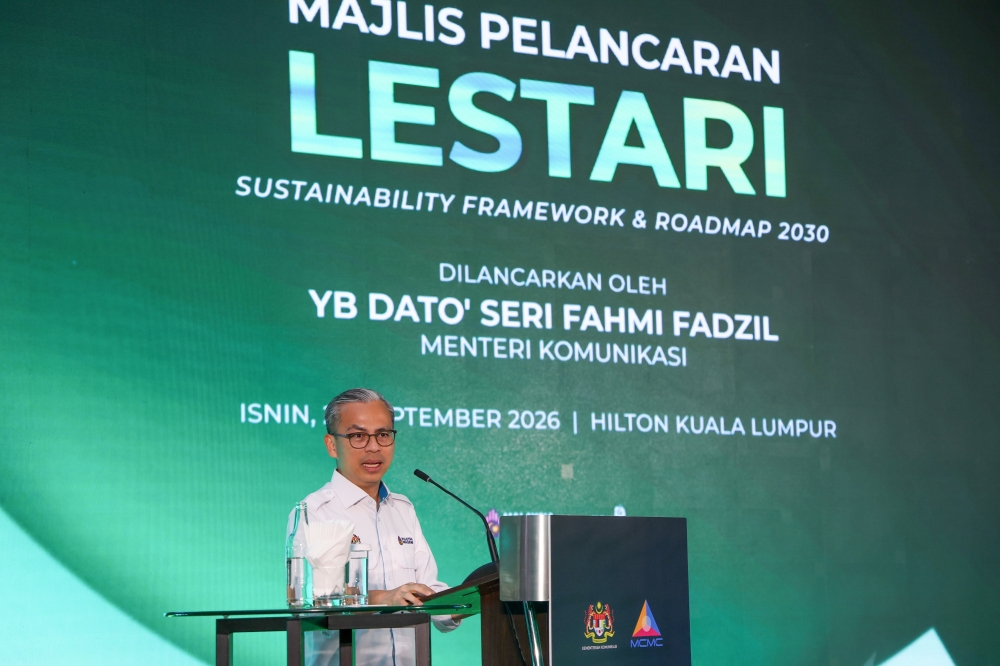
At the launch of the Lestari: Sustainability Framework and Roadmap 2030, Communications Minister Datuk Seri Fahmi Fadzil highlighted the need for industry collaboration to ensure energy-efficient and environmentally sustainable practices.
The framework aims to manage electronic waste sustainably and facilitate a circular economy, benefiting vulnerable and low-income groups through affordable technology access.
Additionally, the Net Zero & Circularity Alliance was introduced to foster industry partnerships in reducing carbon emissions and enhancing e-waste management.
KUALA LUMPUR, Sept 28 — The government has called on telecommunications companies to reassess their reliance on diesel generator sets (gensets) to operate some 60,000 telecommunication towers nationwide, particularly in rural areas.
Communications Minister Datuk Seri Fahmi Fadzil said the large-scale use of fossil fuels to keep telecommunication towers operational needed to be gradually reduced by switching to renewable energy sources, in line with the National Energy Transition Roadmap (NETR).
He said the matter required greater attention given the significant amount of diesel consumed by each tower every month and the large number of towers operating nationwide.
“There are about 60,000 telecommunication towers nationwide. Can you imagine the amount of energy consumed to ensure these 60,000 telecommunication towers remain active and online?
“Therefore, today we have gathered partners whom I regard as strategic partners from various sectors, each of which has an impact on energy consumption. We must collectively look at how a cooperation framework and perhaps incentives can be established to enable them to begin this transition,” he said at the launch of Lestari: Sustainability Framework and Roadmap 2030 (SFR2030) here today.
Fahmi said the development and advancement of the communications industry must go hand in hand with sustainability efforts, including by taking into account the environmental impact of business operations.
In this regard, he said the Lestari strategic framework had been introduced to chart the sustainability direction for the telecommunications, broadcasting, as well as postal and courier sectors towards 2030.
Through the framework, Fahmi said the Malaysian Communications and Multimedia Commission (MCMC) and industry players aim to sustainably manage 15 million electronic devices by 2030 as part of efforts to help reduce the accumulation of electronic waste in the country.
He said the initiative would also support the circular economy by encouraging the refurbishment and reuse of functional devices, thereby helping to lower the cost of owning smart devices.
The effort was expected to benefit five million people, particularly vulnerable and low-income groups, by expanding access to affordable technology, he added.
The Lestari framework was developed through engagement with 116 participants from 47 organisations and is anchored on three key areas: Climate and Environmental Sustainability; Social Impact and Inclusivity; and Technology and Innovation.
The event also saw the launch of the Net Zero & Circularity Alliance (NZCA), an industry collaboration platform aimed at reducing carbon emissions and expanding e-waste collection in a more organised manner.
Fifteen organisations from various sectors of the digital ecosystem, including CelcomDigi, Maxis, Telekom Malaysia, Astro, Media Prima and Pos Malaysia, signed a pledge in support of Lestari and the NZCA. — Bernama
Sabah police say gospel singer Israel Houghton concert unsuitable now, two reports lodged
Lee Chong Wei mourns Dr Hasmah: ‘To us, she was a warrior’
Malaysia’s passport now No. 2 globally, sharing silver tier with Singapore
马来西亚政府敦促电信公司减少对柴油发电机的依赖,以维持约 60,000 座电信塔的运行,并倡导根据国家能源转型路线图转向可再生能源。
在《Lestari:可持续发展框架和2030年路线图》发布会上,通讯部长拿督斯里法米·法兹尔强调了行业合作的必要性,以确保节能和环境可持续的做法。
该框架旨在以可持续的方式管理电子垃圾,促进循环经济,并通过提供价格合理的科技产品,使弱势群体和低收入群体受益。
此外,还推出了净零排放与循环经济联盟,以促进行业合作,减少碳排放并加强电子垃圾管理。
吉隆坡,9月28日讯——政府呼吁电信公司重新评估其对柴油发电机组(发电机组)的依赖程度,以运营全国约6万座电信塔,尤其是在农村地区。
通讯部长拿督斯里法米·法兹尔表示,为了维持电信塔的运转,需要逐步减少大规模使用化石燃料,转而使用可再生能源,这符合国家能源转型路线图(NETR)。
他表示,鉴于每座信号塔每月消耗的柴油量巨大,而且全国范围内运营的信号塔数量众多,因此需要更加重视此事。
“全国大约有6万座电信塔。你能想象为了保证这6万座电信塔保持运行和在线状态,需要消耗多少能源吗?”
“因此,今天我们聚集了来自各个领域的战略合作伙伴,我认为他们都是各自领域的合作伙伴,每个领域都对能源消耗产生影响。我们必须共同探讨如何建立合作框架,或许还可以制定激励措施,以帮助他们开始这一转型,”他在今天举行的“Lestari:可持续发展框架和2030路线图”(SFR2030)发布会上说道。
法赫米表示,通信行业的发展和进步必须与可持续发展努力齐头并进,包括考虑业务运营对环境的影响。
在这方面,他表示,引入莱斯塔里战略框架是为了规划电信、广播以及邮政和快递行业到 2030 年的可持续发展方向。
法米表示,通过该框架,马来西亚通讯及多媒体委员会 (MCMC) 和行业参与者旨在到 2030 年可持续地管理 1500 万台电子设备,以帮助减少该国电子垃圾的积累。
他表示,该举措还将通过鼓励对功能性设备进行翻新和再利用来支持循环经济,从而有助于降低智能设备的拥有成本。
他补充说,这项举措预计将使 500 万人受益,特别是弱势群体和低收入群体,因为它可以扩大人们获得价格合理的技术的途径。
Lestari 框架是通过与 47 个组织的 116 名参与者互动而制定的,它以三个关键领域为基础:气候和环境可持续性;社会影响和包容性;以及技术和创新。
此次活动还启动了净零排放与循环经济联盟(NZCA),这是一个旨在以更有组织的方式减少碳排放和扩大电子垃圾收集的行业合作平台。
来自数字生态系统各个领域的15家机构,包括CelcomDigi、Maxis、马来西亚电信、Astro、Media Prima和马来西亚邮政,签署了一份支持Lestari和NZCA的承诺书。——马新社
沙巴警方称,福音歌手以色列·霍顿的演唱会目前不合适,已接到两起举报。
李宗伟悼念哈斯玛医生:“对我们来说,她是一位战士”
马来西亚护照目前在全球排名第二,与新加坡护照并列银级。